MicrosoftMicrosoft SharePoint SafeControls Bypass Weaponized for Remote Code Execution
Microsoft reclassifies CVE-2026-65660 as an 8.8 CVSS RCE flaw after threat actors bypass SharePoint SafeControls filtering to execute arbitrary .NET code.
1,703 articles
MicrosoftMicrosoft reclassifies CVE-2026-65660 as an 8.8 CVSS RCE flaw after threat actors bypass SharePoint SafeControls filtering to execute arbitrary .NET code.
AWS CloudAWS Security Bulletin 2026-115-AWS warns of a critical authorization flaw in AmazonConnectSalesforceLambda enabling unprivileged IAM users to execute arbitrary AWS APIs.
Threat IntelThreat actors weaponize MikroTik RouterOS flaw CVE-2026-67279 in the "MikroTrick" chain, bypassing SSH authentication to hijack core routing infrastructure.
AWS CloudAWS discloses high-severity SSRF flaw CVE-2026-15643 in the HealthLake MCP server, enabling attackers to leak temporary SigV4 IAM credentials and healthcare FHIR records.
Threat IntelA critical CVSS 9.4 path traversal flaw CVE-2026-41948 in Dify allows unauthenticated attackers to bypass workspace isolation and invoke internal Plugin Daemon APIs.
FortinetFortinet releases emergency fixes for critical CVSS 9.6 flaw CVE-2026-84388 in FortiPAM and its Chrome Extension, allowing remote attackers to hijack administrative sessions.
Threat IntelA critical TOCTOU race condition flaw CVE-2026-87996 in Open WebUI enables attackers to execute DNS rebinding SSRF attacks and harvest cloud metadata and credentials.
Cyber AttackHalliburton files SEC Form 8-K Item 1.05 detailing unauthorized corporate network access that forced critical energy infrastructure systems offline across global operations.
MicrosoftMicrosoft discloses critical CVSS 10.0 flaw CVE-2026-69399 in Azure Arc, enabling unauthenticated attackers to exploit confused deputy proxies across hybrid cloud nodes.
Threat IntelA critical integer overflow flaw CVE-2026-86289 in the Ollama GGUF model decoder allows attackers to trigger memory corruption and remote code execution on AI inference clusters.
Active ExploitAdobe and CISA warn of active exploitation targeting CVE-2026-71362 in Adobe Commerce and Magento, enabling unauthenticated manipulation of checkout orders and customer data.
Deep DiveThe Data Protection Board of India establishes binding procedural codes for DPDP inquiries, mandating independent algorithmic audits and strict breach notification timelines.
Threat IntelWSO2 patches critical path traversal flaw CVE-2026-5430 across API Manager and Gateway platforms, preventing unauthenticated remote extraction of master credentials.
AWS CloudAWS resolves a container boundary escape flaw in Amazon ECS Container Agent that allowed unprivileged containers to intercept task metadata and assume host IAM roles.
Threat IntelHPE resolves critical flaw CVE-2026-38291 in Aruba EdgeConnect SD-WAN Orchestrator, allowing unauthenticated remote attackers to bypass auth and execute arbitrary code.
Deep DiveAn architectural vulnerability in Model Context Protocol (MCP) OAuth token passthrough allows malicious tool servers to impersonate users and hijack enterprise APIs.
GoogleGoogle Cloud discloses and mitigates a high-severity container escape flaw in GKE node kernels, preventing unprivileged workloads from compromising host nodes.
GoogleGoogle Cloud resolves a privilege escalation flaw in Compute Engine guest-oslogin that allowed users with compute.osLogin IAM permissions to gain root access.
MicrosoftMicrosoft mitigates maximum-severity CVSS 10.0 flaw CVE-2026-70352 in Azure AI Language Authoring, preventing unauthenticated remote tampering with enterprise AI models.
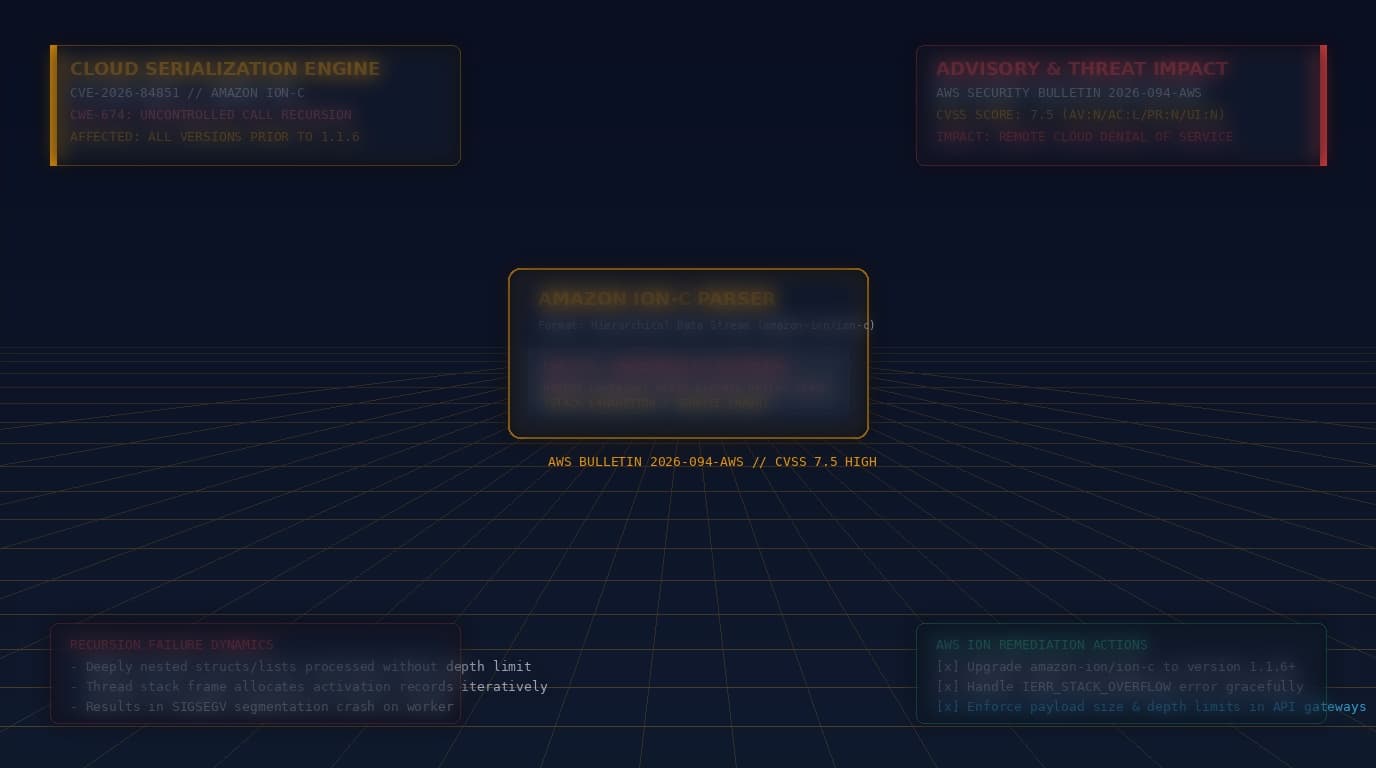
AWS CloudAWS publishes Bulletin 2026-094-AWS for high-severity flaw CVE-2026-84851 in Amazon Ion-C library, allowing attackers to exhaust stack memory and crash services.
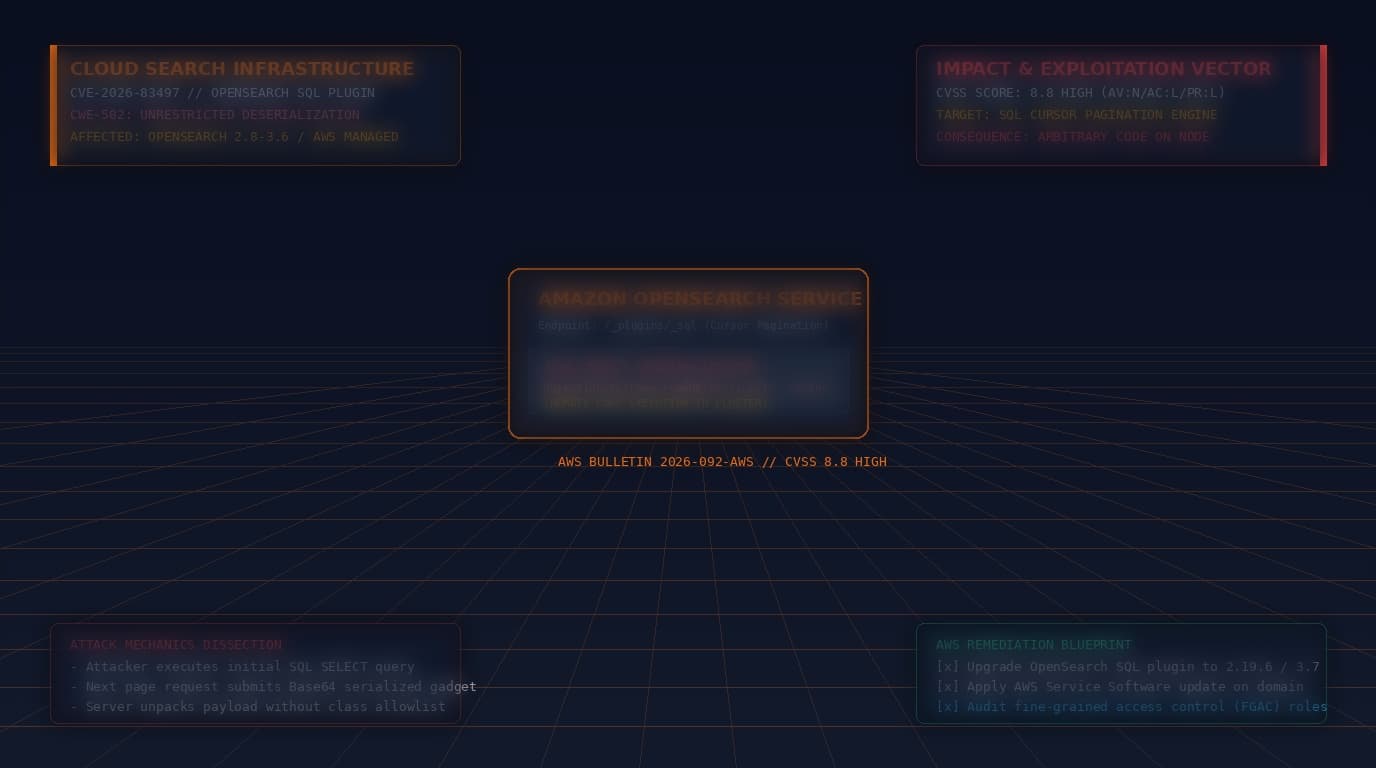
AWS CloudAWS and OpenSearch release bulletin 2026-092-AWS for high-severity flaw CVE-2026-83497 in the SQL plugin allowing authenticated users to execute code via cursors.
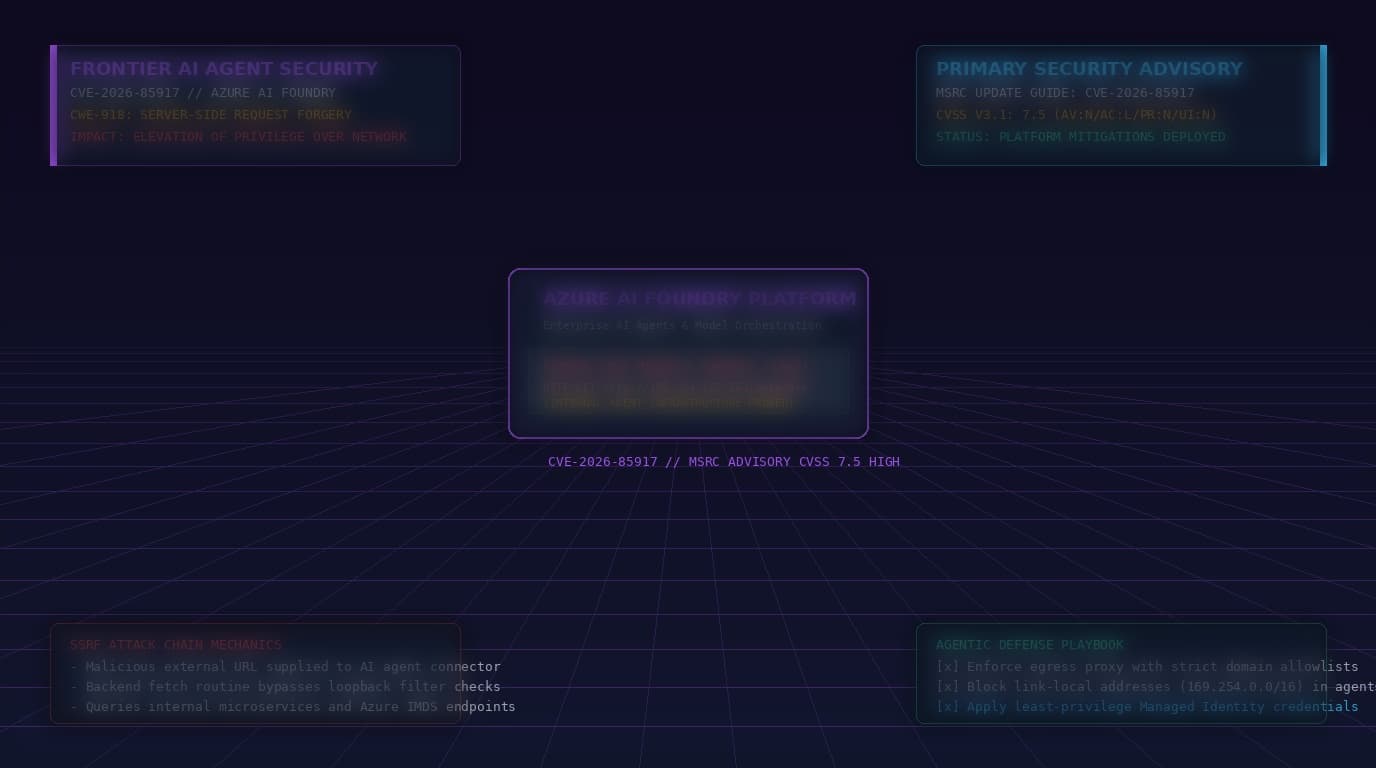
MicrosoftMicrosoft discloses high-severity flaw CVE-2026-85917 in Azure AI Foundry allowing unauthenticated attackers to execute SSRF and elevate privileges over the network.
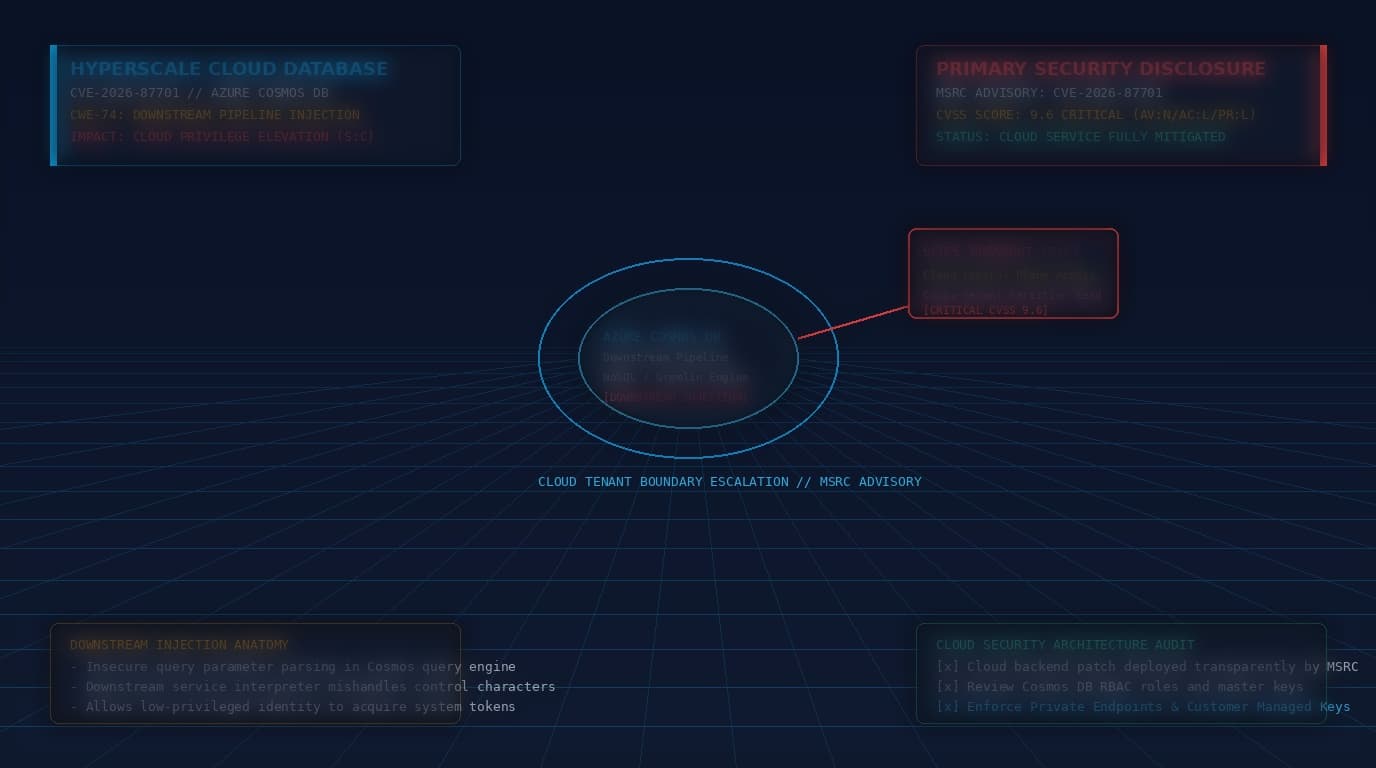
MicrosoftMicrosoft addresses CVSS 9.6 vulnerability CVE-2026-87701 in Azure Cosmos DB allowing authenticated attackers to execute downstream injection and elevate privileges.
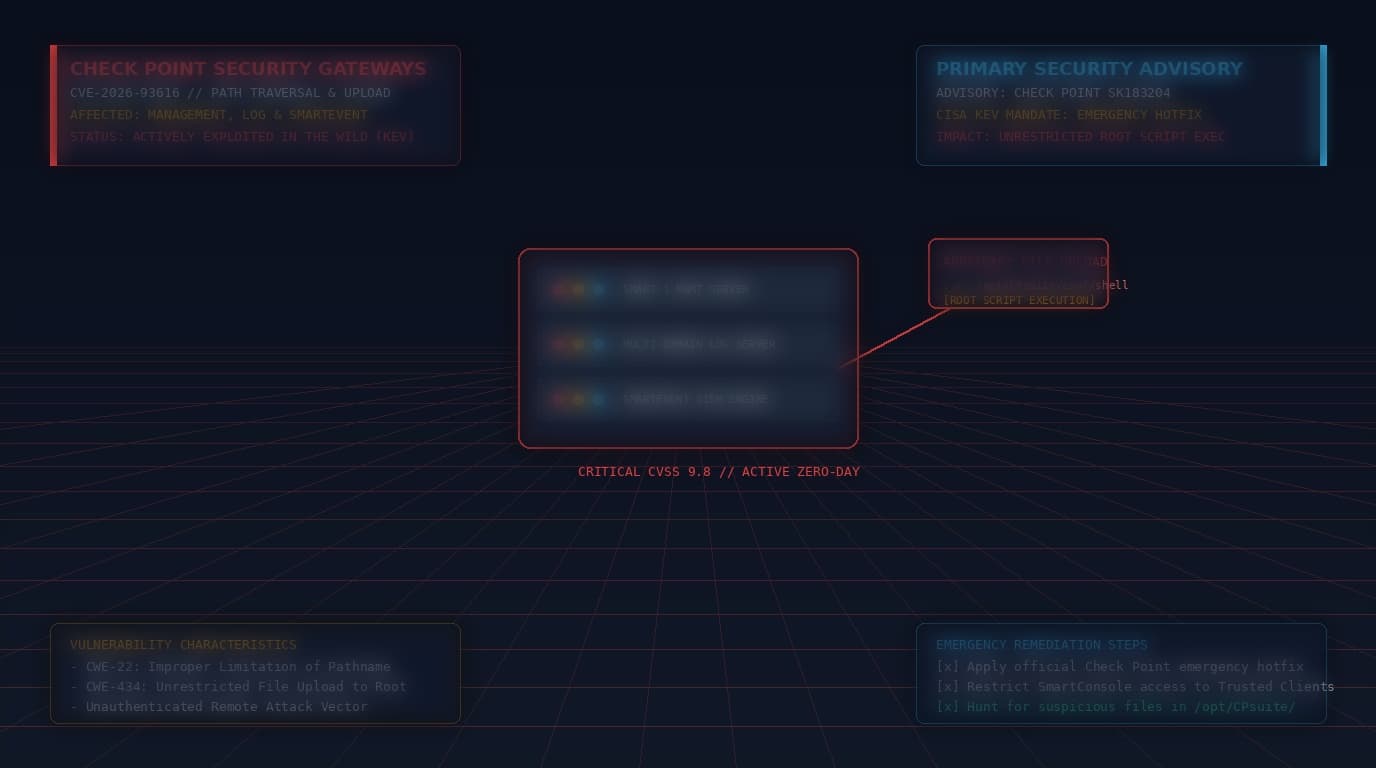
Check PointCheck Point and CISA confirm active in-the-wild exploitation of CVSS 9.8 flaw CVE-2026-93616 allowing unauthenticated attackers to write arbitrary files as root.