Executive Summary: DPBI Transition from Statute to Active Enforcement
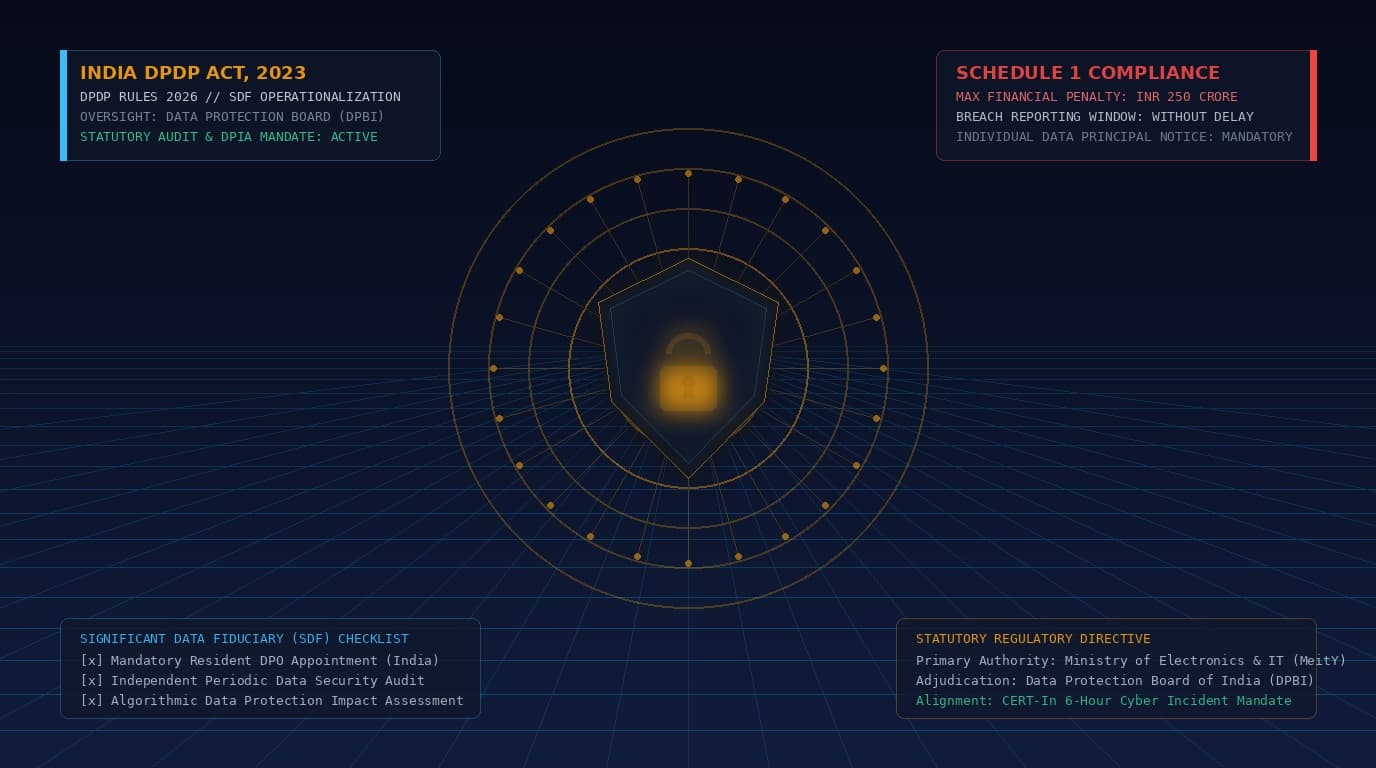
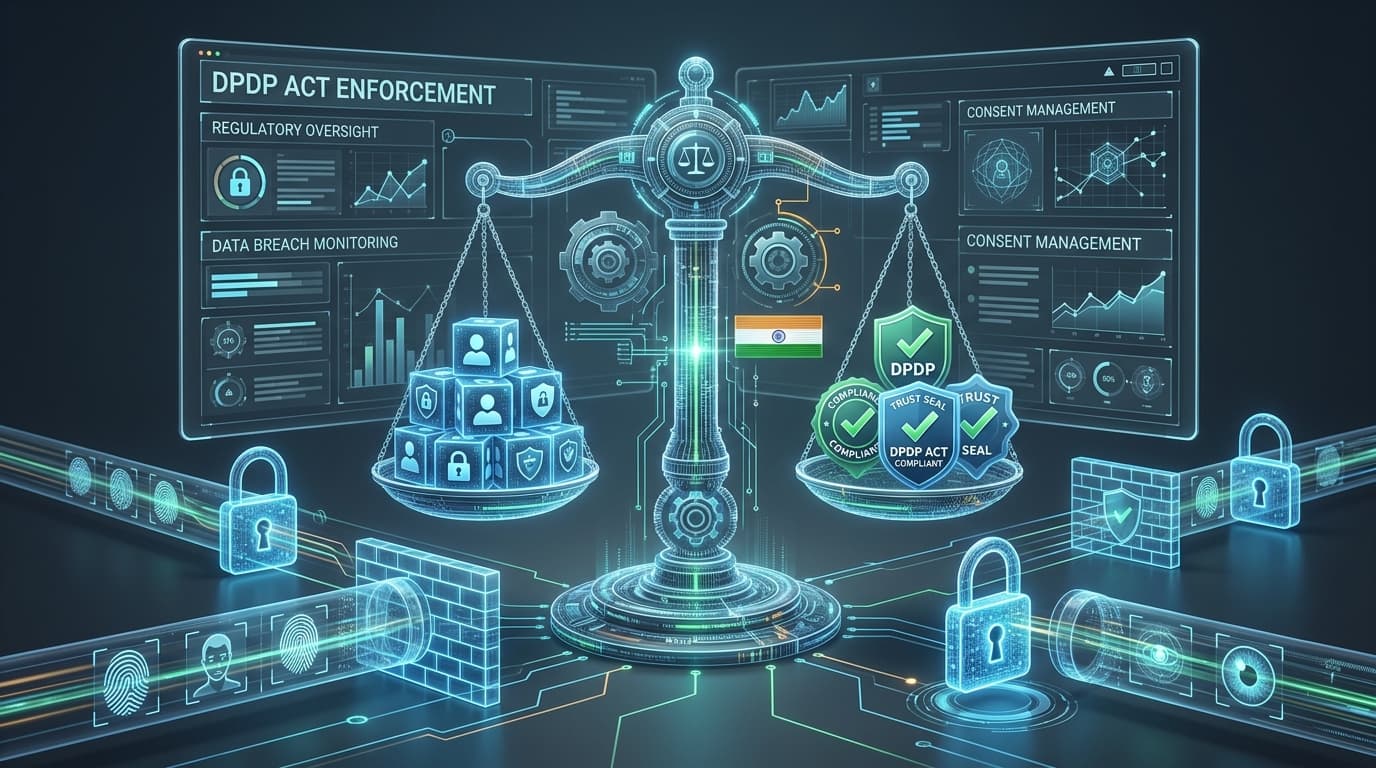
The Ministry of Electronics and Information Technology (MeitY) has officially notified the procedural rules governing the Data Protection Board of India (DPBI), formally initiating Phase 2 enforcement of the Digital Personal Data Protection Act, 2023 (DPDP Act). The regulatory activation establishes the operational mechanisms through which the Board receives complaints, conducts digital inquiries, summons corporate leadership, and levies statutory financial penalties up to ₹250 Crore (~$30 Million USD) per compliance failure.
Central to the newly notified framework are strict operational mandates targeting entities designated as Significant Data Fiduciaries (SDFs). Spanning scheduled commercial banks, major payment gateways, telecom operators, hyperscale cloud service providers, and large-scale e-commerce platforms, SDFs are now legally required to submit to annual independent algorithmic transparency audits, maintain locally resident Data Protection Officers (DPOs), and execute automated Data Protection Impact Assessments (DPIAs) prior to deploying AI automated decision-making engines.
The Digital Inquiry Architecture: Virtual Tribunals & Evidence Pipelines
Unlike legacy judicial proceedings, the DPBI is conceived as a "digital by design" regulatory tribunal. All inquiry workflows—from initial complaint registration by a Data Principal to evidence submission and cross-examination—occur through a cryptographically signed portal:
- Techno-Legal Summons: Inquiries initiated under Section 28 of the DPDP Act will transmit digitally signed summons to the registered DPO email endpoint. Fiduciaries must acknowledge receipt within 24 hours.
- Forensic Log Disclosures: Fiduciaries under inquiry must furnish tamper-proof, timestamped audit trails of consent artifacts, access control logs, and encryption verification proofs without redactions that impede evidentiary review.
- Algorithmic Scrutiny: Where automated processing, credit scoring, or profiling is alleged to cause harm to Data Principals, the Board possesses statutory authority to compel the disclosure of model training parameters, feature weights, and validation benchmarks.
Compliance Obligations Matrix for Significant Data Fiduciaries
| Regulatory Mandate | Statutory DPDP Section | Required Corporate Deliverable | Maximum Penalty for Default |
|---|---|---|---|
| Reasonable Security Safeguards | Section 8(5) / Schedule 1 | Hardware-enforced encryption (AES-256), multi-factor authentication, and continuous SOC telemetry monitoring | Up to ₹250 Crore |
| Mandatory Breach Notification | Section 8(6) | Rapid disclosure to DPBI and affected Data Principals within statutory timeframes upon breach discovery | Up to ₹200 Crore |
| Children's Data Protection | Section 9 | Verifiable parental consent mechanisms; absolute ban on behavioral tracking and targeted advertising to minors | Up to ₹200 Crore |
| Independent Audits & DPIA | Section 10(2) | Annual algorithmic audit report certified by an empanelled independent cybersecurity auditing firm | Up to ₹150 Crore |
Cross-Border Data Flows & Sovereign Safeguards
The DPBI framework operationalizes the central government's "negative list" model for cross-border personal data transfers. While data may flow internationally to unrestricted jurisdictions, SDFs must maintain a fully synchronized secondary copy within Indian sovereign borders. Furthermore, transfers of sensitive financial telemetry, biometric authentication vectors, and health data remain strictly subject to localized retention mandates enforced by sectoral regulators (RBI, IRDAI, and MeitY).
CISO & Data Protection Officer (DPO) Action Checklist
- Formalize DPO Appointment and Indian Residency: Validate that the designated Data Protection Officer is a resident of India, possesses direct reporting lines to the Board of Directors, and is registered with the DPBI electronic registry.
- Automate Consent Lifecycle Architecture: Replace monolithic privacy terms with granular, multilingual consent notices that provide explicit, withdrawal-friendly consent receipts:
// DPDP Compliant Consent Architecture Schema (JSON-LD) { "@context": "https://dpbi.gov.in/schemas/consent/v1", "consentId": "urn:uuid:7f3b8912-9c44-4e20-b839-482910482019", "dataPrincipalId": "sha256(customer_phone_hash)", "dataFiduciary": "Enterprise Financial Services Ltd", "purpose": "CreditUnderwritingAutomatedEvaluation", "retentionPeriodDays": 365, "withdrawalEndpoint": "https://privacy.enterprise.in/api/v1/consent/revoke", "timestamp": "2026-09-25T08:00:00Z" } - Institute Periodic Algorithmic Fairness & Bias Audits: Retain independent external auditors to evaluate scoring algorithms for discriminatory bias, maintaining signed audit certificates for Board review.