Executive Summary: The Dawn of Comprehensive Data Privacy Enforcement in India
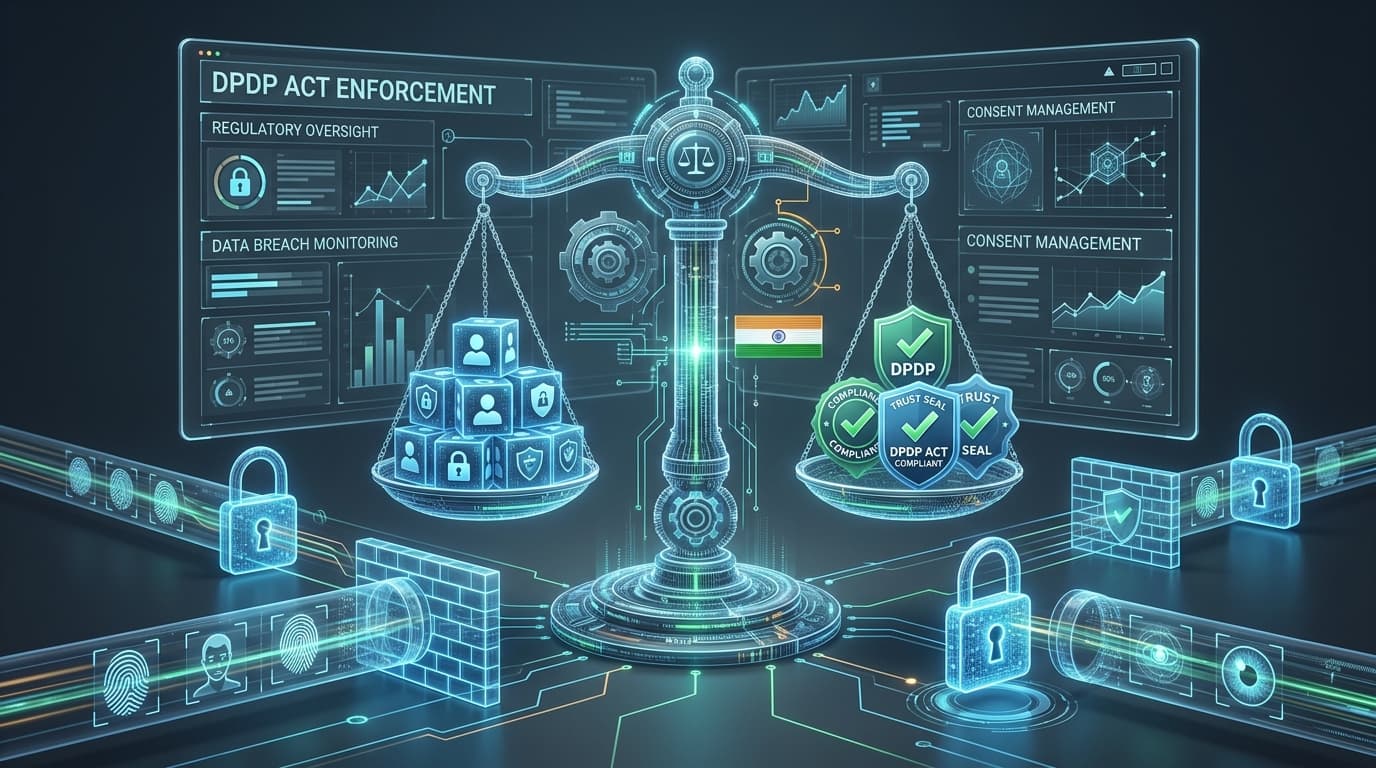
The operationalization of the Digital Personal Data Protection Act, 2023 (DPDP Act) and the accompanying DPDP Rules 2026 marks a transformative epoch for enterprise security architectures, corporate boards, and cloud platforms handling the personal data of Indian citizens. Administered by the Data Protection Board of India (DPBI), the statutory regime shifts personal data governance from voluntary compliance guidelines to strict, enforceable liability backed by civil penalties of up to ₹250 Crore (~$30 Million USD) per infraction.
Unlike legacy privacy regulations that treated breach notifications as internal matters unless systemic fraud occurred, Section 8(6) of the DPDP Act mandates that in the event of a personal data breach, the Data Fiduciary shall give the Board and each affected Data Principal intimation of such breach in the prescribed form and manner.
The DPDP Penalty Framework: Breaking Down the Statutory Matrix
The Schedule to the DPDP Act specifies maximum financial penalties across five distinct operational failure categories. The Data Protection Board evaluates liability based on the nature, gravity, duration of the breach, the volume of Data Principals exposed, and whether the organization took proactive steps to mitigate harm.
| Statutory Breach Category | Section Reference | Maximum Civil Penalty | Primary Technical Trigger |
|---|---|---|---|
| Failure to Take Reasonable Security Safeguards | Section 8(5) / Schedule 1 | Up to ₹250 Crore ($30M) | Unencrypted storage, leaked API tokens, missing MFA, or exposed cloud buckets resulting in personal data access. |
| Failure to Notify Board & Principals of Breach | Section 8(6) / Schedule 2 | Up to ₹200 Crore ($24M) | Concealing data leaks, delayed intimation beyond prescribed timelines, or incomplete disclosure of exposed telemetry. |
| Non-Compliance with Children’s Data Safeguards | Section 9 / Schedule 3 | Up to ₹200 Crore ($24M) | Tracking, behavioral monitoring, or targeted advertising directed at individuals under 18 years of age without parental consent. |
| Failure of Significant Data Fiduciary Obligations | Section 10 / Schedule 4 | Up to ₹150 Crore ($18M) | Failure to appoint an India-based DPO, lack of independent data audits, or skipping Data Protection Impact Assessments. |
| General Regulatory Non-Compliance | Miscellaneous / Schedule 5 | Up to ₹50 Crore ($6M) | Failure to honor user erasure/correction requests or obstructing Data Protection Board inquiries. |
Obligations for Significant Data Fiduciaries (SDFs)
Entities designated by the Central Government as Significant Data Fiduciaries—typically determined by data volume, sensitivity of information handled, systemic risk to democratic processes, or state security—must satisfy rigorous organizational standards:
- India-Resident Data Protection Officer (DPO): An accountable C-level executive based within India who reports directly to the Board of Directors and serves as the primary liaison to the DPBI.
- Independent Data Auditors: Annual audits executed by accredited external security assessors evaluating consent architecture, database tokenization, and encryption standards.
- Algorithmic & Data Protection Impact Assessments (DPIA): Formal technical assessments conducted prior to deploying large language models (LLMs), automated profiling algorithms, or high-risk data processing pipelines.
Defensive Engineering: Implementing DPDP Safeguards in Cloud Architectures
To defend against the maximum ₹250 Crore penalty for "failure to take reasonable security safeguards," engineering organizations must implement cryptographic controls at the database and application layer.
1. Enforcing Automated Data Pseudonymization & Tokenization
-- Example PostgreSQL Row-Level Tokenization for Sensitive Indian PII
-- Masks Aadhaar, Phone Numbers, and Financial Telemetry
CREATE OR REPLACE FUNCTION mask_pii_identity()
RETURNS TRIGGER AS $$
BEGIN
    -- Cryptographically tokenize phone and identity numbers
    NEW.phone_hash := encode(digest(NEW.phone_number || 'DPDP_SALT_2026', 'sha256'), 'hex');
    NEW.phone_masked := 'XXXXXX' || RIGHT(NEW.phone_number, 4);
    NEW.phone_number := NULL; -- Drop cleartext PII from disk
    RETURN NEW;
END;
$$ LANGUAGE plpgsql;

CREATE TRIGGER trg_mask_user_pii
BEFORE INSERT OR UPDATE ON user_identities
FOR EACH ROW EXECUTE FUNCTION mask_pii_identity();
2. Engineering Playbook for Consent Lifecycle Verification
- Verifiable Consent Receipts: Every consent interaction must produce an immutable cryptographic receipt containing timestamp, exact notice version, and scope of processing.
- Right to Erasure API Pipelines: Automated deletion cascades that scrub customer records from live relational tables, search indexes (Elasticsearch), and analytics lakes within 30 days of consent withdrawal.
- Zero-Trust Cloud IAM: Elimination of long-lived access keys across cloud repositories, enforcing short-lived STS tokens with least-privilege IAM policies.