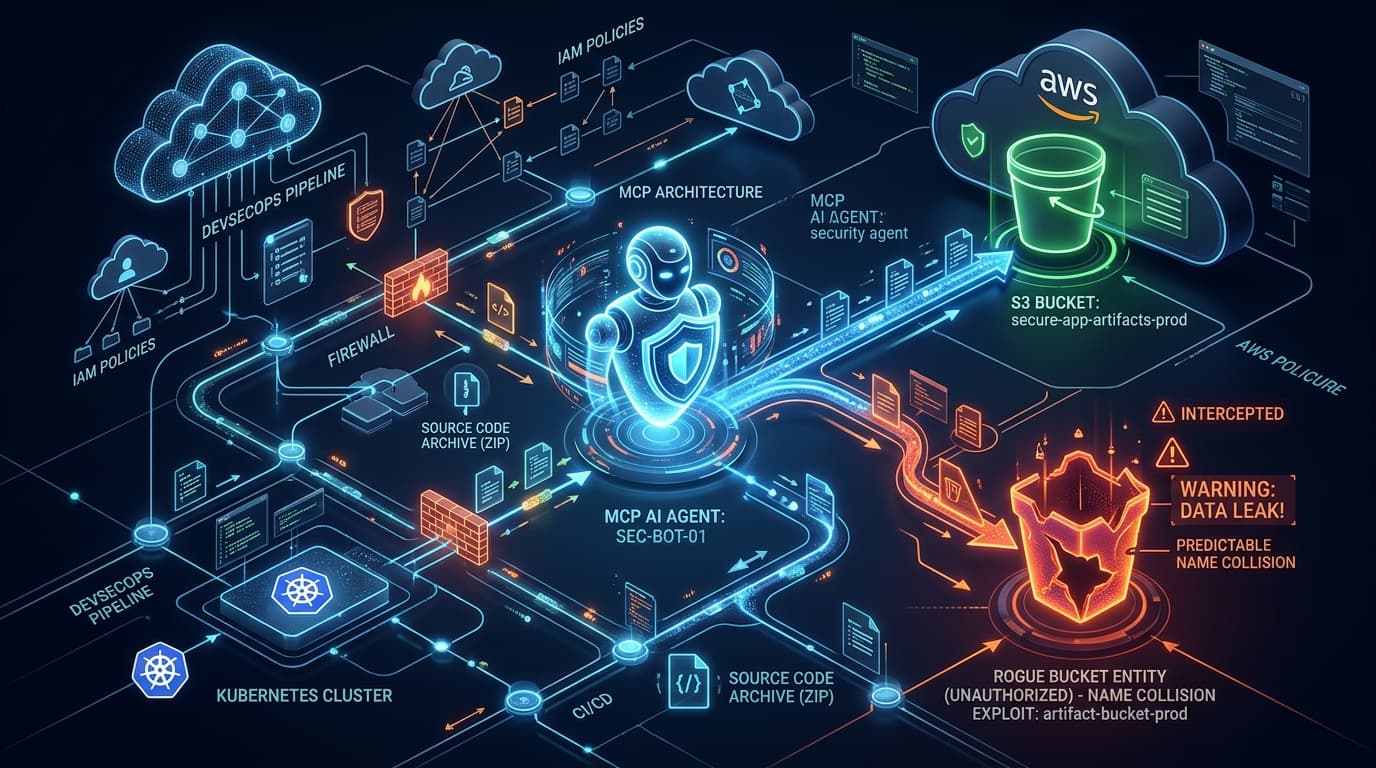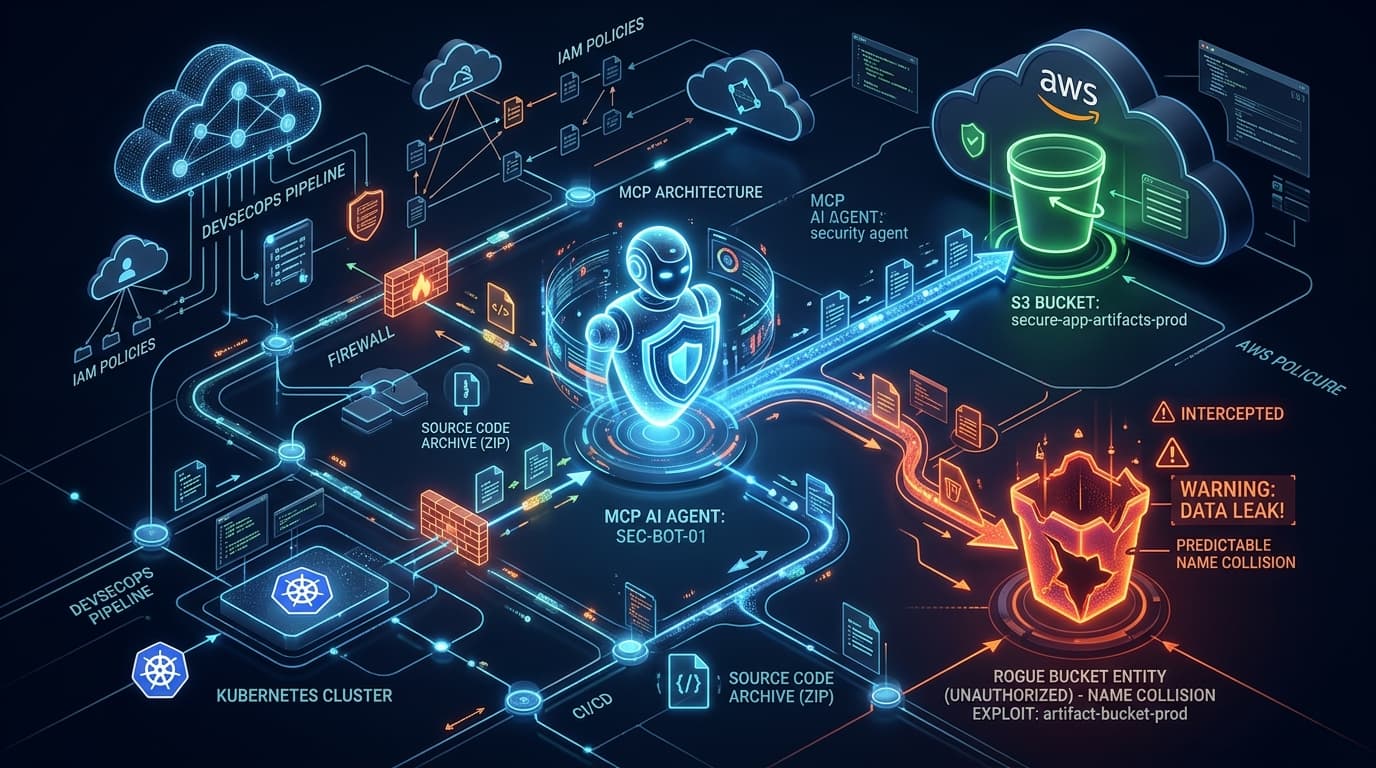
Executive Summary: Model Context Protocol Implementations Under Attack
As enterprises accelerate the adoption of autonomous artificial intelligence systems for legacy code migration and cloud modernization, the underlying communication protocols and execution frameworks that interface Large Language Models (LLMs) with operating system environments have emerged as prime targets for exploitation. In official AWS Security Bulletin 2026-075-AWS, Amazon Web Services disclosed a high-severity vulnerability—cataloged as CVE-2026-18953 with a CVSS v3.1 base score of 8.6—affecting the open-source awslabs/aws-transform-mcp-server.
The vulnerability represents a critical Path Traversal (CWE-22) breakdown within the server's Model Context Protocol (MCP) tool dispatch pipeline. Specifically, when an autonomous coding agent invokes the server's internal resource extraction utilities, a failure to properly canonicalize and constrain the destination path allows context-dependent inputs to escape isolated sandbox directories, writing arbitrary binary or script artifacts into arbitrary locations on the host system filesystem.
In automated software engineering environments where AI agents possess autonomous execution permissions, exploitation of CVE-2026-18953 enables adversaries to achieve unauthenticated local and remote code execution (RCE) by overwriting sensitive profile scripts, cron definitions, or shared libraries utilized by developers and cloud deployment runners.
Technical Deep-Dive: CWE-22 in the get_resource Tool
The aws-transform-mcp-server is engineered to support cloud modernization initiatives by exposing a standardized JSON-RPC interface through which AI developer assistants (such as Claude Desktop, Cursor, or custom corporate agent orchestrators) query, transform, and store cloud resource schemas and code transformations.
During code migration tasks, the client agent invokes the get_resource tool to pull configuration bundles, database schemas, or reference templates from source repositories and write them to the local disk. The tool accepts two primary arguments: resourceUri (specifying the target data source) and savePath (specifying the destination file path).
1. The Path Sanitization Breakdown
In versions 0.1.0 through 0.1.4 of aws-transform-mcp-server, the underlying file-writing logic directly concatenates the user-supplied savePath string with the working directory without verifying that the resolved canonical path remains bounded within the designated output tree:
// Vulnerable path resolution logic in awslabs/aws-transform-mcp-server (v0.1.4)
async function handleGetResource(params: GetResourceArgs) {
    const { resourceUri, savePath } = params;

    // Insecure: Direct path concatenation allows directory traversal sequences!
    const targetFile = path.resolve(process.cwd(), savePath);

    // Flaw: No verification that targetFile begins with base workspace directory!
    const content = await fetchResourceContent(resourceUri);
    await fs.promises.writeFile(targetFile, content, { encoding: 'utf-8', flag: 'w' });

    return { status: 'success', path: targetFile };
}
Because the code relied on path.resolve(process.cwd(), savePath) without an explicit prefix check (such as targetFile.startsWith(safeRoot)), an adversary supplying directory traversal sequences (such as ../../../../home/user/.bashrc or ../../../../etc/cron.d/malicious_task) can force the server to overwrite arbitrary files across the host operating system with attacker-controlled content.
2. Indirect Prompt Injection Vector
The primary operational risk stems from Indirect Prompt Injection. An attacker does not require direct network access to the MCP server. Instead, by embedding poisoned instructions within a public code repository, pull request, or documentation file processed by the autonomous AI assistant:
When the LLM parses the repository during a modernization audit, the model follows the embedded instructions, formulating a JSON-RPC tool request to the local MCP server with the malicious traversal payload. The server blindly writes the external script into the developer's shell environment, triggering persistent code execution the next time a terminal session is initiated.
Impact Analysis & Lateral Movement Potential
The blast radius of CVE-2026-18953 varies depending on whether the MCP server is hosted on individual developer workstations, corporate CI/CD runners, or cloud-hosted container environments:
- Developer Workstation Compromise: Overwriting shell profiles (
.zshrc,.bashrc) or IDE extensions allows silent persistence, enabling keylogging, credential harvesting, and theft of AWS IAM credentials stored in~/.aws/credentials. - CI/CD Runner Poisoning: In automated build pipelines that leverage MCP agents for continuous code refactoring, writing to shared build tool directories (such as
/usr/local/bin/or virtual environments) enables full container breakouts and supply-chain contamination. - Zero Authentication Defenses: Standard MCP transport over standard input/output (stdio) or localhost HTTP carries no inherent authentication token verification, allowing any running process on the machine to interact with the server daemon.
Vulnerability Comparison & Telemetry Matrix
| Parameter | Vulnerability Specification | Enterprise Risk Assessment |
|---|---|---|
| CVE Identifier | CVE-2026-18953 | Documented in AWS Bulletin 2026-075-AWS |
| Vulnerability Class | CWE-22 (Improper Limitation of a Pathname) | Path traversal leading to arbitrary file write |
| CVSS v3.1 Score | 8.6 (CVSS:3.1/AV:L/AC:L/PR:N/UI:R/S:C/C:H/I:H/A:H) | High-impact local code execution via tool poisoning |
| Affected Software | awslabs/aws-transform-mcp-server v0.1.0 – v0.1.4 | All deployments utilizing get_resource tool |
| Remediated Version | awslabs/aws-transform-mcp-server v0.1.5 | Mandatory upgrade enforcing strict path boundary validation |
Defensive Playbook: MCP Security Hardening & Remediation
Organizations utilizing Model Context Protocol servers in engineering workflows must immediately implement the following four-tier defensive measures:
1. Upgrade aws-transform-mcp-server to v0.1.5
Verify the installed version of the server package across all developer environments and package managers, pulling the latest patched release from npm or GitHub:
# Check currently installed version
npm list -g @awslabs/aws-transform-mcp-server

# Upgrade globally to patched release v0.1.5 or later
npm install -g @awslabs/aws-transform-mcp-server@latest

# Verify version >= 0.1.5
aws-transform-mcp-server --version
2. Inspect Fixed Path Sanitization Logic
In version 0.1.5, AWS engineers implemented path normalization and boundary enforcement to guarantee that destination files remain strictly within the designated output workspace:
// Patched path validation implementation in v0.1.5
const resolvedRoot = path.resolve(allowedWorkspaceDir);
const targetPath = path.resolve(resolvedRoot, savePath);

// Enforce strict containment check
if (!targetPath.startsWith(resolvedRoot + path.sep)) {
    throw new Error("Security Error: savePath attempts to escape sandbox boundary!");
}
Actionable Checklist for Enterprise AI Security Teams
- Implement Read-Only Tool Sandboxes: Configure MCP client runtime configurations to restrict file system modification tools strictly to temporary scratch directories.
- Enforce Human-in-the-Loop Confirmation: Configure developer assistants to require explicit user confirmation before executing any tool that writes or modifies files on disk.
- Audit Git Repositories for Prompt Injections: Scan ingested codebase documentation and comments for adversarial instruction-tuning prompts designed to hijack tool arguments.
- Restrict Ambient Credentials: Ensure CI/CD runners executing AI migration agents operate with temporary, tightly scoped IAM role credentials lacking administrative privileges.