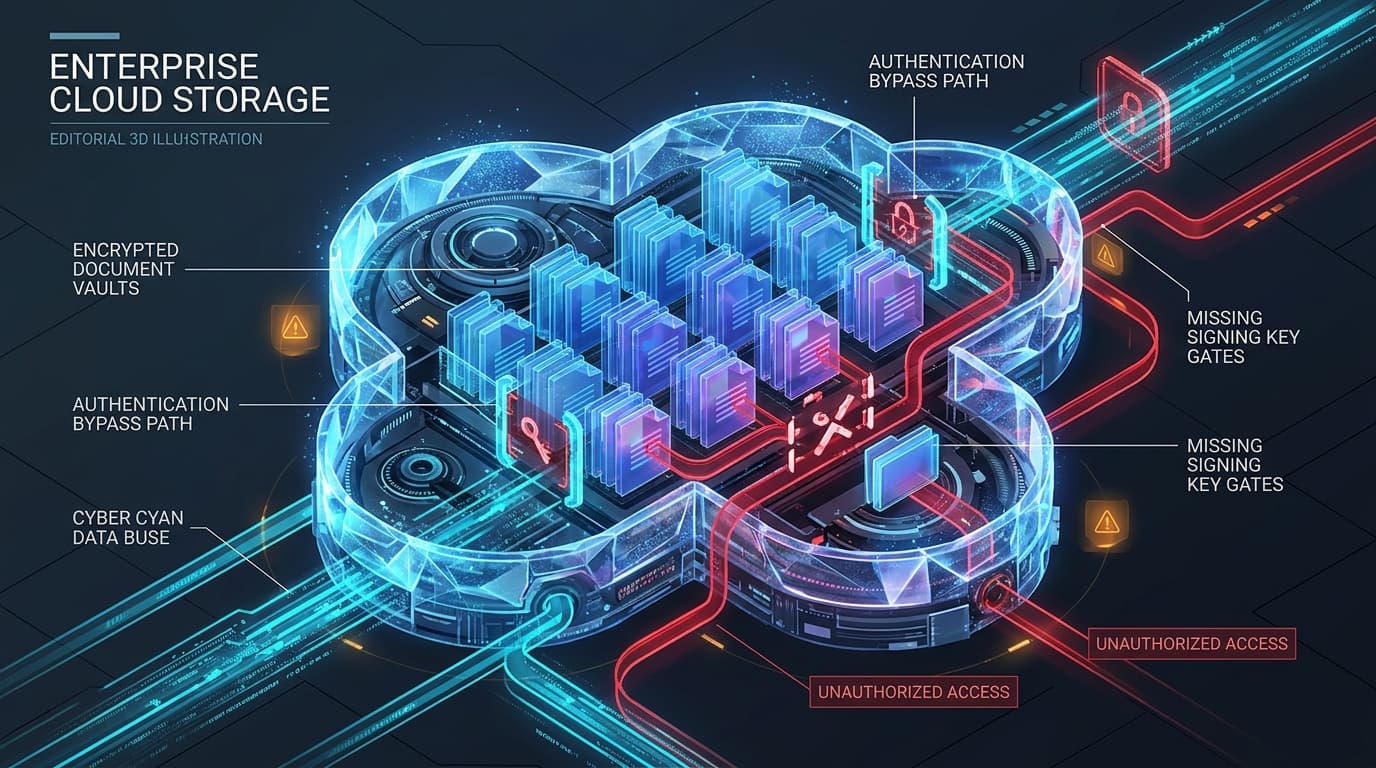
Threat actors and initial access brokers are actively exploiting a critical vulnerability in Citrix NetScaler ADC and NetScaler Gateway appliances that allows remote, unauthenticated adversaries to completely circumvent authentication barriers and reach sensitive management and proxy services.
The vulnerability, tracked as CVE-2026-19490, carries a Common Vulnerability Scoring System (CVSS v4.0) score of 9.3. Classified under CWE-288: Authentication Bypass Using an Alternate Path or Channel, the defect allows an external attacker to interact with an internal authentication processing endpoint that fails to validate session states, executing post-login handlers on the victim appliance with zero user interaction.
Attack Mechanics: The Alternate-Path Flaw
According to reverse-engineering analysis and threat intelligence bulletins from CISA and security researchers, the vulnerability lies in the routing logic between NetScaler's packet processing engine (nsppe) and the underlying authentication daemon.
When an appliance is configured as an AAA virtual server or operates in NetScaler Gateway mode (providing SSL VPN, ICA Proxy, or RDP proxy services), incoming HTTP requests are intended to pass through a strict authentication pipeline. However, researchers discovered that sending specially structured HTTP requests targeting specific URI paths bypasses the primary gatekeeper:
- Unauthenticated Reachability: The attacker transmits a single crafted HTTP request to the publicly exposed Gateway or AAA listener on TCP 443.
- Parser Discrepancy & State Confusion: The appliance misinterprets the request path, treating the request as already validated by an upstream authentication module.
- Post-Login Handler Execution: The engine executes privileged internal routines, allowing the adversary to establish an authenticated session context, leak tokens, or execute administrative commands.
Perimeter gateways are the front door to enterprise internal networks. An unauthenticated authentication bypass on NetScaler gives an adversary immediate visibility and pivoting access behind the firewall.
Configuration Prerequisites & Exposure Surface
The conditions required for exploitation vary depending on firmware release train:
- Legacy Firmware Branches: Any appliance running unpatched firmware where Gateway or AAA virtual server features are enabled is directly vulnerable.
- Modern Release Branches (14.1 / 13.1): The flaw requires the presence of a configured SAML action or SAML authentication policy bound to the virtual server.
Telemetry from internet scanning sensors indicates thousands of enterprise Citrix endpoints remain exposed globally, with particular concentration in financial institutions, healthcare providers, and managed IT service providers.
Remediation & Forensic Verification Checklist
Citrix and cybersecurity authorities urge administrators to treat exposed NetScaler gateways with the highest urgency:
- Upgrade Firmware Immediately: Deploy vendor-released security updates:
- NetScaler ADC and Gateway 14.1 → Update to 14.1-73.32 or later
- NetScaler ADC and Gateway 13.1 → Update to 13.1-63.21 or later
- NetScaler FIPS & NDcPP editions → Apply release-specific patched builds (e.g. 13.1-37.277)
- Verify Patch State Remotely: Run trusted detection checks from isolated management hosts to verify whether perimeter appliances continue to process unauthenticated alternate-path requests.
- Inspect Web Server Access Logs: Audit
/var/log/httperror.log,/var/log/ns.log, and/var/log/notice.logfor abnormal HTTP status codes (200 OK or 302 redirects) associated with SAML callback routes originating from unknown external IP ranges. - Isolate Management Interfaces: Restrict management IP addresses (NSIP) and subnet IPs (SNIP) strictly to internal out-of-band management VLANs. Under no condition should administrative portals face the internet.