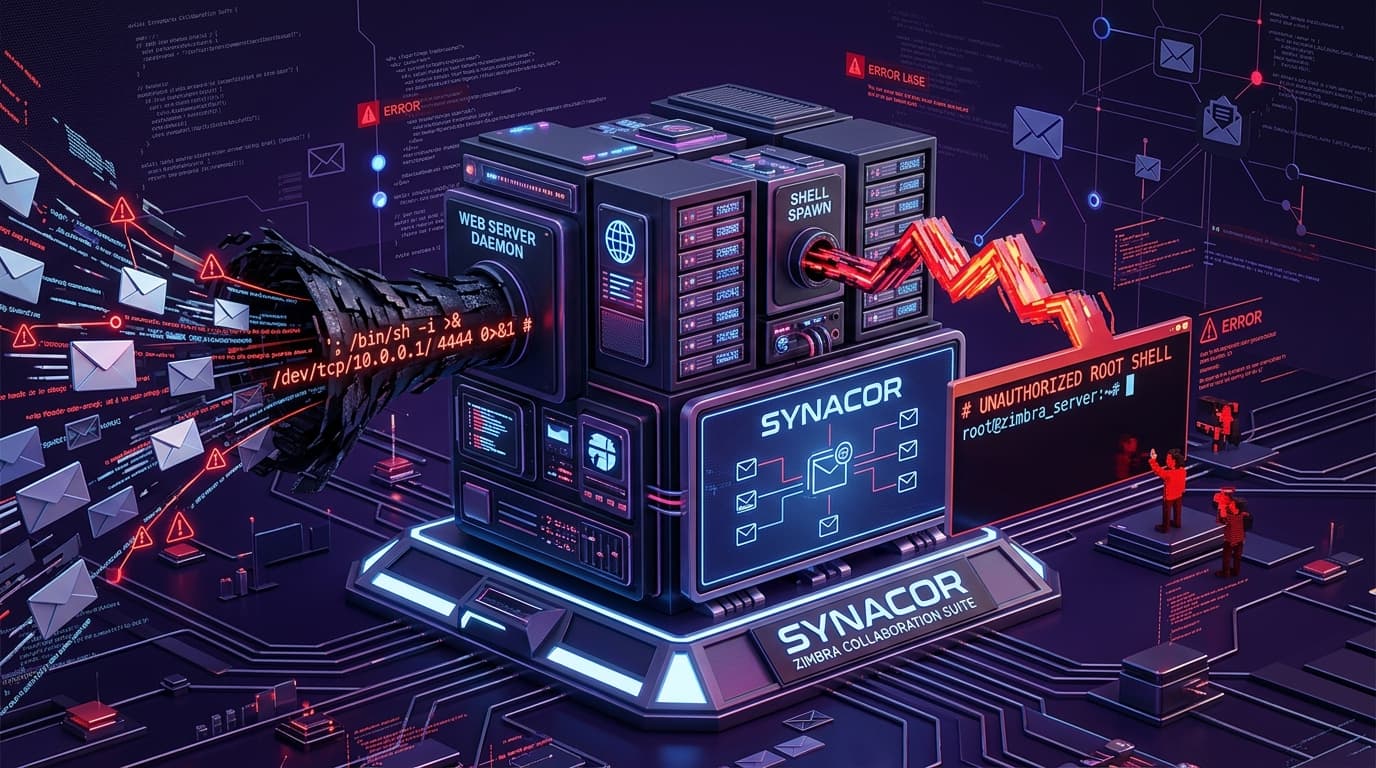
The Cybersecurity and Infrastructure Security Agency (CISA) has issued an urgent directive adding CVE-2026-73570 to its Known Exploited Vulnerabilities catalog. The security defect impacts Synacor Zimbra Collaboration Suite (ZCS), an enterprise-grade messaging and groupware platform serving hundreds of millions of corporate, educational, and public sector mailboxes globally.
Holding a critical CVSS v3.1 rating of 9.8 (CVSS:3.1/AV:N/AC:L/PR:N/UI:N/S:U/C:H/I:H/A:H), the vulnerability allows unauthenticated, remote attackers over the network to trigger arbitrary operating system commands under the permissions of the zimbra service account, with subsequent privilege escalation pathways to unrestricted root control.
Attack Mechanics: Unquoted Shell Argument Execution in Mail Attachment Parser
The vulnerability stems from improper neutralization of special elements in argument handling within Zimbra's webmail attachment preview and document conversion handlers:
- Unauthenticated Endpoint Exposure: Zimbra's public HTTP/HTTPS listeners (running Nginx and Jetty) accept multipart file uploads and document conversion requests from unauthenticated clients.
- Shell Metacharacter Injection: When processing document metadata (such as filename parameters or embedded MIME headers), the application invokes internal shell scripts (such as
zmmailboxdconversion utilities) via system shell calls without utilizing safe parameter arrays or sanitizing backticks, semicolons, and pipes. - Interactive Reverse Shell Spawn: The injected shell syntax executes immediately on the underlying Linux host, allowing the adversary to establish persistence via cron jobs, steal LDAP master credentials, and dump all mailbox archives.
Zimbra servers are primary targets for espionage and ransomware groups. Because the server manages sensitive email communications, calendar schedules, and employee directories, an unauthenticated remote code execution exploit enables instant total domain compromise.
Affected Zimbra Releases & Remediations
| ZCS Product Release | Vulnerable Patch Levels | Remediated Version | Mandate Level |
|---|---|---|---|
| Zimbra Collaboration Suite 10 | 10.0.0 through 10.0.8 | ZCS 10.0.9 or later | Emergency Directive Action Required |
| Zimbra Collaboration Suite 9 | 9.0.0 prior to Patch 41 | ZCS 9.0.0 Patch 41 | Emergency Directive Action Required |
| Zimbra Collaboration Suite 8.8 (EoL) | All versions | Upgrade to ZCS 10 | Discontinue Unsupported Software |
Detection, Audit & Defensive Playbook
Email administrators and security operations analysts must execute the following triage commands across Zimbra mail host nodes:
# Audit Zimbra mailbox logs for command injection strings
grep -iE "(;|\||exec|\$\()|nc -e|/bin/sh|/bin/bash" /opt/zimbra/log/mailbox.log

# Check for unauthorized cron jobs under the zimbra user account
crontab -u zimbra -l

# Inspect web directory for newly created JSP webshell files
find /opt/zimbra/jetty/webapps -name "*.jsp" -mtime -7
Recommended Defensive Controls
- Deploy Vendor Patches Immediately: Update Zimbra installations using the official package manager repositories:
sudo apt-get update && sudo apt-get install zimbra-patch # For Ubuntu/Debian sudo yum check-update && sudo yum update zimbra-patch # For RHEL/CentOS - Restrict Public Web Administration: Ensure administrative ports (TCP 7071) and internal APIs are strictly bound to internal management IPs.
- Deploy WAF Signature Rules: Configure edge web application firewalls to detect and block command injection characters within multipart POST requests directed at Zimbra webmail endpoints.