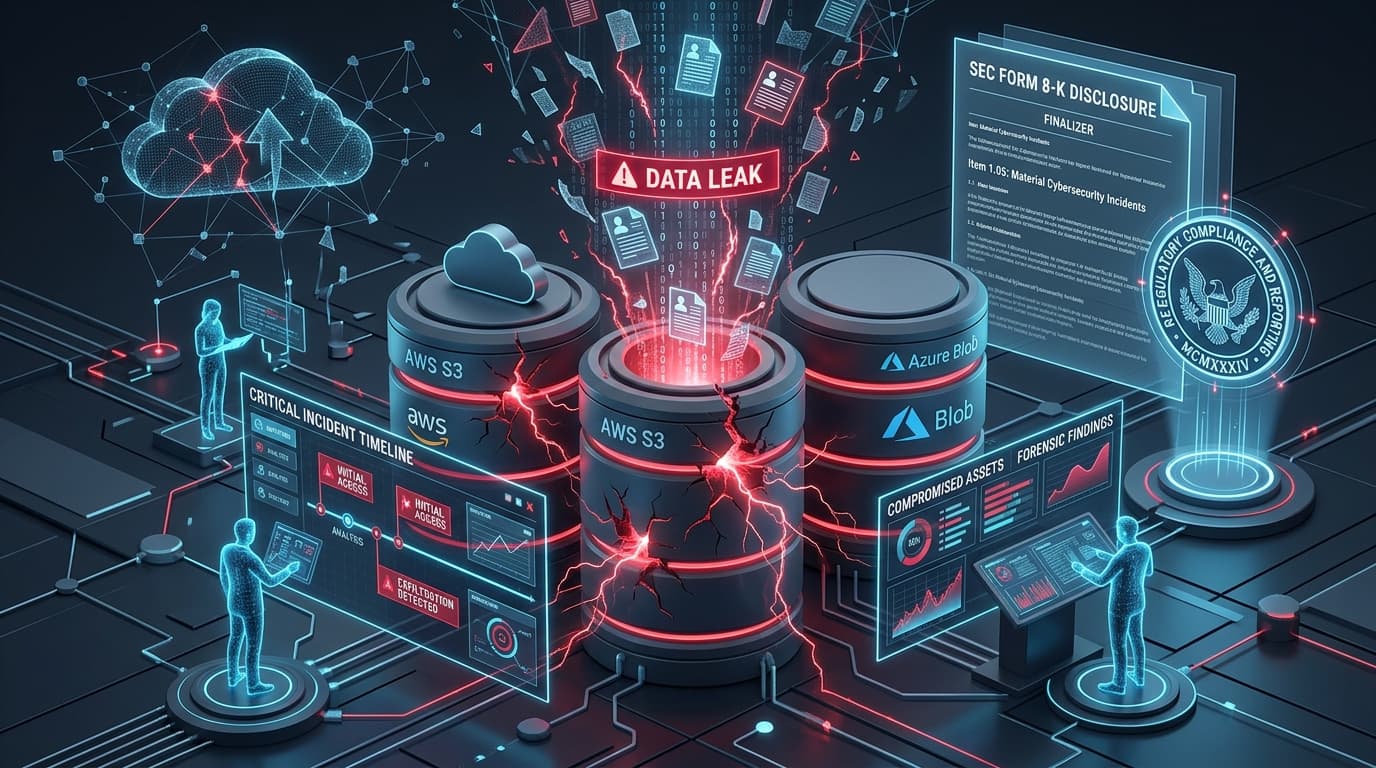
In a striking demonstration of how cyber data exfiltration directly translates into immediate programmatic financial crime, Upbound Group, Inc. (NASDAQ: UPBD)—the parent corporation of consumer retail and lease-to-own giants Rent-A-Center and Acima Leasing—has disclosed a major cybersecurity incident that resulted in approximately $13 million in fraudulent contract write-offs. Forensic filings submitted to the California Attorney General reveal that stolen cloud files were directly weaponized through automated API attacks to originate thousands of fraudulent merchandise lease agreements.
The Cloud Breach and the Acima Fraud Pipeline
The intrusion occurred between July 3 and July 6, 2026, when unauthorized actors gained access to cloud-stored file repositories within Upbound's cloud hosting infrastructure. The compromise was discovered by internal security operations on July 13.
Unlike conventional ransomware events where extortionists demand cryptocurrency in exchange for decryption keys, the threat actors executed an immediate programmatic monetization scheme. Using automated bots, the attackers fed the exfiltrated consumer profiles—including real Social Security numbers, dates of birth, and banking details—into Acima's algorithmic point-of-sale financing APIs.
Acima's automated underwriting models, perceiving verified credit identities with matching historical data, approved thousands of consumer lease agreements for high-value merchandise (consumer electronics, jewelry, and furniture) that were subsequently diverted to fraudulent drop addresses:
# The Weaponization Lifecycle: Stolen Cloud Files -> API Fraud
[Exfiltrated Cloud Object Storage]
       |
       +--> Stolen PII Records (Names, SSNs, Bank Account Details, IDs)
       |
[Automated Headless Script / Botnet]
       |
       +--> Programmatic Submission to: POST /api/v2/leasing/underwrite/instant
       |
[Acima Automated Underwriting Engine]
       |
       +--> Credit checks match bureau records -> Instant Lease Approved ($1,500 - $3,000)
       |
[Direct Financial Loss: $13,000,000 in unrecoverable merchandise contracts]
Direct Material Impact: The $13 Million Fraud Shock
In its financial performance filings with the U.S. Securities and Exchange Commission (SEC), Upbound explicitly attributed approximately $13 million in fraudulent lease merchandise charge-offs during the second quarter directly to the cybersecurity breach. This disclosure provides rare, quantifiable proof of the velocity at which exfiltrated identity records can be converted into balance sheet damage.
| Breach Stage | Technical Mechanism | Observed Impact |
|---|---|---|
| Cloud Exfiltration | Compromised cloud IAM service token accessing S3/Blob storage | Extraction of thousands of consumer underwriting dossiers |
| Bot Pipeline | Distributed headless browser scripts rotating residential proxies | Bypassed rate-limiting and device fingerprinting defenses |
| Fraud Settlement | Underwriting engine instant approval of high-value consumer goods | $13M in uncollectible lease contracts across retail partner network |
Architectural Defenses: Hardening Underwriting APIs Against Stolen PII
- Move Beyond Static PII Verification: Algorithmic underwriting engines must stop relying solely on static identifiers (SSN, DOB, name, address) for instant credit approval. Implement behavioral biometrics, device intelligence (carrier network signals), and mandatory one-time bank account verification via open banking APIs (e.g., Plaid/MX).
- Continuous IAM Principle of Least Privilege: Restrict cloud storage bucket policies using ABAC (Attribute-Based Access Control). Ensure that temporary credentials issued to application pods cannot execute bulk
s3:GetObjectorGetBlobcommands across multiple tenant directories. - Behavioral Bot Mitigation on Underwriting Endpoints: Deploy advanced Web Application and API Protection (WAAP) sensors to detect synthetic applicant submissions originating from VPN networks, data center IP ranges, or headless browsers.
- Cross-Functional Fraud-SOC Integration: Establish automated telemetry pipelines linking Security Operations Centers (SOC) with corporate fraud risk engines, triggering immediate underwriting throttles whenever abnormal cloud data access patterns are detected.