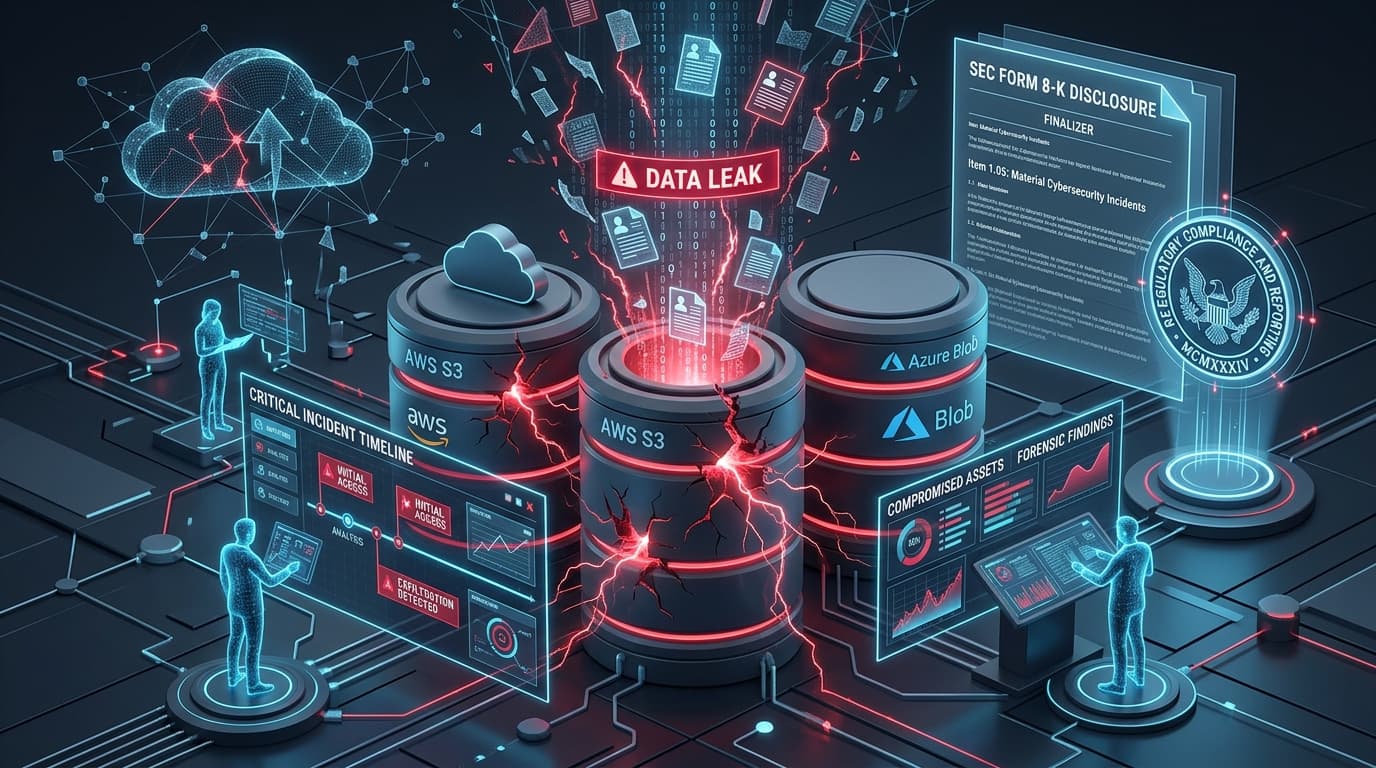
Executive Summary: The End of Ambiguous Breach Notification Timelines
In what marks the most consequential overhaul of state-level data security legislation in the United States this year, the State of California has enacted Senate Bill 446 (SB 446). Amending California Civil Code Section 1798.82, the legislation decisively dismantles the historic legal standard permitting companies to disclose cybersecurity intrusions "in the most expedient time possible and without unreasonable delay."
In its place, SB 446 establishes a rigid, statutory 30-calendar-day deadline for notifying impacted California residents following the discovery or reasonable belief of unauthorized acquisition of computerized personal data. Furthermore, for breaches impacting more than 500 California residents, organizations face an accelerated obligation to transmit a formal electronic disclosure to the California Attorney General's Office within 15 calendar days of notifying affected consumers.
As global regulatory frameworks converge—joining the U.S. SEC Form 8-K four-day material disclosure rule, the European Union's DORA 4-hour major incident reporting mandate, and India's DPDP Rules 2026—California's statutory hard cap eliminates corporate foot-dragging, imposing severe civil liability and regulatory enforcement for delayed disclosures.
Legislative Dissection: Key Provisions of California SB 446
Corporate compliance officers, General Counsel, and Chief Information Security Officers (CISOs) must navigate several foundational shifts enacted under the revised statute:
1. The Non-Negotiable 30-Day Notification Clock
Historically, corporate defendants justified multi-month disclosure delays by citing protracted third-party forensic investigations. Under amended Section 1798.82(a), the statutory clock starts at the moment the organization discovers, or has reasonable cause to believe, that personal data was accessed or acquired by an unauthorized third party:
"Any person or business that conducts business in California, and that owns or licenses computerized data that includes personal information, shall disclose any breach of the security of the system following discovery or notification of the breach... in no event later than 30 calendar days from the date of discovery."
The only recognized statutory tolling mechanism occurs if a verified federal, state, or local law enforcement agency determines that notification will impede a criminal investigation and submits a formal written request for delay.
2. The Accelerated 15-Day Attorney General Disclosure Portal
Under Section 1798.82(f), whenever an enterprise is required to notify more than 500 California residents simultaneously, it must submit an electronic copy of the notification to the California Attorney General's reporting portal no later than 15 calendar days after the date on which consumer notices are dispatched. The submission must detail:
- The precise date range and duration of the unauthorized network intrusion.
- The specific categories of personal information compromised (e.g., medical, financial, biometric, credentials).
- A sample copy of the consumer notice, excluding individual names and addresses.
- A summary of technical remediation steps taken to secure the compromised systems.
3. Expanded Scope of Personal Identifying Information (PII)
SB 446 significantly broadens the statutory definition of covered personal information to reflect emerging technological capabilities, explicitly incorporating:
- Neural and Behavioral Biometrics: Raw brain-computer interface telemetry, gait analysis, and behavioral keystroke dynamics utilized for authentication.
- Government-Issued Identifiers: Tax identification numbers, military service numbers, and passport credentials regardless of accompanying passwords.
- Cloud and Application Session Tokens: Cryptographic API keys, session cookies, and OAuth refresh tokens that grant persistent access to corporate cloud storage or personal email vaults.
Global Regulatory Alignment Matrix
Enterprise incident response playbooks must align California SB 446 with existing domestic and international incident reporting frameworks:
| Regulatory Framework | Primary Authority | Mandatory Notification Clock | Triggering Threshold |
|---|---|---|---|
| California SB 446 | California DOJ / State AG | 30 Days (Residents) / 15 Days (AG Portal) | Any unauthorized acquisition of PII (>500 records) |
| U.S. SEC Form 8-K Item 1.05 | U.S. Securities & Exchange Commission | 4 Business Days | Determination of material financial/operational impact |
| India DPDP Rules 2026 | Data Protection Board of India (DPBI) | Without Undue Delay (Formal 6-72h guidelines) | Personal data breach affecting Data Principals |
| EU DORA / NIS2 | European Supervisory Authorities (ESAs) | 4 Hours (Initial Warning) / 24 Hours (Detailed) | Major ICT-related operational disruptions |
Defensive Playbook: Engineering a Rapid Breach Response Pipeline
To ensure strict compliance with SB 446 while executing rigorous digital forensics, enterprise security teams must adopt a standardized four-phase operational model:
1. Automated Forensic Evidence Collection
Implement automated forensic triage scripts across multi-cloud environments to freeze evidence, dump memory artifacts, and catalog impacted database segments within hours of detection:
# Automated forensic evidence collection script for cloud workloads
echo "[*] Freezing compromised AWS EC2 instance volumes for forensic imaging..."
INSTANCE_ID="i-0abcd1234ef56789a"
VOLUME_ID=$(aws ec2 describe-instances --instance-ids $INSTANCE_ID --query "Reservations[0].Instances[0].BlockDeviceMappings[0].Ebs.VolumeId" --output text)

# Generate point-in-time snapshot with legal preservation tags
aws ec2 create-snapshot --volume-id $VOLUME_ID --description "SB446 Legal Hold Snapshot - Incident IR-2026-09" --tag-specifications "ResourceType=snapshot,Tags=[{Key=LegalHold,Value=True},{Key=Incident,Value=IR-2026-09}]"
2. Integrated Legal & Technical Escalation Matrix
Establish automated Security Information and Event Management (SIEM) alerts that immediately notify internal legal counsel and the privacy officer upon confirming any exfiltration of PII database columns.
Actionable Checklist for Enterprise General Counsel & CISOs
- Audit Encryption at Rest: Verify that sensitive data repositories utilize AES-256 with keys managed in dedicated Hardware Security Modules (HSMs) to qualify for statutory encryption safe harbors.
- Contractual Vendor Mandates: Update third-party vendor Master Services Agreements (MSAs) to mandate processor breach disclosure within 72 hours of compromise.
- Standardize Notification Templates: Pre-draft California-compliant consumer notice templates adhering to Section 1798.82(d) font size and title standards to prevent drafting delays.
- Establish AG Submission Channels: Validate corporate access to the California Department of Justice data breach reporting portal prior to any active incident.