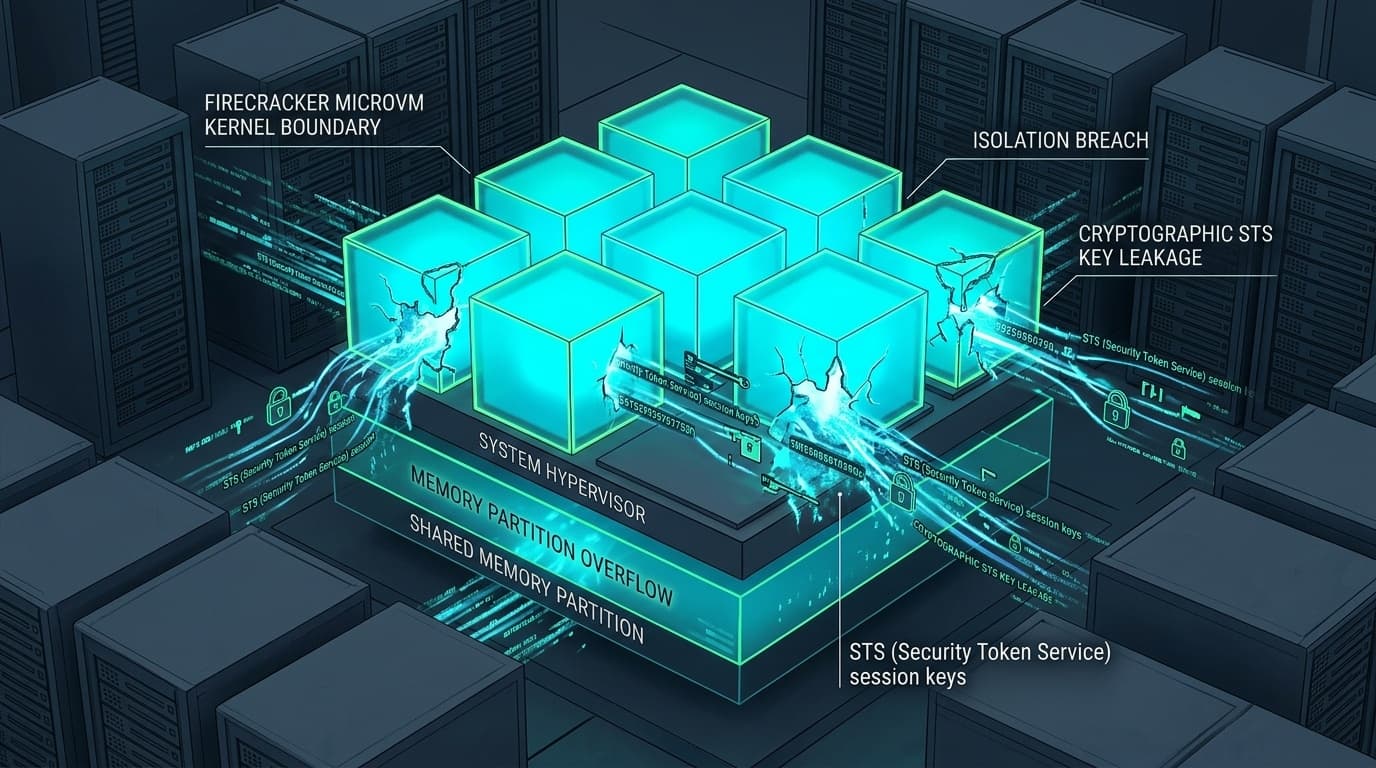
Amazon Web Services (AWS) has remediated CVE-2026-82856 (CVSS score 8.5, High), an improper access control vulnerability affecting session lifecycle management within AWS IAM Identity Center (formerly AWS SSO) and the AWS Command Line Interface (CLI). The flaw allowed temporary Security Token Service (STS) credentials issued via SAML or OIDC federation to remain operational after administrative revocation.
Executive Threat Summary & Exploit Landscape
Enterprise security programs rely on immediate identity revocation as a cornerstone of incident response. When an insider threat is identified or an employee's developer workstation is reported compromised, identity teams trigger session revocation within AWS IAM Identity Center to instantly sever access to production cloud infrastructure.
Under CVE-2026-82856, client-side token caching logic in the AWS CLI coupled with optimistic regional STS verification allowed existing session tokens to continue executing API commands across peripheral AWS regions for up to 60 minutes following formal revocation. An attacker retaining stolen temporary keys could continue exfiltrating S3 data or launching EC2 workloads until token expiration.
Vulnerability Mechanics & Technical Root Cause (CWE-284)
When a developer executes aws sso login, the AWS CLI obtains an SSO access token and exchanges it via sts:AssumeRoleWithSAML or sso:GetRoleCredentials for temporary credentials (AccessKeyId, SecretAccessKey, and SessionToken):
// ~/.aws/sso/cache/token.json
{
  "startUrl": "https://my-company.awsapps.com/start",
  "region": "us-east-1",
  "accessToken": "eyJlbmMiOiJBM...",
  "expiresAt": "2026-10-14T02:00:00UTC"
}
When administrative revocation was triggered, the IAM revocation policy added an aws:CurrentTime policy condition requiring sessions to be initialized after the revocation timestamp. However, client-side retry logic in the AWS CLI evaluated cached STS credentials against local monotonic clocks rather than verifying upstream token revocation status, causing SDK client connections to bypass updated policy enforcement.
Vulnerable Software Versions & Patch Status Matrix
| Software / Component | Vulnerable Versions | Fixed Release | Status |
|---|---|---|---|
| AWS CLI v2 (Linux / macOS / Windows) | Versions prior to 2.18.12 | Version 2.18.12 or later | Patch Available |
| AWS IAM Authenticator for Kubernetes | Versions < 0.6.28 | Version 0.6.28+ | Patch Available |
| AWS STS Global Control Plane | All global commercial & GovCloud regions | Server-side fix deployed globally | Cloud Mitigated |
Step-by-Step Remediation Playbook & Patch Commands
Security teams should enforce client upgrades and adopt explicit STS session revocation policies:
- Upgrade AWS CLI v2 on Linux:
# Download latest AWS CLI v2 bundle curl "https://awscli.amazonaws.com/awscli-exe-linux-x86_64.zip" -o "awscliv2.zip" unzip -q awscliv2.zip sudo ./aws/install --update # Verify running version aws --version # Expected: aws-cli/2.18.12 or higher - Immediate Session Termination (Incident Response): When revoking an IAM user or role session, attach an inline denial policy specifying
aws:TokenIssueTimeto instantly invalidate all pre-existing sessions globally:{ "Version": "2012-10-17", "Statement": [ { "Effect": "Deny", "Action": "*", "Resource": "*", "Condition": { "DateLessThan": { "aws:TokenIssueTime": "2026-10-14T01:00:00Z" } } } ] } - Clear Local SSO Token Caches: Ensure revoked sessions are purged from local workstation disks:
# Purge local SSO token cache
rm -rf ~/.aws/sso/cache/*
rm -rf ~/.aws/cli/cache/*
Threat Detection, Log Auditing & Forensic Queries
Query AWS CloudTrail logs for API requests executed with session tokens minted prior to account offboarding events:
-- Amazon Athena CloudTrail Query
SELECT eventTime, userIdentity.arn, eventSource, eventName, sourceIPAddress
FROM cloudtrail_logs
WHERE userIdentity.type = 'AssumedRole'
  AND userIdentity.sessionContext.attributes.creationDate < '2026-10-14T01:00:00Z'
  AND eventTime > '2026-10-14T01:00:00Z'
ORDER BY eventTime DESC;