Executive Overview
Delta Electronics, in coordination with the Cybersecurity and Infrastructure Security Agency (CISA), has disclosed a critical memory corruption vulnerability designated CVE-2026-74810 affecting its CNC HMI and CNC Soft software suites. Rated with a CVSS v3.1 base score of 9.4 (Critical), the flaw enables unauthenticated network adversaries on the factory shop-floor subnet to overwrite execution memory, achieving arbitrary code execution or subtly altering active Computer Numerical Control (CNC) machining program files.
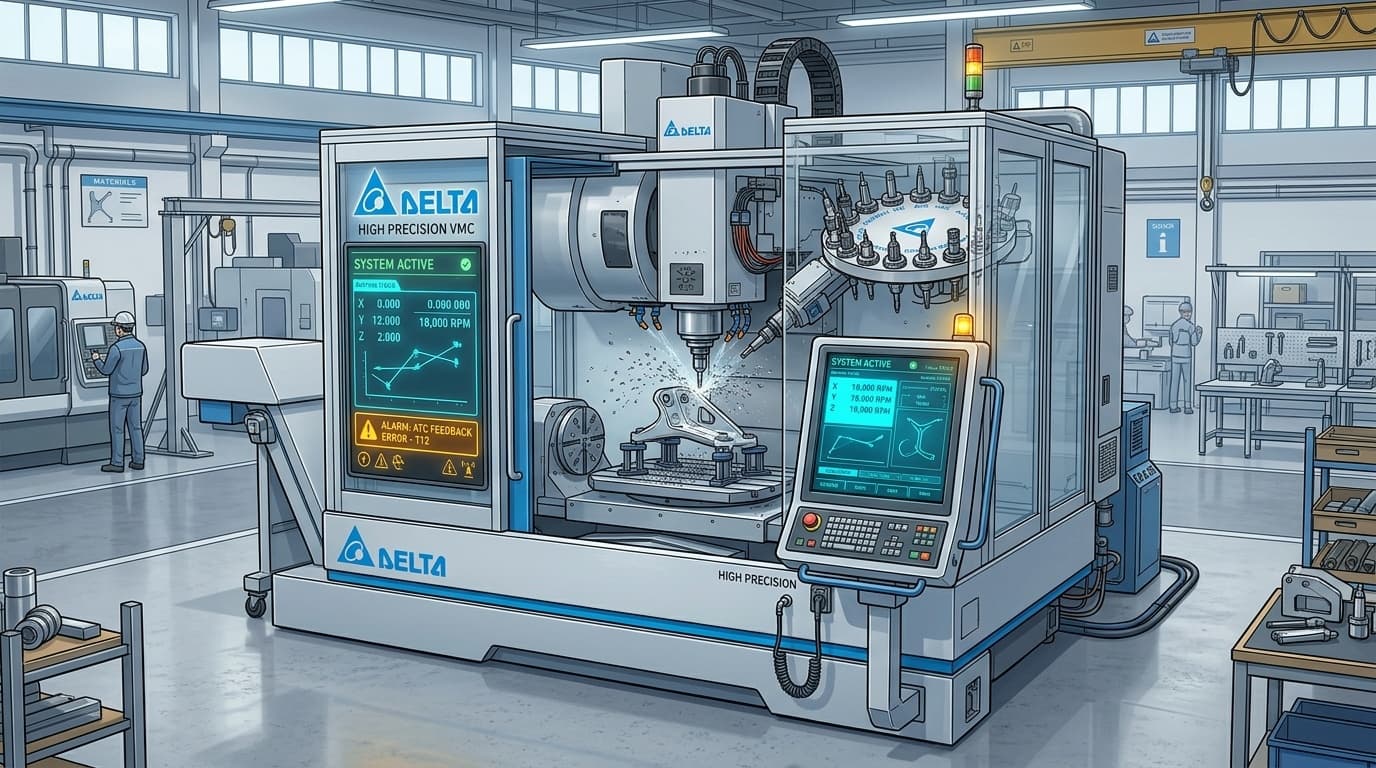
Delta Electronics CNC controllers drive 5-axis vertical machining centers (VMCs), CNC lathes, and automated laser cutters worldwide. These systems manufacture high-tolerance mechanical assemblies for civil aviation turbine blades, aerospace structural airframes, defense ordnance, and precision medical implants.
Vulnerability Dissection: Network G-Code Parser Buffer Overflow
Delta CNC HMI includes an integrated communication service listening on TCP port 8088 used by CAD/CAM software to remotely stream NC programs and monitor spindle telemetry. When the daemon receives a crafted NC block containing extended macro parameters (such as custom G-code or M-code subroutines), an unchecked buffer copy allows arbitrary byte overwrite past the allocated program memory buffer:
// Vulnerable snippet in Delta CNC G-code parser
void process_remote_nc_block(const char *block_data, size_t block_len) {
    char active_gcode_line[128];

    // VULNERABLE: Unbounded string copy allows overwrite of spindle speed registers and feed-rate variables
    strcpy(active_gcode_line, block_data);

    execute_nc_interpreter(active_gcode_line);
}
Physical Safety & Quality Sabotage Impact
Unlike standard IT malware that seeks data theft, exploiting machine tool controllers introduces severe physical sabotage hazards reminiscent of the historic Stuxnet incident:
- Subtle Dimensional Sabotage: By subtly altering toolpath coordinate offsets (e.g., shifting coordinate axes by 50 microns), an attacker can introduce invisible structural micro-fractures in aerospace components that pass initial visual inspection but fail catastrophically under operational stress.
- Physical Spindle Crash: Overriding rapid traverse rates (G00) or commanding the tool changer to engage the spindle during high-speed rotation causes explosive tool breakage, damaging multi-million dollar machining centers.
- Operator Physical Hazard: Overriding door interlock safety signals while high-pressure coolant and 24,000 RPM spindles are active poses acute physical danger to machine operators.
Remediation & Shop-Floor Defense-in-Depth
Industrial manufacturing plants operating Delta CNC equipment must implement the following protective measures:
- Apply Software Patches: Upgrade Delta CNC HMI to version
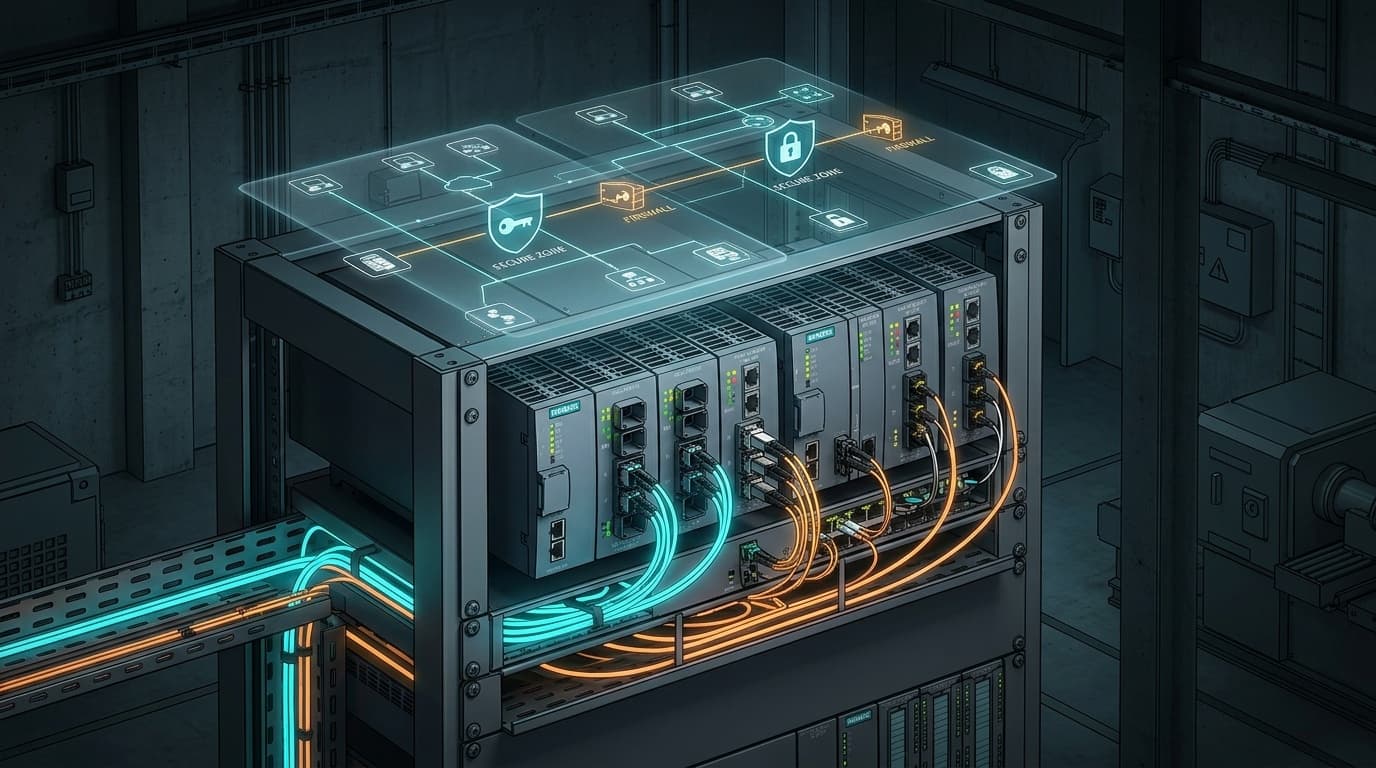
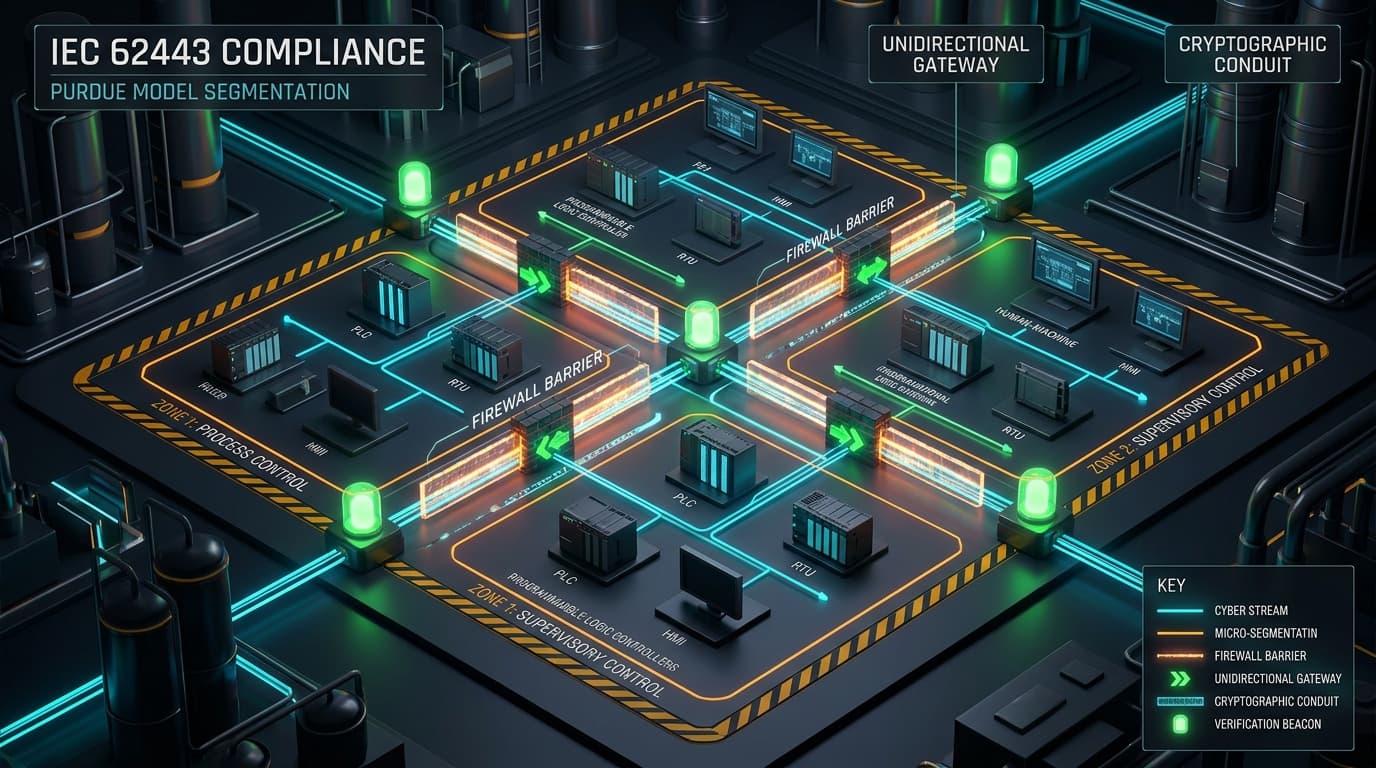
3.4.1or higher as instructed in Delta Advisory DE-2026-004. - Isolate CNC Subnets (Purdue Level 1/2): Place all machine tools and CNC workstations on dedicated manufacturing VLANs with no direct connectivity to corporate IT or guest Wi-Fi.
- Implement Physical Key Lockouts: Enable the physical program lock key on the CNC operator console, preventing remote network updates to NC memory without an operator physically inserting and turning the key.
- Post-Process Verification: Enforce offline cryptographic hash verification on all NC program files transferred to machine tools via air-gapped USB media or dedicated secure DNC servers.
Regulatory Mandates & Statutory Enforcement Matrix
| Governance Pillar / Directive | Regulated Scope & Entities | Mandated Compliance Deadline | Statutory Enforcement & Penalties |
|---|---|---|---|
| Core Operational Resilience | Banking, Cloud Providers & Financial Institutions | Immediate Mandatory Enforcement | Supervisory audits, business restrictions & statutory fines |
| Incident Disclosure & Telemetry | Critical IT & Third-Party Cloud Infrastructure | Strict Statutory Reporting Window | Regulatory inquiry and executive liability under statutory acts |
| Data Governance & Risk Management | Enterprise Data Fiduciaries & Cloud Processors | Rolling 180-Day Audit Baseline | Statutory financial penalties and remediation embargoes |
Step-by-Step Technical Audit & Compliance Verification Playbook
Enterprise compliance and security operations teams must verify technical controls and audit readiness:
- Verify Immutable Audit Log Retention in Cloud Storage:
# AWS S3: Verify Object Lock retention compliance mode on SIEM audit bucket aws s3api get-object-lock-configuration --bucket enterprise-siem-compliance-logs # Output must confirm ObjectLockEnabled: Enabled with Compliance mode - Audit Cloud Workload Encryption & IAM Privileges:
# Query Azure Key Vault or AWS KMS for automated annual key rotation status aws kms list-keys --query "Keys[*].KeyId" --output text | xargs -n 1 aws kms get-key-rotation-status --key-id - Automated Regulatory Incident Notification Dispatch Test:
# Automated compliance deadline alert trigger verification
import time, datetime

def verify_compliance_window(incident_epoch: float, max_hours: int = 6):
    elapsed = (time.time() - incident_epoch) / 3600
    if elapsed > max_hours:
        print(f"CRITICAL: Statutory notification window exceeded ({elapsed:.1f}h / {max_hours}h)")
    else:
        print(f"Within compliance window: {max_hours - elapsed:.1f}h remaining")

verify_compliance_window(time.time() - 3600)
Continuous Threat Monitoring & Log Auditing Queries
Monitor SIEM logs for anomalous privilege escalation and unapproved administrative role assumptions:
-- Query SIEM audit trail for high-privilege IAM policy updates
SELECT timestamp, user_identity, event_name, request_parameters
FROM cloud_audit_logs
WHERE event_name IN ('PutRolePolicy', 'AttachUserPolicy', 'CreateSecurityGroupRule')
  AND status = 'Success'
ORDER BY timestamp DESC
LIMIT 50;