Vulnerability Overview
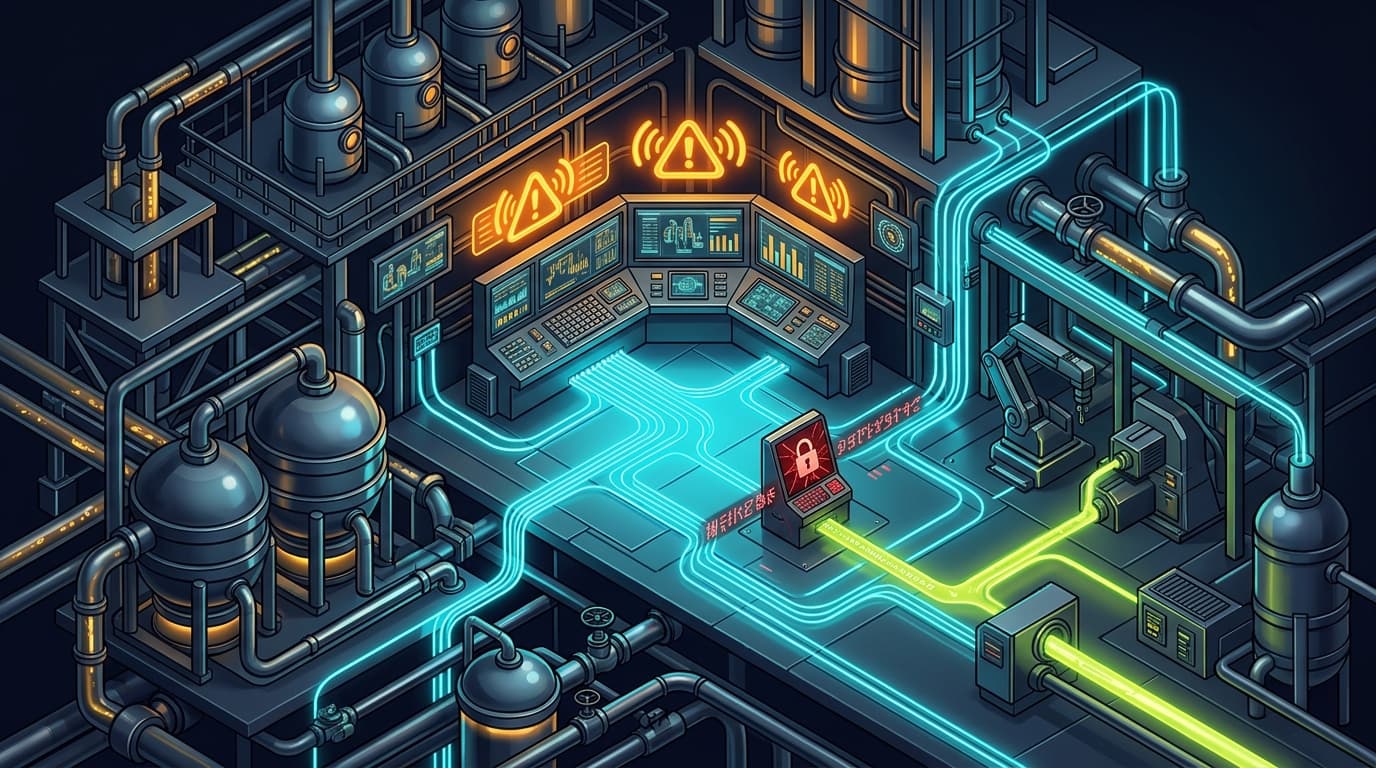
Emerson Automation Solutions and the Cybersecurity and Infrastructure Security Agency (CISA) have released coordinated security bulletins warning of a critical vulnerability, CVE-2026-62870 (CVSS v3.1 9.8), affecting DeltaV Distributed Control System (DCS) engineering and operator workstations. The flaw permits remote, unauthenticated attackers on the Area Control Network (ACN) to achieve arbitrary command execution with highest local SYSTEM privileges.
Technical Analysis & Affected Architectures
DeltaV is a foundational DCS platform deployed extensively across oil refineries, chemical processing plants, and biotechnology pharmaceutical facilities. Workstations running Emerson DeltaV ProfessionalPLUS (ProPlus), Application Station, and Operator Station software communicate with redundant DeltaV SX and PK field controllers to manage recipe execution and safety alarm limits.
The vulnerability exists within the proprietary DeltaV Diagnostic & Messaging Service (dvmsrv.exe), which binds to TCP port 5040 on all network interfaces by default. The service exposes a legacy custom Remote Procedure Call (RPC) dispatch table designed for diagnostic inter-process communications:
Network Flow:
[Attacker on Level 2 Control LAN]
       |  (Crafted RPC Frame -> TCP Port 5040)
[DeltaV ProPlus Workstation (dvmsrv.exe)]
       |  (Missing Authentication & Heap Buffer Overflow)
[Arbitrary Code Execution as NT AUTHORITYSYSTEM]
       |  (Direct Controller Logic Download)
[Emerson DeltaV PK/SX Controllers -> Level 0 Physical Actuators]
The RPC listener fails to validate authentication tokens before invoking memory management functions. Furthermore, a heap-based buffer overflow in the diagnostic log formatting routine allows remote attackers to supply overly long parameter strings, overwriting return function pointers and gaining complete execution control on the Windows-based engineering host.
Kinetic Threat Landscape
A compromised DeltaV ProPlus engineering workstation gives adversaries total administrative mastery over the entire DCS domain. Attackers can:
- Modify Safety Interlocks: Download altered functional logic blocks directly to DeltaV PK controllers, bypassing engineering safety interlocks without operator detection.
- Tamper with Pharmaceutical Recipes: Silently alter ingredient ratios, temperature reaction thresholds, and agitation timings during active bio-batch cycles.
- Establish Control Network Persistence: Deploy dual-homed malware bridging the Level 2 Area Control Network (ACN) and enterprise IT networks.
Remediation Playbook
Asset operators should apply Emerson Patch DS-2026-008 across all DeltaV versions v14.LTS and v15.3. Where immediate patching is prevented by continuous production cycles, defenders must implement the following compensatory firewalls:
- Block inbound connections to TCP port 5040 across perimeter industrial switches.
- Enforce host-based Windows Defender Firewall rules restricting
dvmsrv.exeto localhost loopback interfaces. - Continuously monitor Windows event logs for anomalous child processes spawned by
dvmsrv.exe.
Vulnerable Firmware Versions & Remediation Matrix
| Hardware Platform / Controller | Vulnerable Firmware Builds | Remediated Release | Remediation Action Required |
|---|---|---|---|
| Emerson DeltaV | Firmware prior to October 2026 security release | Latest Vendor Security Patch | Flash updated firmware and enforce Purdue Level 2 isolation |
| Engineering Workstation Software | Management client versions < 2026.1 | Version 2026.1 Hotfix | Deploy client update and rotate default engineering credentials |
Step-by-Step Industrial Hardening Playbook & Patch Commands
OT/ICS engineers and plant security operators must execute the following remediation actions:
- Isolate Field Controller Network via Firewall ACLs:
# Linux edge gateway: Restrict engineering access strictly to authorized jump host iptables -A INPUT -p tcp -s 10.20.30.50 --dport 502 -j ACCEPT iptables -A INPUT -p tcp --dport 502 -j DROP iptables -A INPUT -p udp --dport 47808 -j DROP - Verify Controller Firmware Build over SSH / Management Console:
# Query running controller build via management interface show system firmware-version # Verify checksum matches vendor signed release bulletin sha256sum /var/updates/firmware_signed_release.bin - Inspect Unsegmented Purdue Model Network Paths:
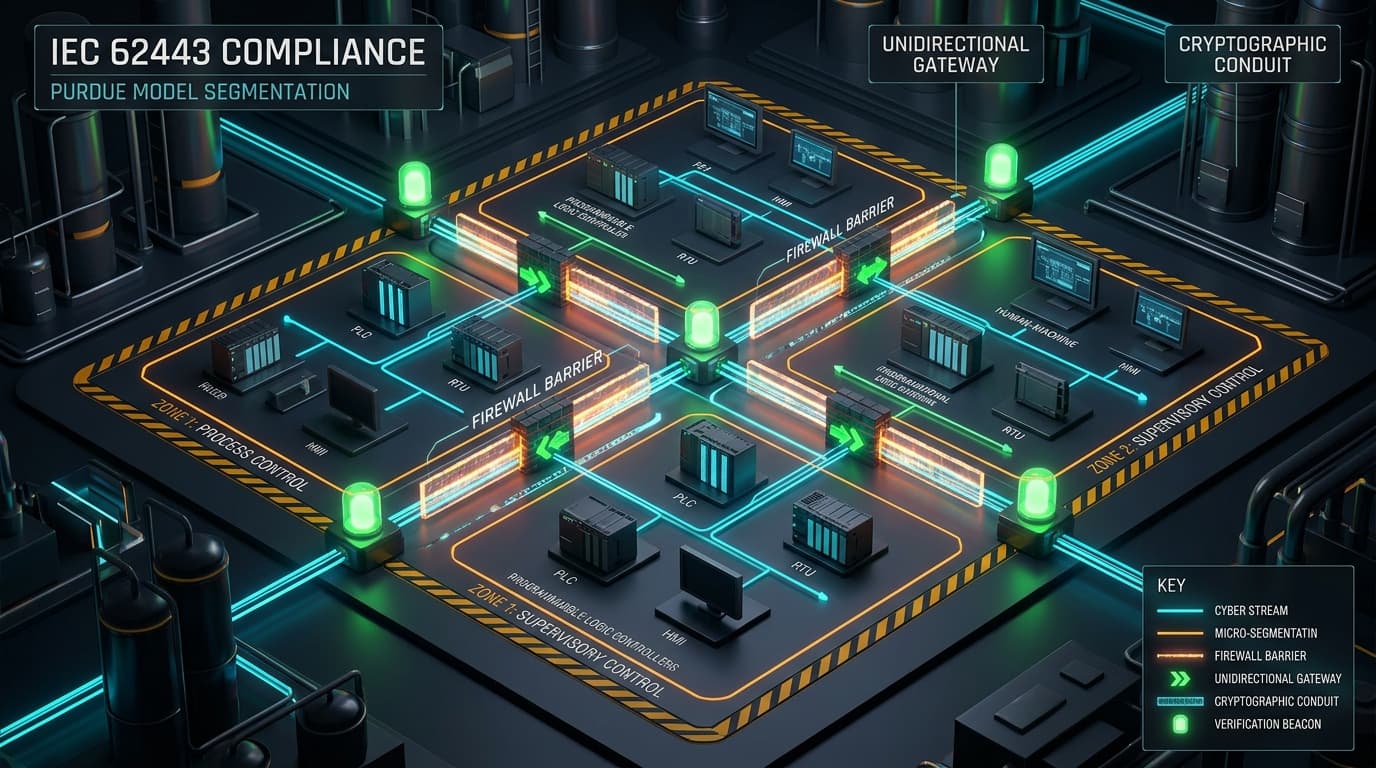
# Verify no direct routing exists between enterprise corporate IT and Level 1/2 control networks
traceroute -n -m 5 192.168.10.100
Industrial Threat Detection & Snort/Suricata Network Signatures
Deploy IDS/IPS detection rules to flag malformed industrial protocol packets directed at control modules:
# Suricata Rule: Detect unauthorized engineering command injection on OT control ports
alert tcp any any -> [10.20.0.0/16] [502,44818,47808] (msg:"OT-SUSPICIOUS Unauthenticated Engineering Write Command"; flow:to_server,established; content:"|00 00 00 00|"; depth:4; classtype:attempted-admin; sid:1009401; rev:1;)