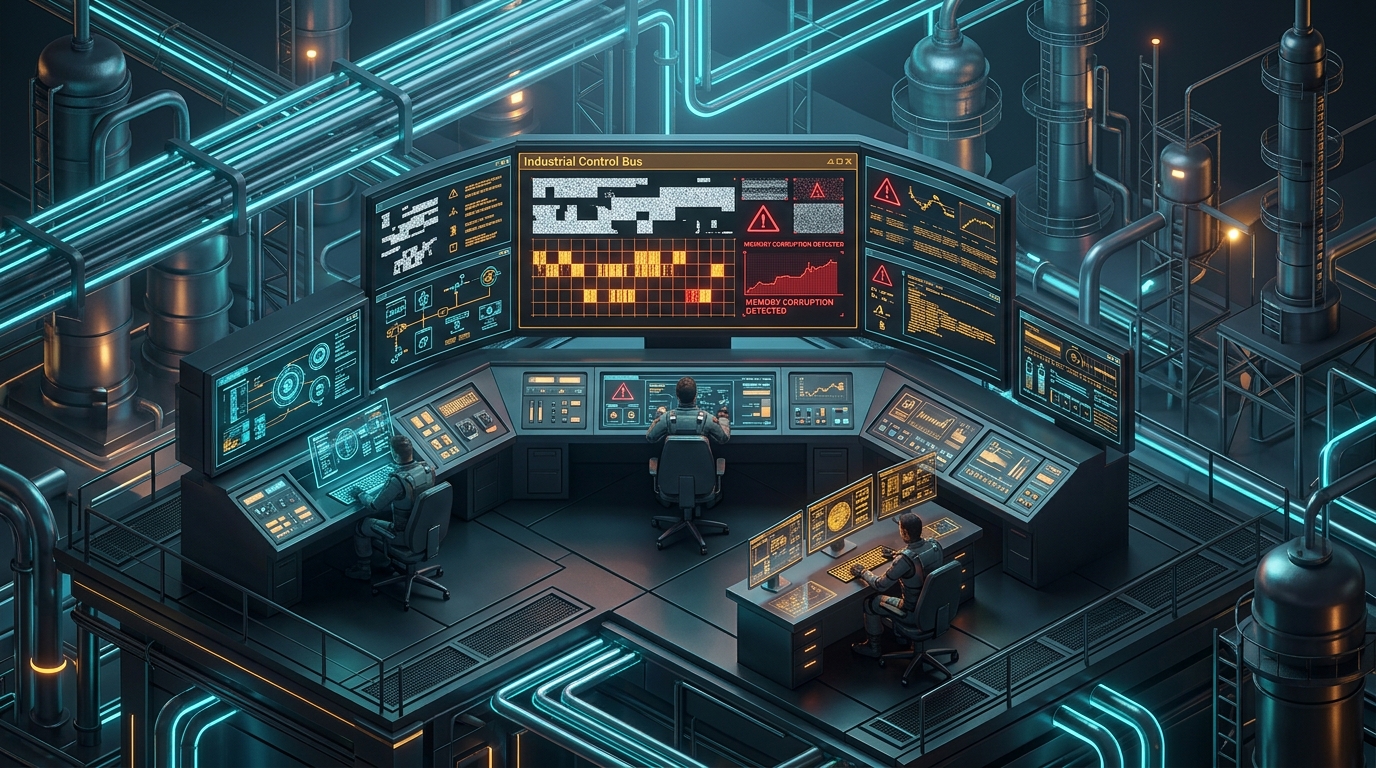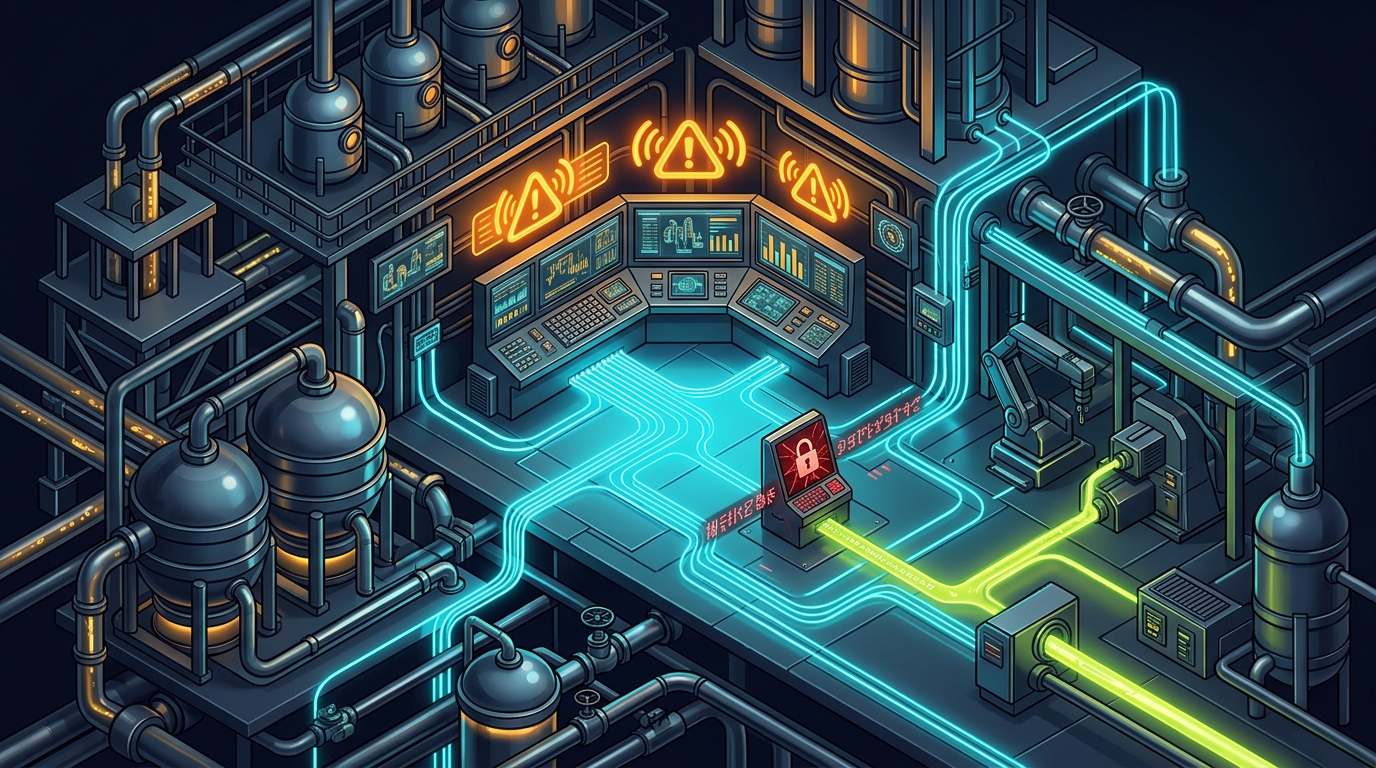
The Cybersecurity and Infrastructure Security Agency (CISA), in conjunction with global process automation giant Emerson, has issued an emergency ICS advisory (ICSA-26-283-02) addressing a maximum-severity authentication flaw (CVE-2026-46801, CVSS 9.8) in Emerson DeltaV Distributed Control Systems (DCS). The defect enables remote, unauthenticated adversaries on the industrial network to execute system commands directly on DeltaV operator and engineering workstations controlling continuous manufacturing plants.
Technical Root Cause: Missing Authentication for Critical Function (CWE-306)
Emerson DeltaV is one of the most widely deployed distributed control systems in critical process industries, governing production across pharmaceutical batch manufacturing, refining, and power generation. Operator consoles and engineering workstations communicate with DeltaV hardware controllers via dedicated proprietary diagnostic protocols.
According to the CISA notification, the DeltaV Workstation Management Service (DeltaVDiagSvc.exe) listens on TCP port 18507 to collect hardware health metrics and manage remote software updates. The service omitted authentication validation on its internal command dispatch handler:
// Disassembly representation of vulnerable DeltaVDiagSvc RPC handler
int HandleDiagnosticCommand(SOCKET s, char* recv_buffer) {
    uint32_t cmd_opcode = *(uint32_t*)(recv_buffer);
    // Defect: Command dispatcher executes RPC functions without checking user session tokens
    if (cmd_opcode == CMD_EXECUTE_SYSTEM_SCRIPT) {
        char* script_path = recv_buffer + 4;
        return SystemExecutionHelper(script_path); // Executes with SYSTEM privileges
    }
    return 0;
}
An adversary on the local control network (Purdue Level 2/3) can transmit an unauthenticated packet sequence to port 18507 and execute arbitrary executables or scripts under the high-privileged NT AUTHORITY\SYSTEM account.
Operational and Life Safety Impact (IEC 62443 Framework)
Under IEC 62443-3-3, distributed control systems must prevent unauthorized modifications to process loops. Compromising a DeltaV workstation allows adversaries to manipulate continuous production variables:
- Chemical Batch Recipe Manipulation: Attackers can tamper with chemical formulation parameters and drug batch temperatures while displaying false "normal" metrics to human operators.
- Controller Logic Tampering: From an engineering workstation, threat actors can download rogue logic routines directly into DeltaV PK or SX controllers.
- Disabling Safety Systems: Suppressing safety interlocks creates catastrophic overpressure or thermal runaway risks in petrochemical facilities.
Remediation Playbook for Industrial Asset Owners
- Apply Vendor Hotfix: Immediately apply Emerson DeltaV Security Patch KBA-2026-088 across all operator, engineering, and application workstations.
- Enforce Boundary Firewall Filtering: Block ingress and egress traffic on TCP port 18507 across all inter-zone conduits.
- Zone & Conduit Segmentation: Isolate DeltaV control network segments strictly within Purdue Level 2 VLANs, disallowing direct routability from corporate enterprise networks.