Check PointTwo 9.8 Check Point VPN flaws put the perimeter back on the emergency patch queue
Two CVSS 9.8 Check Point VPN certificate flaws can enable unauthenticated RCE. Identify exposed gateways, apply hotfixes and review the perimeter now.
1,485 articles
Check PointTwo CVSS 9.8 Check Point VPN certificate flaws can enable unauthenticated RCE. Identify exposed gateways, apply hotfixes and review the perimeter now.
DevSecOpsGitLab pushed emergency patches for CVE-2026-85706, an unauthenticated CVSS 10.0 path traversal flaw in the repository commits API that allows remote file extraction.
Threat IntelWiz Research caught threat actors chaining two JFrog Artifactory flaws (CVE-2026-42018 & CVE-2026-42016) to forge admin tokens and compromise enterprise software repositories.
Agentic AIPaperCut shipped consolidated maintenance updates after automated AI agent swarms compromised over 440 print management servers, bypassing earlier emergency hotfixes.
Gov / DefenseSonicWall disclosed two actively exploited SMA1000 flaws on 1 September; CISA set a 5 September federal deadline. The harder problem is proving an appliance you cannot instrument is clean.
FortinetFortinet's emergency hotfix for CVE-2026-35616 blocked the attack path without fixing the flaw, and the complete patch that followed needed its own re-release.
CISA added 15 CVEs to the KEV catalog in six working days, including exploited flaws in LiteLLM and Kestra — AI tooling that most asset inventories never see.
CiscoTwelve fresh entries hit the Known Exploited Vulnerabilities catalog, covering Citrix NetScaler, Cisco FMC, Fortinet FortiOS, Adobe Commerce, N-able N-central and Chrome.
GoogleGroup-IB uncovered a major evolution in the Gigabud banking trojan, which uses Android enterprise Work Profiles to isolate tampered banking apps and blind client security checks.
Trellix says APT28 routed command-and-control through filen.io during a three-day European phishing burst. Here is the behavioural detection logic that catches it when reputation cannot.
MicrosoftMicrosoft’s September 2026 rollup addresses 973 CVEs, including two elevation-of-privilege bugs — in the Windows Update Stack and ALPC — confirmed under active attack.
LinuxSAP and Onapsis disclosed OVERPASS (CVE-2026-44756), a maximum-severity kernel flaw in Extended Passport processing enabling unauthenticated root RCE on enterprise ERP hosts.
Threat IntelCISA issued an emergency KEV addition for CVE-2026-86218, an unauthenticated static code injection flaw in N-able N-central RMM servers actively exploited against MSP networks.
Palo AltoA newly catalogued authentication bypass in Palo Alto Networks PAN-OS lets an unauthenticated attacker reach management functionality. Here is the exposure and the fix.
CrowdStrikeCrowdStrike revealed Slim Spider, a financially motivated cybercrime group abusing cloud IMDS credentials to penetrate Brazilian instant payment (Pix) and crypto custody systems.
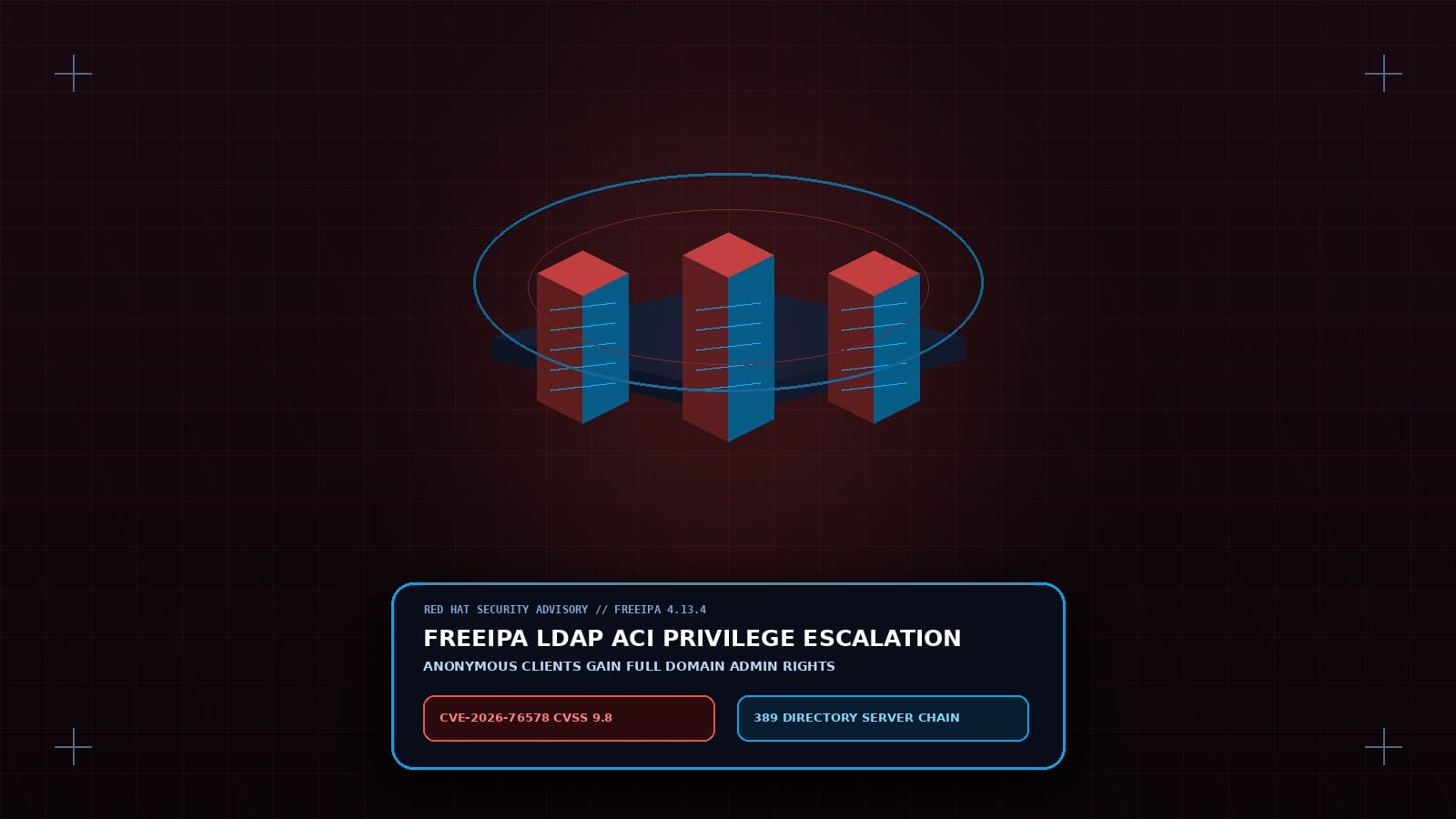
LinuxRed Hat patched CVE-2026-76578 (CVSS 9.8) in FreeIPA and 389 Directory Server, where an LDAP Access Control Instruction flaw allowed unauthenticated clients to create permanent domain admins.
DevSecOpsA self-propagating worm compromised hundreds of popular npm packages, harvesting cloud keys and CI tokens then using them to publish further poisoned releases.
Four high-severity vulnerabilities in widely deployed enterprise software — including a build-artefact repository that sits directly in the software supply chain.
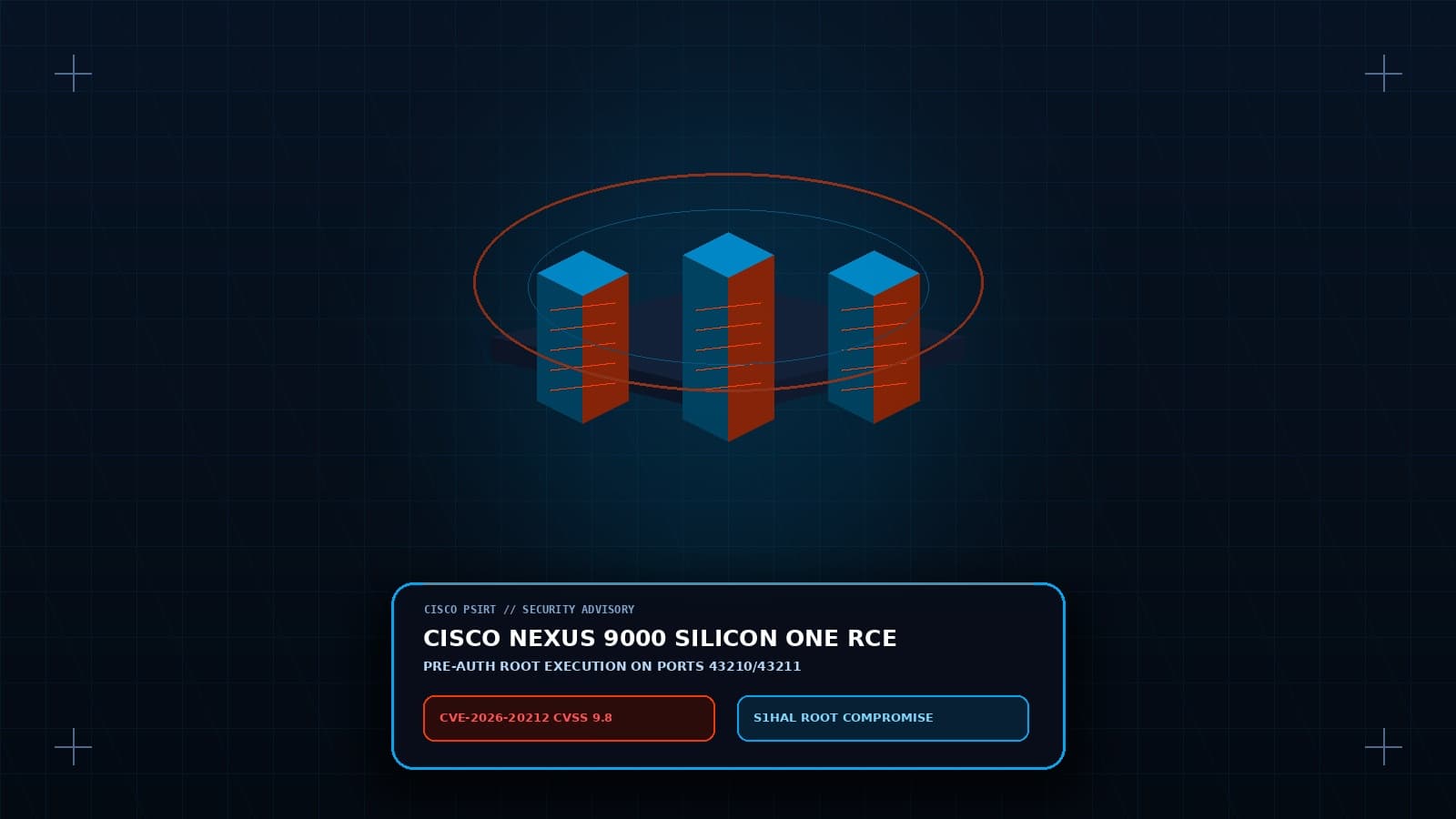
Cisco disclosed CVE-2026-20212 (CVSS 9.8), an unauthenticated root code execution flaw on Silicon One-based Nexus 9000 datacenter switches due to open debugging ports.
Threat IntelResearchers logged 7.4 million infected devices between January and June 2026 — a 27% jump — as the infostealer market matured into a fully automated criminal supply chain.
Adversary-in-the-middle phishing now defeats standard MFA at industrial scale. Microsoft tracked a single April 2026 campaign spanning 26 countries in 72 hours.