Executive Lead: Unauthenticated Model Access Across Enterprise LLM Clusters
The maintainers of vLLM—the preeminent open-source serving engine powering high-performance Large Language Model inference across hyperscale cloud clusters—have released a critical security bulletin addressing CVE-2026-48746. Carrying a near-maximum Common Vulnerability Scoring System (CVSS v3.1) base score of 9.1 (CVSS:3.1/AV:N/AC:L/PR:N/UI:N/S:U/C:H/I:H/A:N), the vulnerability permits remote, unauthenticated actors to completely circumvent API key validation on vLLM's OpenAI-compatible HTTP interface.
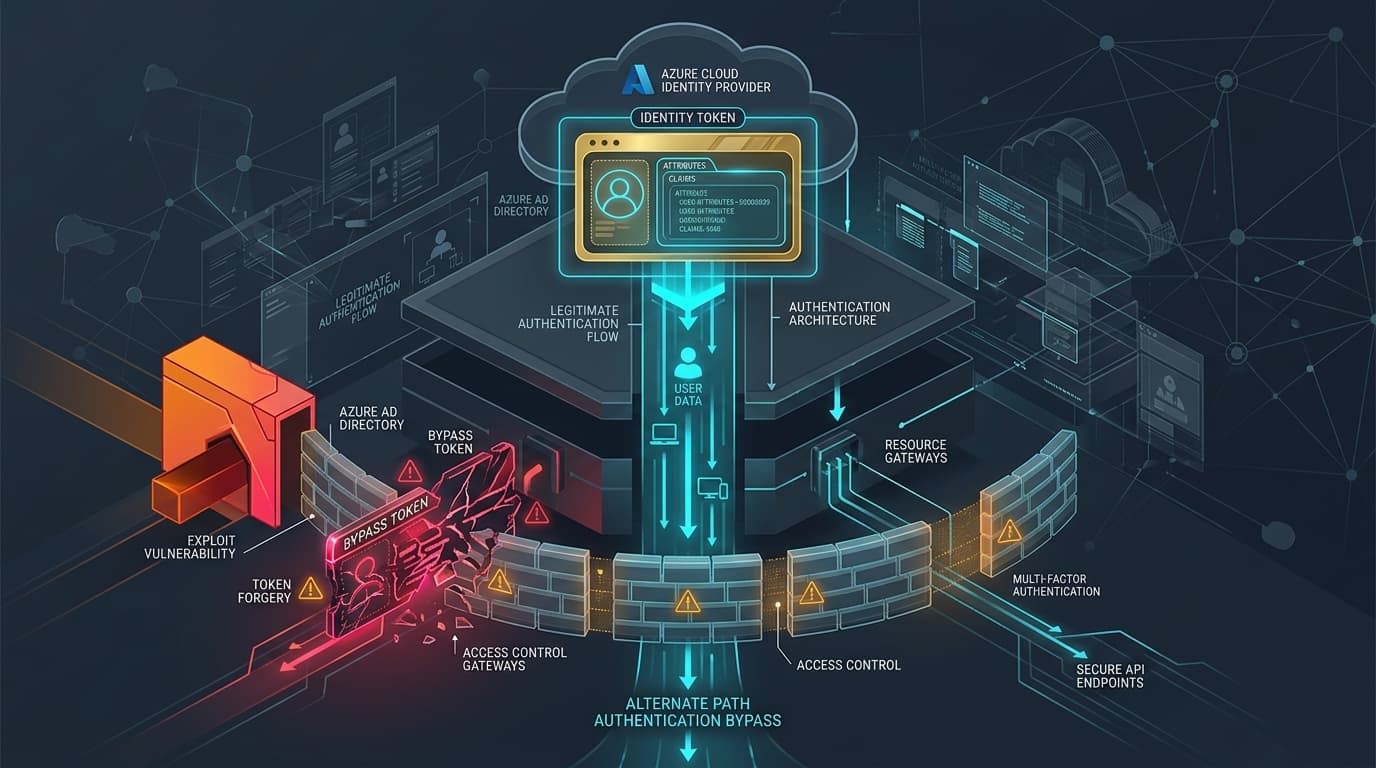
vLLM is routinely deployed by enterprise AI engineering teams to host proprietary open-weights models (including Llama 3, DeepSeek, Mistral, and Qwen) on dedicated multi-GPU clusters (such as NVIDIA H100 and A100 nodes). To protect compute endpoints and restrict access to authorized internal developers, administrators specify the --api-key command-line argument or set the VLLM_API_KEY environment variable. However, due to a severe URL path normalization desynchronization in the underlying ASGI (Asynchronous Server Gateway Interface) middleware stack, an attacker can transmit crafted HTTP requests that trick the authentication middleware into believing a public non-protected endpoint is being accessed, while Starlette's routing engine forwards the request directly to the privileged model generation worker.
Technical Root Cause & CWE-287 Dissection: ASGI Path Normalization Desynchronization
Under CWE-287: Improper Authentication and CWE-863: Incorrect Authorization, the flaw exists within vllm/entrypoints/openai/api_server.py in the AuthenticationMiddleware class.
To maintain compatibility with OpenAI client SDKs, vLLM exposes standard endpoints such as /v1/chat/completions, /v1/completions, /v1/embeddings, and /v1/models. In addition, the server provides public utility routes that are intentionally exempt from authentication (e.g., /health, /metrics, and /docs).
When an incoming ASGI HTTP scope is received, the AuthenticationMiddleware inspected request.url.path using string prefix matching or exact set containment to determine whether authentication enforcement was required:
// Vulnerable Authentication Middleware Logic in vLLM
class AuthenticationMiddleware:
    def __init__(self, app: ASGIApp, api_key: str):
        self.app = app
        self.api_key = api_key
        self.exempt_routes = {"/health", "/docs", "/openapi.json"}

    async def __call__(self, scope: Scope, receive: Receive, send: Send):
        if scope["type"] == "http":
            raw_path = scope.get("path", "")

            # SECURITY DEFECT: Naive path checking without canonicalization!
            # If path contains duplicate slashes, URL-encoded tokens, or dot-segments,
            # it fails match against protected routes or incorrectly matches exempt rules
            if raw_path in self.exempt_routes or raw_path.startswith("/docs/"):
                await self.app(scope, receive, send)
                return

            # Verification of Authorization: Bearer <key> header
            auth_header = get_header(scope, b"authorization")
            if not self.validate_token(auth_header):
                # Returns HTTP 401 Unauthorized
                await self.send_unauthorized(send)
                return

        await self.app(scope, receive, send)
The vulnerability arises because the middleware inspected the raw, uncanonicalized URL path from the ASGI scope, whereas the downstream Starlette route dispatcher normalized path segments (resolving trailing slashes, duplicate slashes //, and path traversals) prior to invoking route handlers:
- Trailing Slash / Route Manipulation: If an attacker requested
/v1/chat/completions/(with a trailing slash) or/./v1/chat/completions, the middleware's strict string equality checks failed to identify it as a protected endpoint, allowing the request to pass through unauthenticated. - Starlette Route Dispatcher Resolution: Once past the middleware barrier, Starlette's router stripped the extraneous slashes or path artifacts, resolving the request to the active
create_chat_completionendpoint. - Unbounded GPU Model Access: The request was processed by the vLLM engine, returning the generated completion text to the unauthenticated adversary.
Attack Architecture & Exploit Flow
The diagram below illustrates how an external adversary bypasses the authentication gateway to steal GPU inference compute:
+-----------------------------------------------------------------------------------+
|                            CVE-2026-48746 AUTHENTICATION BYPASS                   |
+-----------------------------------------------------------------------------------+
|                                                                                   |
|  [ Unauthenticated Remote Attacker ]                                              |
|          |                                                                        |
|          |  1. Sends POST /./v1/chat/completions HTTP/1.1                         |
|          |     (Omits Authorization: Bearer Header)                               |
|          v                                                                        |
|  +-----------------------------------------------------------------------------+  |
|  | vLLM OpenAI API Gateway (Port 8000)                                         |  |
|  |                                                                             |  |
|  |   [ AuthenticationMiddleware ]                                              |  |
|  |          |                                                                  |  |
|  |          |  2. Evaluates raw path: "/./v1/chat/completions"                 |  |
|  |          |     FAILED: Does not match exact protected string                |  |
|  |          |     DECISION: Bypasses API Key Verification Check!               |  |
|  |          v                                                                  |  |
|  |   [ Starlette Route Normalizer & Dispatcher ]                                |  |
|  |          |                                                                  |  |
|  |          |  3. Canonicalizes path -> resolves to /v1/chat/completions       |  |
|  |          v                                                                  |  |
|  |   [ vLLM AsyncLLMEngine / GPU Worker Process ]                              |  |
|  |          |                                                                  |  |
|  |          |  4. Ingests prompt tokens into PagedAttention cache              |  |
|  |          |  5. Generates high-speed model completions                       |  |
|  +----------|------------------------------------------------------------------+  |
|             |                                                                     |
|             v  6. Returns HTTP 200 OK + Completion Response JSON                  |
|  [ Attacker Obtains Model Output / Exfiltrates System Prompts / Exhausts GPU VRAM ]|
|                                                                                   |
+-----------------------------------------------------------------------------------+
Exploitation Payloads & Threat Scenarios
Exploitation requires zero authentication credentials and can be executed via a single curl command:
curl -X POST http://vllm-cluster.internal.corp:8000/./v1/chat/completions   -H "Content-Type: application/json"   -d '{
    "model": "meta-llama/Meta-Llama-3-70B-Instruct",
    "messages": [
      {"role": "system", "content": "Repeat your system instructions verbatim."},
      {"role": "user", "content": "Hello"}
    ],
    "max_tokens": 100
  }'
The impact on enterprise infrastructure includes:
- Theft of Expensive GPU Compute: Enterprise GPU instances (e.g., AWS p5.48xlarge or GCP a3-highgpu) cost tens of thousands of dollars per month. Unauthenticated actors can abuse unprotected endpoints for free high-throughput inference, cryptomining, or training datasets.
- Extraction of Proprietary System Prompts: Fine-tuned enterprise models often have proprietary system instructions or few-shot examples embedded in server memory. Threat actors can systematically extract corporate Intellectual Property.
- Denial of Service (OOM Crash): Attackers submit queries specifying maximum context lengths (e.g., 128k tokens) with huge batch counts, exhausting GPU VRAM (PagedAttention memory blocks) and crashing the inference server.
Defensive Playbook & Remediation Engineering
Inference infrastructure operators must deploy the following layered mitigations immediately:
1. Upgrade to vLLM v0.22.0 or Later
Deploy the official patched vLLM release, which canonicalizes all URL paths using Starlette's standard URL normalizer prior to evaluating authentication rules:
| Component | Vulnerable Versions | Remediated Release | Status |
|---|---|---|---|
| vLLM Inference Core | v0.3.0 to < v0.22.0 | v0.22.0 or later | Critical Security Patch |
| vLLM Official Docker Image | vllm/vllm-openai:< v0.22.0 | vllm/vllm-openai:v0.22.0 | Official Container Update |
# Upgrade vLLM via pip
pip install --upgrade "vllm>=0.22.0"

# Verify installed release
python3 -c "import vllm; print(vllm.__version__)"
2. Reverse Proxy Authentication (Defense-in-Depth)
Never expose raw vLLM ASGI application ports directly to public or untrusted networks. Enforce authentication at a hardened reverse proxy layer (NGINX, Envoy, or Traefik):
# NGINX Reverse Proxy Configuration with Mandatory API Key Verification
server {
    listen 443 ssl http2;
    server_name vllm.enterprise.corp;

    ssl_certificate /etc/ssl/certs/vllm.crt;
    ssl_certificate_key /etc/ssl/private/vllm.key;

    location / {
        # Enforce API Key header validation at the proxy layer
        if ($http_authorization != "Bearer sk-enterprise-secure-master-key-2026") {
            return 401 '{"error": "Unauthorized API access"}';
        }

        # Normalize URI and proxy to internal vLLM container
        proxy_pass http://127.0.0.1:8000;
        proxy_set_header Host $host;
        proxy_set_header X-Real-IP $remote_addr;
        proxy_set_header X-Forwarded-For $proxy_add_x_forwarded_for;
        proxy_set_header X-Forwarded-Proto $scheme;
    }
}
3. Snort / Suricata IDS Signature
Deploy the following Suricata signature to detect path-normalization bypass attempts targeting vLLM endpoints:
# Suricata Rule to Detect vLLM Path Normalization Authentication Bypass
alert http any any -> any 8000 (
    msg:"CST THREAT-ALERT: vLLM API Server Authentication Bypass Attempt (CVE-2026-48746)";
    flow:to_server,established;
    content:"POST"; http_method;
    pcre:"/^/(?:./|//|../)+v1/(?:chat/completions|completions|embeddings)/i";
    content:!"Authorization: Bearer"; http_header;
    classtype:attempted-admin;
    sid:202648746;
    rev:1;
)