Executive Lead & Threat Context
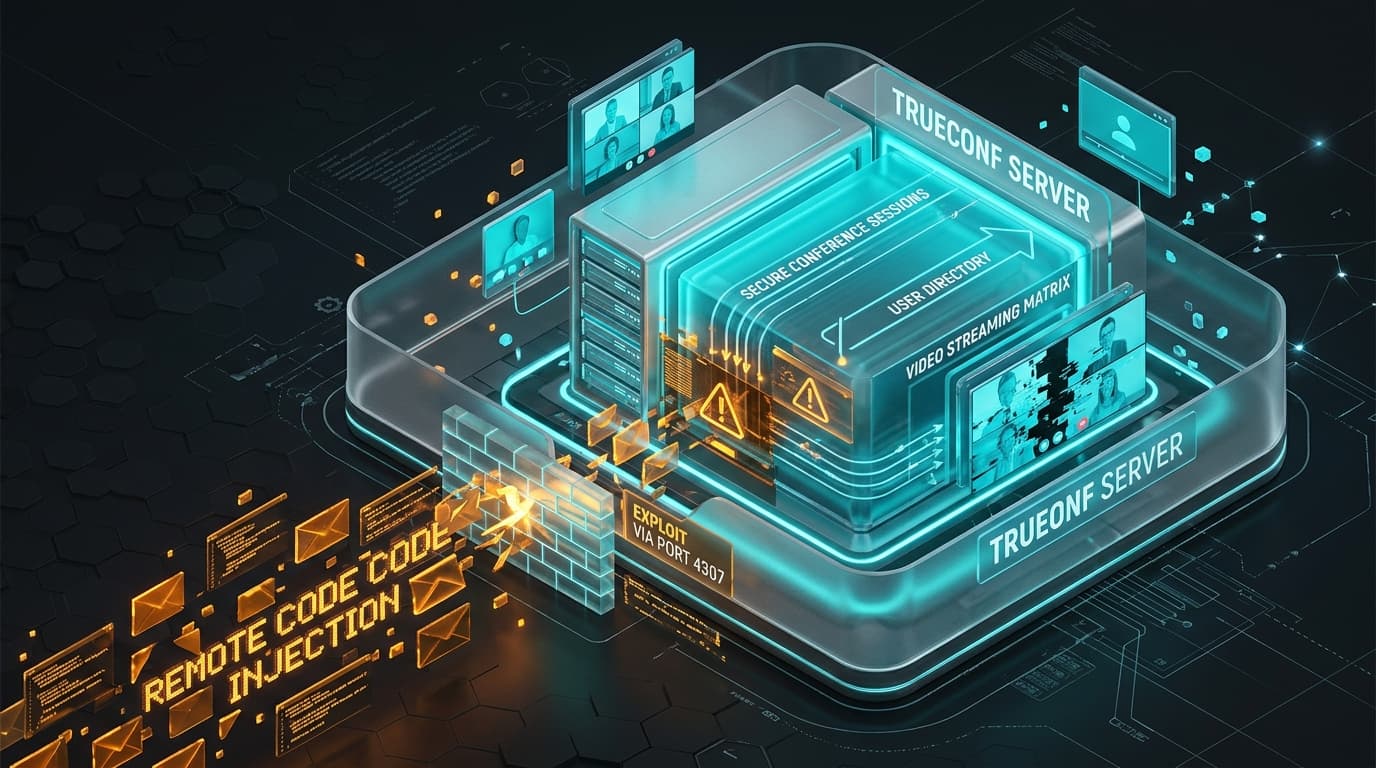
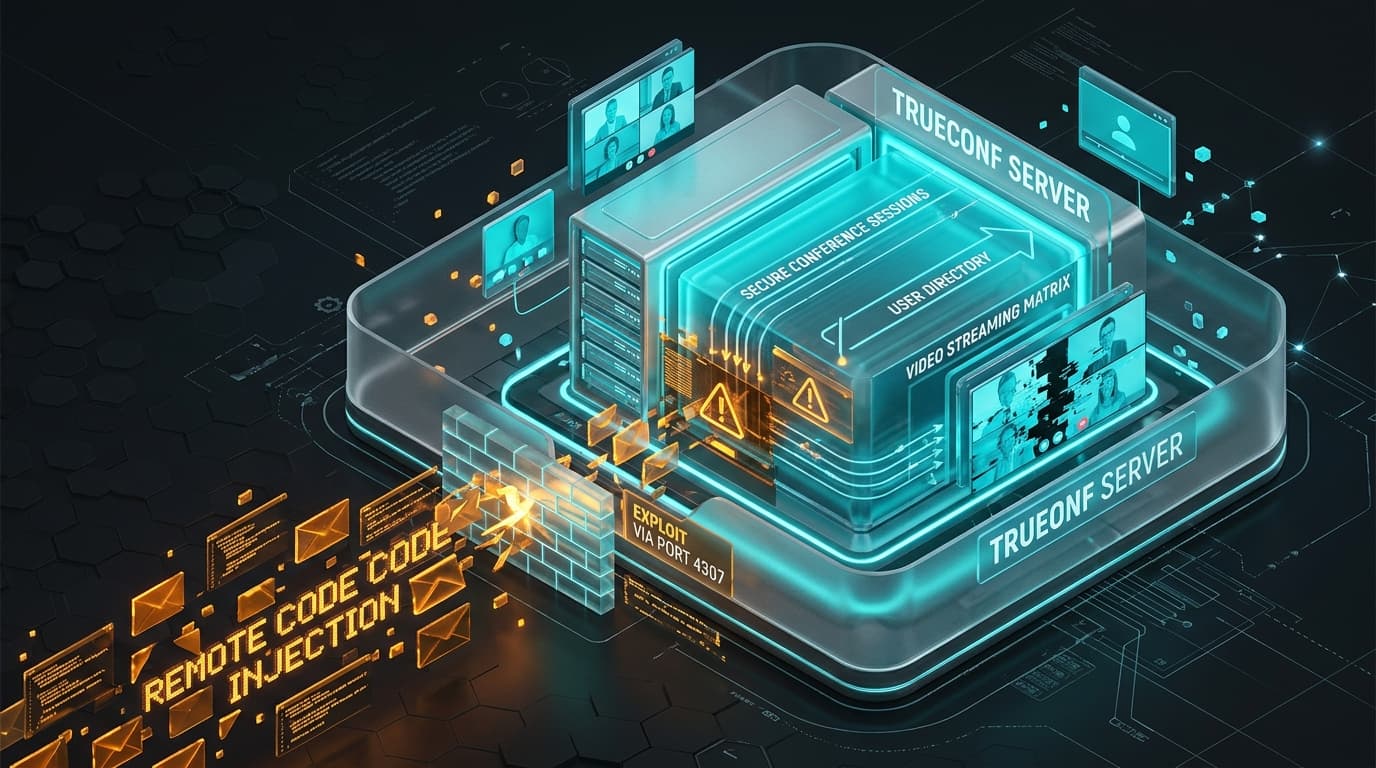
The Cybersecurity and Infrastructure Security Agency (CISA) has added CVE-2026-72529 to its Known Exploited Vulnerabilities (KEV) catalog, warning of active, targeted in-the-wild exploitation against TrueConf Server—an enterprise unified communications, video conferencing, and team collaboration platform widely deployed across government departments, defense contracting entities, and critical infrastructure operators.
Classified under CWE-306 (Missing Authentication for Critical Function) and assigned a critical severity score of CVSS 9.8, the vulnerability permits unauthenticated remote threat actors to bypass administrative authentication controls entirely. By transmitting specially crafted HTTP requests to the TrueConf Server web management interface, attackers can invoke privileged API functions, create rogue administrator accounts, manipulate server configurations, intercept active audio/video feeds, and download stored conference recordings containing proprietary intellectual property and classified intelligence.
Vulnerability Mechanics & Endpoint Dissection
TrueConf Server exposes an integrated administrative web console and REST API service handling user administration, SIP/H.323 gateway management, and conference recording lifecycle. In vulnerable software iterations preceding version 5.4.3, the internal routing middleware deployed an inconsistent access control policy between static frontend assets and dynamic administrative API endpoints located beneath /api/v1/system/ and /admin/api/.
The root architectural flaw lies in how the routing filter processed incoming request paths with specific header parameters. An unauthenticated attacker could supply an HTTP request with an alternate path prefix or manipulate the X-TrueConf-Auth-Context and Authorization request headers to trick the authentication filter into treating the request as an internally forwarded request originating from the local loopback interface (127.0.0.1):
POST /api/v1/system/users/admin HTTP/1.1
Host: uc.enterprise.corp:443
User-Agent: Mozilla/5.0 (Security-Audit)
X-Forwarded-For: 127.0.0.1
X-TrueConf-Internal-Bypass: true
Content-Type: application/json
Content-Length: 142

{
  "username": "sec_audit_backup",
  "password": "AttackerControlledPassword123!",
  "role": "SuperAdministrator",
  "email": "backup@adversary.domain"
}
Because the API dispatcher evaluated the request prior to validating the session token, the dispatcher dispatched the payload directly to the user management controller, creating a new superuser account without prompting for MFA or administrative session tokens.
Threat Actor Campaigns & Post-Exploitation Activity
Threat intelligence telemetry reveals that advanced threat groups targeting defense supply chains and state agencies have actively leveraged CVE-2026-72529 for covert corporate and government espionage:
- Silent Conference Eavesdropping: Upon obtaining administrative access, adversaries inject invisible recording bots into sensitive virtual conference rooms, recording encrypted WebRTC and RTSP streams directly from the server mixer.
- Archive Exfiltration: Attackers invoke the backup and storage synchronization APIs to bulk-download gigabytes of archived video meetings, shared whiteboards, and transferred files stored in local directories.
- Arbitrary System Command Execution: Leveraging the administrative backup script configuration utility, attackers register malicious post-backup maintenance hooks, executing arbitrary batch and PowerShell scripts with
NT AUTHORITY\SYSTEMprivileges on the Windows host. - Lateral Pivot to Active Directory: In environments where TrueConf Server is integrated with Microsoft Active Directory or LDAP for Single Sign-On (SSO), adversaries extract cached LDAP service account credentials from the server configuration registry, facilitating broader domain enumeration.
Affected Software Builds
| Product Family | Vulnerable Releases | Patched Release Baseline | Status |
|---|---|---|---|
| TrueConf Server for Windows | Versions prior to 5.4.3 | TrueConf Server 5.4.3 | Active In-the-Wild Exploitation |
| TrueConf Server for Linux | Versions prior to 5.4.3 | TrueConf Server 5.4.3 | Active In-the-Wild Exploitation |
| TrueConf Enterprise | Branch 5.x prior to 5.4.3 | TrueConf Enterprise 5.4.3 | Security Hotfix Deployed |
Defensive Playbook & Incident Response Procedures
Organizations running TrueConf Server must execute the following remediation steps immediately:
1. Upgrade to TrueConf Server 5.4.3
Download and install the official security release TrueConf Server 5.4.3 from the vendor repository. The updated installer replaces the vulnerable API routing subsystem, enforces cryptographically verified JWT tokens on all system management endpoints, and eliminates header-based loopback trust.
2. Restrict Administration Interfaces to Dedicated Management VLANs
Block public internet exposure of TrueConf Server administrative ports:
# Linux iptables: Restrict admin port access to internal management subnet only
iptables -A INPUT -p tcp -s 10.100.50.0/24 --dport 443 -j ACCEPT
iptables -A INPUT -p tcp -s 10.100.50.0/24 --dport 4307 -j ACCEPT
iptables -A INPUT -p tcp --dport 4307 -j DROP
3. Forensic Audit of User Accounts and Meeting Logs
Review the TrueConf Server user database and audit logs for indicators of unauthorized administrator account creation:
# Inspect TrueConf Server user database via CLI utility
trueconf-server-cli --list-admins

# Search TrueConf access logs for unauthorized access to /api/v1/system/
grep -E "POST /api/v1/system/" /var/log/trueconf/access.log | grep -v "10.100.50."
4. Rotate LDAP/AD Service Account Credentials
If TrueConf Server was bound to Active Directory via LDAP, assume the stored service account credential may have been exposed. Immediately rotate the Active Directory service account password and restrict the account's domain permissions.