Executive Threat Advisory: Multi-Agency Warning on Industrial PLC Targeting
A coalition of United States federal defense and regulatory agencies—including the Cybersecurity and Infrastructure Security Agency (CISA), the National Security Agency (NSA), the Federal Bureau of Investigation (FBI), the Department of Energy (DOE), and the Environmental Protection Agency (EPA)—has issued a high-priority joint cybersecurity advisory (AA26-231A).
The advisory warns that advanced persistent threat (APT) groups and financially motivated threat actors are actively scanning for, connecting to, and manipulating Siemens S7 Series Programmable Logic Controllers (PLCs) deployed across critical infrastructure sectors. Affected installations include water and wastewater treatment facilities, electrical transmission substations, chemical processing facilities, and automated automotive manufacturing plants.
Threat Actor Methodology & AI-Assisted Protocol Abuse
Telemetry documented in AA26-231A indicates a concerning evolution in industrial exploitation tooling. Rather than relying on bespoke, complex malware frameworks (such as Stuxnet or Industroyer), adversaries are leveraging commoditized, AI-assisted tooling:
- Reconnaissance & Shodan/Censys Scanning: Threat actors query public internet scanning engines to identify exposed industrial endpoints listening on TCP Port 102 (the standard port for ISO-on-TCP and Siemens proprietary S7comm / S7comm-plus protocols).
- AI-Generated Automation Scripts: Attackers utilize AI code generation models to craft customized Python scripts that integrate open-source communication libraries like
snap7. These scripts are packaged into deceptive tools that mimic legitimate network diagnostic utilities. - Direct Memory Read/Write Operations: By negotiating an S7 session over port 102 with controllers lacking password protection or using legacy S7-300/400 hardware, the scripts issue direct read and write commands against the PLC's internal Data Blocks (DB), Memory Registers (M), Inputs (I), and Outputs (Q).
- Process Manipulation: Attackers alter operational setpoints—such as chemical dosage levels, valve pressure thresholds, or motor RPM limits—causing physical equipment wear, safety shutdown trips, or environmental contamination.
Hardware Impact: Legacy vs. Modern S7 Platforms
The blast radius varies significantly based on the controller generation and security configuration:
| Platform Family | Protocol Supported | Vulnerability Exposure | Required Hardening Action |
|---|---|---|---|
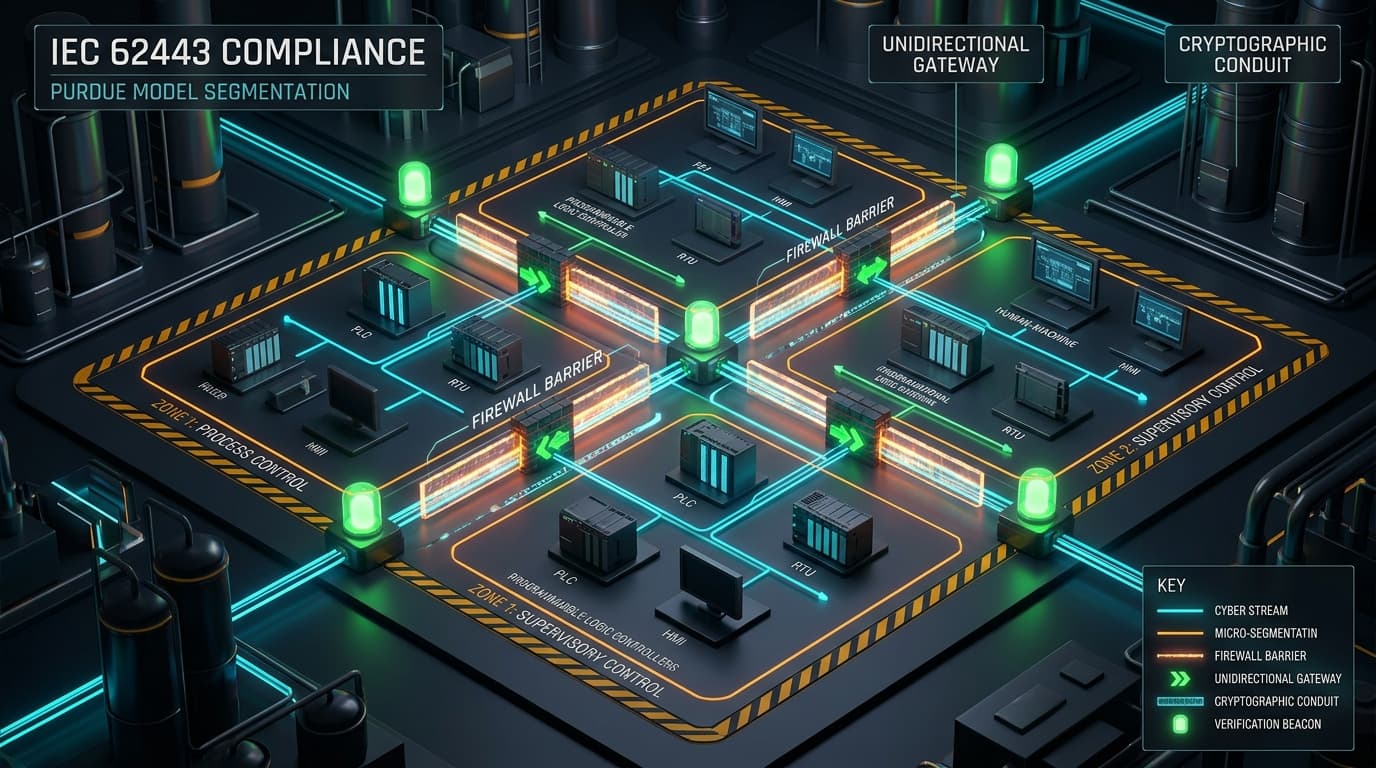
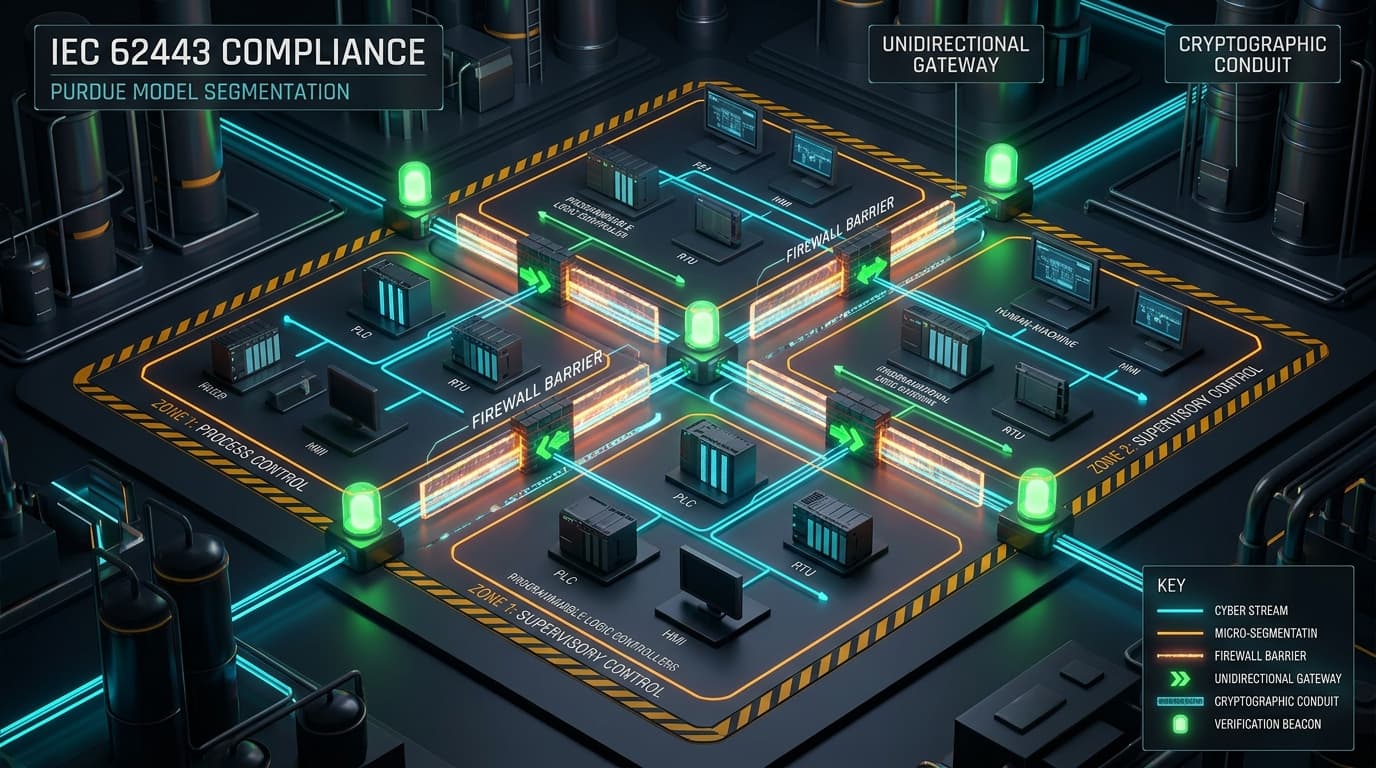
| Siemens S7-300 / S7-400 | Legacy S7comm (Cleartext) | Critical: Lacks cryptographic authentication; any client reaching port 102 can read/write memory blocks directly. | Migrate to modern hardware or isolate behind external IEC 62443 security conduits and industrial firewalls. |
| Siemens S7-1200 / S7-1500 | S7comm-plus (Authenticated / Encrypted) | Moderate to High: Protected if "Secure PG/PC and HMI Communication" is enabled; vulnerable if legacy compatibility or Web Server is exposed. | Enforce firmware v3.0+, enable Access Level protection (Full Protection / Write Protection), and disable HTTP/S web server if unneeded. |
Remediation Playbook & IEC 62443 Industrial Hardening
Industrial cybersecurity teams and plant automation engineers must implement the following mandatory controls:
1. Eliminate Direct Internet Exposure (Purdue Model Level 1/2)
Under no circumstances should an industrial PLC have a public IP address or be directly reachable from external networks. S7 controllers must reside exclusively in isolated Cell/Area Zones (Purdue Level 1/2), separated from corporate IT (Level 4/5) by industrial demilitarized zones (IDMZs):
# Example Cisco Industrial Ethernet (IE) switch ACL blocking inbound Port 102 from non-engineering hosts
ip access-list extended OT-FIREWALL-FILTER
 permit tcp host 10.200.1.50 any eq 102
 deny tcp any any eq 102
 permit ip any any
2. Enable Controller Access Protection in TIA Portal
Within Siemens TIA Portal engineering software:
- Navigate to PLC Properties -> Protection & Security.
- Select Full protection (no access without password) or Read protection to prevent unauthorized engineering clients from writing logic.
- Enable Secure PG/PC Communication utilizing digital certificates.
3. Snort / Zeek Network Monitoring for S7comm Anomalies
Deploy network intrusion detection signatures to monitor industrial traffic traversing OT conduits:
alert tcp $EXTERNAL_NET any -> $PLC_NET 102 (msg:"CST THREAT DESK - Unauthorized S7comm Write Job Command (0x05)"; flow:to_server,established; content:"|03 00|"; depth:2; content:"|32 01|"; distance:5; content:"|05|"; distance:2; classtype:attempted-admin; sid:202623101; rev:1;)