Executive Lead: Centralized Industrial Edge Takeover Flaw Disclosed
Siemens ProductCERT has issued a critical security advisory, cataloged under SSA-503852, addressing a maximum-severity authentication bypass vulnerability in Siemens Industrial Edge Management (IEM). Designated as CVE-2026-18963, the vulnerability carries a Common Vulnerability Scoring System (CVSS v3.1) base score of 9.1 (CVSS:3.1/AV:N/AC:L/PR:N/UI:N/S:U/C:H/I:H/A:H).
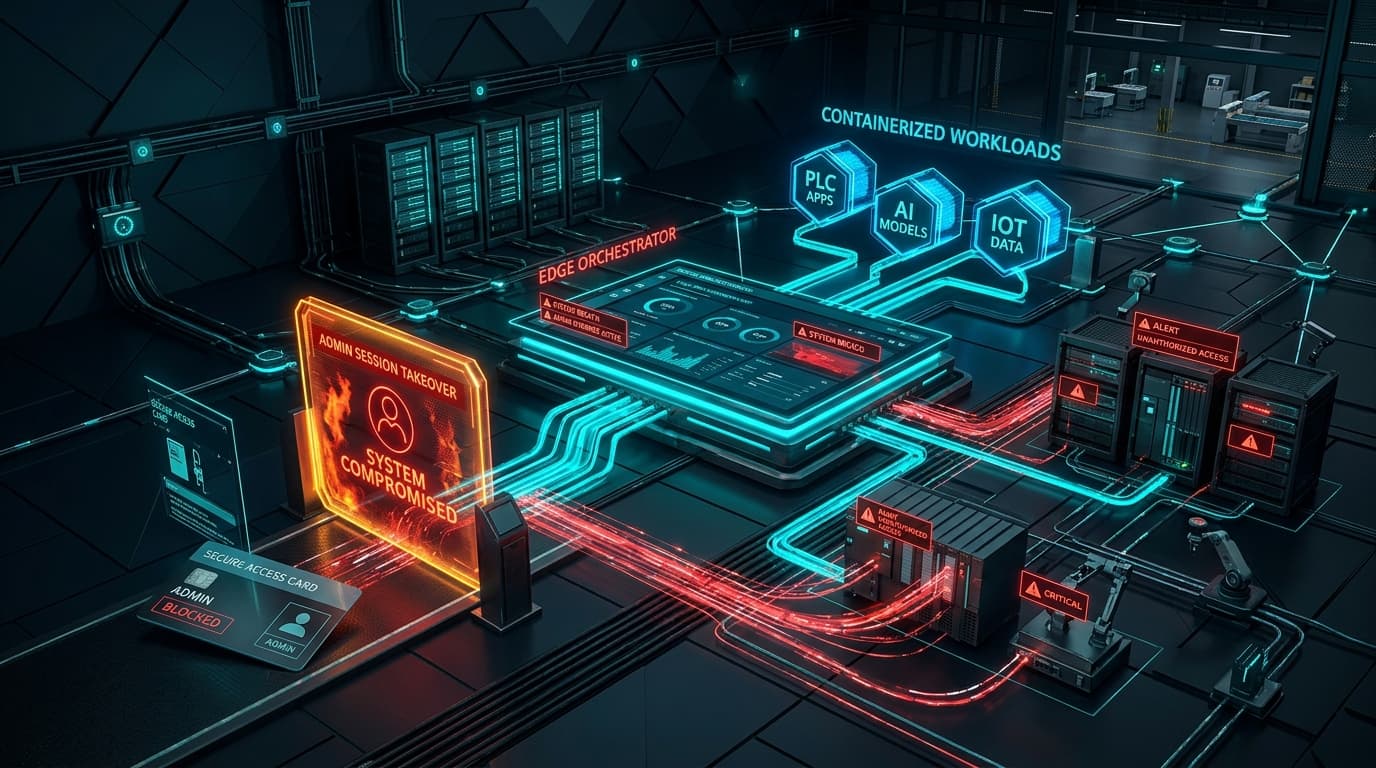
Siemens Industrial Edge Management serves as the central orchestration and management platform for industrial manufacturing environments. It coordinates, monitors, and deploys containerized applications, machine vision models, and telemetry microservices across fleets of connected Industrial Edge Devices (IEDs), including Siemens SIMATIC IPCs and edge gateways installed on physical production lines. The flaw enables an unauthenticated, remote attacker with network access to the IEM web interface to force a password reset for any registered account—including system administrators—completely bypassing email verification. With full administrative privileges, attackers can take over the orchestration cluster, distribute malicious container payloads directly onto factory floor edge devices, and disrupt physical industrial processes.
Technical Root Cause & CWE-287 Dissection: Flawed State Transition in Password Reset Workflow
Under CWE-287: Improper Authentication, the defect resides in the identity and access management layer integrated into Siemens Industrial Edge Management, which leverages an embedded distribution of Keycloak (specifically within the reset-credentials flow in keycloak-services).
When a user requests a credential reset, the authentication state machine initializes an AuthenticationSessionModel. In a standard workflow, the user inputs their username, triggering an email with an action token that the user must click to authenticate their identity before setting a new password.
However, security researchers identified a state desynchronization vulnerability in the form action execution handler. By transmitting a specially formatted sequence of HTTP POST requests manipulating session execution tokens and query parameters, an external attacker could advance the authentication execution state directly from ACTION_ENTER_USERNAME to ACTION_RESET_PASSWORD without triggering or validating the required action token:
// Conceptual Execution Flaw in Credential Reset State Handler
public void processResetCredentials(AuthenticationFlowContext context) {
    String actionId = context.getHttpRequest().getDecodedFormParameters().getFirst("action_id");
    AuthenticationSessionModel authSession = context.getAuthenticationSession();

    // SECURITY DEFECT: Missing state assertion check ensuring that the action token
    // was verified before transitioning to the password update execution phase
    if ("update-password".equals(actionId)) {
        // Allows direct bypass of email token verification check!
        authSession.setAuthNote("VERIFIED_IDENTITY", "true");
        context.success();
        return;
    }

    // Standard email dispatch logic...
}
By specifying the target administrator username (e.g., admin or iem_superadmin) and submitting the forged state progression payload, the system prompts the attacker to enter a new password immediately. Once submitted, the administrator's password is overwritten in the underlying database, granting the attacker unhindered access to the Industrial Edge Management administration console.
Industrial OT Architecture & Purdue Model Exploit Trajectory
The diagram below illustrates how an attacker leverages CVE-2026-18963 to compromise Purdue Level 3 operations and bridge into Level 1/2 control networks:
+-----------------------------------------------------------------------------------+
|                        CVE-2026-18963 INDUSTRIAL TAKEOVER TRAJECTORY              |
+-----------------------------------------------------------------------------------+
|                                                                                   |
|  [ Remote Adversary on Enterprise / Operations Network ]                          |
|          |                                                                        |
|          |  1. Dispatches crafted HTTP request to IEM Reset Credentials Endpoint  |
|          |     Bypasses email verification token -> Sets new Admin Password       |
|          v                                                                        |
|  +-----------------------------------------------------------------------------+  |
|  | Siemens Industrial Edge Management (IEM) Server (Purdue Level 3)            |  |
|  |                                                                             |  |
|  |   [ Keycloak Identity Layer: CVE-2026-18963 Exploit Accepted ]              |  |
|  |   [ Compromised Account: SuperAdministrator ]                               |  |
|  |          |                                                                  |  |
|  |          |  2. Deploys Rogue Edge Container via IEM App Publishing Pipeline |  |
|  |          v                                                                  |  |
|  |   [ Secure TLS Edge Management Conduit ]                                    |  |
|  +----------|------------------------------------------------------------------+  |
|             |                                                                     |
|             +-----------------------+-----------------------+                     |
|             |                       |                       |                     |
|             v                       v                       v                     |
|  +---------------------+  +---------------------+  +---------------------+        |
|  | Industrial Edge     |  | Industrial Edge     |  | Industrial Edge     |        |
|  | Device: SIMATIC IPC |  | Device: SIMATIC IPC |  | Device: Edge Gateway|        |
|  | Assembly Line 1     |  | Chemical Reactor 2  |  | Substation Node 4   |        |
|  |                     |  |                     |  |                     |        |
|  | - Rogue Docker App  |  | - Overwrites Modbus |  | - Intercepts SCADA  |        |
|  | - S7 Communication  |  |   Register Limits   |  |   Telemetry Streams |        |
|  +---------------------+  +---------------------+  +---------------------+        |
|             |                       |                       |                     |
|             v                       v                       v                     |
|  [ Direct Manipulation of Level 1 PLCs: S7-1500 / S7-1200 Controllers & Drives ]  |
+-----------------------------------------------------------------------------------+
Operational Impact: Supply Chain & Factory Floor Sabotage
The operational consequences of an IEM takeover within an IEC 62443 industrial automation landscape are catastrophic:
- Rogue Container Distribution: IEM acts as an internal Docker registry and app store for the entire factory floor. With administrative access, attackers can publish weaponized container images that IEM automatically pushes and runs across dozens or hundreds of edge devices.
- Direct PLC Communication Manipulation: Industrial Edge Devices connect directly to SIMATIC S7-1200, S7-1500, and ET 200SP controllers via the S7 Communication protocol or OPC UA. A rogue edge application can issue unauthorized write commands to PLC memory, altering process setpoints, overriding temperature thresholds, and causing physical equipment destruction.
- Intellectual Property & Telemetry Theft: Edge devices collect proprietary computer vision inspection feeds, batch recipes, and real-time production analytics. Attackers can siphon high-value manufacturing secrets to external command-and-control servers.
Affected Software & Firmware Matrix
The following Siemens Industrial Edge Management editions are impacted according to Siemens advisory SSA-503852:
| Product Edition | Vulnerable Versions | Remediated Release | Deployment Context |
|---|---|---|---|
| Industrial Edge Management Pro V1 | V1.14.9 to V1.15.19 | V1.15.20 or later | On-Premises Dedicated Server |
| Industrial Edge Management Pro V2 | V2.2.0 to V2.2.1 | V2.2.2 or later | On-Premises High Availability |
| Industrial Edge Management Virtual | V2.6.0 to V2.9.0 | V2.9.1 or later | VMware ESXi / Linux KVM |
| Industrial Edge Management Cloud | All Cloud Instances | Mitigated Server-Side | Siemens-Hosted Cloud Service |
Defensive Playbook & Industrial Hardening Guide
Industrial cybersecurity teams and plant automation engineers should execute the following remediation checklist immediately:
1. Apply Official Siemens IEM Updates
Download and install the official security patches from the Siemens Industrial Edge Hub or Siemens Industry Online Support (SIOS):
- For IEM Pro V1, upgrade to V1.15.20 or newer.
- For IEM Pro V2, upgrade to V2.2.2 or newer.
- For IEM Virtual Edition, deploy patch V2.9.1.
- Verify that the update is verified and signed by Siemens ProductCERT before executing maintenance workflows.
2. Emergency Reverse Proxy Workaround: Block Password Reset Route
If an immediate maintenance window cannot be scheduled, block access to the vulnerable reset-credentials URL path at the perimeter reverse proxy (NGINX or Envoy) fronting the IEM server:
# NGINX Workaround to Block Vulnerable Keycloak Endpoint
location ~* /auth/realms/[^/]+/login-actions/reset-credentials {
    deny all;
    return 403 "Password resets are temporarily disabled by industrial security policy.";
}
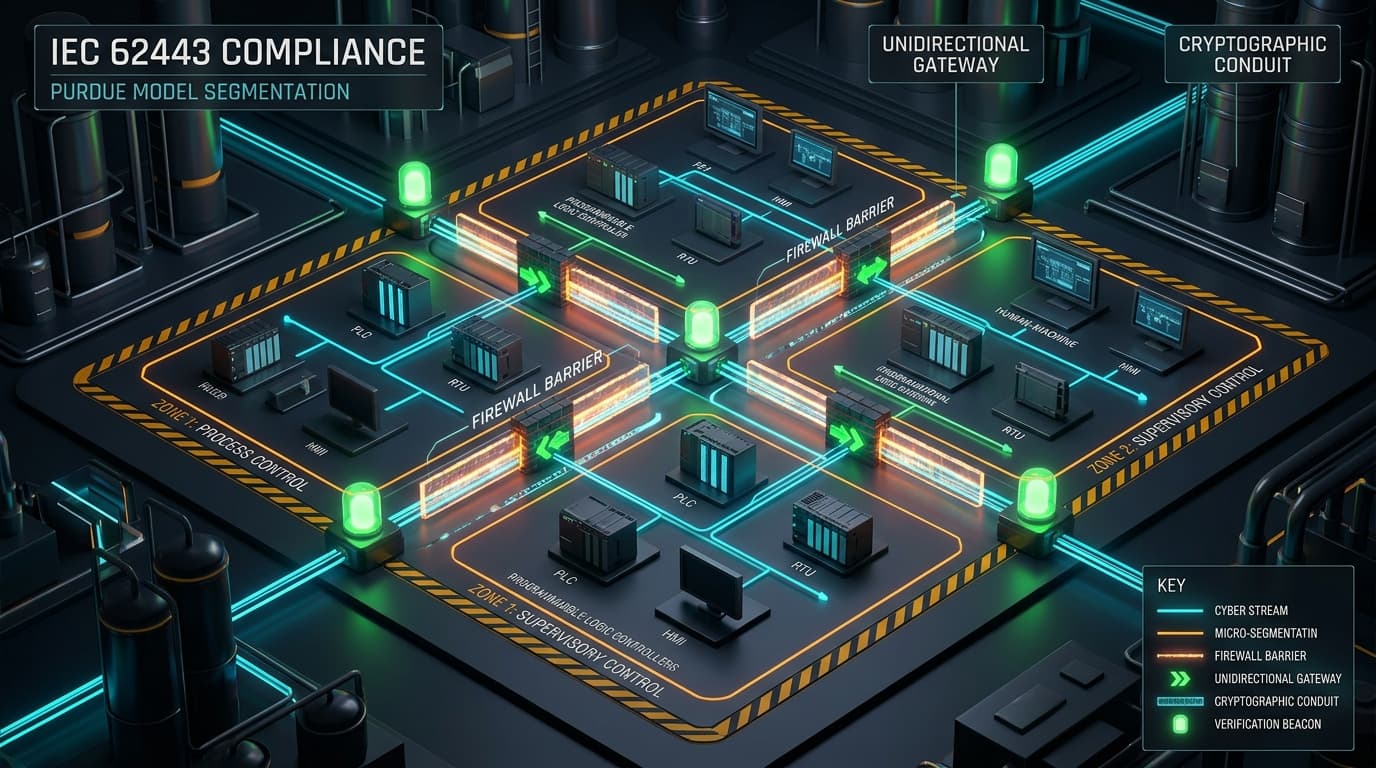
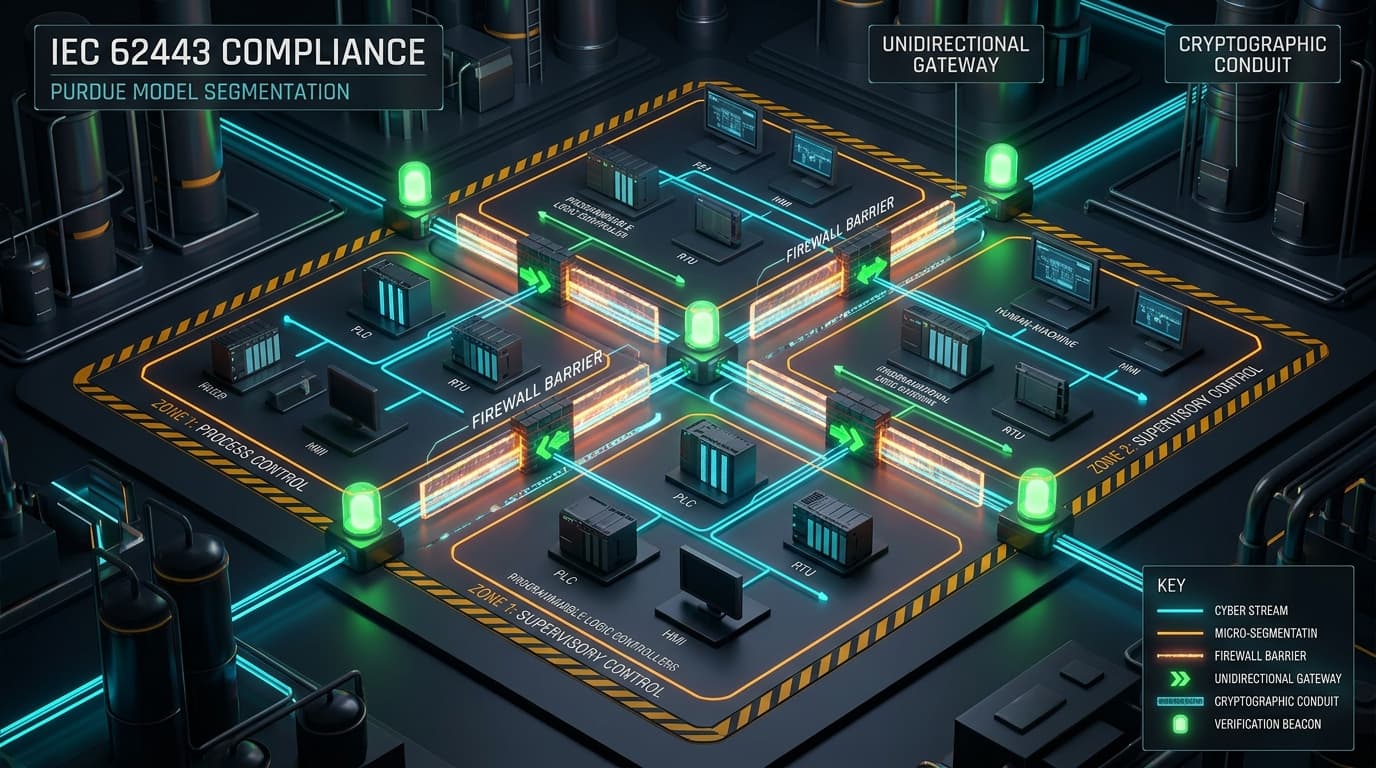
3. IEC 62443 Zone Segmentation & Perimeter Isolation
In accordance with IEC 62443-3-2 and IEC 62443-3-3:
- Strictly isolate the IEM management interface within a dedicated Operations Management VLAN (Purdue Level 3).
- Never expose the IEM web console directly to corporate enterprise IT networks (Level 4) or the public Internet. Access must require an authenticated, multi-factor jump host or industrial VPN.
- Enforce micro-segmentation firewalls between the IEM server and connected Industrial Edge Devices, ensuring only mutual-TLS edge agent traffic (port 443) is permitted.
4. Forensic Audit & Account Verification
Perform an immediate audit of all user accounts within the IEM Keycloak administration realm:
- Log in to the Keycloak admin interface and inspect the Users table.
- Review the Last Login and Password Modified timestamps for all administrative accounts.
- Identify any accounts modified within the past 30 days that cannot be correlated to approved internal change management tickets.
- Inspect the audit log for anomalies:
docker logs -f iem-keycloak | grep -i "RESET_PASSWORD".