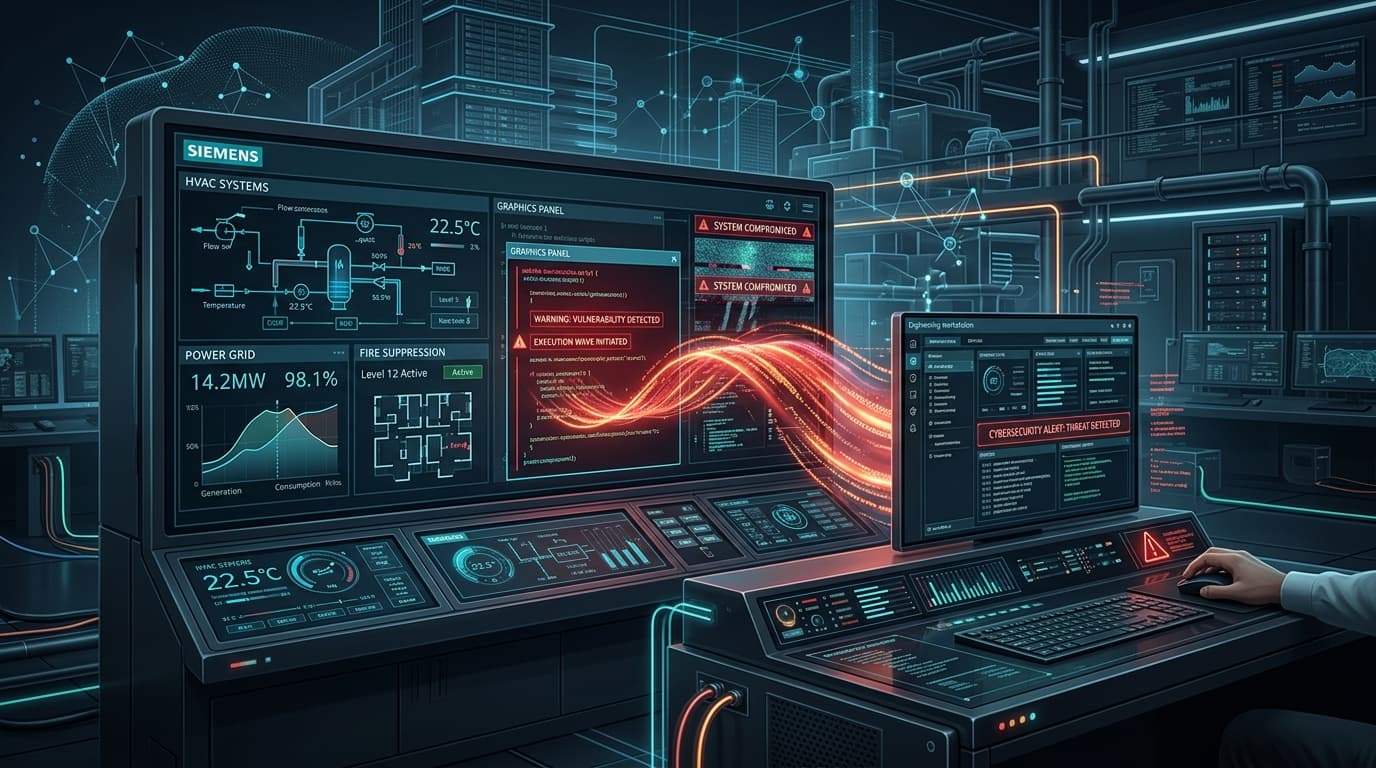
Operational Impact: Critical Building Management SCADA Blindness
The Cybersecurity and Infrastructure Security Agency (CISA) has released Industrial Control Systems (ICS) Advisory ICSA-26-265-08 addressing a high-severity vulnerability (CVE-2026-89207, CVSS v3.1 base score 7.5) affecting Siemens WTV676 and WTV776 energy data acquisition gateways.
The affected devices are central hardware components deployed across smart corporate campuses, hospitals, data centers, and industrial facilities to collect, log, and transmit energy consumption data from M-Bus electricity, water, heat, and gas meters to supervisory Building Management Systems (BMS) and cloud energy dashboards. Successful exploitation allows an unauthenticated network attacker to trigger an unrecoverable denial-of-service condition, disabling the device's remote web interface and freezing building telemetry streams.
Technical Root Cause: CWE-400 Resource Exhaustion in Embedded Webserver
The vulnerability is categorized as CWE-400 (Uncontrolled Resource Consumption) within the embedded HTTP/HTTPS management daemon operating on the gateway:
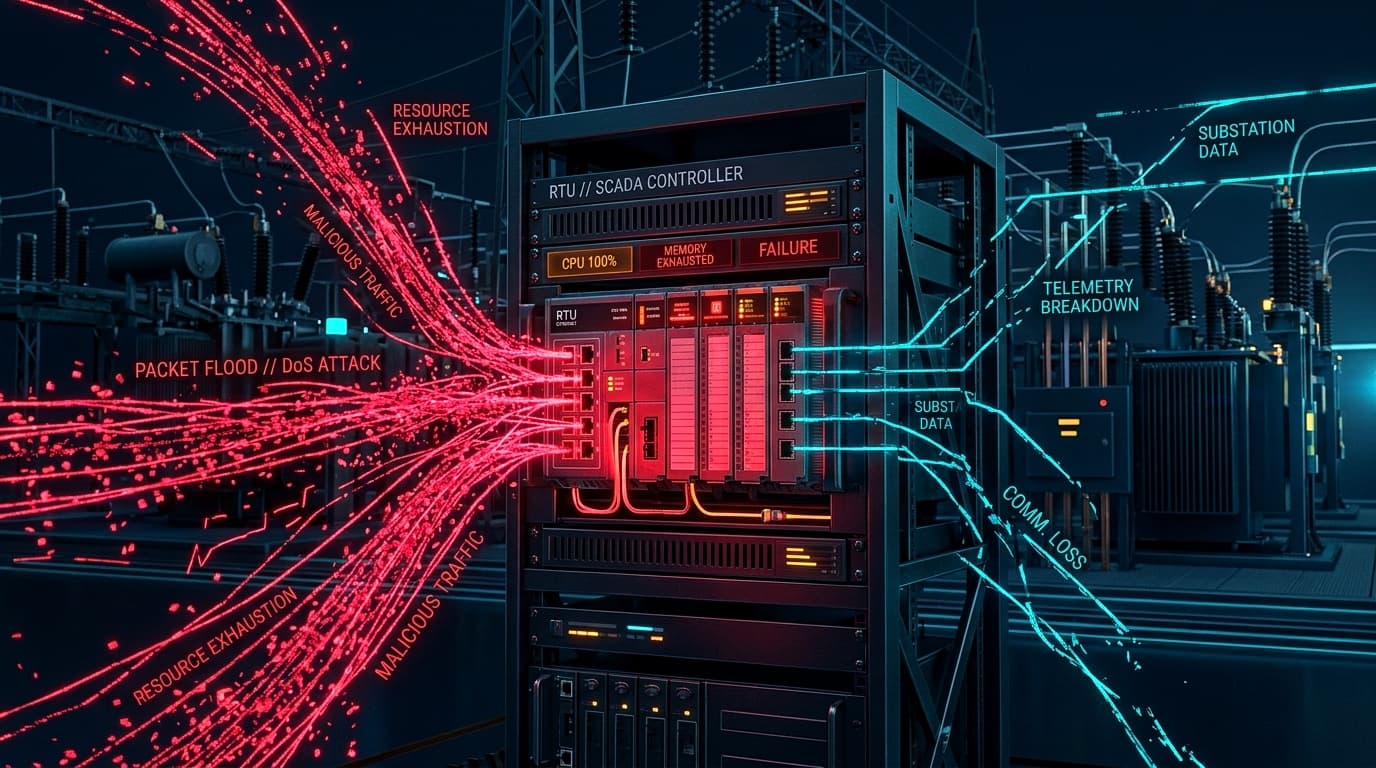
- Memory Exhaustion in HTTP Request Parser: When processing specialized malformed HTTP requests containing irregular header lengths or continuous incomplete multipart payloads, the web server allocates dynamic memory buffers without enforcing hard upper bounds.
- Protection Mode Lock: Rather than gracefully dropping the offending connection, the embedded operating system detects a memory allocation panic in the userspace daemon and forces the device into a hardware "Protection Mode" state.
- Web Interface Teardown: Once locked in protection mode, all remote web access (HTTP/HTTPS) and automated REST API telemetry endpoints are terminated until an on-site technician physically power-cycles the terminal hardware.
Attack Mechanics & Industrial Network Exposure
Threat actors targeting commercial infrastructure or seeking to blind energy monitoring systems during ransomware deployments can trigger the lock state across entire industrial subnets:
# Proof-of-concept trigger against Siemens WTV Web Server:
POST /api/v1/system/network/config HTTP/1.1
Host: 192.168.10.45:443
Content-Type: application/x-www-form-urlencoded
Content-Length: 4294967295

[Malformed stream causing internal buffer allocation lock...]
When the gateway crashes, central energy monitoring software loses real-time visibility into peak electrical loads, cooling water flow rates, and secondary power feeds. In mission-critical environments such as pharmaceutical manufacturing cleanrooms or tier-3 data centers, loss of environmental and electrical telemetry directly threatens compliance with FDA Good Manufacturing Practice (GMP) regulations.
Defensive Remediation & IEC 62443 Playbook
Siemens has released updated firmware packages resolving CVE-2026-89207. Asset owners and industrial systems integrators must implement the following corrective actions:
1. Firmware Upgrade Matrix
| Product Family | Vulnerable Firmware | Remediation Firmware |
|---|---|---|
| Siemens WTV676-HB6035 | All versions < V3.4.1 | Update to Firmware V3.4.1 or higher |
| Siemens WTV776-HB6035 | All versions < V3.4.1 | Update to Firmware V3.4.1 or higher |
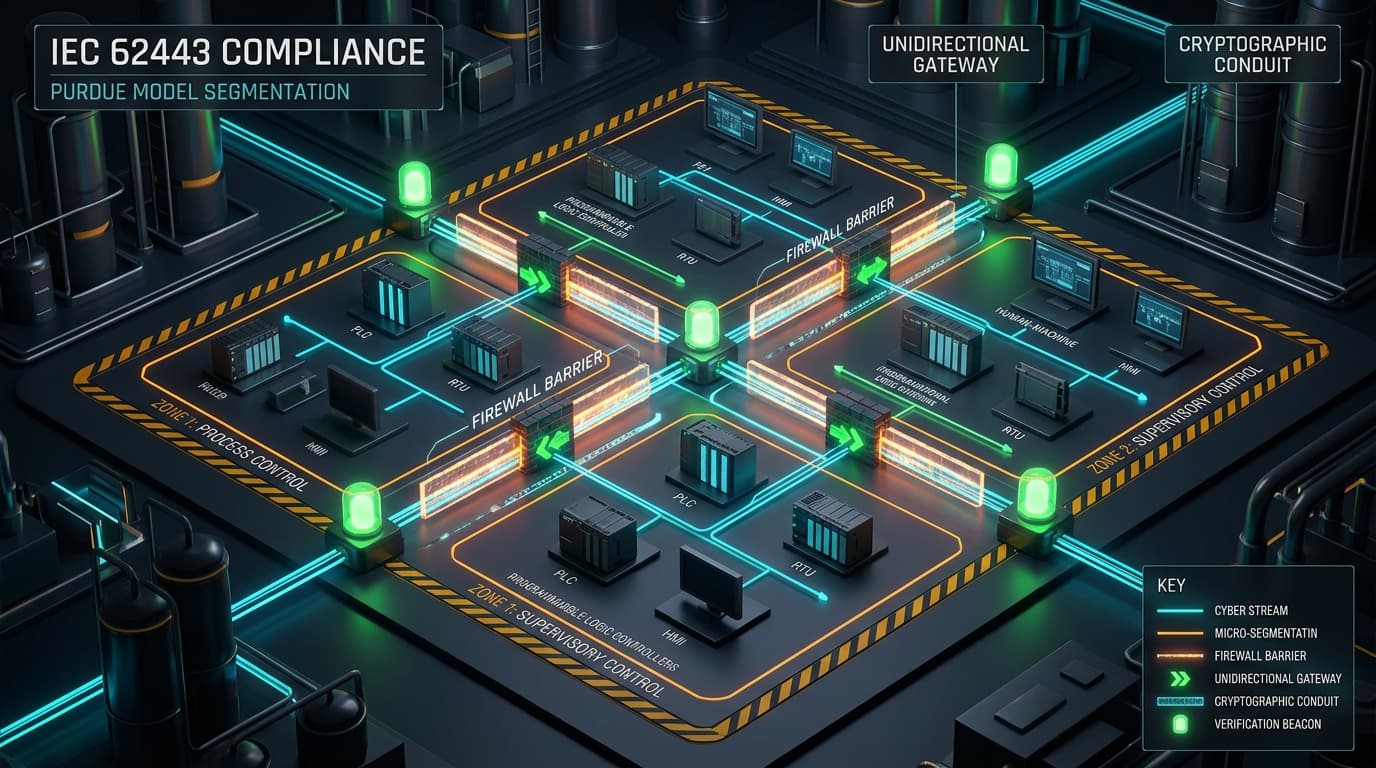
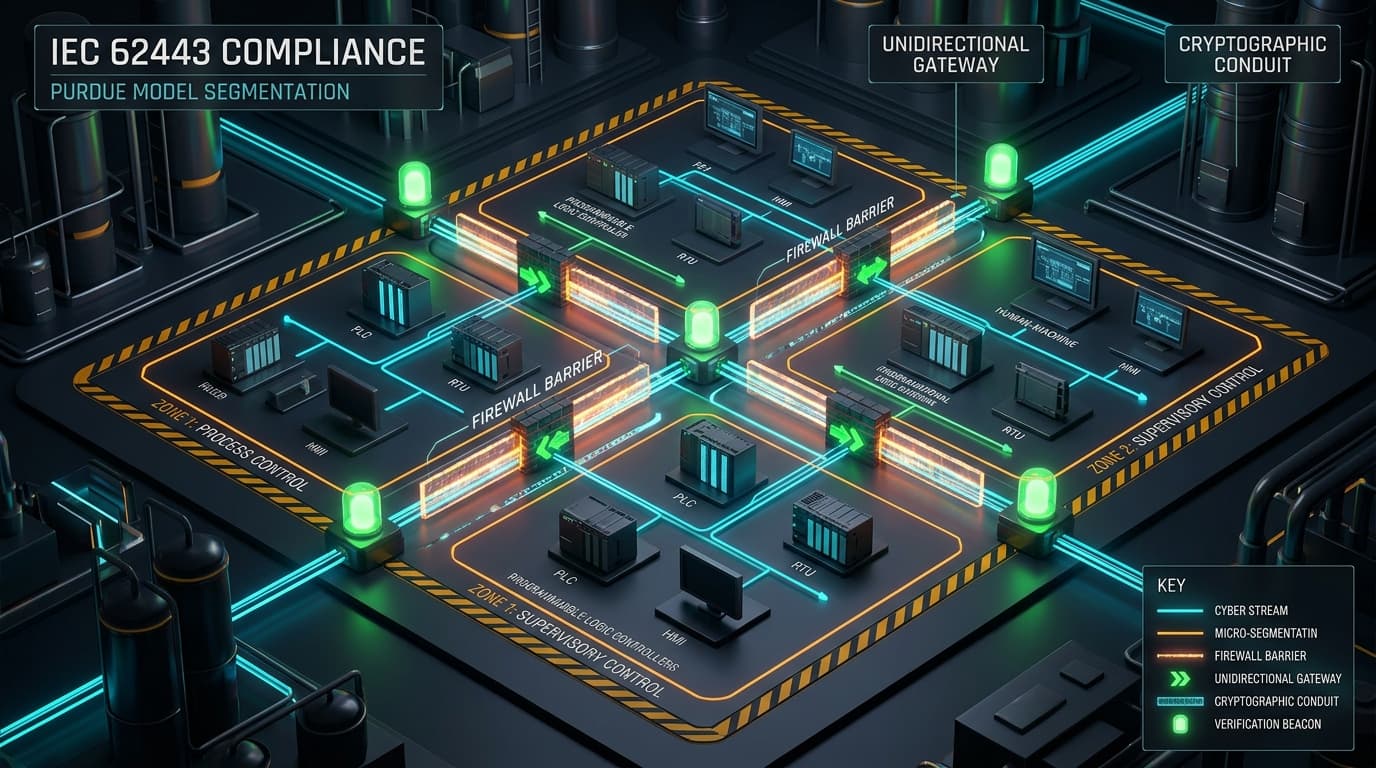
2. IEC 62443-3-3 Zone & Conduit Segmentation
- Isolate M-Bus Devices into Level 1/2 Control Zones: Strictly prohibit direct Internet routing or corporate IT network access to WTV gateways. Place energy collection terminals behind industrial firewalls enforcing unidirectional conduits.
- Disable Unused Web Management Interfaces: If automated Modbus TCP or BACnet IP logging is utilized, disable the embedded web management server or restrict access strictly to a dedicated physical management port.
- Apply mTLS / VPN Access Control: Enforce strict VPN encapsulation with multi-factor authentication (MFA) and client certificates for any remote maintenance connectivity.