Operational Context: Smart Facilities and Industrial Control at Risk
The Cybersecurity and Infrastructure Security Agency (CISA) has expanded its Known Exploited Vulnerabilities (KEV) catalog with the addition of CVE-2023-4346, an overly restrictive account lockout mechanism vulnerability affecting the KNX Association KNX Protocol (specifically implementations employing Connection Authorization Option 1).
KNX is the globally standardized open protocol (ISO/IEC 14543-3, EN 50090, ANSI/ASHRAE 135) for commercial building automation, smart environmental controls, and industrial facility management. Deployed across tens of thousands of hospitals, data centers, government facilities, and smart manufacturing plants, KNX controllers govern critical subsystems: chiller plants, industrial HVAC ventilation, smart emergency lighting, electrical sub-metering, and physical turnstile access controllers.
Root Cause Analysis: Flawed Authorization Lockout State (CWE-307)
The vulnerability resides within the protocol specification and implementation of KNXnet/IP Connection Authorization Option 1, which defines password-based challenge-response authentication for engineering connections over UDP port 3671.
To mitigate brute-force password guessing against the KNX gateway, the protocol specification specifies an automatic lockout penalty timer following consecutive failed authentication attempts. However, CVE-2023-4346 stems from an architectural logic flaw (CWE-307: Improper Restriction of Excessive Authentication Attempts):
- Unauthenticated Remote Trigger: An unauthenticated adversary on the local control network (or via an exposed public KNX router) can transmit a continuous stream of forged
CONNECTION_REQUESTframes containing invalid authorization credentials. - Exponential Denial-of-Service State: Because the gateway does not rate-limit incoming handshake requests or validate source network legitimacy before applying the lockout state machine, the gateway enters an indefinite lockout condition.
- Complete Management Blackout: Once locked out, the gateway drops all legitimate management traffic from certified Engineering Tool Software (ETS) workstations, supervisory SCADA servers, and building management central consoles. In severe implementations, automated control frame routing across the IP-to-TP (Twisted Pair) boundary is frozen, leaving environmental controls in an unmanageable state.
# KNXnet/IP Authorization Lockout Flood Simulation Frame
# Target: Port 3671/UDP (KNXnet/IP Routing & Tunneling)

Frame Header:
  06          # Protocol Version: 1.0
  10          # Header Length: 6 bytes
  02 05       # Service Type: CONNECTION_REQUEST (0x0205)
  00 14       # Total Length: 20 bytes
HPAI (Host Protocol Address Information):
  08 01       # UDP/IPv4 Struct Length
  c0 a8 01 64 # Attacker Source IP: 192.168.1.100
  8e 24       # Source Port: 36388
Connection Request Information (CRI):
  04 04       # Tunnel Connection (0x04) / Option 1 Auth Flag
  00 00       # Invalid Password Challenge Token -> Triggers Gateway Lockout Penalty
Threat Modeling & Industrial Impact (IEC 62443 Perspective)
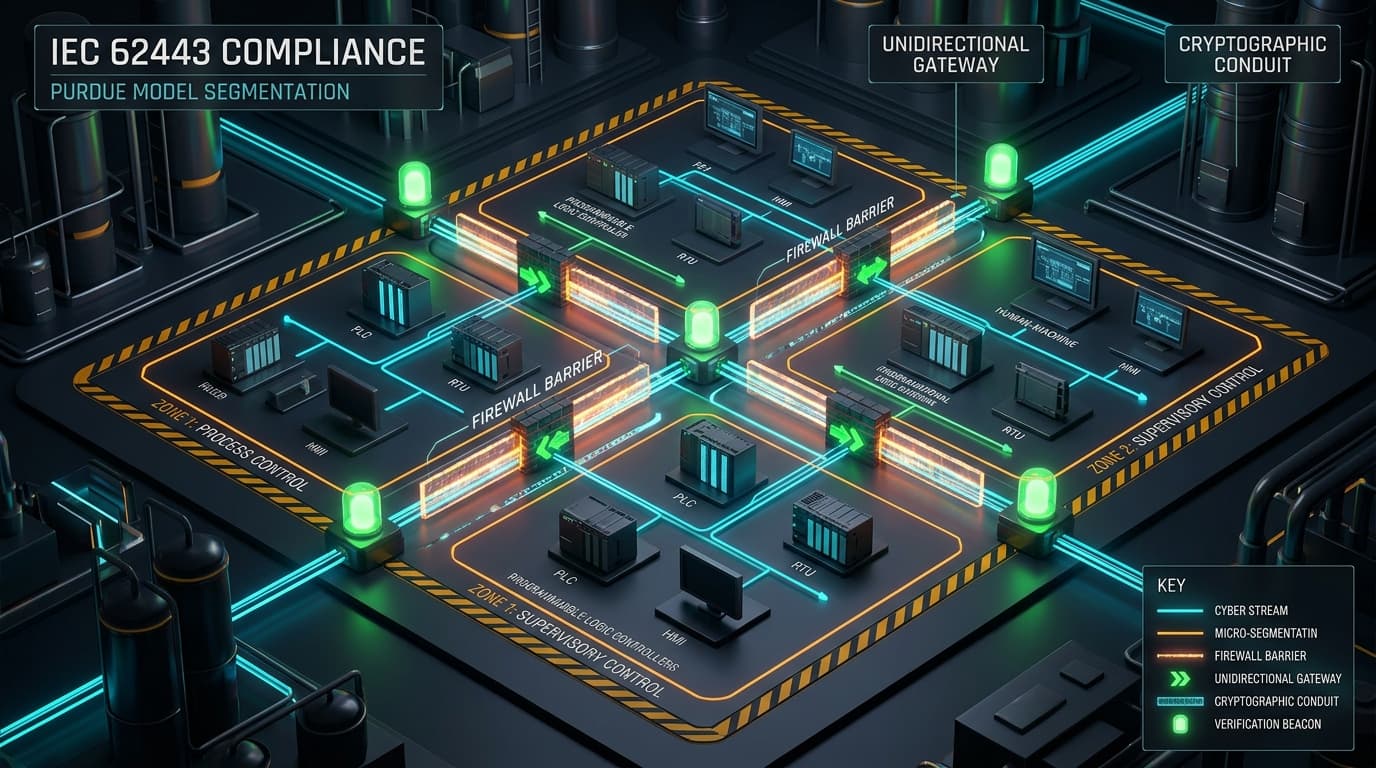
In the context of the IEC 62443 industrial automation and control systems (IACS) cybersecurity framework, CVE-2023-4346 represents a catastrophic failure of System Integrity (FR 3) and Resource Availability (FR 7) at Security Level 2 (SL-2) and above:
- Data Center Cooling Disruption: Threat actors targeting server farm chiller plants can lock out HVAC control nodes, preventing automated load shifting during peak heat cycles and forcing hardware shutdowns.
- Healthcare Facility Airflow Impairment: In hospital cleanrooms and surgical suites, locking out differential pressure controls governed by KNX air handlers compromises sterile environmental standards.
- Physical Security Lock-in: Facilities with automated emergency egress doors integrated into KNX fire alarm relays risk delayed manual overrides during emergency conditions.
Remediation Matrix & IEC 62443 Defense-in-Depth
| Remediation Layer | Standard Control | Actionable Engineering Directive |
|---|---|---|
| Protocol Modernization | KNX IP Secure | Migrate all legacy KNXnet/IP links to KNX IP Secure (AES-128 CCM encryption and sequence counters) to prevent unauthenticated frame injection. |
| Network Segmentation | IEC 62443-3-2 Conduits | Isolate building automation controllers into dedicated VLANs (Purdue Level 1/2) with zero direct routing from corporate IT or internet boundaries. |
| Firewall Rules | Port Filtering | Block UDP port 3671 at all perimeter ingress points. Restrict internal port 3671 communication strictly to authorized ETS management hosts. |
| Firmware Maintenance | Vendor Patching | Apply vendor-specific firmware updates released by gateway manufacturers (ABB, Schneider Electric, Siemens, MDT) that fix the lockout state machine. |
Operational Verification & Threat Hunting Commands
Industrial cybersecurity teams should run active sweeps across facility networks to identify exposed KNX devices and audit their authentication state:
# Scan industrial OT networks for listening KNXnet/IP ports
nmap -sU -p 3671 --script knx-gateway-info 192.168.10.0/24

# Zeek OT Script snippet to alert on repeated failed KNX connection requests
event knx_connection_request(c: connection, service_type: count) {
    if (service_type == 0x0205) {
        NOTICE([$note=KNX::ExcessiveConnectionRequests,
                $msg=fmt("High rate of KNX connection requests from %s", c$id$orig_h),
                $conn=c]);
    }
}