Critical Infrastructure Alert: Industrial Time-Sensitive Networking Under Threat
The Cybersecurity and Infrastructure Security Agency (CISA) has released an industrial cybersecurity advisory, ICSA-26-211-07 (Update A), detailing high-severity vulnerabilities affecting Mitsubishi Electric CC-Link IE TSN industrial communication protocol modules and MELSEC iQ-R and iQ-F Series Programmable Logic Controllers (PLCs).
CC-Link IE TSN (Time-Sensitive Networking) is a deterministic gigabit industrial Ethernet protocol combining open IEEE 802.1 TSN standards with high-speed motion and synchronous I/O control. It forms the communication backbone for automated automotive assembly lines, robotic welding stations, semiconductor wafer fabrication, and high-speed packaging machinery worldwide. A failure or disruption of the TSN control loop can halt multi-million-dollar production lines or trigger dangerous mechanical safety overrides.
Vulnerability Mechanics & Protocol Parsing Breakdown
The flaw resides in the embedded protocol parsing firmware handling CC-Link IE TSN synchronization and cyclical communication frames over Ethernet:
- Improper Frame Validation: The communication processor fails to properly validate incoming Ethernet frame payload boundaries during high-throughput cyclical data exchanges.
- Memory Corruption & Watchdog Panic: When an attacker or compromised device on the industrial network transmits malformed TSN synchronization packets with abnormal timestamp counters or corrupted cyclic header blocks, the protocol parser triggers an unhandled memory fault in the communication stack.
- Controller Halting State: The internal hardware watchdog timer registers a communication timeout failure, forcing the MELSEC PLC to abort program execution and transition to a safe-stop (ERROR/STOP) fault mode. Resetting the controller requires physical power-cycling of the PLC rack, causing extensive industrial downtime.
# CC-Link IE TSN Cyclical Frame Structure (IEEE 802.1Qbv / TSN Profile)
Ethernet Header:
  Destination MAC: 01-19-F0-00-00-01 (CC-Link Multicast)
  Source MAC:      [Attacker Node on Level 1 Cell]
  EtherType:       0x88F7 (Precision Time Protocol / TSN Control)
TSN Cyclic Payload:
  Header Type:     0x22 (Synchronous Motion Command)
  Sequence Number: 0xFFFF0001 <-- Out-of-Bounds Sequence Counter
  Payload Length:  0x0400     <-- Mismatched Frame Length Parameter
  [Malformed Cyclic Data Stream Overwriting Buffer Pointer]
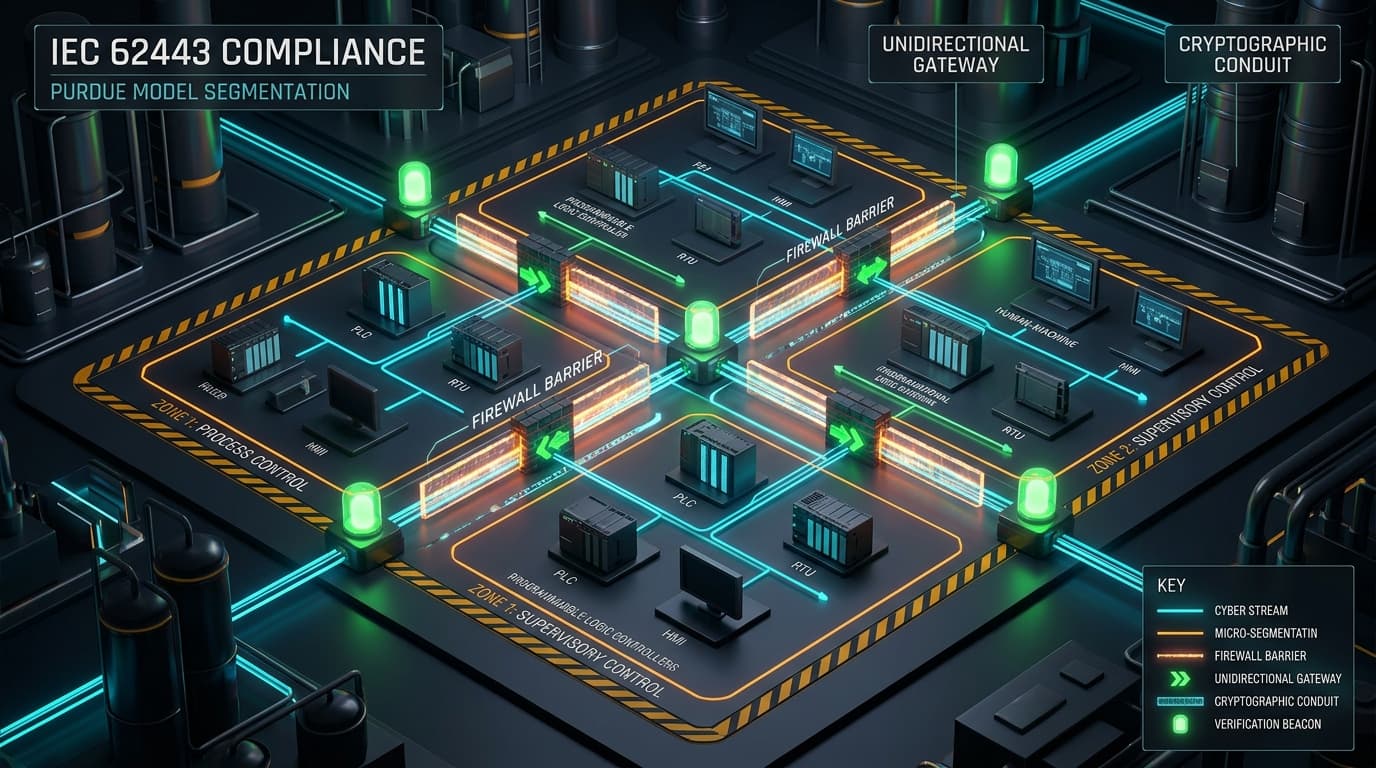
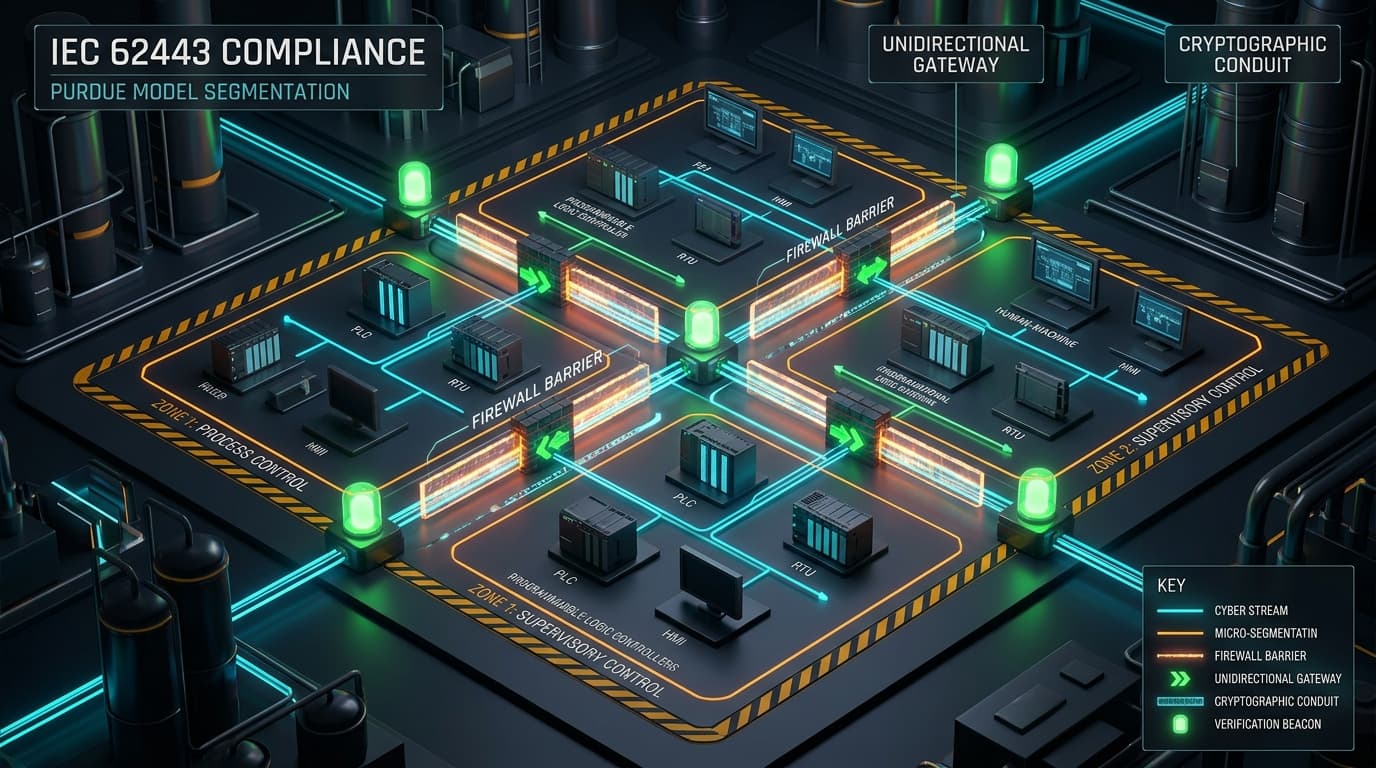
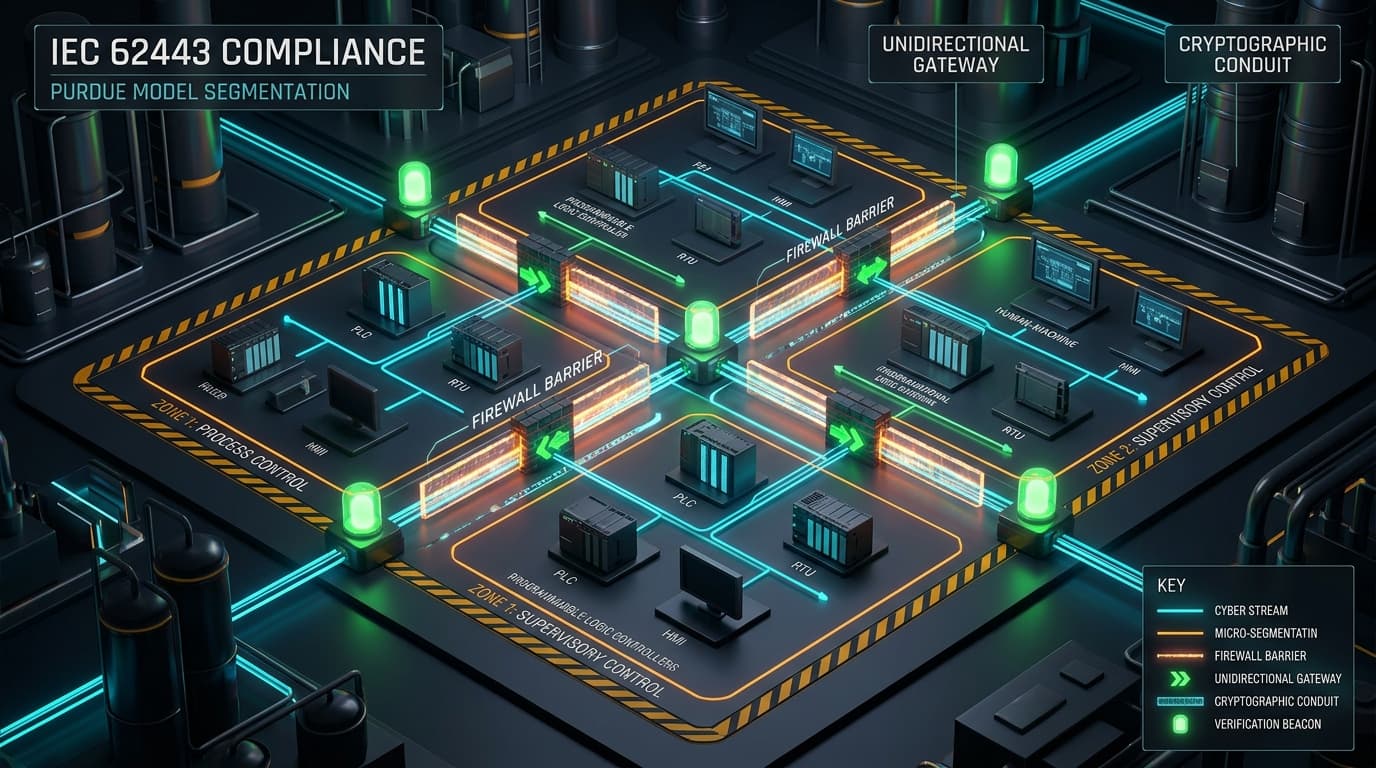
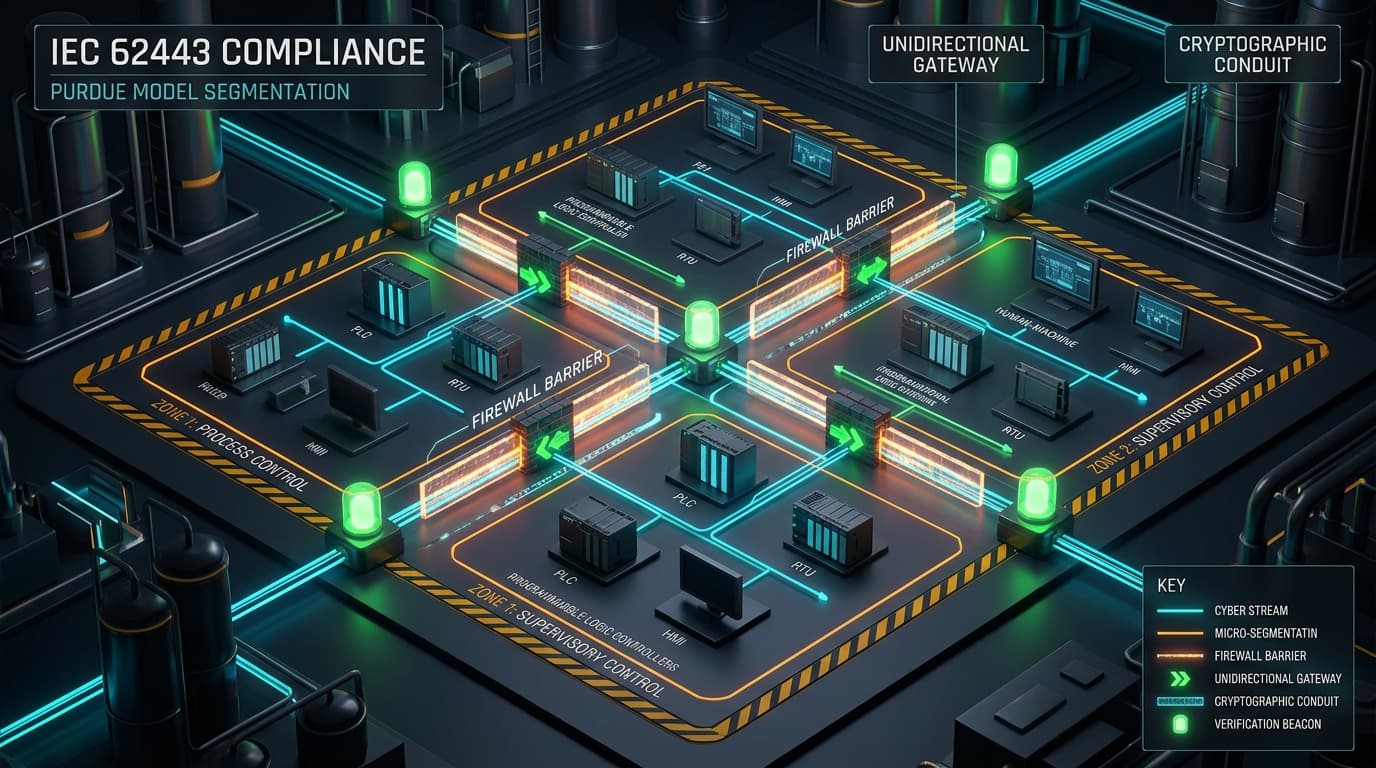
IEC 62443 Impact Assessment: Zone & Conduit Breakdown
Under the IEC 62443 industrial automation and control systems (IACS) cybersecurity framework, the vulnerability represents an acute compromise of Resource Availability (FR 7) and System Integrity (FR 3) at Security Level 3 (SL-3):
| Purdue Model Level | Component | Failure Impact | IEC 62443 Requirement |
|---|---|---|---|
| Level 1 (Cell Control) | MELSEC iQ-R / iQ-F PLC | Immediate cessation of ladder logic execution; robotics and servomotors trip emergency brakes. | SR 7.1 - Denial of Service Protection |
| Level 2 (Supervisory) | SCADA / GOT HMI Panels | Loss of view and loss of control over active manufacturing work cells; false alarm telemetry. | SR 3.1 - Cryptographic Integrity |
| Conduit (Network) | CC-Link IE TSN Switch | TSN time-synchronization drift exceeding microsecond tolerances, degrading deterministic motion loops. | SR 5.2 - Zone Boundary Protection |
Affected Products & Firmware Patch Matrix
| Product Model | Affected Module | Remediation Firmware Build |
|---|---|---|
| MELSEC iQ-R Series | RJ71GN11-T2 (CC-Link IE TSN Master/Local Module) | Firmware Version 15 or later |
| MELSEC iQ-F Series | FX5-CCLGN-MS (CC-Link IE TSN Module) | Firmware Version 1.020 or later |
| MELIPC Industrial PC | MI5000 Series (Real-Time OS Models) | Update to Package Release 1.08J |
Actionable OT Defense-in-Depth & IEC 62443 Remediation
- Apply Manufacturer Firmware Updates: Upgrade all affected RJ71GN11-T2 and FX5 modules to the patched firmware releases published by Mitsubishi Electric PSIRT.
- Enforce Strict Purdue Model Micro-Segmentation: Place CC-Link IE TSN control cells into dedicated, isolated VLANs at Purdue Level 1. Ensure zero routing between manufacturing cells and corporate enterprise IT networks.
- Deploy OT-Aware Industrial Firewalls: Implement industrial security appliances (e.g., Hirschmann, Moxa, Fortinet FortiGate Rugged) at zone conduits to filter out malformed Ethernet frames and block unauthorized TSN multicast traffic.
- Harden Industrial Programming Workstations: Restrict MELSOFT GX Works3 engineering software access strictly to authenticated, encrypted engineering workstations equipped with hardened endpoint protection.