Executive Industrial Threat Overview: Critical Infrastructure Perimeter at Risk
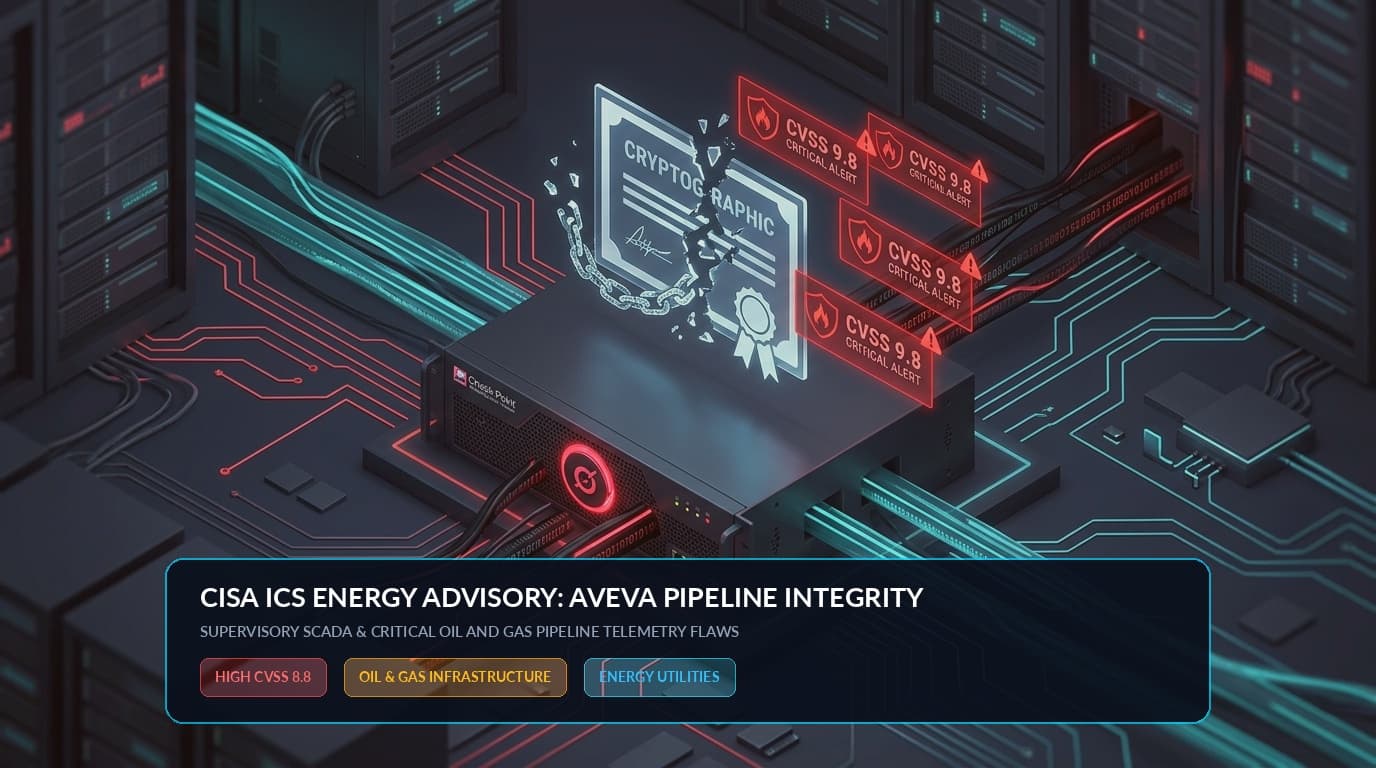
The Cybersecurity and Infrastructure Security Agency (CISA) has published industrial security advisory ICSA-26-258-01, detailing critical vulnerabilities affecting video management systems (VMS), digital video recorders (DVRs), and telemetry devices widely deployed across municipal water authorities, electrical substations, manufacturing plants, and transportation hubs. Rated CVSS 9.8, the advisory highlights severe weaknesses in network boundary segmentation where edge physical security devices bridge operational technology (OT) zones and corporate IT networks.
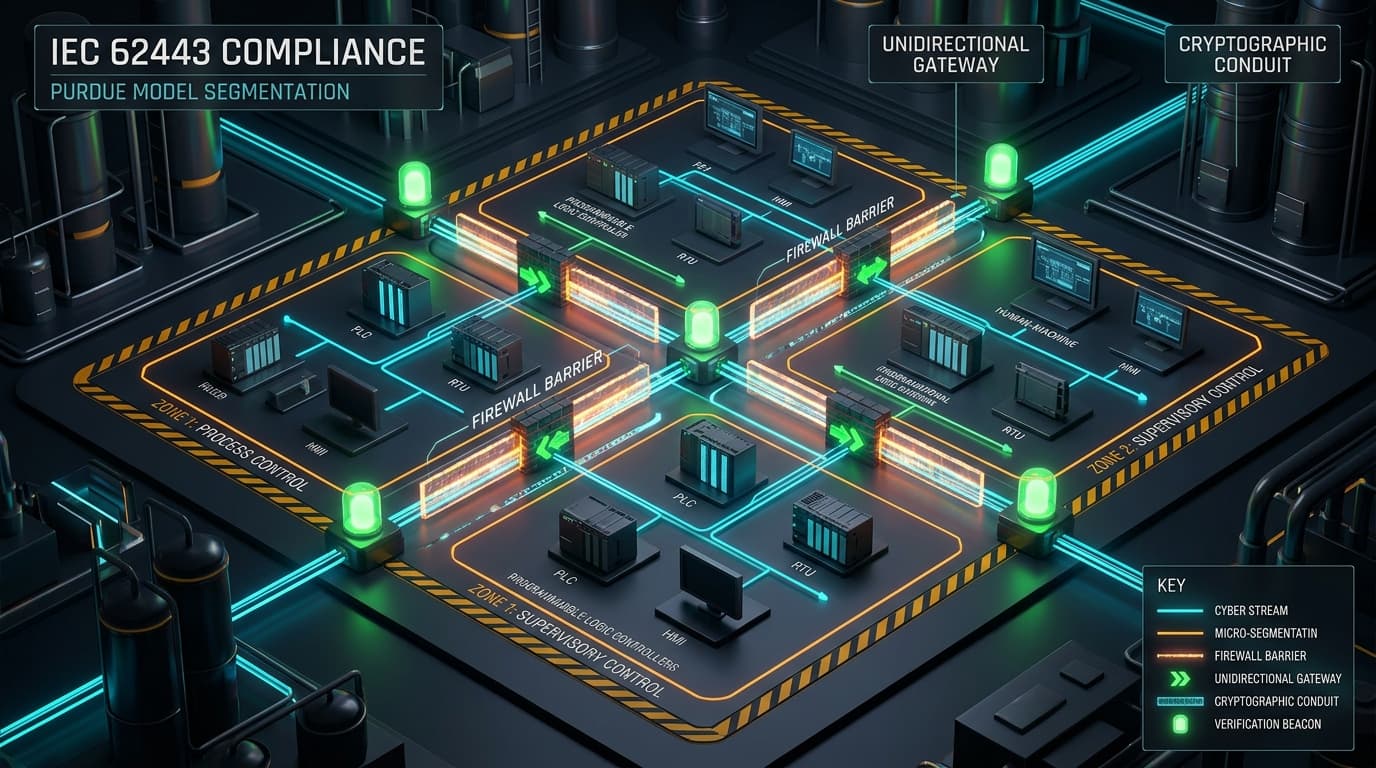
When edge IoT and surveillance devices located in industrial demilitarized zones (IDMZs) are compromised, adversaries can bypass perimeter firewalls and pivot directly into Level 2 (Supervisory Control) and Level 1 (Basic Control) automation networks. Securing these environments requires the systematic application of IEC 62443 standards, specifically IEC 62443-3-2 (Zones and Conduits) and IEC 62443-3-3 (System Security Requirements).
Architecture Analysis: Purdue Model Breakdown & Conduit Failures
In legacy industrial control systems (IACS), physical security hardware (such as CCTV cameras and NVR appliances) is frequently dual-homed across corporate IT (Purdue Level 4) and plant operations (Purdue Level 3). This dual-homed architecture introduces an unmanaged conduit that completely bypasses the industrial firewall:
[ Enterprise IT Network (Level 4/5) ]
                |
       (Dual-Homed VMS/DVR - ICSA-26-258-01 Flaw)
                |  <--- Unmanaged Bypass Conduit
[ Industrial DMZ / SCADA Supervisory (Level 3) ]
                |
[ Human-Machine Interface (HMI) & Historian (Level 2) ]
                |
[ Programmable Logic Controllers (PLCs) & RTUs (Level 1) ]
Under ICSA-26-258-01, an unauthenticated attacker on the corporate network or Internet sends crafted HTTP packets to the VMS controller, triggering a stack-based buffer overflow that yields root shell access. Once the attacker controls the dual-homed device, they utilize internal network routing to send malicious Modbus/TCP or EtherNet/IP packets directly to PLCs in Level 1, threatening physical industrial equipment.
Implementing IEC 62443 Security Level Target (SL-T 3/4)
To prevent cross-zone contamination, OT cybersecurity engineering teams must establish strict Security Level Targets (SL-T) aligned with IEC 62443-3-3:
| Security Level (SL) | Threat Capability Addressed | Required Boundary Protections | Applicable Purdue Zone |
|---|---|---|---|
| SL-1: Protection against casual violation | Unintentional errors, basic malware | Basic password controls, default firewalls | Enterprise IT / General Offices (Level 4) |
| SL-2: Protection against intentional violation | Cybercriminals using generic tools | Network segmentation, centralized logging | Industrial DMZ (Level 3.5) |
| SL-3: Protection against sophisticated violation | Targeted attacks, IACS-specific knowledge | Hardware conduits, mTLS, strict protocol filters | SCADA Supervisory (Level 2/3) |
| SL-4: Protection against nation-state violation | APT groups with extensive resources | Unidirectional data diodes, isolated safety logic | Safety Instrumented Systems (SIS) |
Industrial Defense Playbook: Micro-Segmentation & Conduits
Control systems engineers and OT security architects must enforce the following hardening measures across industrial assets:
1. Eliminate Dual-Homed Systems via Strict DMZ Architecture
Remove all secondary network interface cards bridging IT and OT networks. All inter-zone communications must transit through an inspected Industrial DMZ (IDMZ Level 3.5) with no direct routing:
# Firewall rule template: Block direct routing between Level 4 and Level 2/1
iptables -A FORWARD -s 192.168.10.0/24 -d 10.0.1.0/24 -j DROP
iptables -A FORWARD -s 192.168.10.0/24 -d 10.0.2.0/24 -j DROP

# Allow only inspected proxy connections through IDMZ (Level 3.5)
iptables -A FORWARD -s 192.168.10.0/24 -d 172.16.1.50 -p tcp --dport 443 -j ACCEPT
2. Restrict Industrial Protocols via Deep Packet Inspection (DPI)
Deploy industrial firewalls capable of Deep Packet Inspection for industrial protocols (Modbus TCP, DNP3, CIP). Ensure that write operations (e.g., Modbus Function Code 05/06/15/16) are prohibited from supervisory workstations that only require read telemetry:
# Snort/Suricata Rule: Alert on unauthorized Modbus Force Single Coil (FC 05) command
alert tcp 172.16.1.0/24 any -> 10.0.1.0/24 502 (
  msg:"OT-ALERT: Unauthorized Modbus FC05 Write Command Detected";
  content:"|00 00|"; offset:2; depth:2;
  content:"|05|"; offset:7; depth:1;
  classtype:attempted-admin; sid:1000921; rev:1;
)
3. Deploy Unidirectional Security Gateways (Data Diodes)
For critical telemetry transfers from the plant floor (Level 2/3) to corporate cloud data warehouses, install physical hardware data diodes that guarantee optical unidirectionality, eliminating any possibility of inbound network command injection into plant control loops.