Executive Lead: Critical Flaw in Flagship Industrial PACs
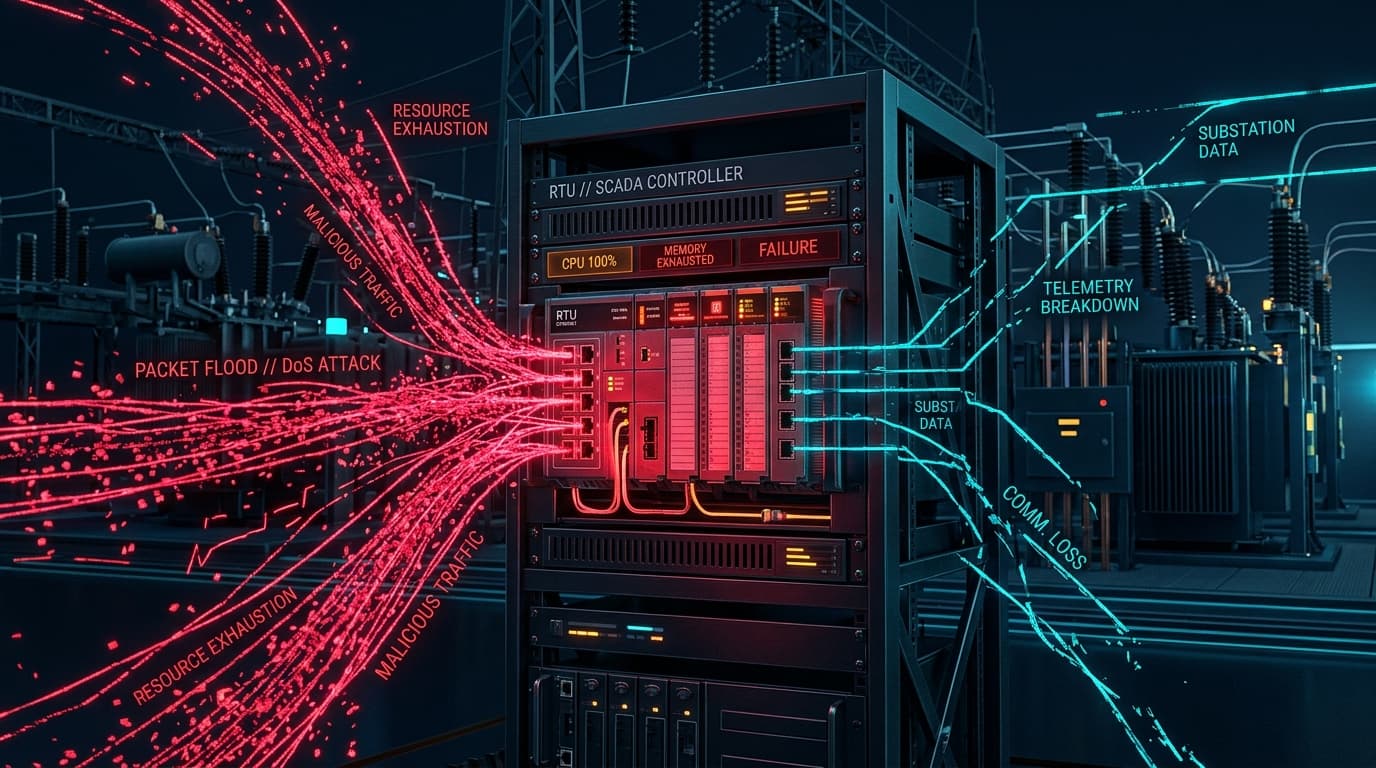
Global energy management and industrial automation leader Schneider Electric has issued an urgent security notification—cataloged under identifier SEVD-2026-251-04—warning asset owners of a critical vulnerability affecting its flagship Modicon M580 and Modicon M580 Safety Programmable Automation Controllers (PACs). Assigned standard CVE identifier CVE-2026-3869, the defect carries an alarming CVSS v4.0 base score of 9.2 (CVSS:4.0/AV:N/AC:L/AT:N/PR:N/UI:N/VC:H/VI:H/VA:H/SC:N/SI:N/SA:N).
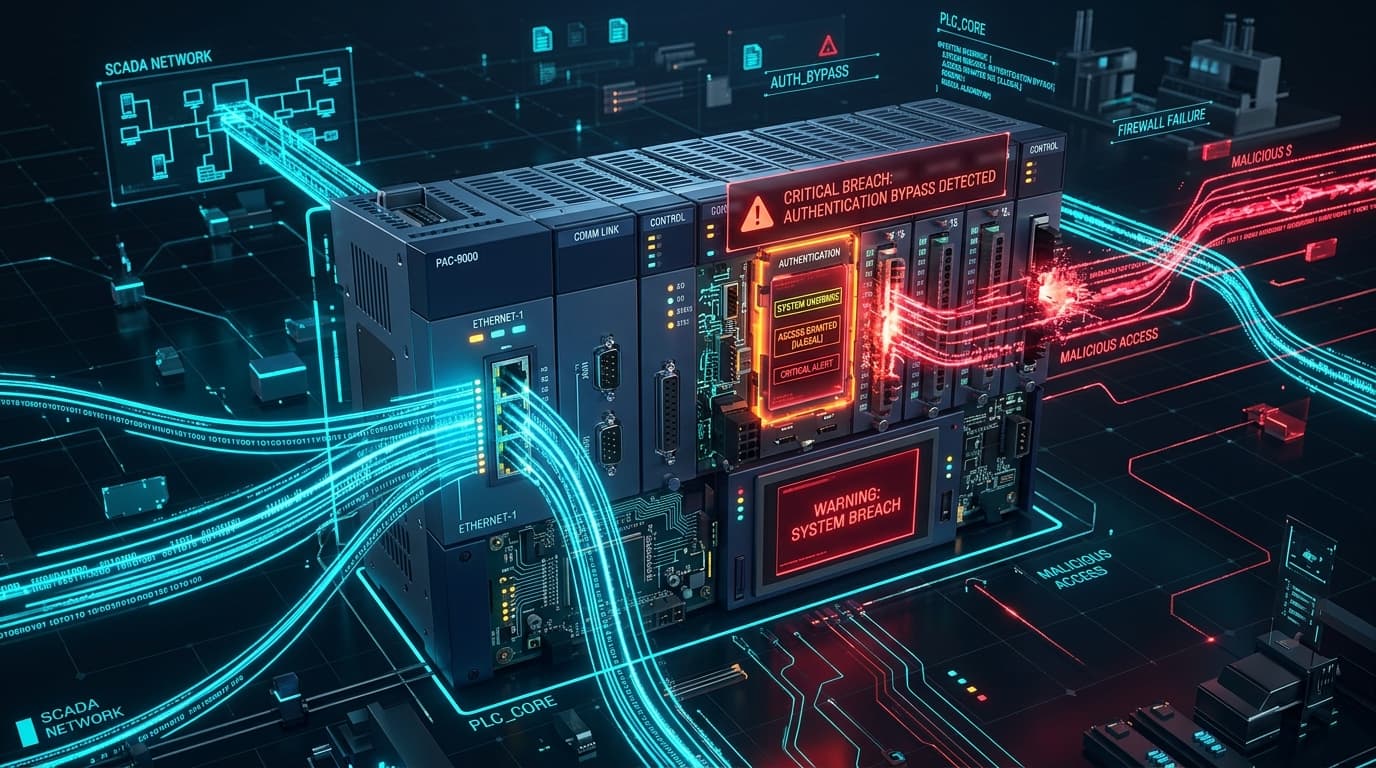
The Modicon M580 series serves as the primary automation and functional safety controller across critical infrastructure sectors worldwide, including petrochemical refineries, power generation facilities, municipal water treatment systems, and high-throughput manufacturing plants. Classified under CWE-303 (Incorrect Implementation of Authentication Algorithm), the defect permits unauthenticated network-based adversaries operating on industrial Ethernet segments to establish direct, unverified administrative sessions with the controller. This grants adversaries the ability to override active safety parameters, alter programmed logic routines, and force physical machinery into dangerous operating conditions or catastrophic shutdowns.
Attack Mechanics & Root Cause: CWE-303 Project Application Level Breakdown
The technical root cause of CVE-2026-3869 lies in the historical architecture used by Schneider Electric controllers to negotiate backward compatibility between legacy engineering projects and modern encrypted controller runtimes:
- Application Level Architecture: In Schneider Electric's EcoStruxure Control Expert engineering ecosystem, every PLC program maintains an internal parameter designated as the "application level" (e.g., v3.xx, v4.00, v4.20). This parameter governs which cryptographic primitives and authentication challenges the controller firmware enforces during engineering tool handshakes.
- Algorithm Downgrade & Fallback: If a Modicon M580 controller is running an application project compiled with an older application level (below 4.00 for standard M580, or below 4.20 for M580 Safety), the controller firmware falls back to a legacy authentication state machine. Within this fallback mode, the controller fails to properly validate the cryptographic challenge-response signature supplied by connecting clients.
- Unauthenticated Session Hijacking: A threat actor on the OT local area network (LAN) can send crafted TCP packets targeting port 502 (Modbus/TCP) or port 20547 (Schneider UMAS proprietary management protocol). By signaling an obsolete project version in the initial session handshake, the attacker forces the controller to accept an unauthenticated session, bypassing all configured password protections and role boundaries.
# Architectural packet flow of the Modicon M580 authentication bypass
[Threat Actor on OT Network (Level 1/2)]
         │
         ▼ (Transmits crafted UMAS/Modbus handshake via TCP/502 or TCP/20547)
[Modicon M580 PAC Interface]
         │
         ▼ (Evaluates Project Application Level: Level < 4.00 detected)
[Legacy Authentication State Machine (CWE-303)]
         │
         ▼ (Fails challenge-response verification; grants unauthenticated connection)
[Unrestricted Controller Access: Program Stop, Logic Overwrite, Memory Tampering]
Industrial OT Impact: Overriding Safety Integrity Functions
The presence of CVE-2026-3869 on Modicon M580 Safety controllers introduces grave operational hazards. Under standard industrial safety standards (IEC 61508 / IEC 61511), Safety Instrumented Systems (SIS) must operate with complete independence from basic process control systems:
- Safety Logic Overwrite: Attackers who gain unauthenticated session control can inhibit emergency shutdown (ESD) triggers, force interlocks open, or disable safety pressure relief valve sequences, creating conditions for severe equipment destruction or physical harm to plant personnel.
- Purdue Model Zone Penetration: If industrial firewalls permit routing between Level 2 (supervisory HMI) and Level 1 (control bus) networks, an attacker who compromises an engineering laptop or SCADA server can pivot directly to the Modicon controllers without requiring local domain credentials.
- Maintenance Window Dependency: Unlike IT systems where software patches can be applied silently in the background, upgrading an industrial controller's application level requires opening the project in EcoStruxure Control Expert, recompiling, and downloading the full binary to the controller. This requires taking the controller offline into "STOP" mode, necessitating planned plant shutdown outages.
Version Comparison & Mitigation Status Matrix
| Hardware Platform | Vulnerable Application Level | Required Firmware | Required Application Level & Tool |
|---|---|---|---|
| Modicon M580 (Standard PAC) | All levels < 4.00 | Firmware v4.10 or newer | Application Level ≥ 4.00 (EcoStruxure Control Expert V15.2+) |
| Modicon M580 Safety | All levels < 4.20 | Firmware v4.21 or newer | Application Level 4.20 (EcoStruxure Control Expert V16.0 HF001) |
Defensive Playbook & Actionable Remediation Checklist
In accordance with IEC 62443-3-3 security requirements, asset owners must deploy a comprehensive mitigation and remediation workflow:
1. Update Controller Firmware & Recompile Project Files
- Upgrade Firmware: Flash all Modicon M580 controllers to firmware version v4.10 or later, and Modicon M580 Safety units to firmware version v4.21 or later.
- Recompile in EcoStruxure Control Expert: Open existing project archives (
.STA/.STU) in EcoStruxure Control Expert V15.2+ (for M580) or V16.0 HF001 (for M580 Safety). Navigate to Project Properties > Application Level and raise the level to 4.00 or 4.20. - Download to Controller: Schedule a planned maintenance shutdown, place the controller in STOP mode, download the recompiled project, and switch back to RUN mode.
2. Enforce IEC 62443 Conduits & Firewall Boundaries
Block all unauthorized external traffic to Modicon management ports (TCP 502 and TCP 20547) using industrial firewall access control lists (ACLs):
# Example Cisco Industrial Ethernet / Firewall ACL for Level 1 PAC isolation
access-list 150 permit tcp host 10.10.20.50 host 10.10.30.10 eq 502
access-list 150 permit tcp host 10.10.20.50 host 10.10.30.10 eq 20547
access-list 150 deny tcp any host 10.10.30.10 eq 502
access-list 150 deny tcp any host 10.10.30.10 eq 20547
3. Deploy Industrial Network Intrusion Detection (IDS)
- Configure OT network monitoring sensors (e.g., Nozomi Networks, Claroty, Dragos) to alert on unauthenticated UMAS function codes and abnormal Modbus function code 90 transmissions.
- Ensure physical key switches on controller faceplates are locked in RUN position rather than REMOTE during steady-state production to prevent remote firmware or project modifications.