Executive Threat Summary: Industrial Power Reliability at Risk
The Cybersecurity and Infrastructure Security Agency (CISA) and Schneider Electric have issued an emergency industrial cybersecurity advisory regarding a critical vulnerability affecting Schneider Electric PowerChute Serial Shutdown software. Tracked as CVE-2026-13348 and detailed under CISA advisory identifier ICSA-26-260-07, the vulnerability allows unauthorized network users to bypass authentication validation routines, threatening the continuous operation of critical data centers, healthcare facilities, and manufacturing control networks.
PowerChute Serial Shutdown is a central management suite responsible for graceful automated shutdowns, battery health monitoring, and power telemetry across Schneider Electric and APC Uninterruptible Power Supply (UPS) hardware. Because these management servers bridge IT hypervisors and physical electrical distribution systems, an authentication breakdown grants adversaries the ability to command premature power cutoffs across entire server rooms or production cells.
The vulnerability carries significant operational risk due to the widespread practice of leaving UPS network cards accessible across broader enterprise networks or corporate subnets.
Vulnerability Mechanics & Authentication Breakdown
The defect is categorized under CWE-287 (Improper Authentication). In affected versions of PowerChute Serial Shutdown (versions <= 1.5 and 1.6), the web management backend failed to consistently enforce session authorization checks on administrative control endpoints:
- Token Verification Bypass: Certain administrative REST endpoints accepted malformed or missing session tokens, failing to validate user credentials against the local security database.
- Privileged Function Access: By submitting crafted HTTP requests directly to management handlers, unauthenticated remote attackers can invoke privileged methods without presenting valid operator credentials.
- Telemetry & State Exposure: Unauthorized users can query sensitive power usage histories, battery discharge characteristics, and network topology maps.
Impact on Physical Infrastructure
In industrial control systems (ICS) and critical infrastructure environments, the exploitation of a power management controller represents a direct transition from digital compromise to physical impact:
| Threat Vector | Technical Mechanism | Operational Consequences |
|---|---|---|
| Malicious Shutdown Trigger | Invoke remote emergency shutdown routine | Immediate power cut to servers, industrial PLCs, and life-safety monitoring racks. |
| Runtime Battery Depletion | Alter runtime threshold settings to zero | Prevents graceful hypervisor shutdown during genuine utility outages, risking data corruption. |
| Telemetry Spoofing | Forge battery health and load indicators | Blinds facilities engineering teams to impending hardware failures. |
IEC 62443 Zone & Conduit Remediation Strategy
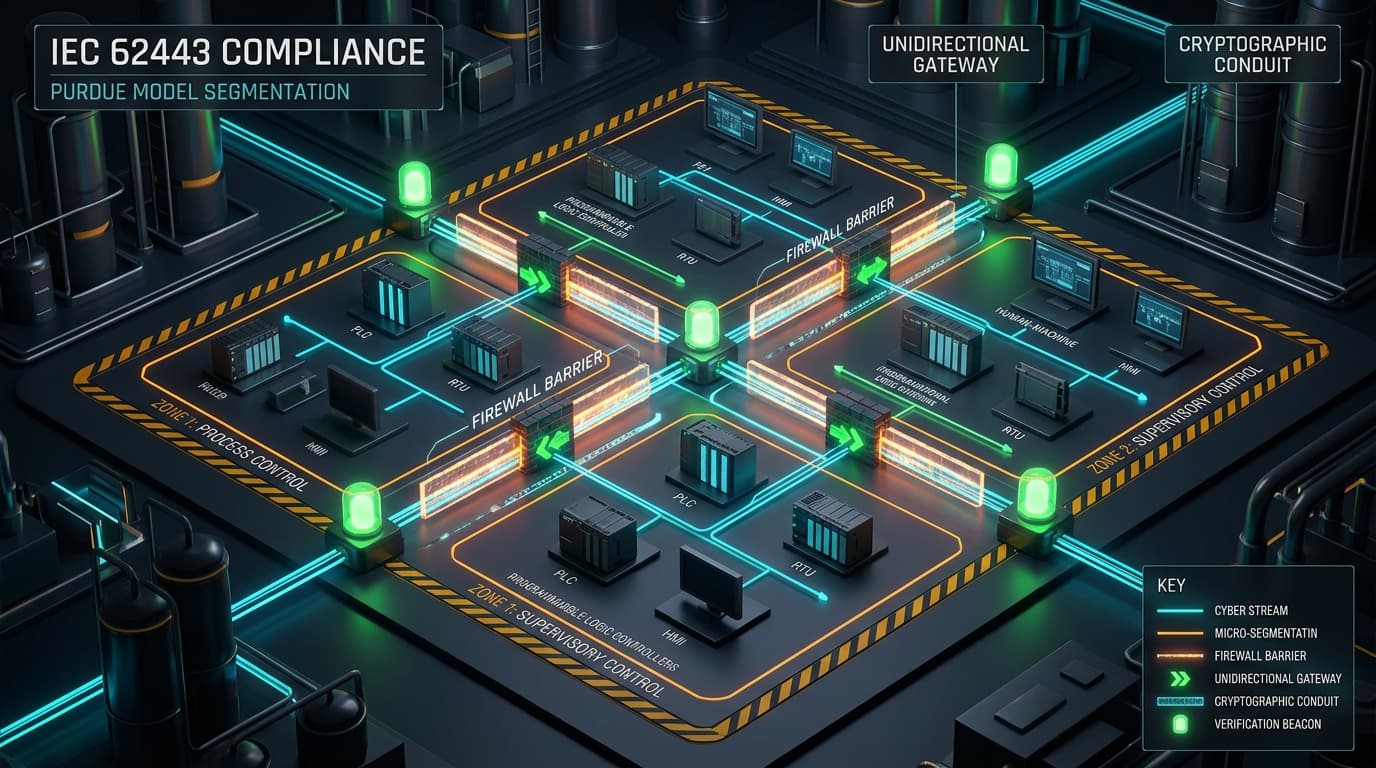
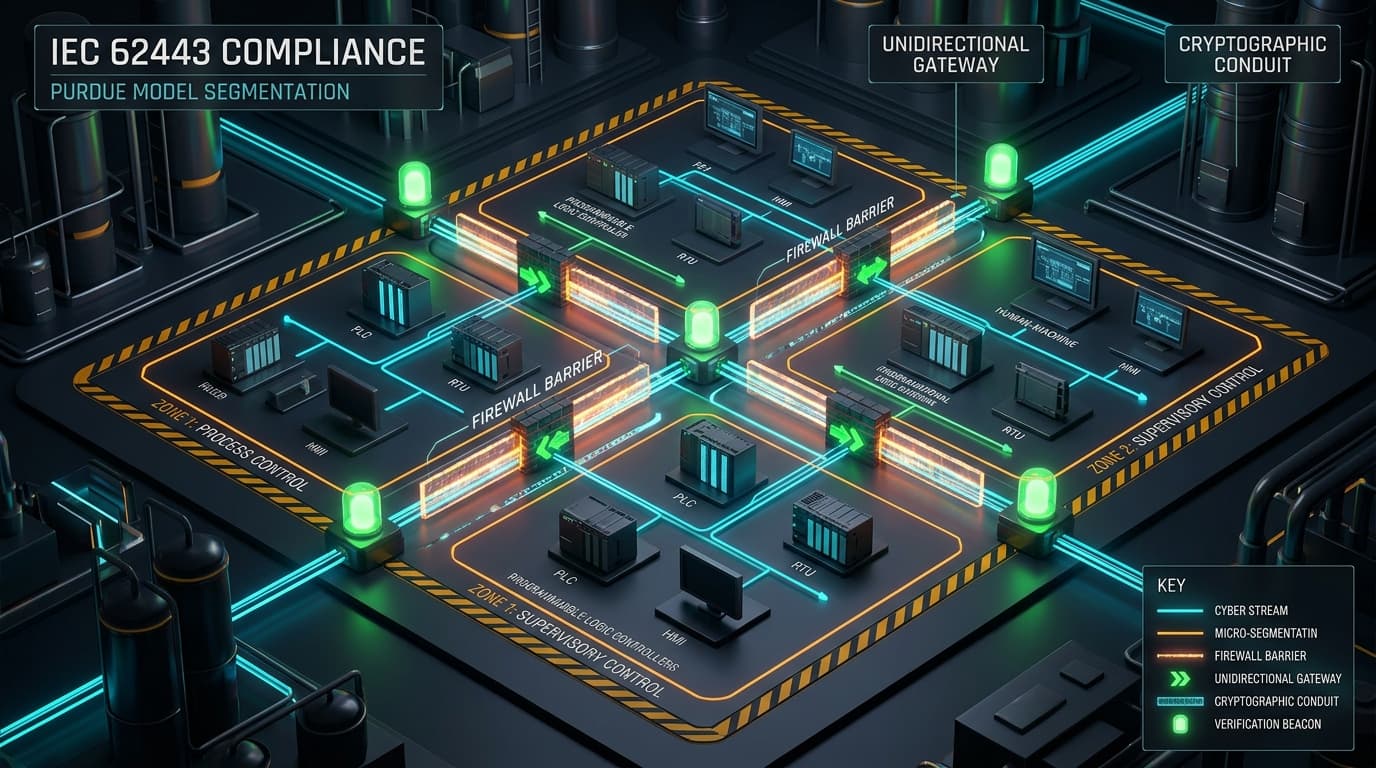
To mitigate CVE-2026-13348 and prevent unauthorized access to UPS controllers, security architects must implement the defense-in-depth principles outlined in IEC 62443-3-2 and IEC 62443-3-3:
1. Apply Vendor Security Updates
Schneider Electric recommends that all operators consult the official Schneider Electric Security Notification portal to download and apply the latest remediated PowerChute software releases and hotfixes.
2. Enforce Strict Purdue Model Segmentation
Power management controllers should never reside on corporate enterprise networks (Purdue Level 4) or public subnets:
# Firewall Rule: Restrict PowerChute Management Ports
# Allow inbound access ONLY from dedicated administrative jump hosts:
iptables -A INPUT -p tcp --dport 3052 -s 10.100.5.50 -j ACCEPT
iptables -A INPUT -p tcp --dport 3052 -j DROP

# Block all direct internet inbound/outbound from UPS subnets
iptables -A FORWARD -s 10.200.0.0/24 -o eth0 -j DROP
3. Disable Unnecessary Remote Management Protocols
Where serial connections or dedicated hardware cables are sufficient, disable remote web management and SNMP daemons. If remote monitoring is required, mandate encrypted VPN access protected by multi-factor authentication (MFA).