Executive Threat Summary: Data Center Environmental Sentinel Compromised
The Cybersecurity and Infrastructure Security Agency (CISA) and Schneider Electric have issued a critical advisory addressing multiple vulnerabilities in Schneider Electric NetBotz 5 750 and 755 physical monitoring appliances. Detailed under CISA advisory identifier ICSA-26-260-05 and Schneider Electric bulletin SEVD-2026-223-02, the primary vulnerability, CVE-2026-13336 (CVSS 7.8), allows authenticated adversaries to execute arbitrary operating system commands with full root privileges by uploading a tampered backup archive.
The advisory also addresses CVE-2026-13337, an HQL SQL injection vulnerability within the web service interface that enables attackers to manipulate internal database records, extract credentials, and bypass lower-level authorization barriers.
NetBotz appliances serve as the frontline physical and environmental sentinels in hyperscale and enterprise data centers, aggregating readings from temperature, humidity, fluid leakage, door contacts, and security surveillance cameras. Compromising these appliances grants adversaries a persistent hardware bridge inside restricted data hall network segments.
Attack Mechanics: Backup Restoration Command Injection
The command injection vulnerability resides in the appliance's backup restoration subsystem (classified under CWE-78). When an administrator restores system configuration states from an uploaded backup archive (typically a compressed tarball or zip package), the backend unpacks and parses configuration metadata:
# Conceptual flaw in backup extraction routine
tar -xzf /tmp/uploaded_backup.tar.gz -C /var/netbotz/
# Backend script executes shell utilities directly with values from configuration files:
system("/usr/bin/apply_config.sh " + backup_network_hostname);
The restoration script failed to sanitize parameters within the archive's metadata files before executing shell scripts. An adversary with access to the web interface can download a legitimate backup, modify configuration fields to contain shell metacharacters (e.g., ; id > /tmp/owned.txt #), re-archive the package, and initiate a system restore. Upon processing, the appliance executes the embedded payload as the root user.
Database HQL Injection (CVE-2026-13337)
The companion vulnerability (CWE-564) stems from insufficient sanitization of user-supplied inputs in web service API queries that map directly to the Hibernate Query Language (HQL) data layer. Authenticated users can inject arbitrary database operations, enabling unauthorized extraction of stored credentials, sensor alarm thresholds, and surveillance access logs.
Defensive Hardening Playbook
1. Restrict Physical Monitoring Networks
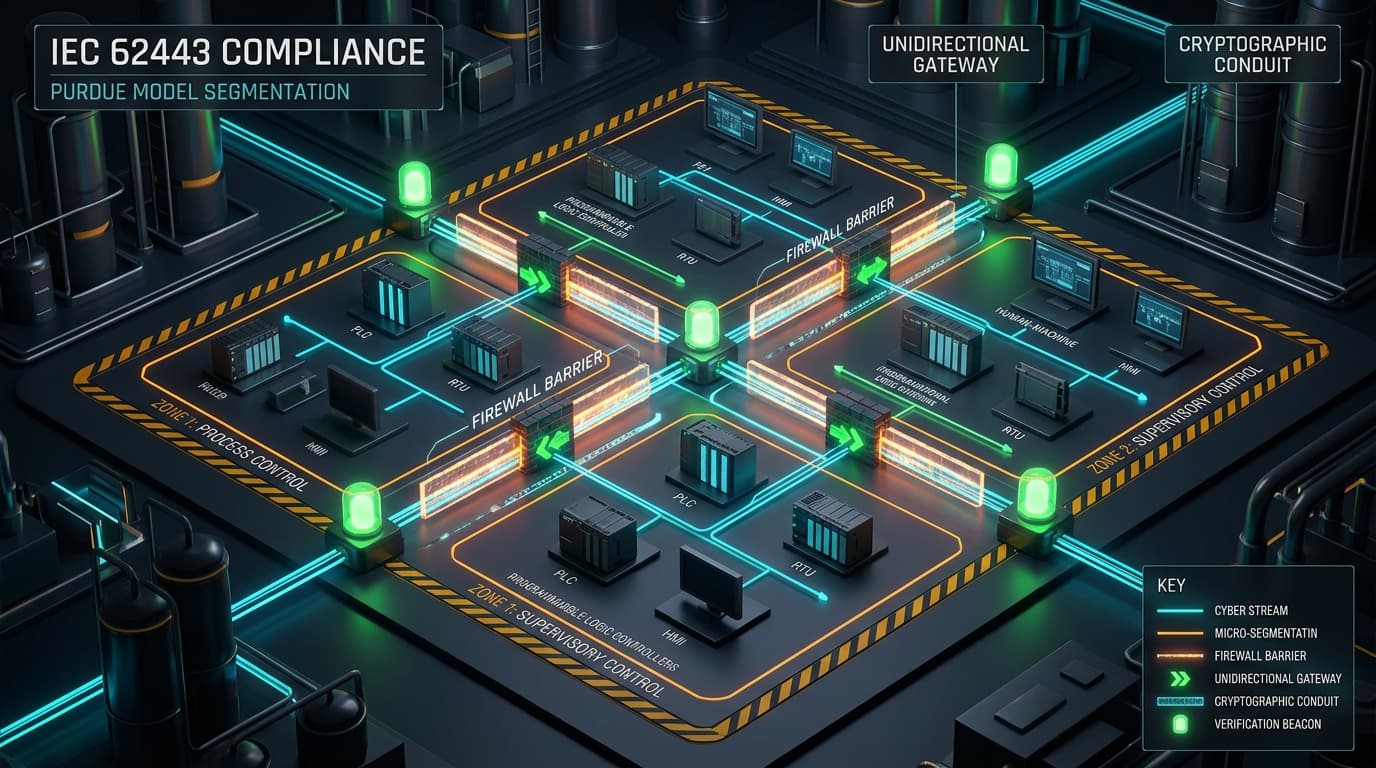
Data center environmental controllers should never be exposed to corporate LANs or external internet routing. Place NetBotz appliances in a dedicated, isolated Management VLAN (Purdue Level 3.5 / Out-of-Band Management Network).
2. Validate Backup Provenance & Integrity
Ensure that backup archives are cryptographically signed or stored on write-protected storage to prevent unauthorized tampering prior to restoration events. Restrict the "Restore Backup" administrative permission to verified data center infrastructure engineers.
3. Apply Schneider Electric Firmware Updates
Download and install the latest remediated firmware releases for NetBotz 750 and 755 appliances directly from the official Schneider Electric customer portal as specified in bulletin SEVD-2026-223-02.