Executive Overview
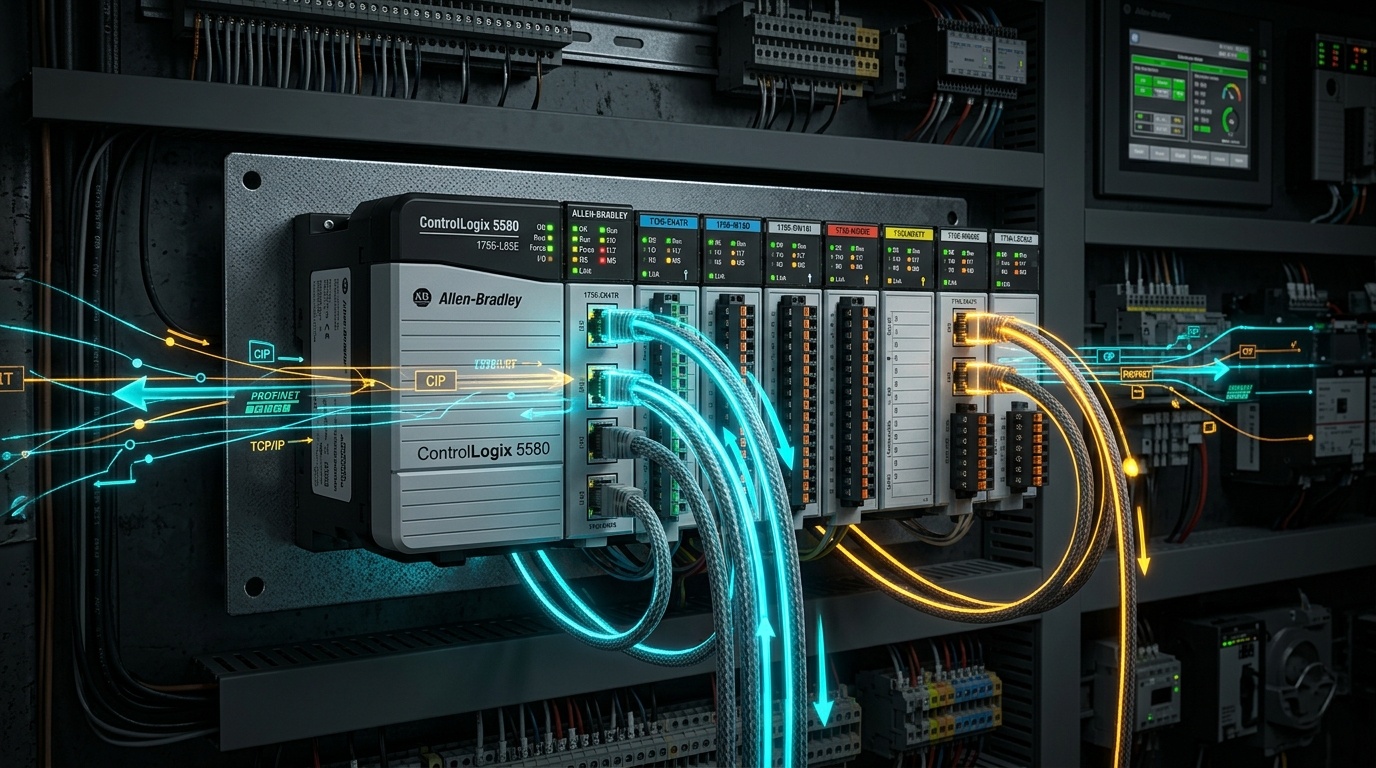
Rockwell Automation and the Cybersecurity and Infrastructure Security Agency (CISA) have disclosed a critical denial-of-service and state desynchronization vulnerability, cataloged as CVE-2026-70820, affecting the Allen-Bradley ControlLogix 5580 and GuardLogix 5580 programmable automation controller (PAC) families. The flaw, which holds a CVSS v3.1 score of 8.8 (High/Critical), enables unauthenticated network actors on the local EtherNet/IP segment to crash the controller into a Non-Recoverable Fault (NRF) state.
ControlLogix 5580 controllers are deployed globally across high-throughput discrete and batch manufacturing industries, including automotive assembly, pharmaceutical bioreactors, food and beverage packaging, and heavy metallurgical processing. A non-recoverable controller halt forces physical emergency stop mechanisms, causing production line shutdowns and operational delays.
Vulnerability Dissection: CIP Multi-Request Stride Memory Boundary
The vulnerability exists within the EtherNet/IP encapsulation stack handling the Common Industrial Protocol (CIP) over TCP/UDP port 44818. Specifically, the parser for the Multiple Service Packet Service (Service Code 0x0A) contains an arithmetic integer overflow flaw when computing stride offsets between embedded request payloads.
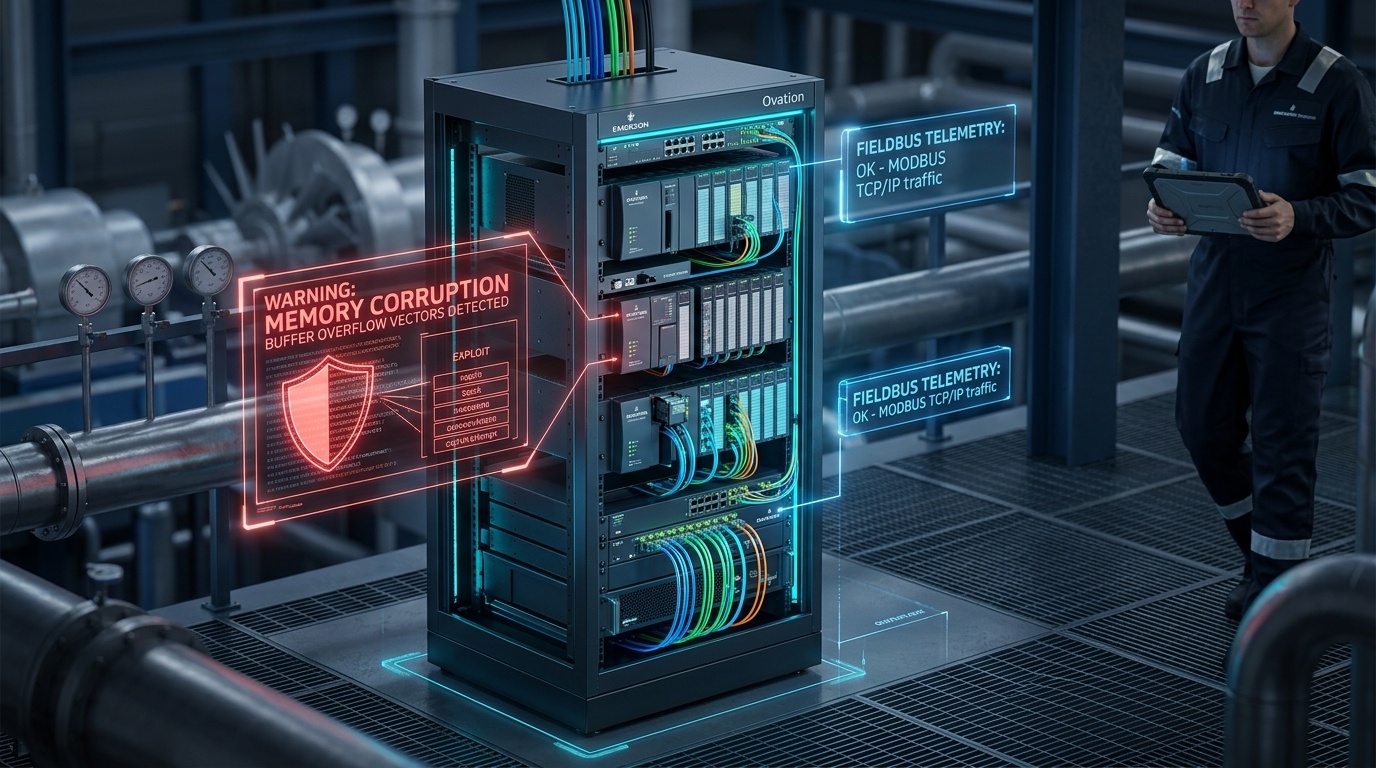
When an attacker constructs a CIP Multiple Service Packet containing a crafted number of sub-requests with negative or excessively large stride length indicators, the parser attempts to read beyond the designated packet memory pool. This generates a memory management unit (MMU) fault in the controller firmware:
// Exploit Packet Structure (EtherNet/IP CIP Encapsulation):
// Command: 0x006F (Send RR Data)
// CIP Service: 0x0A (Multiple Service Packet)
// Request Path: 0x20 0x02 0x24 0x01 (Message Router Object)
// Offset Count: 0x0004
// Malformed Stride Offset: 0xFFFF -> Triggers Integer Wrap-around in RTOS Pointer Calculation
Operational Impact on Purdue Level 1 Industrial Cells
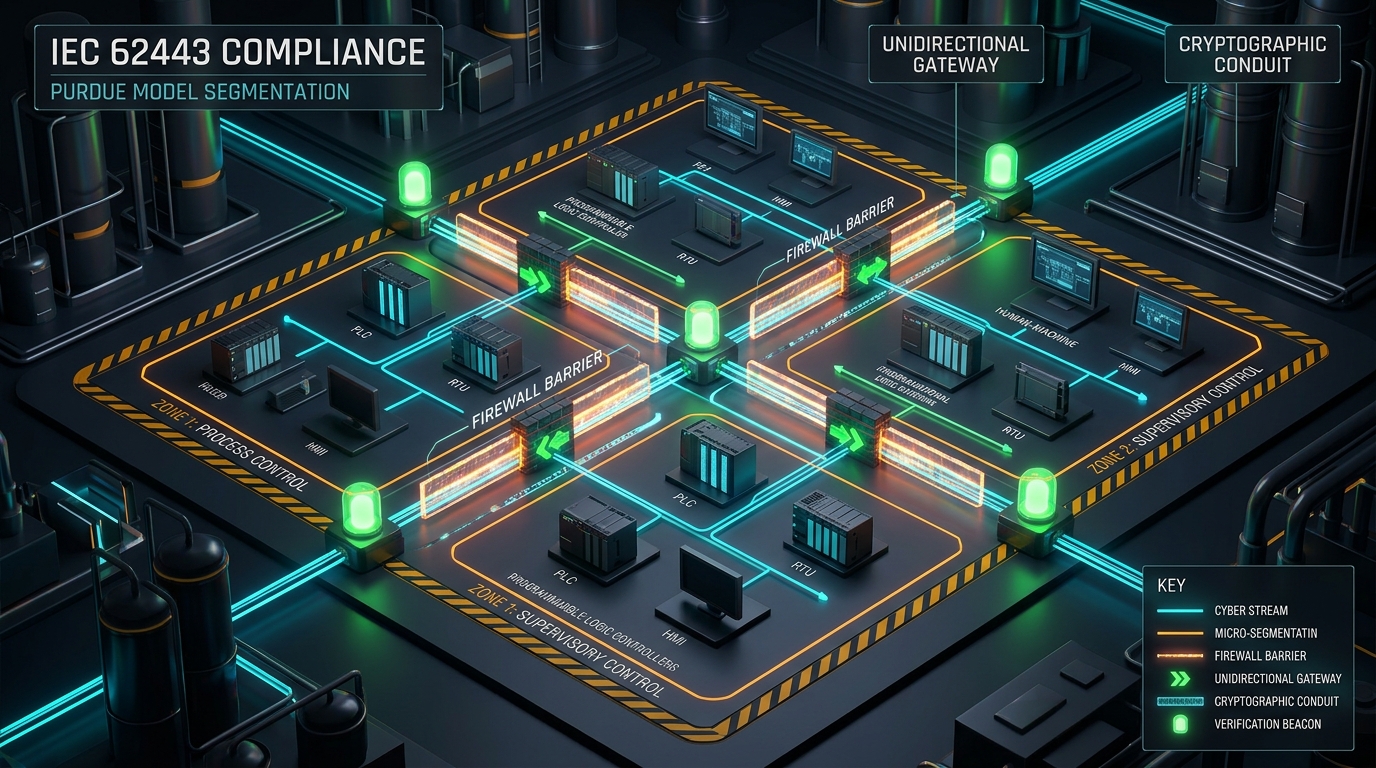
Under the Purdue Enterprise Reference Architecture (PERA), ControlLogix controllers reside at Level 1 (Basic Control), communicating directly with Level 0 sensors, servo drives, and variable frequency drives (VFDs) while reporting status to Level 2 SCADA/HMI displays.
Because the CIP Multiple Service Packet service does not require session authentication by default, any endpoint that can reach port 44818 on the controller’s 1756-EN4TR or embedded ethernet port can transmit the malicious packet. The impact includes:
- Immediate Production Halt: The controller transitions from RUN mode to a Major Fault state, dropping all I/O connection outputs to safe-state de-energized conditions.
- Loss of Diagnostic Telemetry: Because the controller's communication stack crashes simultaneously, SCADA operators lose live temperature, pressure, and position readings until a physical power-cycle occurs.
- Physical Safety Interlock Stress: Abrupt de-energization of heavy machinery can cause mechanical jams or thermal shocks in industrial batch processing furnaces.
Remediation & Defense-in-Depth Checklist
Rockwell Automation has released patched firmware versions. Industrial cybersecurity teams should enact the following remediation measures:
- Update Controller Firmware: Upgrade ControlLogix 5580 and GuardLogix 5580 controllers to firmware versions
v35.014orv36.012or later. - Implement CIP Security: Deploy CIP Security (TLS/DTLS encrypted and authenticated communications) to ensure only authorized engineering workstations and HMIs can establish connections with the controller.
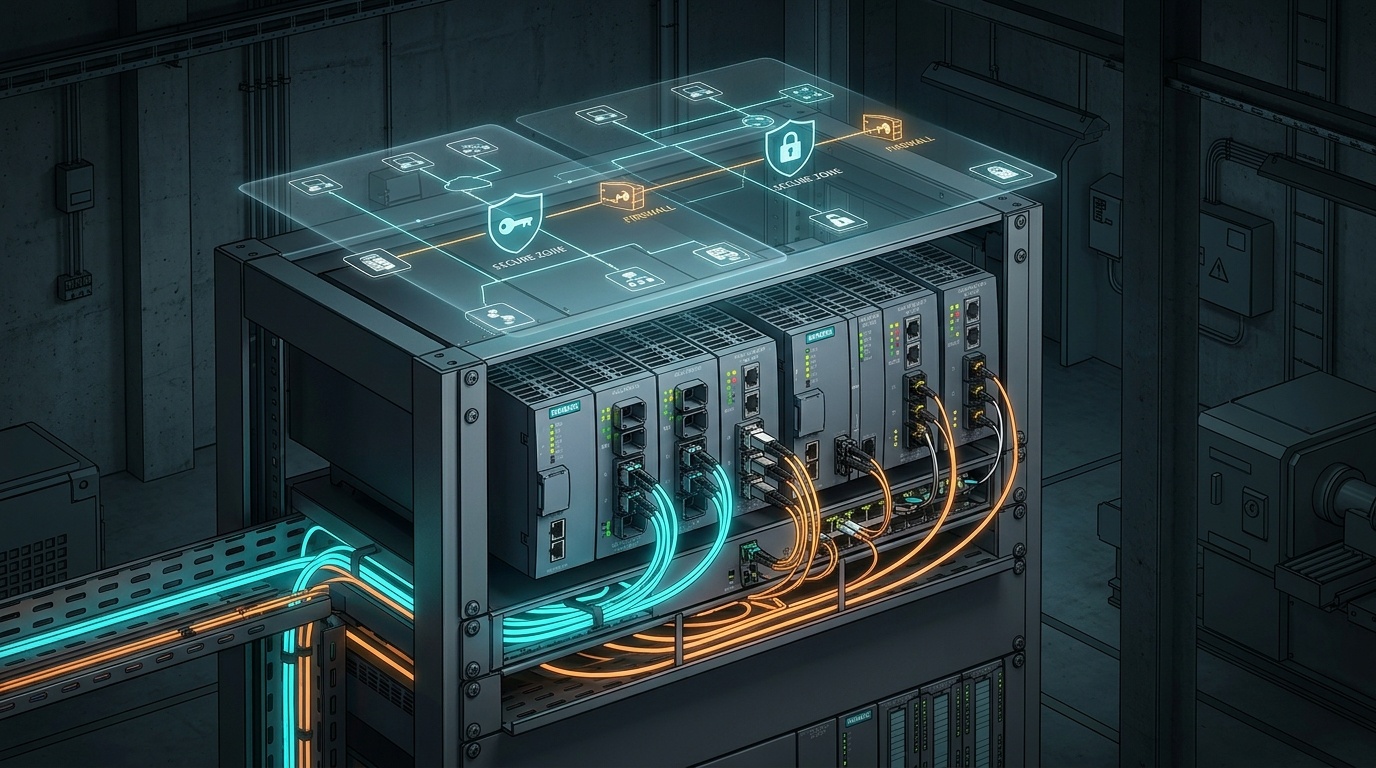
- Cell/Area Perimeter Firewalls: Restrict EtherNet/IP port 44818 at the cell boundary firewall (IEC 62443-3-2 Conduit Enforcement), blocking all traffic originating outside the local industrial automation zone.
- Toggle Controller Physical Key Switch: Turn the front-panel physical key switch on the 1756-L8z controller to the RUN position (preventing remote firmware or program changes via the network) once commissioning is complete.