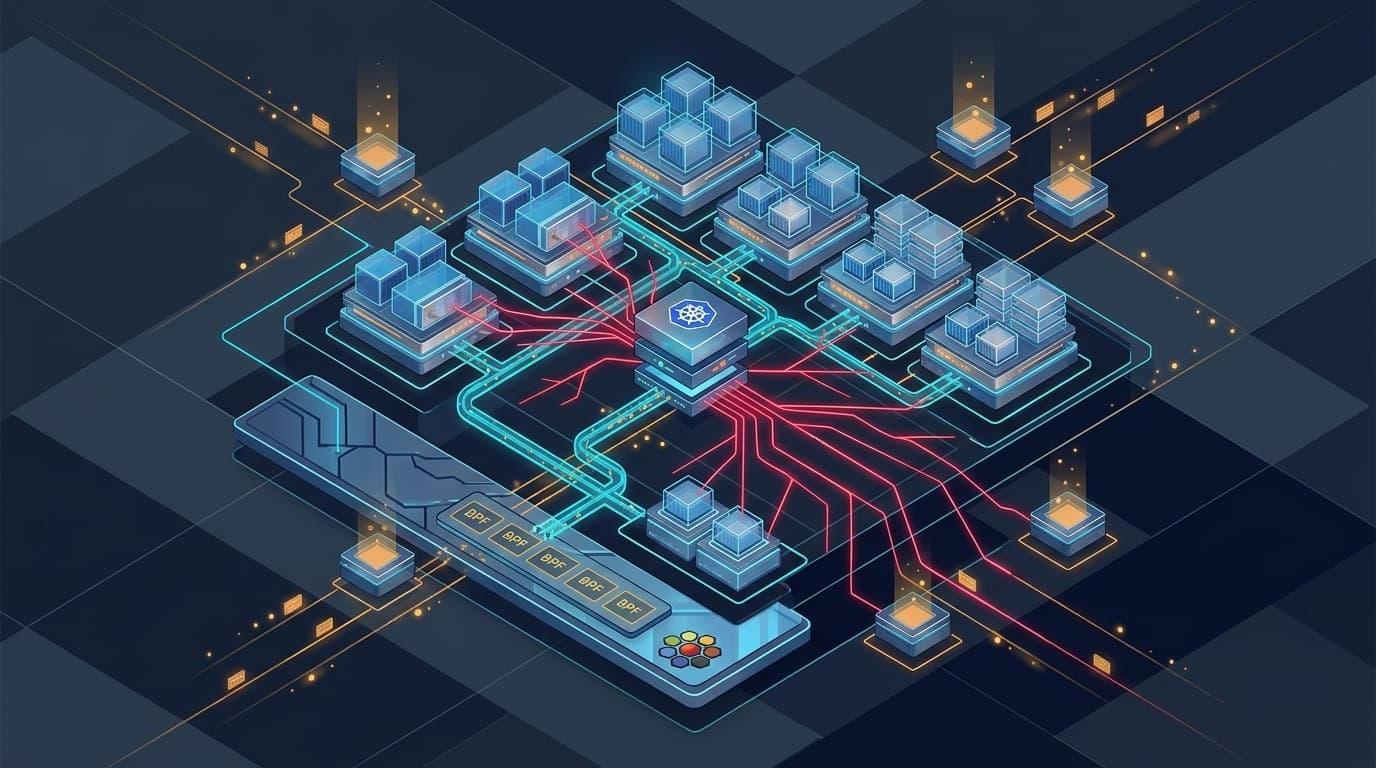
Managed cloud and infrastructure provider Rackspace has formally announced the impending shutdown of its Rackspace Spot cloud service. The decision to permanently sunset the offering follows an unauthorized security breach in which external threat actors gained access to customer Kubernetes environments, sensitive operational secrets, and core configuration data. Organizations utilizing the Spot infrastructure have been provided an operational deadline of December 8 to transition their containerized workloads, migrate critical service dependencies, and extract stored cluster data before infrastructure resources are permanently decommissioned.
The Incident: Breach Scope and Decommissioning Timeline
According to enterprise security notifications issued by Rackspace, threat actors managed to compromise the underlying management plane of the Rackspace Spot platform. Once inside, the attackers obtained unauthorized visibility into and control over customer Kubernetes clusters, encompassing sensitive infrastructure variables, secrets, and customer deployment configurations. Rather than attempting a prolonged remediation and platform rebuild while services remain live, the enterprise concluded that the most effective containment and risk mitigation path was the total shutdown of the product line.
The timeline leaves affected enterprise administrators with a constrained window to reconfigure, export, and redeploy multi-tier containerized systems. Rackspace confirmed that platform services, network connectivity, and management interfaces will cease operation following the cutoff date. Customers must retrieve persistent volumes, migrate application definitions, and transition stateful database deployments to secondary cloud platforms or dedicated private clusters prior to the deadline.
Technical Context: The Architecture of Spot and Kubernetes Secret Exposure
The Rackspace Spot platform was engineered to deliver dynamically priced, bid-based cloud compute capacity optimized for containerized workloads orchestrating distributed applications through managed Kubernetes. Spot compute architectures achieve cost efficiencies by packing ephemeral compute instances across pooled underlying hardware, exposing APIs that interface directly with control-plane orchestrators.
When an adversary breaches administrative boundaries within a managed container fabric, the operational blast radius is broad and severe:
- Kubernetes Secrets and Environmental Tokens: Within Kubernetes deployments,
Secretobjects are standard resources used to store sensitive configuration elements, including database connection strings, symmetric encryption keys, mutual TLS certificates, container registry credentials, and OAuth tokens. Unauthorized access to cluster secrets allows an adversary to pivot laterally beyond the initial orchestration plane. - Pod Workloads and Namespace Cross-Access: Depending on the administrative privileges achieved during the breach, threat actors could inspect configuration maps, inspect mounted volume mounts, extract runtime environmental variables injected into containers, and manipulate active control-plane components.
- API and Cluster Credentials: Access to cluster-level kubeconfig credentials, administrative service accounts, or cluster role bindings allows persistent administrative control over the running namespaces, permitting arbitrary deployment modifications and unauthorized data extraction.
Affected Deployments and Operational Impact Assessment
The scope of this incident is centered exclusively on workloads, container clusters, and data volumes operating within the Rackspace Spot cloud platform environment. Traditional dedicated hosting, private enterprise clouds, and mainstream enterprise managed cloud services operating outside the Spot multi-tenant platform remain outside the stated scope of this decommissioning notice.
For organizations maintaining production or staging environments on Spot, the consequences extend well beyond data extraction. The loss of underlying secrets implies that every external system communicating with affected clusters—such as enterprise data lakes, third-party transactional APIs, continuous integration/continuous deployment (CI/CD) pipelines, and private code repositories—must be treated as untrusted until audited and re-keyed.
Practical Incident Response and Evacuation Playbook
Engineering teams and system administrators supporting deployments on Rackspace Spot must execute an urgent two-phase response plan focused on secure workload evacuation and universal secret rotation:
Phase 1: Workload Migration and Asset Extraction (Deadline: December 8)
- Export Deployment Manifests and Helm Charts: Download all Helm release definitions, Kubernetes custom resource definitions (CRDs), and manifest declarations defining cluster state. Avoid copying compromised raw secrets directly into destination environments.
- Extract Persistent Storage Data: Back up all persistent storage volumes (PVs and PVCs) and associated block storage mappings. Conduct data validation and integrity checksum verification to guarantee stateful database snapshots have exported cleanly without corruption.
- Reroute DNS and Ingress Traffic: Update global DNS records, external load balancer entries, and CDN routing tables to redirect production ingress traffic away from the Spot ingress controllers to alternate infrastructure.
Phase 2: Comprehensive Secret Revocation and Blast Radius Containment
- Universal Credential Invalidation: Immediately revoke and regenerate all database credentials, external API tokens, cloud provider service principal keys, and private SSH keys that were injected, mounted, or referenced within any cluster hosted on the platform.
- Certificate Authority and TLS Turnover: Invalidate and reissue all server and client SSL/TLS certificates and mutual TLS (mTLS) identities configured inside the compromised Kubernetes namespaces.
- Continuous Integration / Continuous Deployment (CI/CD) Audits: Invalidate any deploy tokens, registry access passwords, or automated deployment webhooks that connected build pipelines directly to the Spot platform APIs.
- Downstream Telemetry Analysis: Interrogate audit trails, authentication logs, and database access records across downstream corporate services to detect anomalous queries or API requests originating from the compromised cluster endpoints.
Incident Parameters and Remediation Matrix
The operational aspects and strategic responses regarding the Rackspace Spot security breach are structured as follows:
| Operational Dimension | Confirmed Parameter | Administrative Action Required |
|---|---|---|
| Affected Architecture | Rackspace Spot Managed Cloud & Kubernetes Clusters | Complete export of persistent volumes and application configs |
| Compromise Scope | Unauthorized cluster access, secrets, configuration data | Immediate invalidation of all mounted tokens and credentials |
| Service Deadline | December 8 | Full evacuation of workloads and cutover of DNS records |
| Downstream Impact | Secondary enterprise systems sharing cluster-managed keys | Log auditing and credential rotation across adjacent systems |
What Remains Unknown
While the confirmation of the breach and the decommissioning directive have been formally established, significant technical details regarding the intrusion remain unconfirmed:
- Root-Cause Exploitation Vector: The specific technical flaw, misconfiguration, or identity compromise that initially allowed the adversaries to bridge the management boundary of the platform has not been publicly specified.
- Threat Actor Attribution and Intent: No specific cybercrime syndicate or advanced persistent threat (APT) actor has been formally attributed to the campaign, nor has confirmation been provided regarding whether the intrusion was an opportunistic data-harvesting operation or targeted corporate espionage.
- Exact Customer Volume: The aggregate number of enterprise tenants and individual Kubernetes cluster instances impacted by the intrusion has not been disclosed.
Security and engineering teams utilizing the Spot platform must treat all operational secrets as compromised and prioritize full migration before the service is permanently taken offline.