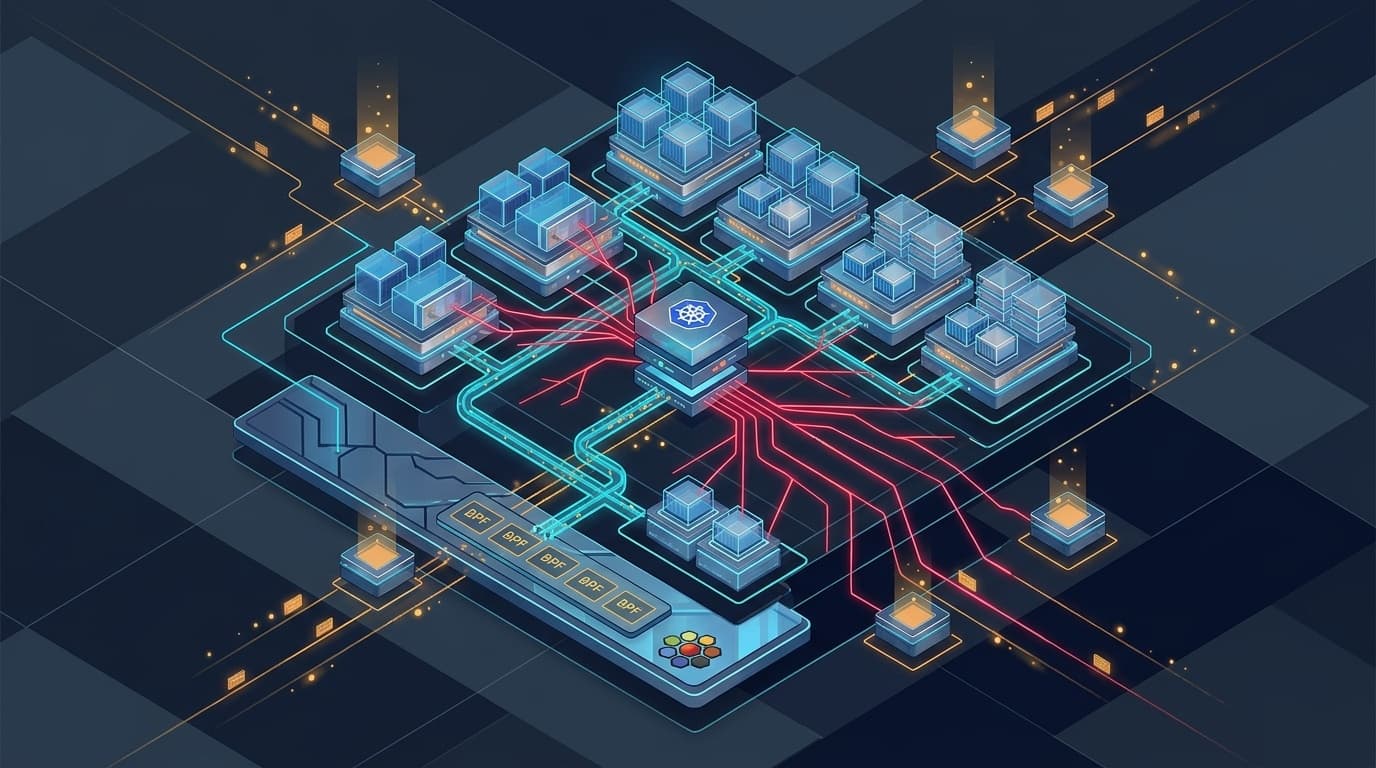
Amazon Web Services has updated AWS Network Firewall to support context-aware rules, introducing the capability to inspect and filter network traffic based on the native cloud resources initiating or receiving connections rather than relying strictly on static IP address blocks. According to documentation released via the Amazon AWS Security Advisory Portal, administrators can now author firewall policies that directly reference cloud architecture components, including virtual private clouds (VPCs), individual subnets, security groups, and AWS Transit Gateway attachments.
The Operational Shift from IP Mapping to Resource Semantics
In conventional cloud network deployments, network access control lists and traditional firewall engines operate predominantly across Layer 3 and Layer 4 parameters, inspecting source and destination Internet Protocol (IP) addresses, protocols, and port ranges. While effective in static perimeter architectures, this model introduces significant operational drag in highly dynamic, ephemeral cloud environments. Autoscaling events, transient container workloads, microservice orchestrations, and regular infrastructure redeployments lead to continuously shifting internal IP addresses.
Previously, maintaining consistent perimeter segmentation required security teams to implement continuous synchronization pipelines. These automation scripts tracked CloudWatch events or AWS Config state changes to dynamically update IP-based CIDR ranges inside firewall rule groups. When network configurations drifted or automation pipelines experienced latency, rules risked applying outdated network definitions, potentially leading to inadvertent traffic blockage or unauthorized traffic transit. By introducing context-aware rules, AWS Network Firewall offloads the mapping overhead directly to the underlying AWS control plane, resolving the identity of network traffic directly through cloud resource primitives.
Supported Context Attributes and Architecture Mapping
The newly announced capability allows network architects to enforce inspection and boundary isolation policies across several discrete resource layers within the AWS network fabric. Rather than calculating complex CIDR overlap schemes, security policies can declare explicit structural boundaries across the following native entities:
- Virtual Private Clouds (VPCs): Define boundaries that permit or deny inter-VPC communications based on the originating or terminating VPC identity across an enterprise architecture.
- Subnets: Implement micro-segmentation policies that isolate internal workloads (such as database tiers or private processing subnets) from public-facing or edge ingress subnets.
- Security Groups: Align centralized firewall packet filtering directly with logical application tiers defined in host-level elastic network interface security groups.
- Transit Gateway Attachments: Manage lateral traffic flows and packet inspection across regional hub-and-spoke topologies mediated by AWS Transit Gateway.
Comparing Traditional CIDR-Based Rules and Context-Aware Policies
The structural transition from static addressing to resource-aware primitives simplifies rule maintenance while eliminating misconfiguration risks associated with overlapping IP allocations.
| Operational Dimension | Traditional IP/CIDR Rules | Context-Aware Firewall Rules |
|---|---|---|
| Addressing Mechanism | Explicit IPv4 or IPv6 CIDR blocks | Native AWS resource identifiers (VPCs, Subnets, Security Groups) |
| Dynamic Workload Adaptation | Requires synchronization scripts and automation to track IP changes | Automatically resolves IP shifts natively through the AWS network fabric |
| Cross-VPC Scaling Complexity | High; requires CIDR tracking across overlapping or adjacent subnets | Low; targets abstract logical boundaries directly |
| Administrative Maintenance | Frequent updates required during infrastructure provisioning | Rules remain valid as instances spin up or down within assigned groups |
Defensive Implementation and Practical Response
Organizations operating centralized inspection architectures—such as dual-arm inspection VPCs or centralized transit inspection hubs—should review existing AWS Network Firewall rule groups to determine where context-aware policies can replace brittle, sprawling CIDR lists. When transitioning to context-aware rule configurations, engineering teams should consider the following migration sequence:
- Audit Existing Static Rule Groups: Identify complex 5-tuple rule sets that exist solely to bridge communication between known VPC tiers, internal service subnets, or autoscaling instance pools.
- Model Resource Boundaries: Translate current network access control boundaries into logical resource groupings, verifying that security groups and subnet structures accurately reflect intended workload isolation boundaries.
- Progressive Policy Deployment: Deploy context-aware rules in parallel within non-production transit topologies, validating that traffic metrics and CloudWatch flow logs reflect expected allow or drop decisions before altering production routing tables.
- Decommission Custom Sync Tooling: Identify and systematically retire bespoke Lambda functions or orchestrations that were previously deployed to scrape IP assignments and synchronize firewall rule groups.
Remaining Questions and Operational Boundaries
While the feature substantially lowers maintenance friction for internal perimeter enforcement, several engineering parameters remain unelaborated in initial portal notices. Specifically, AWS has not detailed performance latency benchmarks when evaluating high-throughput deep packet inspection across deeply nested resource contexts versus standard 5-tuple matching. Additionally, explicit guidelines concerning rule scaling quotas, multi-account resource resolution limits via AWS Resource Access Manager (RAM), and retroactive logging nuances within flow log outputs have not been fully published. Organizations managing complex multi-account environments should consult upcoming technical bulletins for exact provisioning limits.