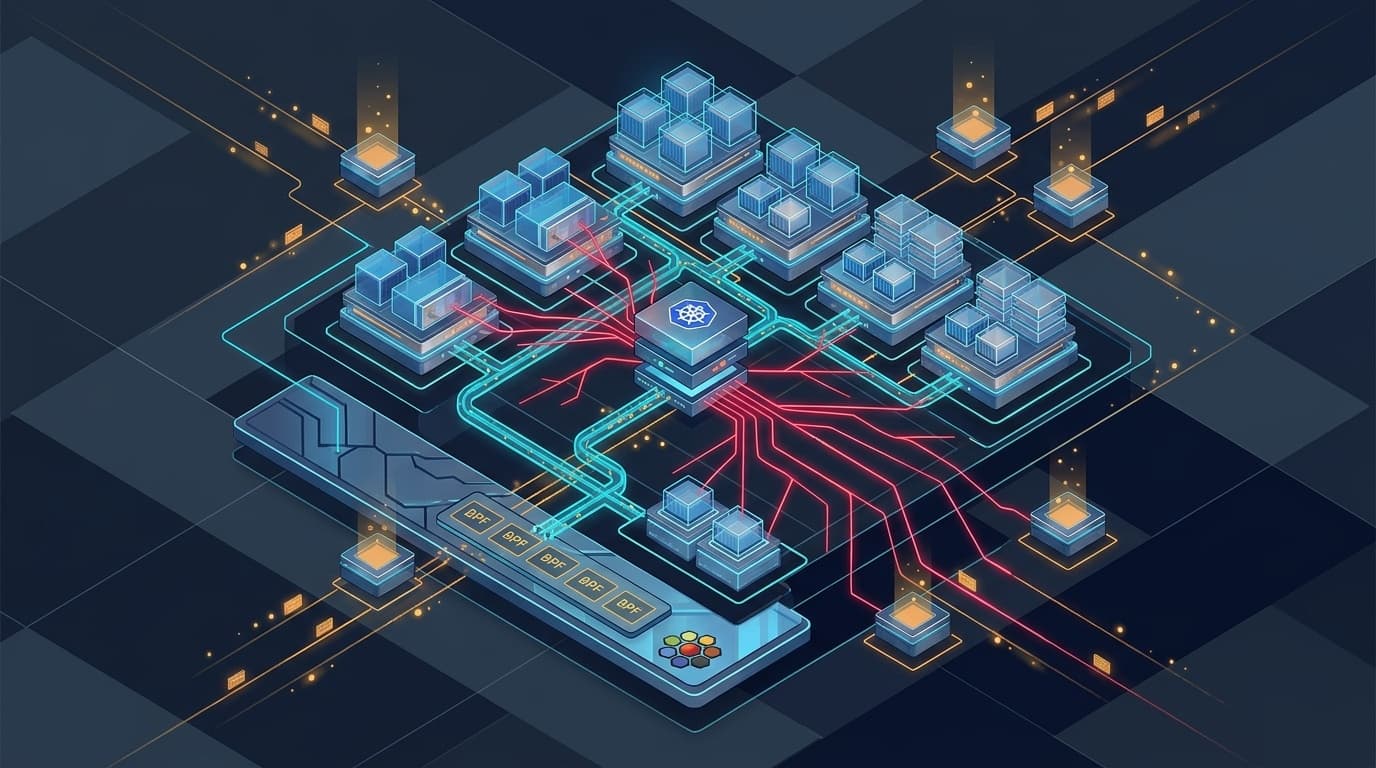
Amazon Web Services has introduced context-aware rules for AWS Network Firewall, providing security teams with the capability to match and filter network traffic based on native AWS infrastructure identifiers rather than relying exclusively on static IP addresses or CIDR blocks. Under this operational capability, firewall rules can directly reference AWS resource contexts—including virtual private clouds (VPCs), subnets, security groups, and AWS Transit Gateway attachments.
In dynamic cloud environments where workloads scale horizontally and ephemeral instances frequently change IP allocations, maintaining traditional rule sets that depend on IP addresses creates continuous operational overhead and increases the risk of configuration drift. By mapping inspection logic directly to the structural topology of the cloud deployment, the update aims to simplify perimeter filtering, streamline microsegmentation strategies, and reduce rule management friction across sprawling enterprise architectures.
The Operational Limits of IP-Centric Firewall Rule Sets
Traditional stateful and stateless network firewalls inspect packet headers against access control lists that define source and destination IPv4 or IPv6 addresses. While this construct remains foundational in static on-premises data centers, modern enterprise cloud architectures introduce structural complexity that challenges IP-based filtering models:
- Ephemeral Workloads and Auto-Scaling: Microservices, container platforms, and auto-scaling groups routinely spin compute instances up and down, cycling through dynamic IP addresses across multi-availability zone deployments.
- Overlapping CIDR Ranges: Organizations managing multiple interconnected accounts, mergers, or complex partner network integrations frequently contend with overlapping IP spaces, complicating disambiguation when traffic traverses transit layers.
- Fragile Orchestration Scripts: Security and cloud engineering teams often resort to complex automation pipelines, Lambda scripts, or dynamic address group managers to synchronize changing IP addresses with firewall policy definitions. A single synchronization delay can lead to unintended traffic drops or unmonitored exposure.
By shifting rule definition parameters from transient networking endpoints to persistent architectural entities, context-aware rule configurations decouple traffic governance policies from IP address assignment lifecycles.
Technical Context: How Resource-Aware Matching Operates
The core mechanism of context-aware rules allows AWS Network Firewall inspection engines to evaluate traffic metadata in conjunction with AWS resource identifiers. Rather than parsing packet headers solely for raw numerical endpoints, rules can evaluate the provenance and destination context of network packets through native AWS constructs.
Supported AWS Structural Contexts
Security administrators can construct firewall filtering rules that directly name and evaluate the following architectural resources:
- Virtual Private Clouds (VPCs): Define perimeter filtering boundaries that isolate broad departmental or administrative environments, allowing or inspecting traffic based on the specific VPC origination or destination.
- Subnets: Implement granular zone isolation, such as strictly gating traffic moving between public presentation subnets, private application tiers, and restricted database subnets.
- Security Groups: Align centralized perimeter firewall policies directly with logical instance and workload groupings, reinforcing zero-trust access controls without tracking individual elastic network interfaces (ENIs).
- Transit Gateway Attachments: Enforce routing and inspection policies across cross-account or inter-region Transit Gateway hubs, governing inter-VPC transit based on the attachment channel.
Comparison: Traditional IP Rule Sets vs. Resource Context Rules
The operational distinctions between standard IP-based firewall definitions and context-aware filtering rules highlight significant differences in deployment maintenance:
| Operational Aspect | Traditional IP-Centric Rules | Context-Aware Resource Rules |
|---|---|---|
| Match Criteria | Static IPv4/IPv6 addresses, CIDR blocks, port ranges, protocols. | Resource identifiers (VPC ID, subnet ID, security group ID, transit gateway attachment). |
| Dynamic Workload Handling | Requires continuous re-synchronization scripts or automated address group updates. | Automatically matches workloads as long as they reside within the designated resource boundaries. |
| Rule Set Volume | Scales upward as new subnets, CIDRs, and instance ranges are provisioned across accounts. | Consolidates policy logic by targeting overarching cloud constructs directly. |
| Drift Vulnerability | High risk of stale IP definitions allowing unapproved traffic or breaking new services. | Low risk from IP renumbering; policies persist through compute churn and auto-scaling events. |
Affected Deployments and Architecture Scenarios
This capability affects enterprise network architectures utilizing AWS Network Firewall as a centralized or distributed traffic inspection point. Specific deployment patterns that stand to modify their governance posture include:
- Centralized Inspection Hubs: Deployments where all egress and spoke-to-spoke network traffic routes through a dedicated inspection VPC via an AWS Transit Gateway. Centralized policies can now evaluate the originating Transit Gateway attachment or source VPC directly without decoding complex internal routing tables.
- Multi-Tier Application Isolation: Distributed deployments hosting sensitive data workloads where strict segmentation requires that database subnets only accept connections initiated by designated application-tier security groups.
- Hybrid and Multi-Account Environments: Cloud estates spanning dozens or hundreds of AWS accounts where central platform engineering teams distribute baseline firewall rulesets across organization units.
Practical Implementation and Security Engineering Guidance
Cloud security architects and infrastructure engineers evaluating or implementing context-aware rules in AWS Network Firewall should consider several practical baseline steps:
1. Architecture and Resource Inventory Audit
Before modifying active firewall rule sets, ensure all target resource identifiers—such as VPC IDs, subnet IDs, security group IDs, and Transit Gateway attachment IDs—are clearly documented, tagged, and standardized across infrastructure-as-code (IaC) templates. Inconsistent security group usage can lead to unintended policy bypasses or over-permissive matches.
2. Phased Policy Transition
Migrate high-turnover IP-based rules to context-aware rules in a staged manner:
- Identify rules that frequently require automated script updates due to compute auto-scaling.
- Replicate existing IP filtering policies using resource context rules in alert or non-blocking evaluation modes to verify traffic matching accuracy.
- Analyze firewall telemetry in Amazon CloudWatch or Amazon S3 logs to validate that contextual attributes match expected packet flows without dropping authorized traffic.
3. Validate Ingress and Egress Inspection Points
Ensure that firewall endpoints are strategically positioned along the packet path to capture necessary resource metadata. For Transit Gateway topologies, verify that inter-VPC traffic is routed through the firewall endpoint prior to egress into target attachment points to enforce attachment-level filtering rules correctly.
What Remains Unknown
While the architectural functionality of context-aware rules has been established, certain long-term operational factors remain unverified in production benchmarks:
- Latency and Rule Evaluation Overhead: Independent performance metrics evaluating whether processing deep resource context attributes introduces measurable packet processing latency compared to raw stateless CIDR matching remain to be documented across sustained line-rate throughput.
- Cross-Account Resource Tagging Constraints: Exact behavioral limits regarding policy inheritance across complex multi-account AWS Organizations hierarchies—specifically when transit attachments interface with externally shared RAM (Resource Access Manager) objects—require validation in custom deployment environments.
- Ecosystem Integration Timelines: The timing and extent of third-party policy orchestrators, SIEM platforms, and commercial Cloud Security Posture Management (CSPM) tools adding native schema support for auditing context-aware firewall definitions remain unconfirmed.
Organizations should review their existing AWS Network Firewall rule sets and evaluate whether converting dynamic IP-based rules to resource-centric definitions can reduce policy complexity and decrease maintenance overhead across their cloud estates.