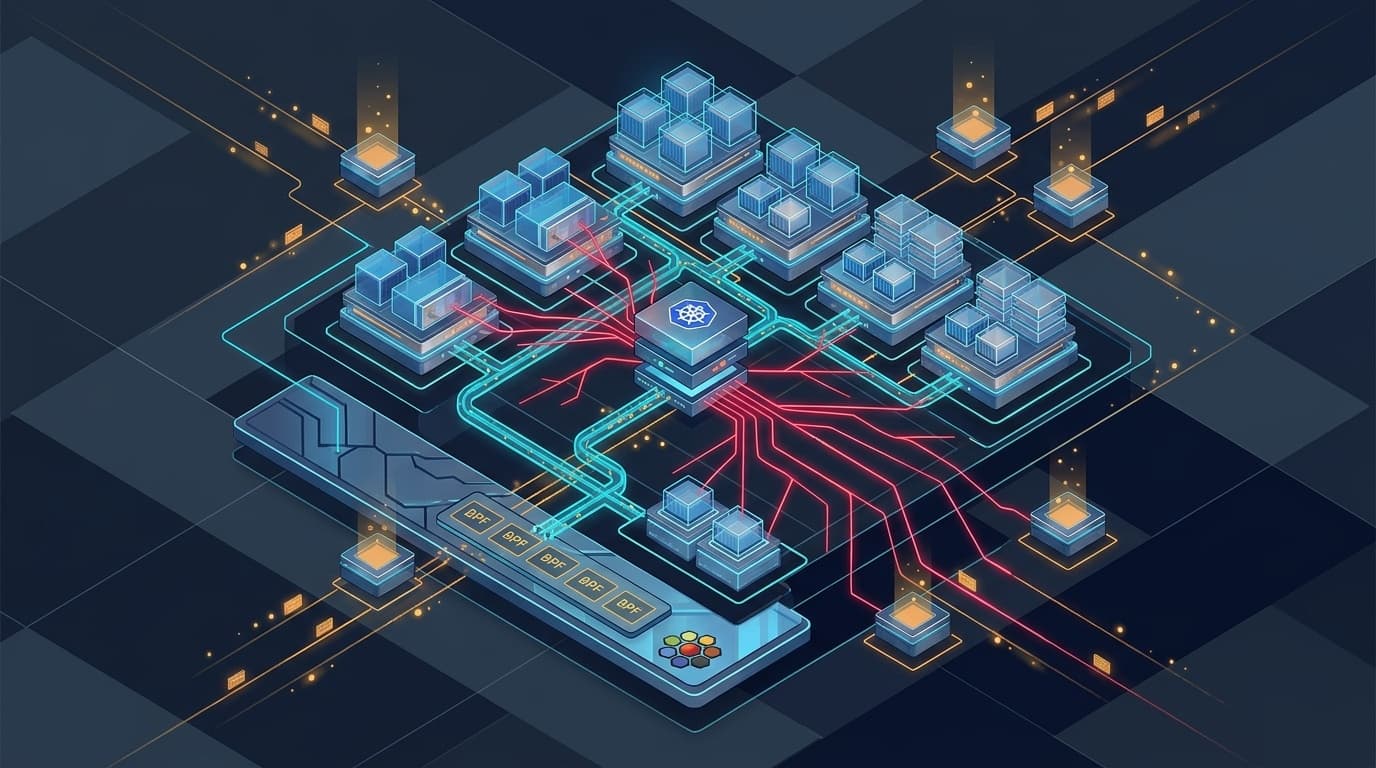
Amazon Web Services has introduced context-aware rules for AWS Network Firewall, providing cloud security teams with the capability to evaluate and filter network traffic based directly on native AWS resource identifiers rather than relying exclusively on static Internet Protocol (IP) address ranges. According to advisory records from the Amazon AWS Security Advisory Portal, the updated filtering mechanism enables security policies to reference specific virtual private clouds (VPCs), subnets, security groups, and transit gateway attachments as native traffic-matching attributes.
The capability addresses long-standing operational complexities inherent in large-scale cloud architectures, where workloads, microservices, and elastic compute instances frequently scale dynamically across environments. By resolving traffic identity at the infrastructure construct level, administrators can establish stateful perimeter and lateral-movement policies that persist across auto-scaling events without necessitating continuous updates to IP address access control lists.
The Shift from Static IP Management to Resource-Centric Filtering
Traditional stateful network firewalls and legacy perimeter inspect devices rely fundamentally on 5-tuple matching logic, evaluating incoming and egress packets based on source IP address, destination IP address, source port, destination port, and protocol. In dynamic cloud environments, however, strict reliance on IP matching presents recurring administrative and security management hurdles:
- Elastic IP Churn: Auto-scaling compute instances, serverless platforms, container tasks, and managed databases regularly commission and decommission, changing their private IP addresses within dynamic CIDR blocks.
- Administrative Policy Drift: Managing static CIDR tables requires external synchronization pipelines, automated Lambda scripts, or manual route table audits to ensure firewall rule groups reflect active deployments.
- Over-Permissive Scope: When security policies cannot target a specific logical grouping, teams frequently resort to broad subnet-wide or VPC-wide CIDR allowances, expanding lateral exposure if an individual workload is compromised.
With context-aware inspection, AWS Network Firewall natively inspects network metadata to correlate packets with their originating and terminating AWS infrastructure objects. Instead of creating stateful rules granting ingress from a broad range such as 10.0.0.0/16, an engineer can explicitly author policies that accept or deny packets where the source matches a targeted subnet, vpc, security group, or transit gateway attachment.
Technical Context and Supported AWS Identifiers
AWS Network Firewall operates as a managed stateful inspection service deployed at VPC boundary ingress and egress routes or centralized within shared-services transit hubs. Under the context-aware model, the firewall engine ingests packet flow telemetry alongside internal AWS control-plane attributes to establish contextual identity.
Advisory disclosures confirm support across several fundamental AWS architectural components:
| Infrastructure Component | Contextual Role in Firewall Rules | Operational Functionality |
|---|---|---|
| Virtual Private Cloud (VPC) | Source / Destination Identifier | Enforces microsegmentation between entire environments (e.g., separating development, staging, and production VPCs) without maintaining CIDR lists. |
| Subnet | Tiered Network Zone Identifier | Allows policies that restrict traffic based on architectural tiers (such as dedicated database subnets or public-facing ingress subnets). |
| Security Group | Workload Identity Identifier | Binds deep inspection policies directly to logical instance groupings defined by existing host-level security groups. |
| Transit Gateway Attachment | Inter-VPC Interconnect Identifier | Inspects and filters traffic crossing specific centralized Transit Gateway links connecting disparate business units or branch environments. |
By operating directly on these infrastructure primitives, firewall policies mirror organizational boundaries defined in AWS Systems Manager, AWS Organizations, or infrastructure-as-code (IaC) templates.
Impact on Cloud Deployments and Architectures
The introduction of context-aware rules influences common deployment architectures across multi-account enterprise topologies. Organizations operating centralized inspection models—where all north-south internet traffic and east-west inter-VPC traffic route through an inspection VPC housing AWS Network Firewall endpoints—gain simplified inspection logic.
Centralized Transit Gateway Routing
In centralized transit hubs, multiple spoke VPCs route all traffic through an AWS Transit Gateway into an inspection appliance. Previously, differentiating traffic between hundreds of tenant VPCs required mapping hundreds of non-overlapping CIDR blocks or configuring separate rule groups for each spoke. By matching directly on the Transit Gateway attachment or originating VPC identifier, security administrators can define unified, intent-based policies across tenant networks.
Hardening East-West Microsegmentation
For internal lateral traffic, security teams can enforce zero-trust segmentation between sensitive application tiers. For example, a rule can specify that only workloads belonging to a specified application security group are permitted to establish connections to a database subnet across a transit gateway, preventing rogue or compromised compute nodes in adjacent subnets from communicating with critical data tiers.
Practical Implementation and Architectural Response
Organizations utilizing AWS Network Firewall can evaluate their existing stateful rule groups and transit configurations to determine where context-based definitions reduce management overhead:
- Audit Existing CIDR-Based Rule Sets: Identify stateful firewall rules that currently rely on hardcoded IP addresses or broad CIDR masks solely to accommodate elastic scaling.
- Map Policies to AWS Primitives: Refactor access controls to reference designated VPCs, subnets, or security group IDs where workloads frequently shift IP allocations.
- Review Transit Gateway Routing: Verify that Transit Gateway route tables and attachment metadata are properly aligned with centralized inspection VPC endpoints.
- Integrate into Infrastructure as Code: Update CloudFormation, Terraform, or AWS CDK pipelines to declare context-aware firewall rule groups alongside VPC and subnet provisioning routines.
What Remains Unknown
While the feature announcement confirms native matching on VPCs, subnets, security groups, and transit gateway attachments, specific technical throughput characteristics, rule processing evaluation limits, and latency implications under peak packet rates remain unstated in the initial advisory documentation. Additionally, availability schedules across isolated sovereign cloud regions and specific pricing or billing implications associated with metadata lookup lookups have not been detailed.
Cloud infrastructure engineers and enterprise security architects should reference official AWS documentation and regional service endpoints for continuous implementation updates and region-specific rollout schedules.