Cloud services provider Rackspace has initiated an emergency decommissioning of its Rackspace Spot platform after an unauthorized intrusion compromised core operational boundaries, exposing customer Kubernetes clusters and environment secrets. The hosting company notified affected tenants that the multi-tenant container and spot-instance infrastructure would be permanently decommissioned, establishing a strict deadline of December 8 for users to export critical data and transition operational workloads to alternative infrastructure.
The incident represents a severe operational failure for the spot compute tier, prompting the provider to retire the platform entirely rather than attempt an in-place rebuild while maintaining untrusted multi-tenant workloads. The breach allowed malicious actors to bypass standard administrative controls and access sensitive cluster configurations, API tokens, and operational metadata belonging to organizations running compute workloads on the platform.
Incident Overview and Breach Impact
According to formal customer communications and enterprise disclosures, the intrusion originated within the centralized control plane that orchestrates Rackspace Spot instances. Once inside, unauthorized operators compromised administrative nodes that interface directly with tenant container configurations. This elevated vantage point enabled the inspection and potential extraction of customer secrets, including embedded environment variables, container registry authentication credentials, and database connection strings.
Rackspace Spot was designed as a low-cost, open-market compute service allowing developers and enterprise engineers to bid on unused bare-metal server capacity and orchestrate auto-scaling Kubernetes deployments. Because containerized microservices frequently handle automated deployments using injected secrets and Kubernetes Secret manifests, access to the cluster management tier exposed critical cryptographic keys and access controls across hosted tenant instances.
| Operational Dimension | Incident Finding | Customer Impact & Mandate |
|---|---|---|
| Affected Product | Rackspace Spot Cloud Platform | Complete platform termination; services go dark after deadline |
| Compromised Assets | Tenant Kubernetes clusters, environment variables, secrets | Critical exposure of database credentials, API keys, certificates |
| Migration Deadline | December 8 | Data must be exported; infrastructure inaccessible thereafter |
| Core Infrastructure | Dedicated hosting and core managed multi-cloud | Separated architectures; no reported cross-tenant lateral traversal |
Technical Context: Multi-Tenant Kubernetes Exposure
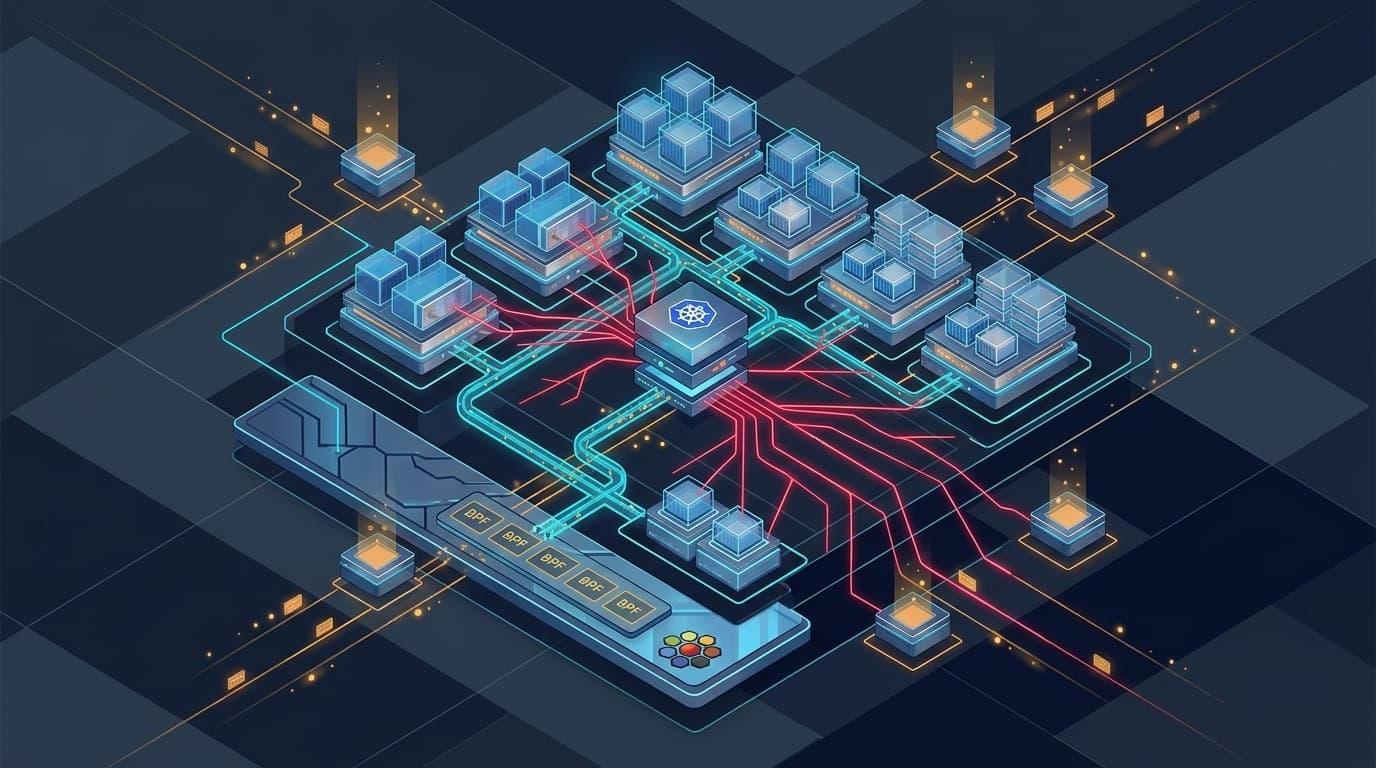
In modern cloud architectures, managing Kubernetes at scale requires strict isolation between the multi-tenant control plane and individual worker nodes. If orchestration layers or cluster provisioning APIs are compromised, the physical security boundary separating individual tenants collapses. When unauthorized actors access internal control APIs, they can query configuration endpoints, interrogate internal key-value stores such as etcd, and harvest operational parameters associated with active deployments.
Exposed Kubernetes secrets represent an acute secondary risk. Unlike ephemeral container storage, cluster secrets often store production database connection strings, third-party software-as-a-service (SaaS) integration tokens, private cryptographic certificates, and cloud infrastructure Identity and Access Management (IAM) credentials. An adversary equipped with these materials can readily transition from a passive compromise of the hosting provider to active, downstream attacks against customer networks, internal repositories, and third-party API backends.
Decommissioning Over Remediation
The decision to terminate the entire product line highlights the technical complexity of remediating an untrusted shared cloud environment. When an intrusion touches the hypervisor, bare-metal provisioning layer, or central orchestration pipeline, verifying that persistence mechanisms, malicious container sidecars, or backdoored control agents have been completely eradicated requires exhaustive system wipe-outs and architecture redesigns. For an auxiliary service like Spot, the risk and cost profile associated with ongoing operation often makes shutdown the only viable risk-reduction measure.
Affected Deployments and Target Workloads
The security exposure specifically impacts organizations utilizing the Rackspace Spot ecosystem for containerized applications, batch data processing, machine learning development pipelines, and distributed web services. Deployments configured to automatically ingest deployment variables from central version control pipelines or continuous integration/continuous deployment (CI/CD) environments are considered high-exposure targets if secrets were mounted into running pods.
Rackspace has confirmed that the perimeter breach was confined to the Spot environment architecture. The provider's flagship managed cloud offerings, dedicated enterprise private clouds, and sovereign customer host environments operate on independent physical infrastructures and network fabrics, remaining insulated from the Spot control plane compromise.
Practical Response and Incident Remediation Playbook
Security teams, system administrators, and DevOps personnel running active deployments within the Rackspace Spot platform must immediately pivot to containment, credential revocation, and evacuation procedures before the platform is shut down.
1. Complete Credential and Secret Rotation
Security teams must assume that any secret, token, or private key accessible within an active or historical Spot deployment is fully compromised. Engineers must immediately execute end-to-end credential rotations:
- API and SaaS Tokens: Invalidate and reissue all API keys, payment gateway tokens, and external integration hooks that were stored as Kubernetes secrets or deployment environment variables.
- Database Credentials: Change passwords, operational connection strings, and administrative accounts for all internal and external databases referenced by containerized workloads.
- TLS/SSL and SSH Keys: Revoke TLS certificates utilized by Spot-hosted ingress controllers and cycle administrative SSH keys deployed to cluster nodes or jump boxes.
- IAM Roles and Service Accounts: Audit cloud provider accounts (such as AWS, Google Cloud, or Azure) linked via access keys within Spot pods; terminate current sessions and assign new credentials with restricted permissions.
2. Data Evacuation and Workload Migration
With the platform set to go dark on December 8, organizations must secure local copies of their persistent data assets immediately:
- Extract stateful database backups, persistent volume claims (PVCs), and object storage snapshots onto verified external storage.
- Inspect container base images and Helm charts in clean local build environments before redeploying them to secondary cloud or on-premises Kubernetes engines to avoid deploying contaminated artifacts.
- Update public DNS and load balancer traffic routing configurations away from Spot IP addresses to minimize customer downtime as the deadline approaches.
3. Audit Downstream Telemetry
Defenders should closely inspect access logs across third-party services that communicate with Spot applications. Unusually timed queries, logins from anomalous geographic regions, or unexpected privilege escalations using credentials mapped to the Spot cluster indicate active secondary exploitation attempts.
Confirmed Facts and Current Unknowns
While the operational outcome—the permanent retirement of Rackspace Spot on December 8—is clear, specific details regarding the intrusion pathway remain undisclosed by the provider. Confirmed information establishes that unauthorized actors accessed tenant cluster environments and associated secrets, prompting the decommissioning decision.
Critical forensic details remain unverified at this stage. It is currently unknown precisely which initial access vector enabled the breach, whether through unpatched edge software, exposed administration interfaces, or compromised administrative credentials. Furthermore, the total number of impacted tenant clusters and whether threat actors actively downloaded customer persistent databases or focused exclusively on control plane configuration data has not been publicly specified. Organizations operating on the platform must proceed under a worst-case assumption regarding secret compromise until their migrations and credential rotations are completed.