Executive Summary: Critical Flaws in Open-Source Industrial Control Core
The Cybersecurity and Infrastructure Security Agency (CISA) has issued an urgent Industrial Control Systems (ICS) advisory, ICSA-26-265-09, alerting asset operators to critical vulnerabilities discovered in OpenPLC Runtime v3. OpenPLC is one of the most widely deployed open-source programmable logic controller (PLC) runtimes globally, providing hardware-agnostic automation for embedded systems, Raspberry Pi, Linux industrial gateways, and commercial PLCs compliant with the IEC 61131-3 standard.
The advisory identifies severe memory corruption and access control breakdowns, headlined by a stack-based buffer overflow (CWE-121) rated at CVSS v3.1 9.8 (Critical). Unauthenticated adversaries situated on the same industrial Ethernet subnetwork (Purdue Model Level 1 or 2) can craft malicious Modbus TCP frames that overflow internal buffers, halting the PLC execution loop, forcing physical fail-safe triggers, or executing arbitrary machine code with the privileges of the runtime service.
Protocol Anatomy & CWE-121 Root Cause in Modbus Stack
OpenPLC Runtime v3 implements multiple industrial communication stacks natively, including Modbus TCP (port 502), DNP3 (port 20000), and Ethernet/IP. Modbus TCP relies on the Modbus Application Protocol (MBAP) header coupled with a Protocol Data Unit (PDU) consisting of a 1-byte Function Code and variable data payload.
The memory corruption flaw resides in the handling of vendor-specific extended function codes and diagnostics commands within modbus.cpp:
// Vulnerable Modbus buffer parsing logic in OpenPLC Runtime v3
void process_modbus_pdu(uint8_t *buffer, int length) {
    uint8_t function_code = buffer[7];
    char diagnostic_payload[256];

    if (function_code == 0x41) { // Custom diagnostic & ladder telemetry query
        uint16_t sub_length = (buffer[8] << 8) | buffer[9];

        // Critical CWE-121: sub_length is copied without validating against 256-byte stack boundary
        memcpy(diagnostic_payload, &buffer[10], sub_length);
        parse_extended_diagnostic(diagnostic_payload);
    }
}
When an unauthenticated packet specifies a sub_length exceeding 256 bytes, the memcpy operation overwrites adjacent stack variables, including saved frame pointers and the instruction return address ($RIP / $EIP). Because default OpenPLC installations on custom industrial Linux gateways frequently lack address space layout randomization (ASLR) and stack canaries, exploitation reliably yields arbitrary remote code execution.
Physical Process Loop Disruption & Impact
In an automated manufacturing plant, water treatment facility, or power generation testbed, PLCs operate on deterministic scan cycles: input scan, program execution (ladder logic), and output update. An exploit payload triggering a segmentation fault terminates the openplc daemon immediately:
- Actuator De-energization: All digital outputs (relays, solenoid valves, and motor contactors) drop to their unpowered default states, risking physical process lockup or emergency shutdown.
- False Telemetry Injection: Attackers exploiting the memory corruption without crashing the daemon can manipulate holding registers, presenting normal operating temperatures and pressure readings to the Supervisory Control and Data Acquisition (SCADA) Human-Machine Interface (HMI) while underlying machinery runs out of tolerance.
- Persistent Firmware Poisoning: Paired with an unauthenticated configuration endpoint in the embedded web server (port 8080), adversaries can upload compiled C ladder logic routines that survive system reboots.
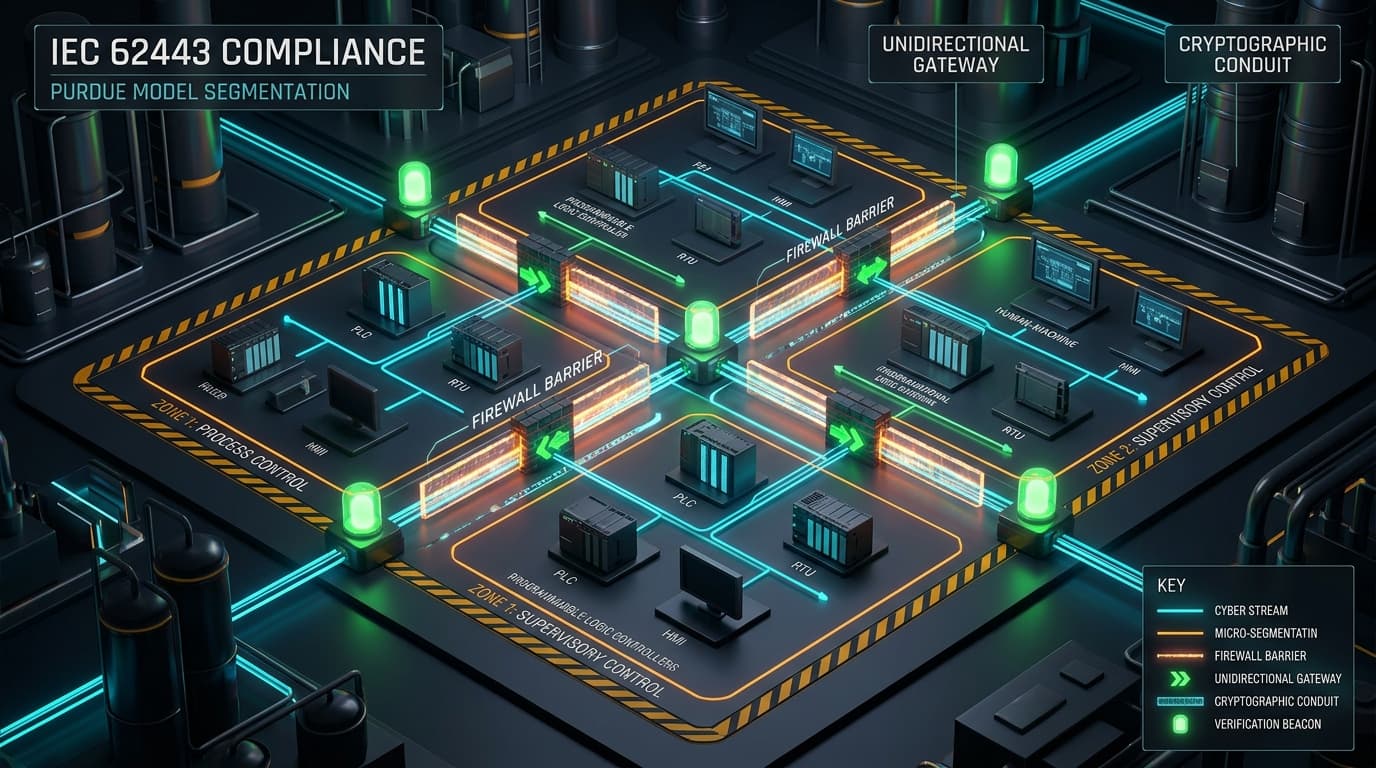
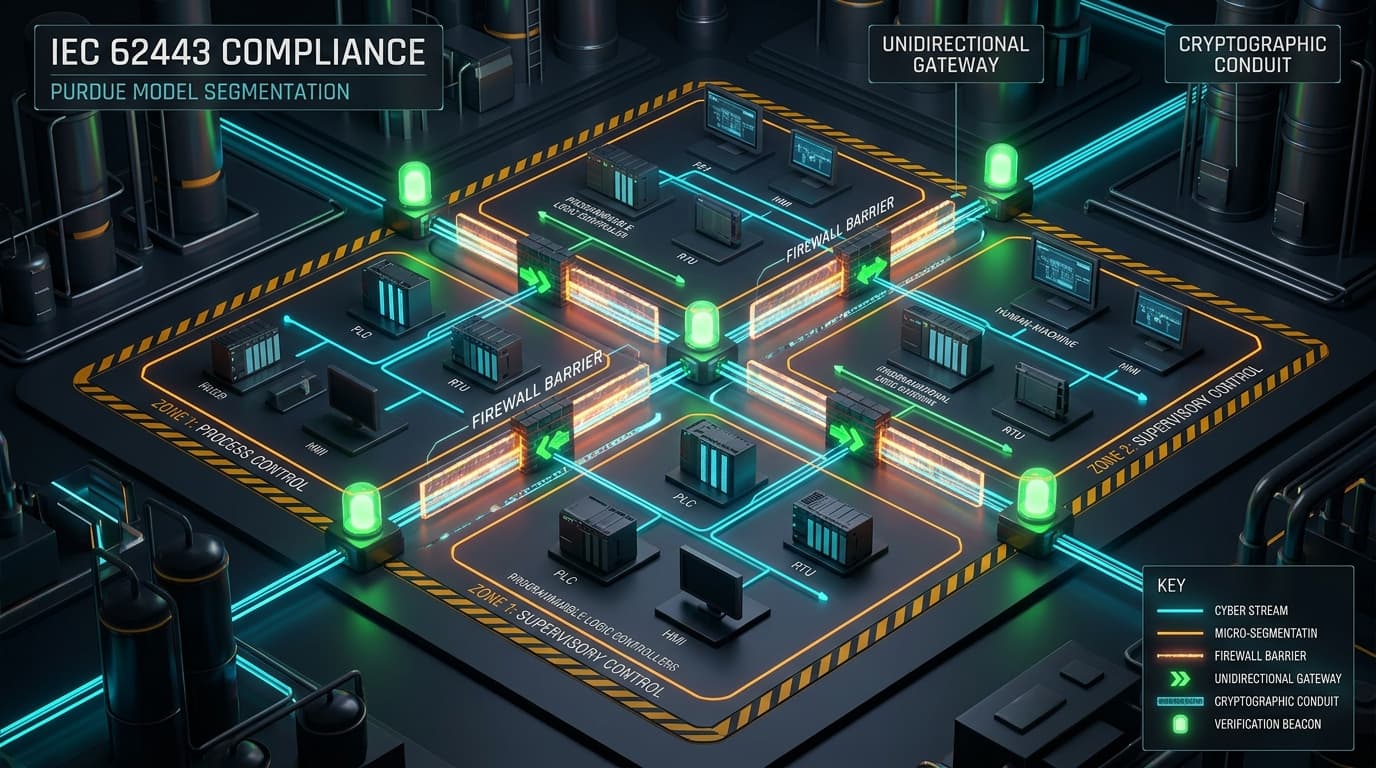
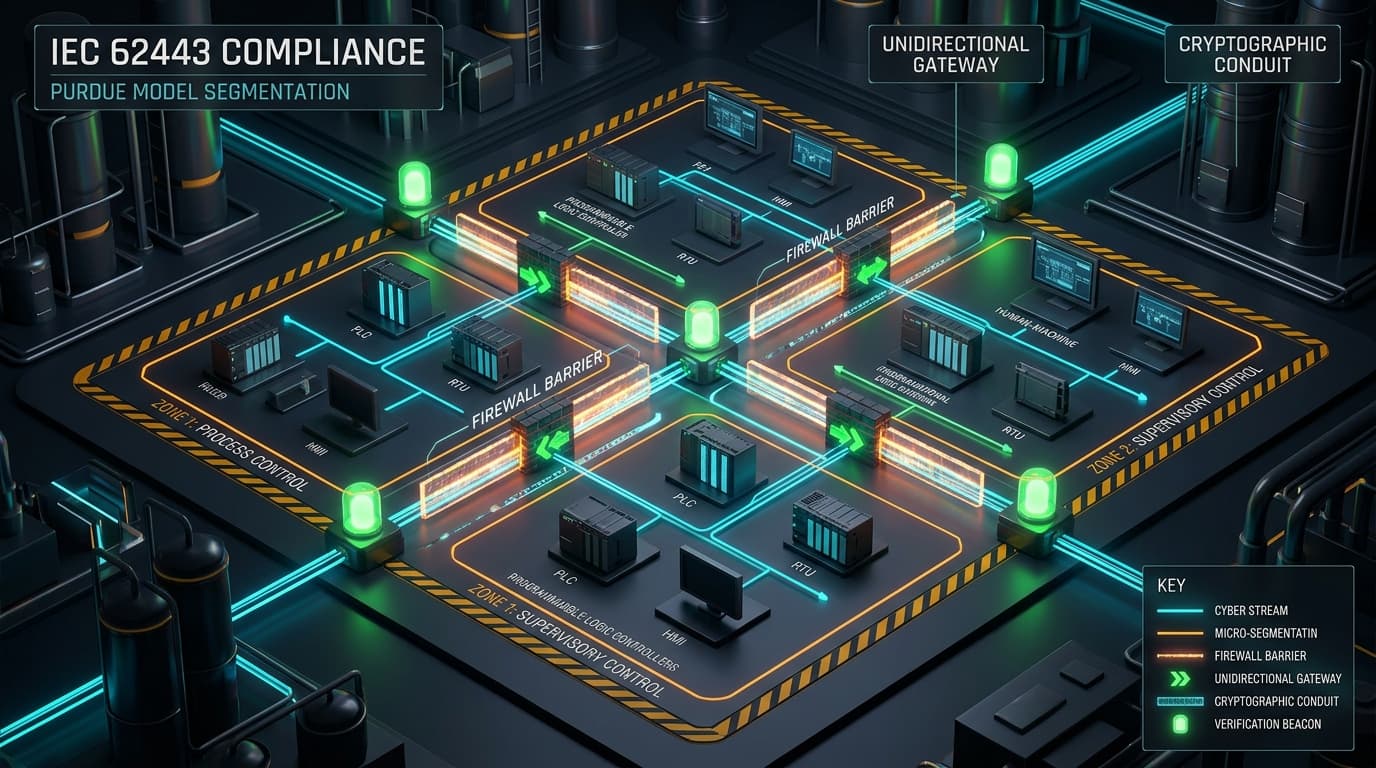
Purdue Model & IEC 62443 Defense-in-Depth Architecture
Asset owners and OT security engineers must apply strict zone and conduit micro-segmentation aligned with the IEC 62443-3-2 standard to insulate vulnerable field controllers:
| Purdue Level | Zone / System Description | Permitted Protocols & Ports | Required Enforcement Control |
|---|---|---|---|
| Level 0 / 1 | OpenPLC Controllers, I/O Modules, Variable Frequency Drives | Modbus TCP (502/tcp), DNP3 (20000/tcp) | Unidirectional conduits; strictly restrict source IPs to authorized SCADA/HMI servers |
| Level 2 | Local HMI Panels & Engineering Workstations | HTTPS (443/tcp), Modbus TCP (502/tcp) | Multi-factor authentication (MFA); isolate engineering programming access to dedicated jump hosts |
| Level 3 | Site SCADA Servers, Historians, OT Active Directory | OPC-UA (4840/tcp), SQL (1433/tcp) | Industrial Next-Gen Firewalls (NGFW) with deep packet inspection (DPI) for Modbus function codes |
| Level 3.5 (IDMZ) | Industrial Demilitarized Zone Gateway | Reverse Proxy / TLS VPN | Zero direct routing between Enterprise IT (Level 4) and OT Process Networks (Level 1/2) |
Actionable Remediation Playbook
- Upgrade OpenPLC Runtime: Pull and compile the latest patched release from the official repository or install vendor-provided binary updates with stack protection (
-fstack-protector-strong). - Deploy Firewall Modbus DPI Rules: Enforce strict iptables or industrial firewall inspection blocking extended function code
0x41:# Linux gateway firewall: drop Modbus packets with non-standard function codes iptables -A FORWARD -p tcp --dport 502 -m u32 --u32 "0>>22&0x3C@8=0x41" -j DROP - Disable Unused Web Management Interfaces: Terminate HTTP port 8080 on production field controllers or bind the web dashboard exclusively to the local loopback interface (
127.0.0.1).