Executive Threat Overview: CI/CD Pipeline Takeover
The Cybersecurity and Infrastructure Security Agency (CISA) has issued an emergency binding directive updating the Known Exploited Vulnerabilities (KEV) catalog with CVE-2026-63077, an unauthenticated Java object deserialization vulnerability affecting JetBrains TeamCity continuous integration and deployment (CI/CD) servers. Assigning the flaw a maximum severity rating of CVSS 9.8, telemetry indicates that advanced threat actors and initial access brokers (IABs) are weaponizing the flaw to compromise corporate build pipelines, exfiltrate software source code, and harvest high-privilege cloud deployment credentials.
Continuous integration servers represent apex targets in modern enterprise networks. Compromising a TeamCity controller grants adversaries access to source code repositories, code-signing private keys, Docker registry credentials, and AWS/Azure production infrastructure tokens baked into automated build tasks.
Vulnerability Mechanics: Insecure Object Deserialization
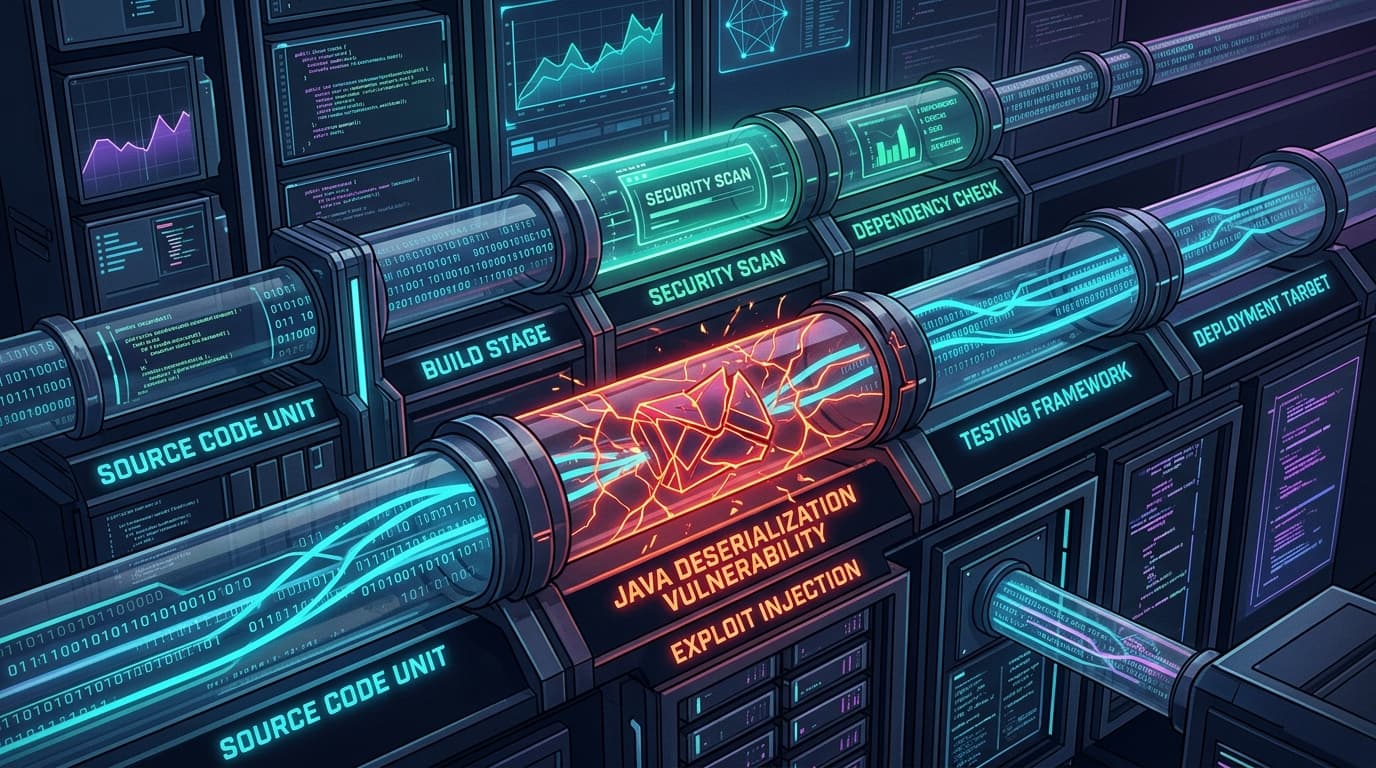
The flaw resides in TeamCity’s communication subsystem responsible for inter-node communication between build agents and the central server controller. When parsing binary payloads delivered over the server's internal RPC/remoting interface, the JVM deserializer fails to enforce an explicit type-allowlist before invoking java.io.ObjectInputStream.readObject().
By delivering a crafted serialized gadget chain (leveraging common libraries bundled in the application classpath), an unauthenticated network adversary can manipulate object instantiation to achieve arbitrary OS command execution under the security context of the teamcity daemon process.
| Metric | Technical Specification |
|---|---|
| CVE Identifier | CVE-2026-63077 |
| CVSS v3.1 Vector | CVSS:3.1/AV:N/AC:L/PR:N/UI:N/S:U/C:H/I:H/A:H (9.8 Critical) |
| CWE Classification | CWE-502: Deserialization of Untrusted Data |
| Affected Releases | TeamCity Server versions prior to 2026.07.4 |
| Fixed Release | TeamCity 2026.07.4 (and backported security updates) |
| CISA Remediation Due Date | Federal agencies must remediate by statutory deadline |
Threat Actor Post-Exploitation & Supply Chain Blast Radius
Telemetry gathered from live intrusions demonstrates that threat groups execute a standardized post-exploitation play once achieving code execution on a TeamCity server:
- Artifact Poisoning: Modifying automated compilation scripts to inject backdoors into production binary releases without altering Git source history.
- Cloud Credential Extraction: Dumping memory structures of active build agents to harvest short-lived AWS STS tokens, Azure Service Principal secrets, and Kubernetes kubeconfig files.
- Lateral Propagation: Using build agent SSH keys and network routes to pivot across isolated developer subnets and internal staging environments.
Defensive Playbook & Incident Remediation
Security teams operating TeamCity installations must execute the following immediate hardening and triage protocols:
1. Immediate Upgrade & JVM Serialization Filtering
Upgrade all on-premises TeamCity controller nodes to version 2026.07.4 immediately. If immediate maintenance windows are constrained, enforce strict JEP 290 deserialization filters via the JVM startup arguments:
# Add JEP 290 global serialization filter to teamcity-server startup
export TEAMCITY_SERVER_OPTS="-Djdk.serialFilter=maxbytes=1000000;maxdepth=50;!org.apache.commons.collections.**;!com.sun.org.apache.bcel.**;*"
/opt/teamcity/bin/teamcity-server.sh restart
2. Network Ingress Isolation
Isolate the TeamCity web interface (default port 8111) and build agent communication ports (default port 9090) behind an enterprise VPN or Zero-Trust Network Access (ZTNA) reverse proxy. Internet-exposed CI/CD portals represent unacceptable enterprise risk.
3. Forensic Log Inspection for Exploit Artifacts
Search TeamCity internal server logs for anomalous deserialization errors and binary payload indicators:
# Hunt for deserialization exceptions and gadget invocations in server logs
grep -E "(ClassNotFoundException|InvalidClassException|java.io.StreamCorruptedException)" /opt/teamcity/logs/teamcity-server.log

# Audit all child processes spawned by the teamcity daemon user
pgrep -u teamcity -a | grep -E "(sh|bash|powershell|cmd|curl|wget|nc)"