A critical cryptographic failure has been disclosed in Hitachi Coding Software Suite (HCSS), the enterprise industrial software platform deployed globally to manage continuous ink-jet printers, laser markers, and automated serialization lines across pharmaceutical, food packaging, and consumer goods manufacturing plants. Cataloged under CVE-2026-82827 and tracked in GitHub Advisory GHSA-xxq6-25c8-35j6 with a CVSS v3.1 base score of 9.8 (Critical), the flaw enables unauthenticated network adversaries to forge administrative JSON Web Tokens (JWT) and execute unauthorized commands across physical production equipment due to the presence of a hardcoded cryptographic signing key.
The Role of HCSS in Industrial Automation & Traceability
In modern Manufacturing Execution Systems (MES) and Industrial Automation and Control Systems (IACS) governed by IEC 62443, Hitachi Coding Software Suite acts as the operational bridge between enterprise ERP/MES platforms and plant floor marking controllers. HCSS schedules batch production jobs, coordinates high-speed laser marking systems, and ensures regulatory compliance with GS1 barcode standards, pharmaceutical serial tracking (DSCSA), and food safety expiration labeling.
Because HCSS runs on supervisory engineering workstations or centralized on-premise servers (Purdue Model Level 3), an authentication bypass compromises the integrity of physical products moving along conveyor belts.
Root Cause Analysis: Static Hardcoded JWT Signing Secret (CWE-798)
The vulnerability lies within the authentication and session management module of the HCSS REST API service. When users authenticate, the server issues an HMAC-SHA256 (HS256) signed JSON Web Token used to authorize subsequent administrative requests.
In all releases through version 3.3.0, the cryptographic secret key used to sign and verify these tokens is hardcoded as an immutable static string within the software binaries:
// Vulnerable Token Validation Pattern in HCSS API Service
const jwt = require("jsonwebtoken");

// FATAL FLAW: Static secret embedded across all customer installations
const STATIC_HCSS_SECRET = "HCSS_Default_Industrial_Signing_Key_2024!";

function verifyAuthToken(req, res, next) {
    const authHeader = req.headers["authorization"];
    const token = authHeader && authHeader.split(" ")[1];

    // Verifies incoming token using immutable static secret!
    jwt.verify(token, STATIC_HCSS_SECRET, (err, user) => {
        if (err) return res.sendStatus(403);
        req.user = user; // Grants administrative claims
        next();
    });
}
Because the identical key exists across every enterprise deployment, an attacker with IP connectivity to the HCSS server does not need to extract credentials from memory or intercept traffic. The attacker simply creates an arbitrary JWT payload with {"role": "Administrator", "permissions": ["*"]}, signs it using the known static secret, and submits it in the Authorization: Bearer header.
Operational Impact on Manufacturing Topologies
| Attack Vector | Exploitation Mechanism | Physical & Operational Consequence |
|---|---|---|
| Batch Code Tampering | REST API job template override | Falsification of pharmaceutical lot numbers and drug expiry dates |
| Laser Marker Sabotage | Direct hardware parameter manipulation | Laser output power adjusted to damage packaging or start fires |
| Factory Line Disruption | Emergency stop command injection | Immediate shutdown of high-throughput packaging facilities ($100k+/hr losses) |
| Lateral MES Pivot | Firmware upload / script dispatch | Compromise of Windows host running HCSS; pivot into SCADA supervisory ring |
Remediation & Defense Actions
- Apply Hitachi HCSS Version 3.4.0+: Immediately upgrade all HCSS server installations. The updated release implements dynamically generated cryptographic keys generated during initial system setup and stored in the OS Secure Credential Vault.
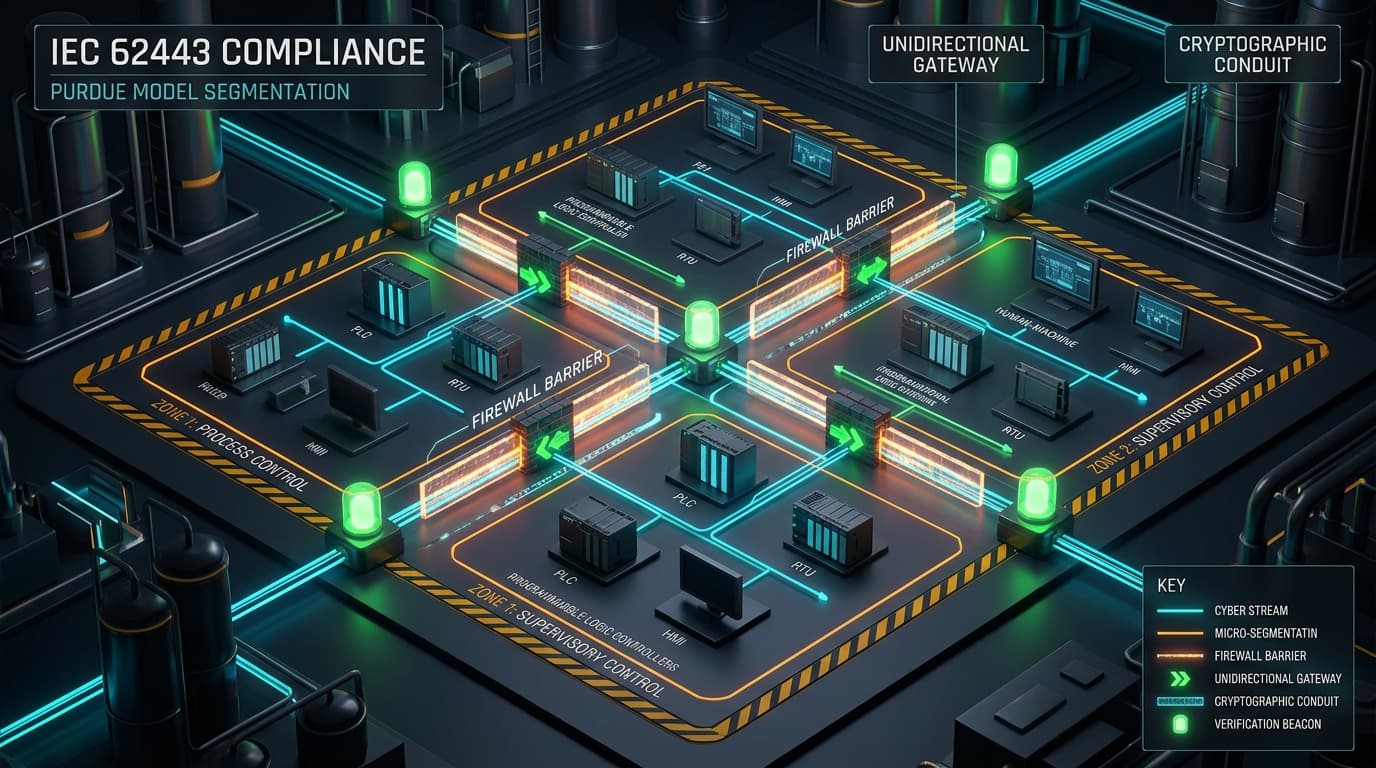
- Enforce Purdue Model Network Segmentation: Ensure HCSS servers and connected industrial controllers reside strictly on isolated OT networks (Purdue Level 2/3). Block all direct inbound routing from corporate IT subnets or external VPN gateways.
- Monitor Industrial REST API Logs: Audit web server access logs for anomalous Bearer token requests originating from unexpected IP addresses or engineering workstations during non-operational shifts.