Executive Summary: Credential Exposure in Remote Telemetry Infrastructure
The Cybersecurity and Infrastructure Security Agency (CISA) has released an industrial control systems security advisory, cataloged as ICSA-26-258-04, alerting critical infrastructure asset owners to a vulnerability affecting Schneider Electric SCADAPack Remote Terminal Units (RTUs). Tracked under identifier CVE-2026-81861 and disclosed in Schneider Electric bulletin SEVD-2026-251-03, the vulnerability involves Insufficiently Protected Credentials (CWE-522) within the RTU's legacy "Secure Lock" configuration mechanism.
SCADAPack controllers serve as the foundational field computing backbone across global oil and natural gas gathering networks, municipal water and wastewater treatment facilities, and electric utility distribution grids. Deployed in remote, unmanned field enclosures, these RTUs monitor pipeline pressure transducers, execute automated shut-off valve routines, and relay telemetry back to central SCADA human-machine interfaces (HMIs) via cellular, radio, and satellite telemetry links.
Assigned a CVSS v3.1 base score of 6.5 (CVSS:3.1/AV:N/AC:L/PR:N/UI:N/S:U/C:H/I:N/A:N), the vulnerability allows an unauthorized attacker with network access to the controller to obtain sensitive authentication information. This compromised data can be leveraged to alter RTU configuration parameters, suppress critical alarm thresholds, or manipulate industrial physical processes.
Technical Deep-Dive: Secure Lock Architecture vs. Modern RBAC
In industrial automation, field RTUs operate at Level 1 (Basic Control) and Level 2 (Supervisory Control) of the Purdue Model. To prevent unauthorized technicians or remote adversaries from reprogramming controller logic or altering register settings over serial and Ethernet ports, older generations of SCADAPack devices introduced a security feature known as Secure Lock.
1. The Flaw in Legacy Secure Lock
The Secure Lock feature was designed to restrict write access to the RTU's configuration memory unless a matching cryptographic unlock key or password was provided by engineering tools such as RemoteConnect or SCADAPack x70 Utilities.
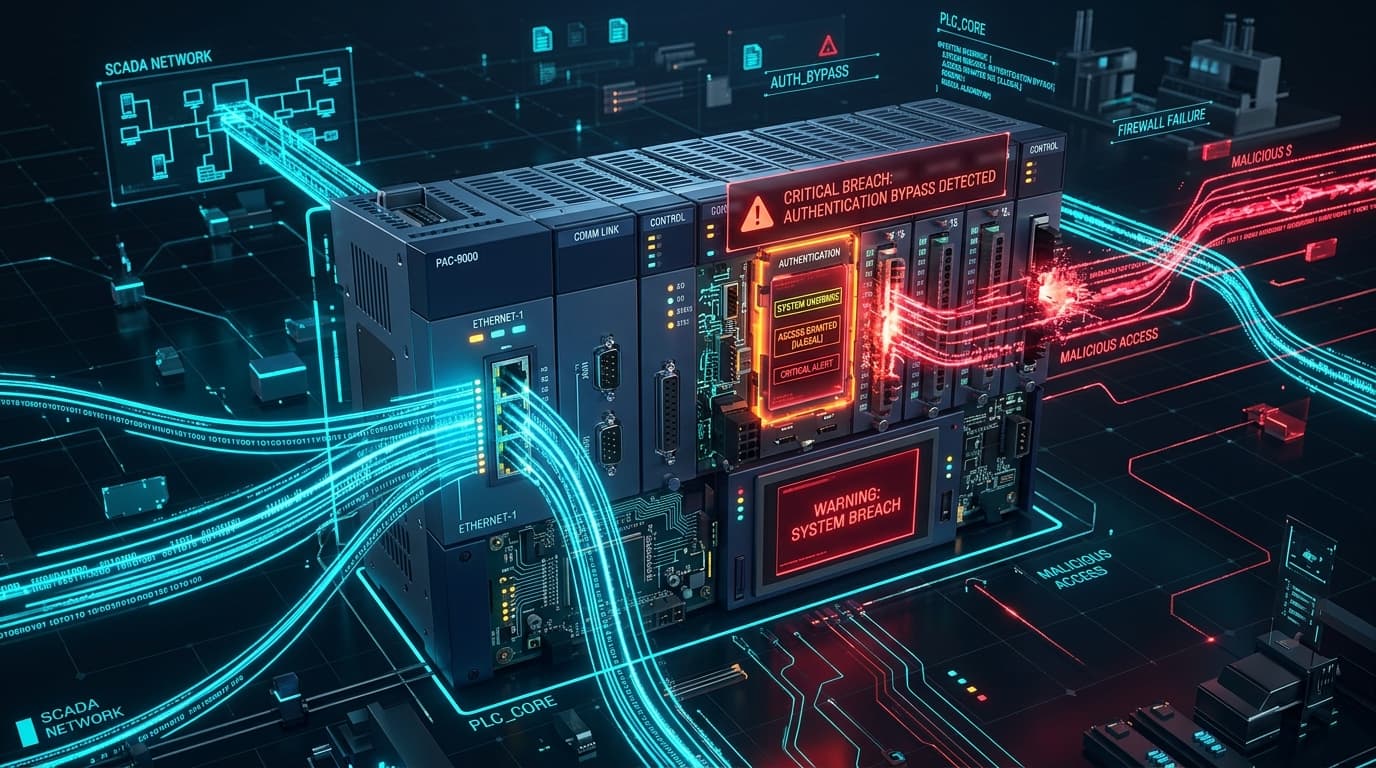
However, vulnerability analysis revealed that the implementation of Secure Lock relies on weakly obfuscated or insufficiently protected credential tokens stored in non-volatile memory or transmitted across communication conduits. An adversary who can intercept engineering communications or query device diagnostic memory can reconstruct the authentication credentials without possessing the authorized administrative key:
# Operational Vulnerability Flow in SCADAPack Legacy Secure Lock
[ Adversary on Field Radio / Telemetry Network ]
        │
        ▼ (Queries RTU diagnostic endpoint or intercepts unencrypted telemetry)
[ Schneider Electric SCADAPack RTU (e.g. SCADAPack 470 / 575) ]
        │
        ├─► [ Secure Lock Subsystem (CWE-522) ]
        │         ├─ Weak credential protection algorithm evaluated
        │         └─ Authentication token extracted without valid cryptographic key
        │
        ├─► [ Configuration Lock Bypassed ]
        │         ├─ Attacker gains unauthorized write access to controller logic
        │         └─ Modifies analog threshold registers & emergency trip logic
        │
        ▼
[ Physical Valve Actuation & Pipeline Telemetry Spoofing ]
        ├─ Closes main line natural gas distribution valve
        └─ Relays false normal pressure telemetry to central HMI
2. Affected Product Matrix
The vulnerability affects all firmware versions of the following SCADAPack model lines when the legacy Secure Lock feature is activated:
- SCADAPack 47x Series: SCADAPack 470, 474, 470i, 474i, and 470R pipeline controllers.
- SCADAPack 57x Series: SCADAPack 570 and 575 high-performance RTUs.
- Legacy Models: SCADAPack 3xx series and SCADAPack 32 hardware platforms.
Industrial Operational Technology Impact & IEC 62443 Alignment
In water distribution and oil pipeline networks, remote RTUs are frequently deployed across thousands of square miles connected via low-bandwidth radio telemetry links (such as licensed UHF/VHF, cellular LTE, or DNP3 over serial). If an adversary obtains the authentication material needed to bypass the RTU lock:
- Safety Instrumented System (SIS) Decoupling: The adversary could reprogram trip settings, preventing safety valves from venting when pipeline pressures exceed allowable operating limits.
- False Telemetry Injection: By falsifying DNP3 or Modbus register states, attackers can present a "normal operating condition" display to operators in the central control room while silently altering chemical dosing or crude oil flow rates.
- IEC 62443-3-3 Requirement Failures: The flaw violates System Security Requirement 1.1 (Human User Identification and Authentication) and SR 1.3 (Account Management) by permitting credential compromise without multifactor validation or cryptographically salted storage.
Defensive Playbook: Migration to Native Role-Based Access Control (RBAC)
Schneider Electric and CISA have advised all critical infrastructure operators to discontinue use of the legacy Secure Lock feature and migrate immediately to native Role-Based Access Control (RBAC).
1. Deprecate Secure Lock and Enable RBAC in RemoteConnect
In modern SCADAPack firmware builds, Schneider Electric provides an enterprise RBAC architecture that enforces cryptographic user authentication, individual user accounts, granular permissions, and audit logging:
# Remediation steps within Schneider Electric RemoteConnect:
1. Connect to the SCADAPack RTU via authenticated USB or secure VPN conduit.
2. Navigate to "Security Settings" -> "General Security Configuration".
3. Disable the legacy "Secure Lock" feature completely.
4. Enable "Role-Based Access Control (RBAC)".
5. Create distinct administrative, engineering, and operator accounts with unique passwords.
6. Enforce DNP3 Secure Authentication (DNP3-SA SAv5) for all remote telemetry communications.
7. Write and commit the updated configuration profile to the controller.
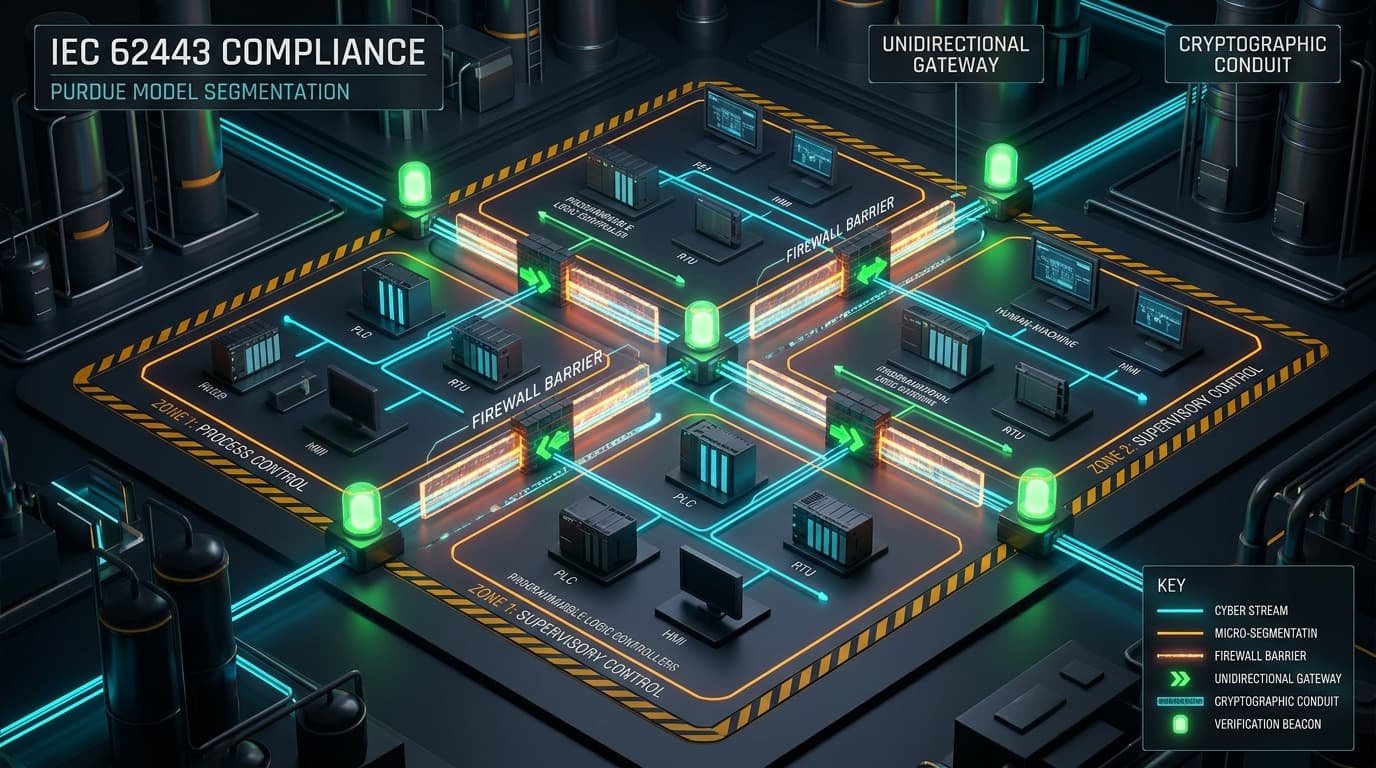
2. Implement RTU Firewall Service & Network Segmentation (IEC 62443-3-2)
SCADAPack RTUs feature an integrated RTU Firewall Service that should be activated to restrict inbound communication strictly to authorized engineering workstations and SCADA servers:
# Example SCADAPack RTU Firewall whitelist policy:
# Allow DNP3 over IP (TCP/UDP Port 20000) strictly from Central SCADA Front-End
RULE 1: ACCEPT PROTO=TCP SRC=10.100.5.10/32 DPORT=20000
RULE 2: ACCEPT PROTO=UDP SRC=10.100.5.10/32 DPORT=20000

# Allow RemoteConnect Engineering Access strictly from Field Laptop Management Subnet
RULE 3: ACCEPT PROTO=TCP SRC=10.200.1.0/24 DPORT=443

# DROP all other unsolicited traffic across cellular / serial Ethernet interfaces
RULE 4: DROP PROTO=ALL SRC=ANY DPORT=ANY
3. Technical Vulnerability Comparison Table
| Security Attribute | Vulnerability Specification | Operational Risk Implication |
|---|---|---|
| CVE Identifier | CVE-2026-81861 | Documented in CISA Advisory ICSA-26-258-04 |
| Vulnerability Class | CWE-522 (Insufficiently Protected Credentials) | Authentication token exposure in legacy lock feature |
| CVSS v3.1 Score | 6.5 (CVSS:3.1/AV:N/AC:L/PR:N/UI:N/S:U/C:H/I:N/A:N) | Loss of configuration confidentiality across field RTUs |
| Affected Models | SCADAPack 47x, 57x, 3xx, 32 Series | Critical oil, gas, water, and wastewater infrastructure |
| Recommended Mitigation | Disable Secure Lock; Migrate to RBAC | Documented in SCADAPack Cybersecurity Hardening Guide |
Actionable Checklist for Pipeline & Water OT Engineers
- Inventory Legacy RTUs: Identify all SCADAPack field controllers currently utilizing the legacy Secure Lock feature across field sites.
- Deploy Strong RBAC Profiles: Replace shared controller passwords with individualized cryptographic accounts across engineering staff.
- Isolate Field Modems: Ensure cellular and satellite modems connected to RTU Ethernet ports are placed in private APNs with no direct public IPv4 exposure.
- Audit DNP3 Communication: Enable event logging and verify integrity flags across SCADA master polling cycles to detect unauthorized configuration changes.