Executive Lead: Material Regulatory Disclosure of Biomedical Supply Chain Disruption
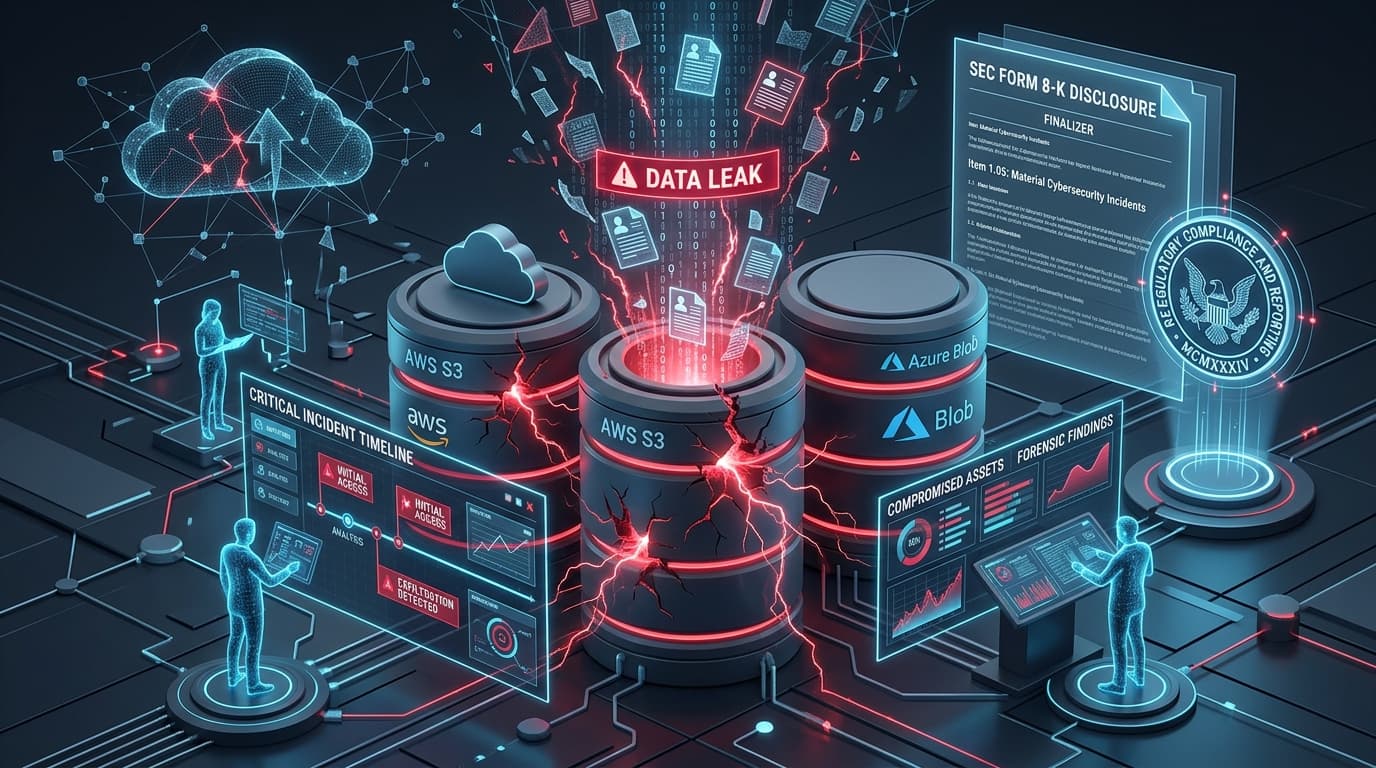
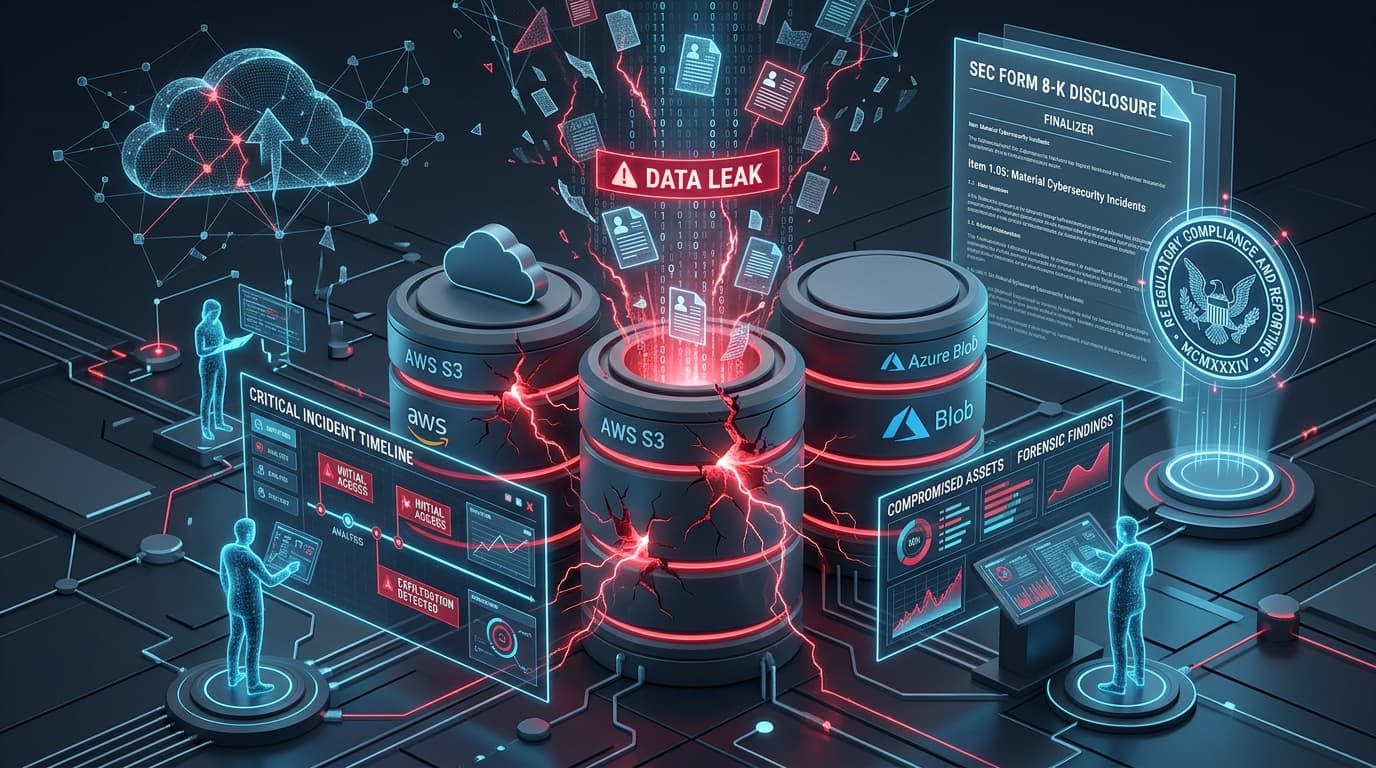
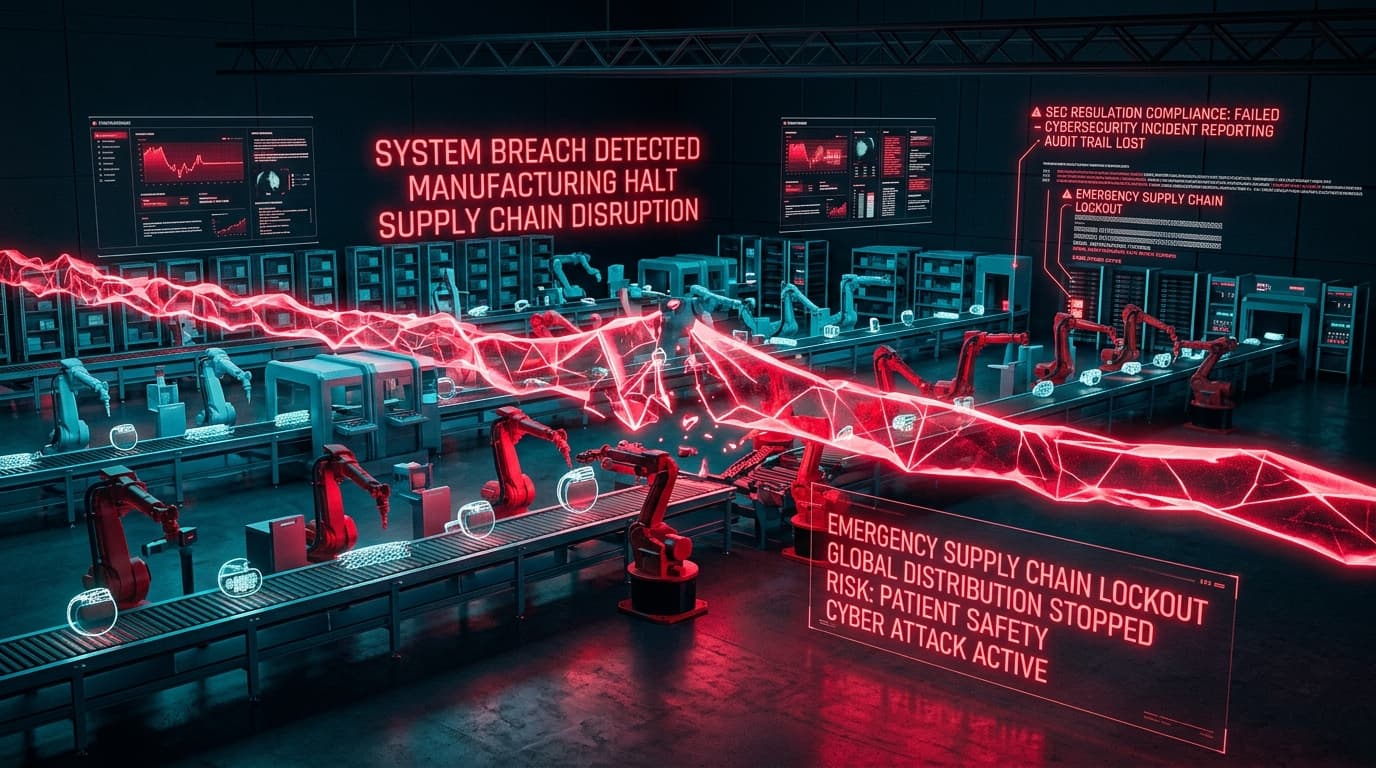
In an authoritative regulatory disclosure that highlights the escalating threat of cyber extortion targeting critical physical manufacturing, Boston Scientific Corporation (NYSE: BSX) has filed a Current Report on Form 8-K under Item 1.05 (Material Cybersecurity Incidents) with the U.S. Securities and Exchange Commission (SEC). The filing follows an unauthorized intrusion first detected on August 25, 2026, that forced the medical technology giant to shut down critical information technology systems, paralyzing global manufacturing plants, inventory processing facilities, and international shipping channels.
Boston Scientific—a Fortune 500 leader producing life-sustaining medical devices including coronary stents, cardiac pacemakers, neuromodulation implants, and endoscopic surgical tools—disclosed that the operational halt had a direct, quantifiable financial impact. In its September regulatory filing, the corporation formally warned shareholders that the disruption is reasonably likely to have a material adverse effect on its operational results for both the third quarter and the full fiscal year 2026, causing the company to miss previously published guidance for net sales growth and adjusted earnings per share (EPS).
Forensic Timeline: From Initial Detection to Materiality Determination
The incident highlights the critical interaction between technical incident response and statutory compliance obligations under the SEC's landmark cybersecurity rules:
| Date | Operational & Regulatory Phase | Action & Impact Description |
|---|---|---|
| August 25, 2026 | Initial Detection & Containment | Security Operations teams identify unauthorized lateral movement within enterprise IT networks. Protective segmentation triggers voluntary isolation of factory and ERP systems. |
| August 26, 2026 | Preliminary SEC Disclosure | Boston Scientific files an initial Form 8-K under Item 8.01 (Other Events), informing the market of system disruptions while forensic materiality assessments proceed. |
| August 27 - Sept 6, 2026 | Forensic Investigation & Recovery | Third-party incident response firms, including CrowdStrike, deploy across the global footprint to isolate threat actors, purge persistence mechanisms, and restore clean backups. |
| September 7-8, 2026 | Statutory Item 1.05 Filing | Executive leadership determines the operational delay represents a material financial impact, triggering the mandatory four-business-day Form 8-K Item 1.05 disclosure. |
| September 9, 2026 | Full Operational Restoration | Manufacturing plants and distribution logistics resume full operation; forensic validation confirms zero active threat presence and no compromise of medical device firmware. |
Attack Architecture & IT/OT Convergence Breakdown
While Boston Scientific confirmed that commercial product technologies and implantable medical device firmware were never compromised, the intrusion exposed the critical dependency of physical manufacturing on enterprise IT systems:
+-----------------------------------------------------------------------------------+
|               BOSTON SCIENTIFIC CYBER INCIDENT & BLAST RADIUS                     |
+-----------------------------------------------------------------------------------+
|                                                                                   |
|  [ Enterprise Corporate IT Domain (Purdue Level 4) ]                              |
|    - Threat actor gains initial access (Compromised VPN / Leaked Token)           |
|    - Active Directory Kerberoasting & Domain Admin credential harvesting          |
|    - Dispatches ransomware payloads targeting VMware ESXi & Windows File Servers  |
|          |                                                                        |
|  ==================== [ Emergency Network Severing / Isolation ] ===============  |
|          |                                                                        |
|  [ Enterprise ERP & Supply Chain Logistics Layer ]                                |
|    - SAP / ERP Order Fulfillment Systems encrypted / rendered inaccessible        |
|    - Warehouse Management Systems (WMS) cannot verify serialized shipping lots    |
|    - Regulatory compliance tracking (FDA UDI serialization) HALTED                |
|          |                                                                        |
|          v (Cascading Operational Lockout)                                        |
|  [ Medical Cleanroom Manufacturing Plants (Purdue Level 2/3) ]                    |
|    - Cleanroom automation PLCs and SCADA networks remain uninfected               |
|    - HOWEVER: Assembly lines forced into idling because raw material lots cannot   |
|      be digitally verified or released into sterile packaging suites              |
|    - GLOBAL SHIPPING OUTAGE: Cardiovascular & Endoscopy devices cannot ship       |
|                                                                                   |
+-----------------------------------------------------------------------------------+
The Materiality Calculation Under SEC Rule Item 1.05
The Boston Scientific filing serves as a vital case study for corporate boards and CISOs evaluating the SEC's materiality threshold:
- Beyond Direct Ransom Demands: Many organizations mistakenly assume an incident is only material if an extortion payment is made or millions of customer records are dumped. Boston Scientific demonstrated that operational stoppage—the inability to manufacture and invoice goods for multiple weeks—constitutes a primary driver of materiality.
- Guidance Revisions as the Legal Trigger: When executive leadership determined that delayed shipments would depress Q3 revenues below Wall Street guidance ranges, the incident crossed the statutory threshold established in SEC Release No. 33-11216, mandating filing within four business days.
- Safe Harbor Separation: By initially utilizing Item 8.01 on August 26, the company avoided premature speculation while conducting technical discovery, transitioning to Item 1.05 precisely when quantitative financial impacts were confirmed.
Defensive Playbook: Hardening Regulated Manufacturing Pipelines
Healthcare, pharmaceutical, and critical manufacturing organizations must adopt defense-in-depth measures to prevent IT disruptions from halting physical operations:
1. Air-Gapped Cleanroom Serialization Buffers
Decouple physical production lines from real-time ERP cloud connectivity. Implement localized, air-gapped serialization databases capable of generating Unique Device Identification (UDI) labels and maintaining production for at least 7 to 14 days during enterprise IT outages:
# Architectural Requirement for Medical OT Isolation:
# - Local MES (Manufacturing Execution System) cache at each plant
# - Asynchronous batch synchronization with corporate SAP/ERP
# - Redundant hardware security modules (HSM) stored on Level 3 OT networks
2. Ransomware Containment & Active Directory Tiering
Enforce strict Active Directory tiering (Microsoft Enterprise Access Model). Ensure that administrative credentials used to manage corporate workstations cannot authenticate against industrial manufacturing hypervisors or plant-floor domain controllers:
# PowerShell Command to Enforce Protected Users Security Group
# Restricts NTLM caching, Kerberos long-term keys, and credential delegation
Add-ADGroupMember -Identity "Protected Users" -Members "svc-erp-admin", "svc-mes-operator"

# Verify that tier-0 domain controllers block inbound connections from Level 4 IT
Get-NetFirewallRule -DisplayName "Block IT to Plant-Floor RPC"
3. Incident Response Tabletop: Materiality Escalation Protocol
Establish an expedited governance committee comprising the CISO, Chief Legal Officer (CLO), Chief Financial Officer (CFO), and Lead Forensic Investigator to meet every 24 hours during an active cyber disruption:
- Quantify the daily burn rate and lost manufacturing capacity in dollar terms.
- Assess whether delayed shipments impact contractual delivery SLAs or quarterly earnings estimates.
- Maintain a formal audit log of the exact minute the committee reaches a consensus on materiality to satisfy SEC four-business-day compliance deadlines.