Executive Summary & Regulatory Filing Overview
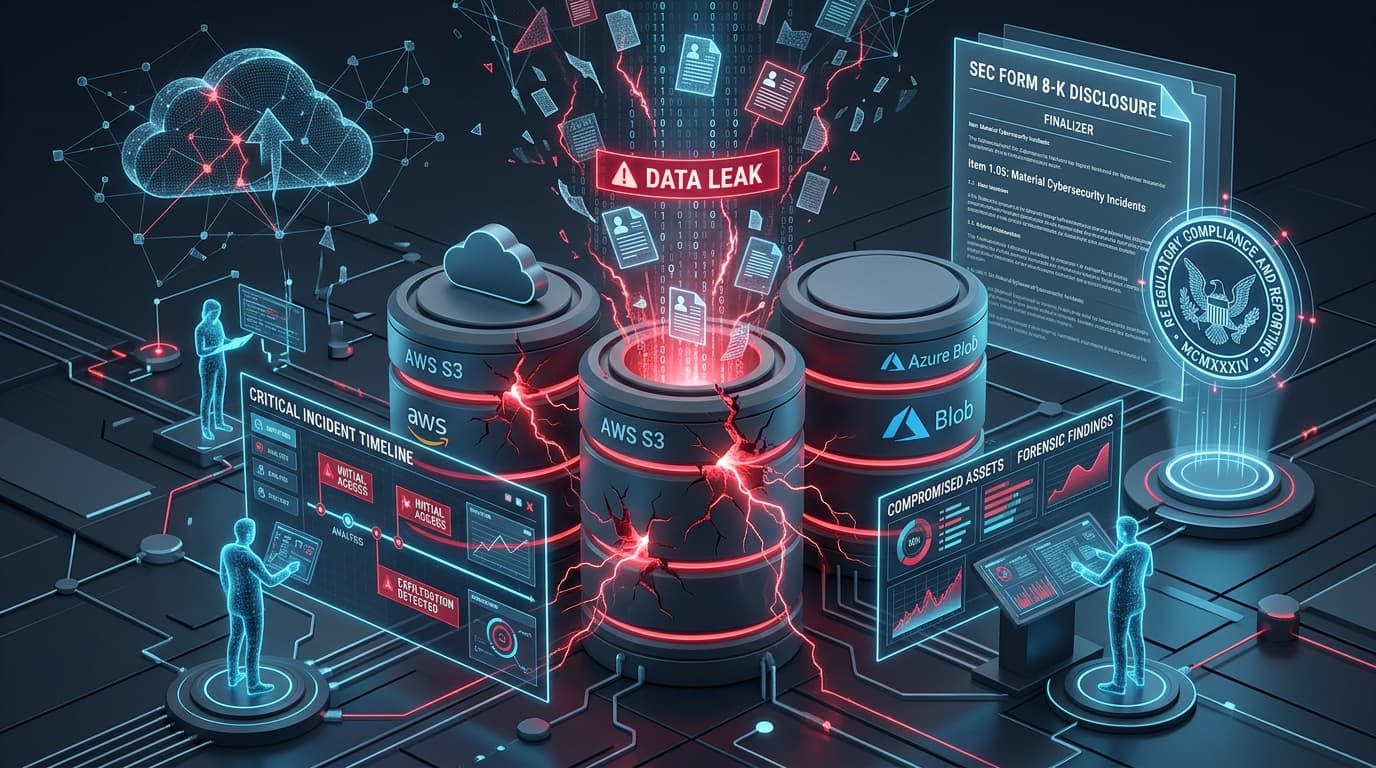
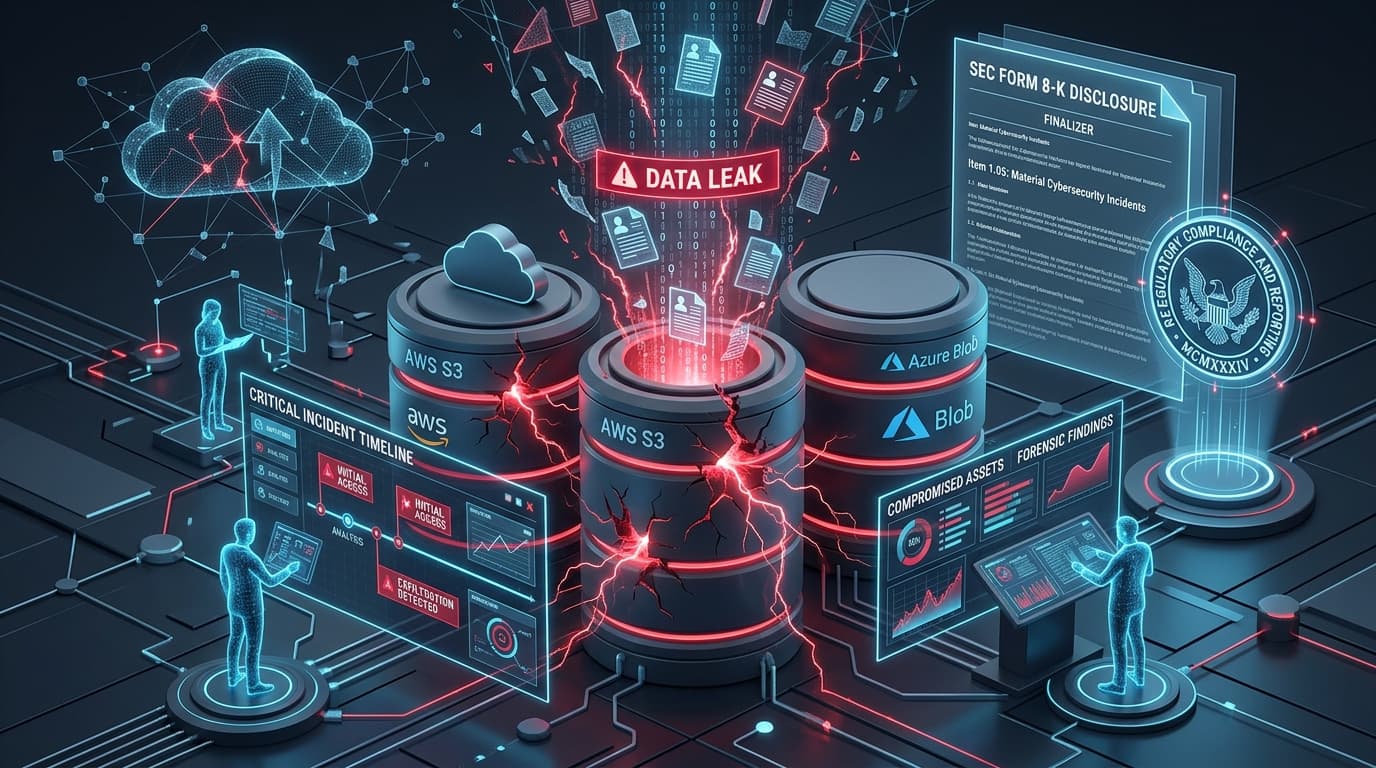
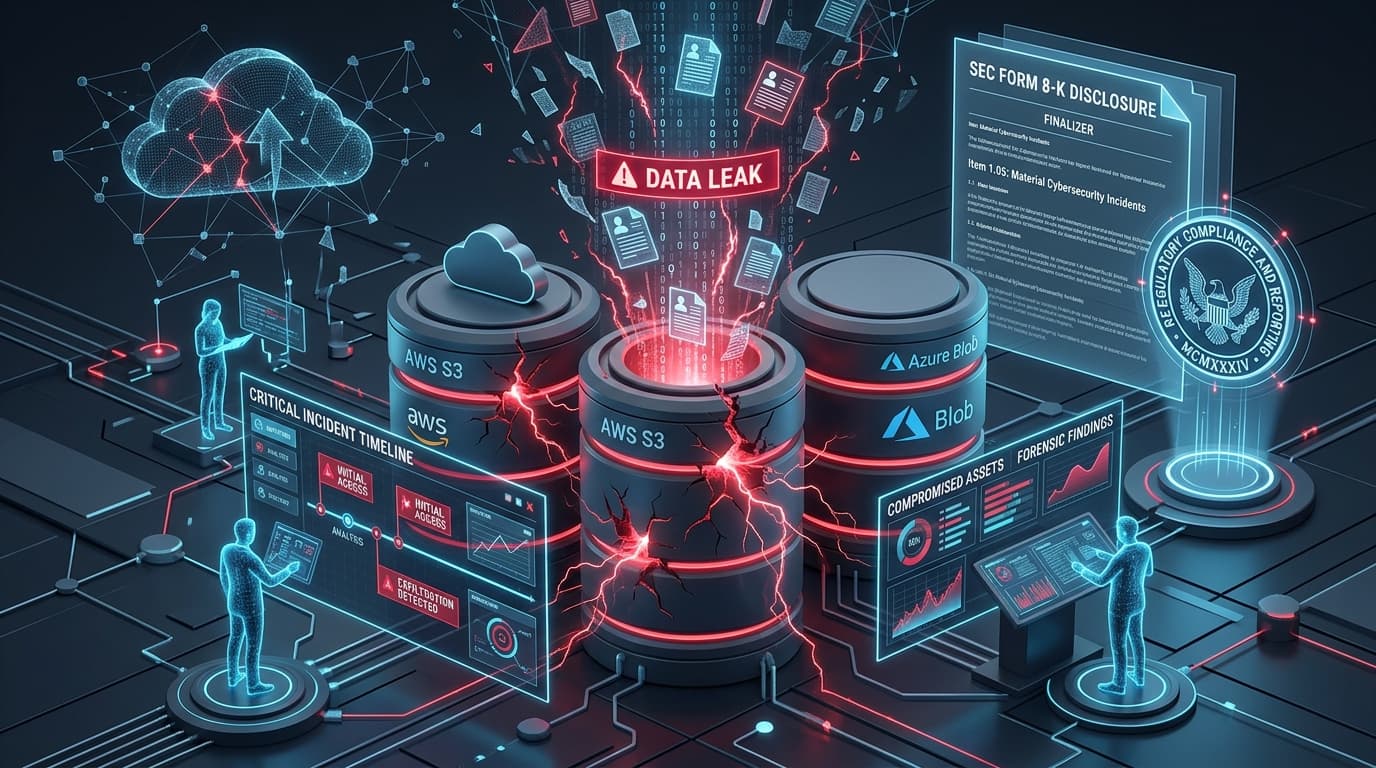
Public utility holding corporation CenterPoint Energy, Inc. (NYSE: CNP) has submitted an official regulatory filing on Form 8-K with the U.S. Securities and Exchange Commission (SEC), disclosing a cybersecurity incident involving unauthorized access to customer information through an external-facing web application portal.
CenterPoint Energy provides electric transmission and distribution services to more than 2.7 million metered customers and natural gas distribution to over 4.7 million customers across Texas, Indiana, Minnesota, Ohio, and Louisiana. According to the company's regulatory disclosure, security operations detected anomalous query traffic interacting with its customer service and account management web tier. Forensic investigation established that unauthorized external threat actors accessed customer profile data, service account identifiers, and billing records prior to containment.
Crucially for public safety and critical infrastructure resilience, CenterPoint Energy confirmed that the intrusion was strictly confined to corporate customer-facing IT environments. The operational technology (OT) networks, Energy Management Systems (EMS), and Supervisory Control and Data Acquisition (SCADA) systems responsible for electrical substation switching and natural gas pipeline pressure regulation operate on physically and logically isolated air-gapped zones and suffered zero disruption.
Forensic Attack Anatomy & Portal API Exploitation
The incident highlights an increasingly targeted attack surface across the utility and energy sectors: public-facing customer self-service portals that interface with legacy enterprise databases via REST and SOAP microservices.
Preliminary technical disclosures indicate that the threat actors conducted automated enumeration against an account management API endpoint. By leveraging credential stuffing or manipulating API object references (Broken Object Level Authorization - BOLA):
POST /api/v2/customer/billing/statementDetails HTTP/1.1
Host: myaccount.centerpointenergy.com
User-Agent: Mozilla/5.0 (Windows NT 10.0; Win64; x64)
Authorization: Bearer [LOW_PRIVILEGE_SESSION_TOKEN]
Content-Type: application/json
Content-Length: 68

{
  "accountNumber": "000489218491",
  "includePaymentProfile": true
}
Because the API gateway validated the authenticity of the session token but failed to enforce strict authorization checks between the authenticated user's identity and the requested accountNumber object, automated scripts were able to increment numerical account ranges, scraping customer names, billing addresses, utility usage metrics, and partial financial details:
- Exfiltrated Data Categories: Customer names, residential service addresses, account numbers, historical kilowatt-hour/gas consumption data, and masked banking routing indicators. CenterPoint stated that sensitive social security numbers and full unencrypted payment card data were not exposed.
- Blast Radius Containment: Upon identifying anomalous API query frequencies exceeding typical user baseline thresholds, security engineers severed the external API gateway, revoked all active web session tokens, and activated external incident response forensics teams.
SEC Cybersecurity Disclosure Dynamics: Item 1.05 vs. Item 8.01
The CenterPoint Energy filing illustrates how publicly traded enterprises are navigating the SEC's cybersecurity disclosure framework:
| Filing Mechanism | Regulatory Trigger | Reporting Window | CenterPoint Assessment |
|---|---|---|---|
| Form 8-K Item 1.05 | Incident determined to be "material" to investors, business, or financials | Within 4 business days of materiality determination | Under ongoing review; utility stated no current expectation of material financial impact |
| Form 8-K Item 8.01 | Voluntary disclosure of non-material or pending cybersecurity events | Discretionary / immediate transparency | Utilized to provide prompt notification to market participants and customers |
Under SEC rules, companies that experience an incident must assess both quantitative factors (direct financial losses, remediation costs, potential regulatory fines) and qualitative factors (reputational damage, customer churn, compromise of critical systems). While CenterPoint does not currently anticipate a material financial impact, utility operators remain under heightened regulatory oversight from state public utility commissions (PUCs) and the Federal Energy Regulatory Commission (FERC).
Defensive Playbook for Utility & Enterprise Customer Portals
Security architects managing customer portals interfacing with critical utility backends must enforce the following controls:
1. Enforce Strict Object-Level Authorization (BOLA Prevention)
Implement cryptographic access validation where every API request cryptographically binds the authenticated user's session context with the requested database record:
# Python FastAPI: Secure object-level ownership validation
@app.get("/api/v2/customer/billing/{account_id}")
async def get_billing_details(account_id: str, user: User = Depends(get_current_user)):
    # Verify requesting user explicitly owns the requested account ID
    if account_id not in user.authorized_account_ids:
        raise HTTPException(
            status_code=403,
            detail="Unauthorized access to requested account object"
        )
    return fetch_billing_record(account_id)
2. Rate Limiting & Behavioral Bot Mitigation
Deploy Web Application Firewall (WAF) rate limiting and automated scraping defense rules on all customer portal endpoints:
- Limit consecutive API account queries to a maximum of 5 requests per minute per authenticated user.
- Enforce CAPTCHA challenges or device fingerprint verification upon detection of sequential numeric parameter queries.
- Deploy behavioral anomaly detection to flag IP addresses interacting exclusively with account lookup APIs without loading core frontend assets.
3. Air-Gap Separation of IT and OT/SCADA Environments
Maintain strict unidirectional security gateways (data diodes) and firewalled DMZ boundaries adhering to IEC 62443-3-2 and Purdue Model Level 3/4 segmentation guidelines, ensuring customer-facing web environments cannot communicate with electrical switching or gas pipeline SCADA networks.