Executive Lead: Maximum-Severity Authentication Flaw in Azure Cloud Database Infrastructure
The Microsoft Security Response Center (MSRC) has disclosed and mitigated a critical vulnerability cataloged as CVE-2026-48567 affecting Azure HorizonDB, Microsoft's managed cloud database service designed for distributed, high-throughput enterprise workloads. The defect received the highest possible severity rating: a Common Vulnerability Scoring System (CVSS v3.1) base score of 10.0 (CVSS:3.1/AV:N/AC:L/PR:N/UI:N/S:C/C:H/I:H/A:H).
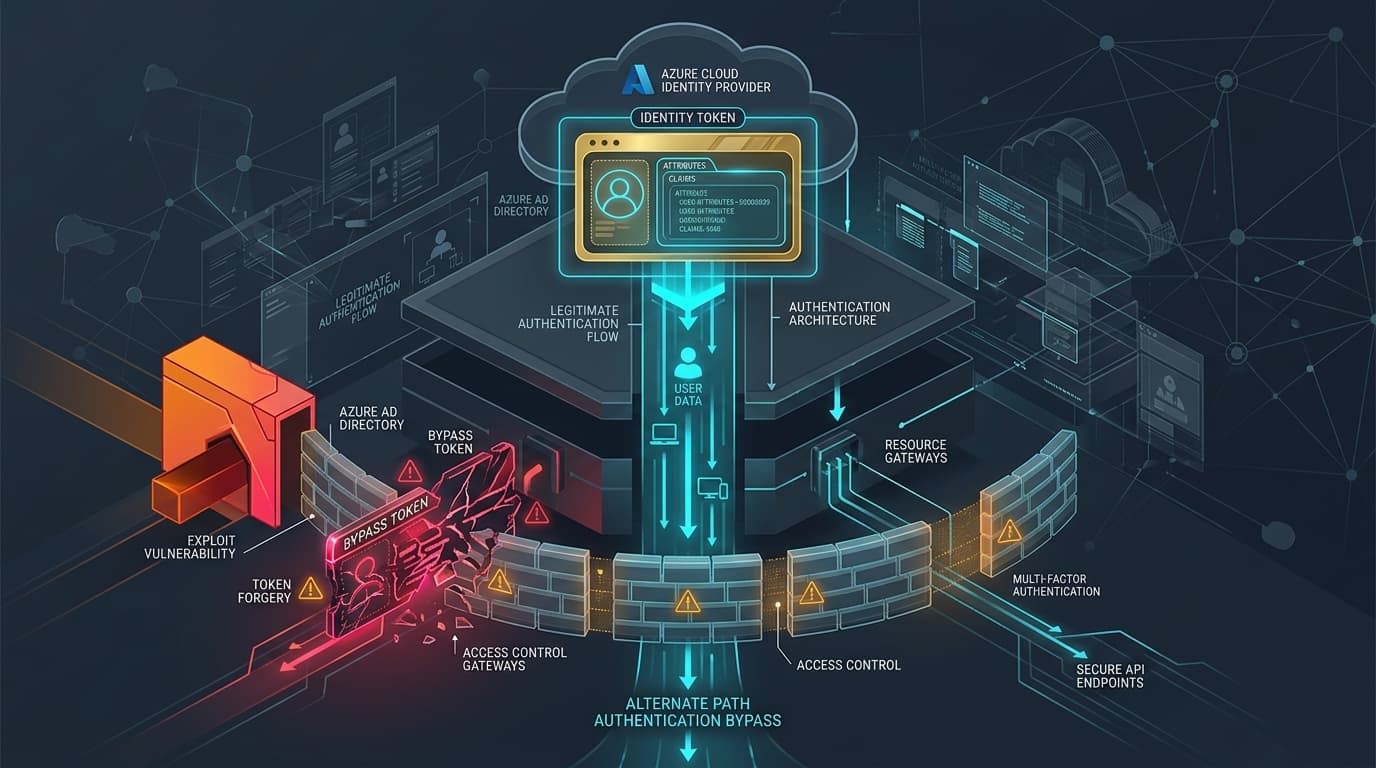
The flaw is classified as Authentication Bypass by Spoofing under CWE-290. Due to a defect in how Azure HorizonDB's front-end connection routers parsed and validated incoming cryptographic authentication assertion headers during session establishment, a remote, unauthenticated attacker on the network could construct forged identity tokens. These spoofed assertions were accepted as legitimate administrative credentials, enabling attackers to gain unrestricted superuser control over database instances, access all underlying tenant tablespaces, and manipulate operational configurations without possessing valid database credentials or Microsoft Entra ID permissions.
Technical Root Cause & CWE-290 Dissection: Cryptographic Assertion Desynchronization
Under CWE-290: Authentication Bypass by Spoofing and CWE-287: Improper Authentication, the vulnerability emerged from a architectural gap between the external transport termination proxy and the internal cluster session manager in Azure HorizonDB.
When enterprise clients establish connections to an Azure HorizonDB cluster, the communication travels through a high-availability ingress proxy before reaching the underlying database compute nodes. To streamline connection pooling and federated identity through Microsoft Entra ID (formerly Azure Active Directory), the ingress proxy attaches internal identity assertion headers (such as X-MS-Identity-Assertion and X-MS-Auth-Context) to the connection stream once mutual TLS (mTLS) or Kerberos handshakes conclude.
However, security researchers identified that when raw external client connections directly targeted the HorizonDB database protocol port, the internal handshake parser failed to verify whether incoming assertion headers originated from an authenticated upstream Azure infrastructure component or from an untrusted client:
// Pseudocode Representation of Insecure Assertion Parsing in HorizonDB Gateway
func HandleClientConnection(conn net.Conn) (*SessionContext, error) {
    handshakeMsg, err := ReadHandshake(conn)
    if err != nil {
        return nil, err
    }

    // DEFECT: Header presence checked without verifying cryptographic signature
    // or validating that the connection originated strictly from the internal mesh
    if assertionToken := handshakeMsg.GetHeader("X-MS-Identity-Assertion"); assertionToken != "" {
        // Flawed logic: Assumed only trusted Azure infrastructure could inject this header
        claims, err := ParseUnsignedAssertionClaims(assertionToken)
        if err == nil && claims.Role == "HorizonDB.ClusterAdmin" {
            // Grants full administrative bypass without credential validation
            return &SessionContext{
                User: claims.Subject,
                Role: claims.Role,
                Authenticated: true,
            }, nil
        }
    }

    // Fallback standard authentication flow
    return PerformStandardMutualAuth(conn, handshakeMsg)
}
Because the parser evaluated the presence of the X-MS-Identity-Assertion token prior to executing standard credential validation, an adversary capable of reaching the HorizonDB network listener could inject a crafted assertion payload containing arbitrary administrative roles (e.g., HorizonDB.ClusterAdmin or sa). The gateway trusted the claims without validating cryptographic signatures against Azure's internal root key infrastructure, resulting in complete authentication bypass.
Architecture & Breach Trajectory Diagram
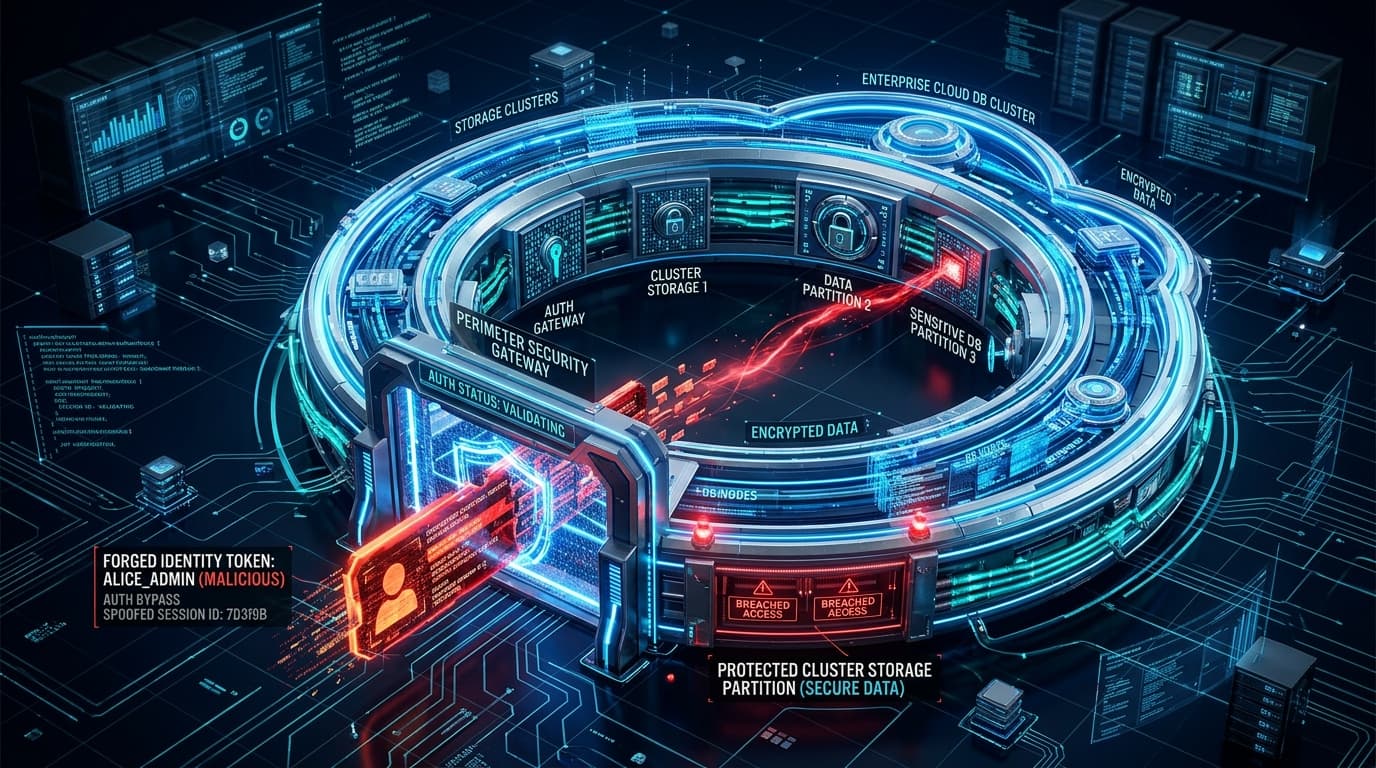
The diagram below illustrates the authentication bypass mechanism and the resultant scope expansion across tenant storage partitions:
+-----------------------------------------------------------------------------------+
|                        CVE-2026-48567 AUTHENTICATION BYPASS                       |
+-----------------------------------------------------------------------------------+
|                                                                                   |
|  [ Remote Network Adversary ]                                                     |
|          |                                                                        |
|          |  1. Initiates TCP connection to HorizonDB Port                         |
|          |     Sends forged assertion: X-MS-Identity-Assertion: Role=Admin       |
|          v                                                                        |
|  +-----------------------------------------------------------------------------+  |
|  | Azure HorizonDB Ingress Gateway Layer                                       |  |
|  |                                                                             |  |
|  |   [ Session Handshake Processor ]                                           |  |
|  |          |                                                                  |  |
|  |          |  2. Evaluates X-MS-Identity-Assertion claims                     |  |
|  |          |     FAILED CHECK: Omits signature verification                   |  |
|  |          |     FAILED CHECK: Allows external client header injection        |  |
|  |          v                                                                  |  |
|  |   [ Access Control Decision: GRANTED (ClusterAdmin) ]                       |  |
|  +----------|------------------------------------------------------------------+  |
|             |                                                                     |
|             |  3. Establishes Authenticated Session Context                        |
|             v                                                                     |
|  +-----------------------------------------------------------------------------+  |
|  | Azure HorizonDB Distributed Storage Engine                                  |  |
|  |                                                                             |  |
|  |   - Full Read/Write Access to Customer Tables & Encrypted Storage Blocks    |  |
|  |   - Execution of Administrative Procedures & User Creation                  |  |
|  |   - Exfiltration of Sensitive Financial, Health, and PII Records            |  |
|  |   - Potential Abuse of Attached Azure Managed Identity                      |  |
|  +-----------------------------------------------------------------------------+  |
|                                                                                   |
+-----------------------------------------------------------------------------------+
Blast Radius: Multi-Tenant Exposure & Scope Change (S:C)
The CVSS v3.1 metric for CVE-2026-48567 includes Scope: Changed (S:C), which denotes that an exploit impact extends beyond the immediate security authority of the vulnerable software component:
- Unrestricted Database Takeover: Once authenticated as
ClusterAdmin, an attacker possesses privileges to read, modify, or truncate all customer data tables. Attackers can create persistent administrative backdoors, alter database transaction histories, or deploy extortion scripts. - Managed Identity Abuse: Enterprise Azure HorizonDB deployments frequently utilize User-Assigned Managed Identities to connect to Azure Key Vault (for Customer-Managed Key encryption) and Azure Blob Storage (for automated backups). With cluster admin rights, an attacker can issue commands leveraging the underlying managed identity, harvesting cryptographic keys and exfiltrating off-site backup archives.
- Network Exposure Dependency: While Microsoft managed cloud instances isolate HorizonDB deployments behind private Virtual Networks (VNets) by default, customers who configured public endpoint access or maintained permissive network security group (NSG) ingress rules were exposed directly to Internet-wide exploitation.
Microsoft Fleet-Wide Mitigation & Customer Verification
Because Azure HorizonDB is a fully managed cloud service, Microsoft deployed server-side updates globally across all Azure regions to eliminate the flaw. The engineering remediation included:
- Header Stripping at Ingress: Immediate enforcement at edge load balancers stripping all
X-MS-Identity-Assertionand internal routing headers from external client connection streams before forwarding packets to internal gateways. - Cryptographic Assertion Verification: Refactoring internal gateway logic to enforce strict asymmetric signature validation on all assertion tokens against Azure's internal certificate authority hierarchy.
- Zero Downtime Patching: The hotfix was rolled out orchestrating rolling gateway restarts without disrupting active client queries or requiring database instance maintenance windows.
Customer Action Required: While no manual software patching is required on the host level, cloud security teams must perform posture validation and network boundary hardening to ensure their instances are fully isolated.
Defensive Playbook & Cloud Security Posture Hardening
Cloud architects and security engineers should execute the following verification and hardening procedures across all Azure subscriptions:
1. Enforce Azure Private Link & Disable Public Network Access
All production database workloads must be decoupled from the public Internet. Verify and enforce Private Endpoint integration using the Azure CLI:
# Check public network access status across HorizonDB instances
az horizondb show   --resource-group rg-enterprise-data   --name horizondb-core-prod   --query "{Name:name, PublicNetworkAccess:publicNetworkAccess, PrivateEndpointConnections:privateEndpointConnections}"

# Disable public network access to enforce private subnet routing
az horizondb update   --resource-group rg-enterprise-data   --name horizondb-core-prod   --public-network-access Disabled
2. Audit Azure Activity Logs for Anomalous Administrative Logins
Deploy the following Kusto Query Language (KQL) hunting query in Microsoft Sentinel or Azure Monitor Log Analytics to detect historical unauthenticated administrative session creation or unexpected role escalations:
// KQL Threat Hunting Query: Detect Anomalous HorizonDB Admin Logins
AzureDiagnostics
| where TimeGenerated >= ago(30d)
| where ResourceProvider == "MICROSOFT.HORIZONDB"
| where Category == "AdministrativeConnections"
| extend ClientIP = tostring(parse_json(properties_s).client_ip),
         AuthType = tostring(parse_json(properties_s).authentication_type),
         RoleAssigned = tostring(parse_json(properties_s).assigned_role),
         Subject = tostring(parse_json(properties_s).subject_identity)
| where RoleAssigned in ("ClusterAdmin", "SuperUser", "DBA")
| where AuthType == "AssertionSpoofed" or isempty(Subject) or AuthType == "InternalAssertion"
| project TimeGenerated, Resource, ClientIP, AuthType, RoleAssigned, Subject
| order by TimeGenerated desc
3. Rotate Database Credentials and Managed Identity Permissions
As a defense-in-depth precaution, organizations with clusters that had public network access enabled during the vulnerability window should cycle administrative credentials and audit IAM role assignments:
# Rotate HorizonDB administrative user credentials
az horizondb update   --resource-group rg-enterprise-data   --name horizondb-core-prod   --admin-user horizondb_admin   --admin-password "H@rd3n3d_Str0ng_P@ssw0rd_2026!"

# Review Azure RBAC role assignments granted on the database scope
az role assignment list   --scope "/subscriptions/00000000-0000-0000-0000-000000000000/resourceGroups/rg-enterprise-data/providers/Microsoft.HorizonDB/instances/horizondb-core-prod"   --output table
4. Infrastructure-as-Code (IaC) Policy Enforcement via Azure Policy
Prevent the future deployment of publicly accessible HorizonDB instances across your tenant by assigning an Azure Policy denying public network ingress:
{
  "properties": {
    "displayName": "Deny public network access for Azure HorizonDB instances",
    "policyType": "Custom",
    "mode": "Indexed",
    "description": "Enforces that all Azure HorizonDB instances must have publicNetworkAccess set to Disabled.",
    "parameters": {},
    "policyRule": {
      "if": {
        "allOf": [
          {
            "field": "type",
            "equals": "Microsoft.HorizonDB/instances"
          },
          {
            "field": "Microsoft.HorizonDB/instances/publicNetworkAccess",
            "notEquals": "Disabled"
          }
        ]
      },
      "then": {
        "effect": "deny"
      }
    }
  }
}