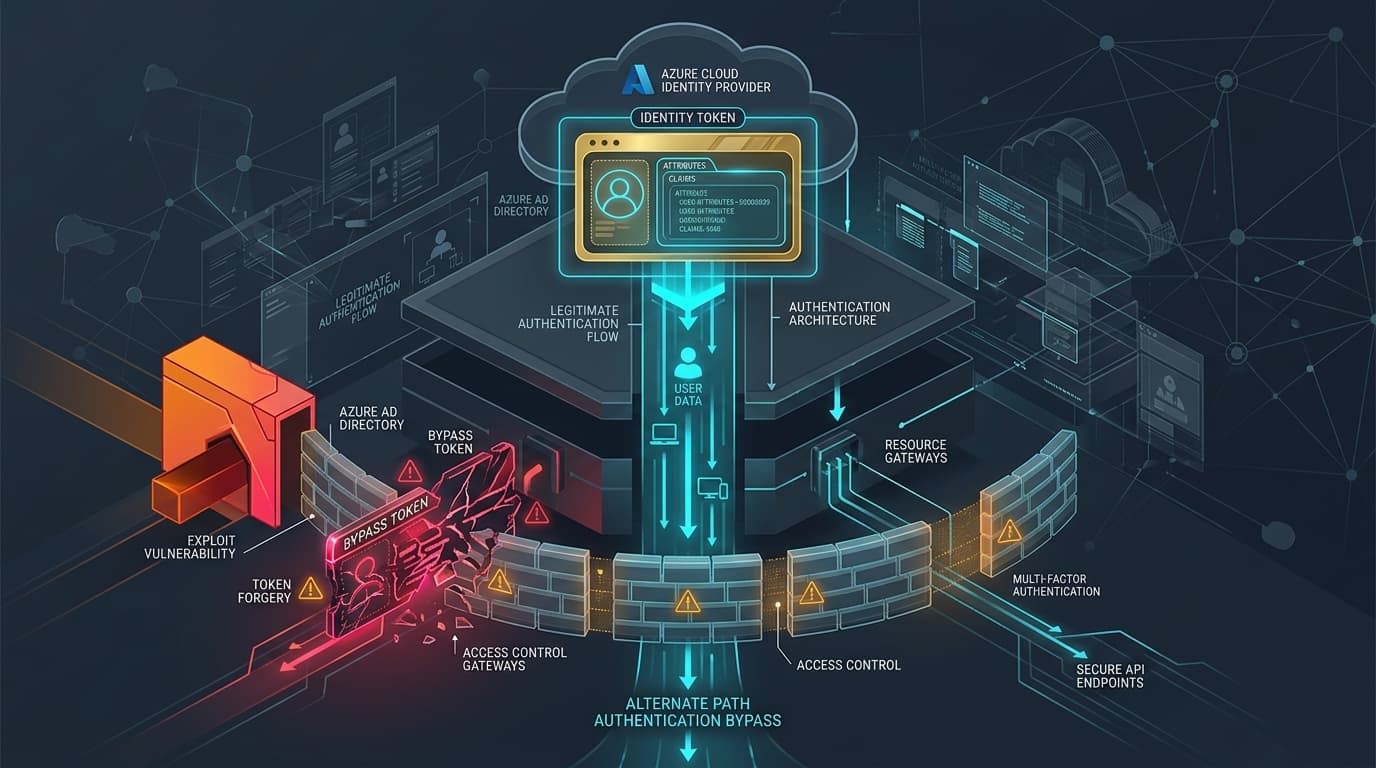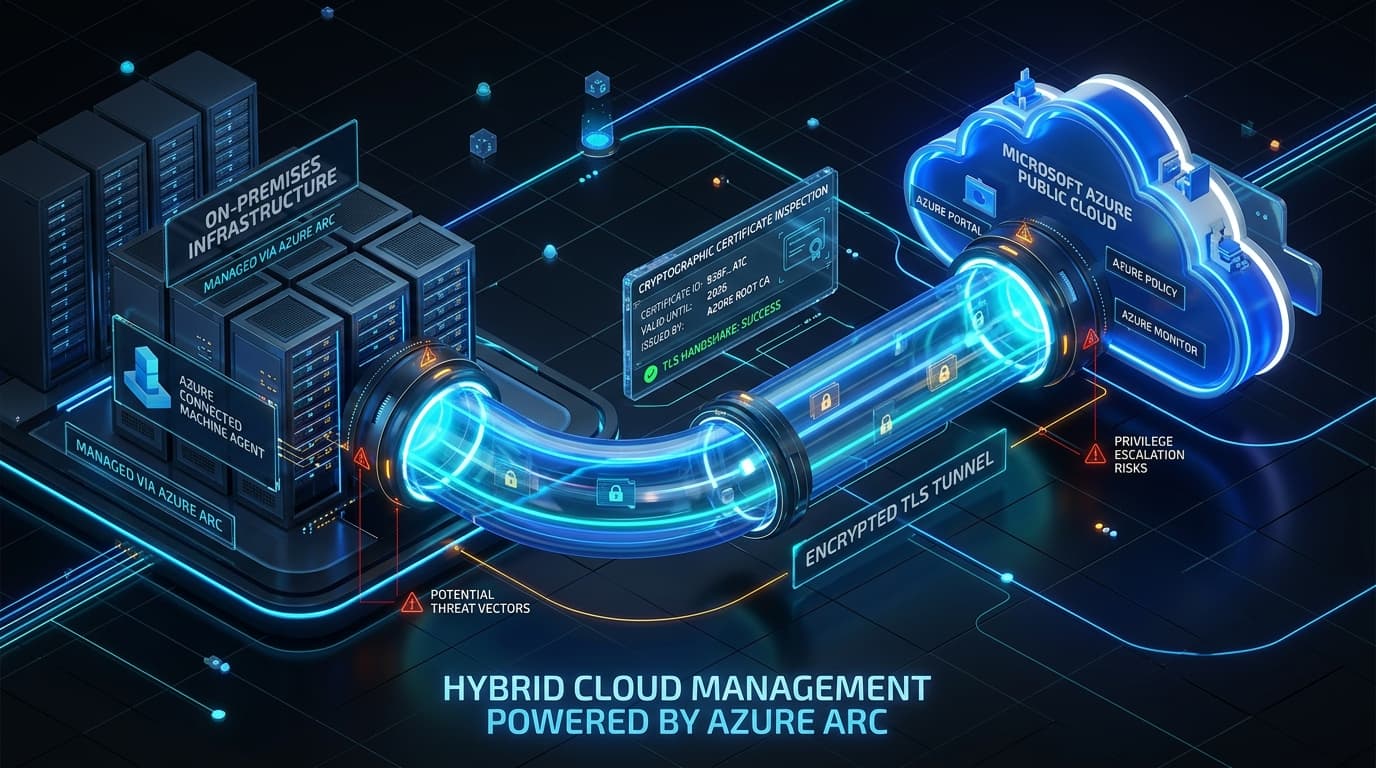
Executive Lead: Hybrid Cloud Management Privilege Escalation in Azure Arc
Microsoft has published a comprehensive security update in the Microsoft Security Response Center (MSRC) detailing a high-severity elevation of privilege vulnerability cataloged as CVE-2026-47632 in the Azure Connected Machine Agent. Assigned a Common Vulnerability Scoring System (CVSS v3.1) base score of 8.8 (CVSS:3.1/AV:A/AC:L/PR:L/UI:N/S:C/C:H/I:H/A:H), the vulnerability allows an attacker with low-privilege access on an adjacent network or local host to compromise the agent communication pipeline and seize complete administrative control (NT AUTHORITY\SYSTEM on Windows or root on Linux).
The Azure Connected Machine Agent is the foundational software component powering Azure Arc-enabled servers. It runs on physical on-premises servers, virtual machines hosted in VMware vSphere or Nutanix environments, and instances running across third-party public clouds (such as AWS EC2 and Google Cloud Compute Engine). The agent enables centralized management through Azure Resource Manager (ARM), governing automated patching, Azure Policy enforcement, guest configuration auditing, and Microsoft Defender for Cloud telemetry. Because the agent executes with maximum system privileges to apply operating system configurations, any compromise of its internal identity and execution pipeline represents a critical risk to enterprise hybrid infrastructure.
Technical Root Cause & CWE-295 Dissection: Flawed TLS Certificate Validation
The vulnerability is classified under CWE-295: Improper Certificate Validation. The Azure Connected Machine Agent comprises several coordinated microservices: the Guest Configuration Service (gc_service), the Extension Manager (himds), and the Local Identity Service.
To facilitate secure communication between local agent components and upstream Azure endpoints, the agent exposes a local inter-process communication (IPC) proxy over loopback and link-local interfaces. When downloading extension packages, script configurations, and custom machine policies from Azure Arc endpoints, the agent initiates mutual TLS (mTLS) handshakes:
// Vulnerable Certificate Verification Handler in Agent Network Client
func (c *ArcSecureClient) ValidateUpstreamCertificate(rawCerts [][]byte, verifiedChains [][]*x509.Certificate) error {
    // SECURITY DEFECT: Custom verify logic bypassed standard Root CA trust validation
    if len(rawCerts) == 0 {
        return errors.New("no certificates presented")
    }

    leafCert, err := x509.ParseCertificate(rawCerts[0])
    if err != nil {
        return fmt.Errorf("failed to parse leaf certificate: %w", err)
    }

    // Flawed logic: Checked if Subject CN matched Azure pattern without verifying cryptographic chain to Trusted Root
    if strings.HasSuffix(leafCert.Subject.CommonName, ".azure.com") ||
       strings.HasSuffix(leafCert.Subject.CommonName, ".arc.azure.net") {
        // Validation returned nil success even if the certificate was self-signed or signed by untrusted CA!
        return nil
    }

    return errors.New("untrusted certificate subject")
}
Because the verification logic evaluated the Common Name (CN) string without validating the cryptographic signature chain against the system trusted Root Certificate Authorities (Root CAs), an attacker on the adjacent local network segment or within a multi-tenant virtualization environment can perform a Man-in-the-Middle (MitM) attack or spoof the local DNS resolution:
- Self-Signed Certificate Spoofing: An attacker generates a self-signed X.509 certificate featuring a valid Azure subject name (e.g.,
management.arc.azure.net). - Extension Payload Tampering: When the Azure Connected Machine Agent polls for scheduled extension updates or policy enforcement runs, the attacker intercepts the TLS session, presents the spoofed certificate, and returns a modified JSON extension payload containing malicious executable commands.
- Root/SYSTEM Execution: The agent Extension Manager dequeues the payload, unpacks the extension binary, and executes it under elevated
SYSTEMorrootcontext.
Attack Mechanics & Proof-of-Concept Workflow Analysis
In an enterprise hybrid deployment where multiple servers share an internal VLAN, an attacker who has compromised a low-privilege developer workstation or auxiliary server can execute an adjacent network interception sequence:
- ARP Spoofing / LLMNR Poisoning: The attacker initiates ARP spoofing targeting the Azure Arc-enabled production host, directing outbound traffic for Azure Arc regional endpoints to the attacker's gateway.
- TLS Interception: The attacker presents a crafted TLS certificate with CN
pas.his.arc.azure.com. The vulnerable agent (version < 1.65) accepts the connection without verifying the certificate chain. - Malicious Extension Injection: The attacker's spoofed endpoint transmits a synthetic
CustomScriptExtensiontask manifest specifying a shell script payload:{ "extension": "CustomScriptExtension", "version": "1.10.12", "properties": { "commandToExecute": "powershell.exe -ExecutionPolicy Bypass -Command \"Add-LocalGroupMember -Group Administrators -Member AttackerUser\"" } } - Local Privilege Escalation: The agent executes the script with
NT AUTHORITY\SYSTEMprivileges, instantly promoting the unprivileged account to full local administrator.
Impacted Software Versions & Update Matrix
| Component | Vulnerable Versions | Fixed Release | Remediation Mechanism |
|---|---|---|---|
| Azure Connected Machine Agent (Windows) | 1.0.0 through 1.64.03023 | 1.65.03024.1202 or later | Windows Update / Azcmagent CLI update |
| Azure Connected Machine Agent (Linux) | 1.0.0 through 1.64.03023 | 1.65.03024.1202 or later | Package manager update (apt / yum / zypper) |
| Azure Arc Private Link Scope (PLS) | All versions if paired with unpatched agent | Enforce Agent Version 1.65+ Policy | Azure Policy governance enforcement |
Remediation Playbook: Upgrading and Hardening Azure Arc Workloads
1. Immediate Agent Upgrade via Azcmagent CLI
Enterprise infrastructure engineers should initiate immediate automated updates across all registered Azure Arc hybrid servers:
# Check current installed agent version
azcmagent version

# For Linux hosts (Ubuntu / Debian)
sudo apt-get update && sudo apt-get install --only-upgrade azcmagent

# For Red Hat Enterprise Linux / CentOS / Rocky Linux
sudo yum update azcmagent

# For Windows Server hosts via PowerShell
azcmagent.exe update
2. Enforce Azure Policy for Minimum Agent Compliance
Deploy an Azure Governance Policy across the tenant to automatically audit and flag any Connected Machine Agent reporting a version below 1.65:
{
  "mode": "Indexed",
  "policyRule": {
    "if": {
      "allOf": [
        {
          "field": "type",
          "equals": "Microsoft.HybridCompute/machines"
        },
        {
          "field": "Microsoft.HybridCompute/machines/agentVersion",
          "less": "1.65.0"
        }
      ]
    },
    "then": {
      "effect": "Audit"
    }
  }
}
3. Network Layer Protection & 802.1X Isolation
Isolate Azure Arc-managed servers on dedicated management VLANs with Dynamic ARP Inspection (DAI) and DHCP Snooping enabled on top-of-rack switches to prevent adjacent network ARP spoofing and Man-in-the-Middle attacks.
Forensic Audit Indicators & Telemetry
| Telemetry Source | Log Location | Indicator / Signature |
|---|---|---|
| Agent Connection Logs | /var/opt/azcmagent/log/himds.log or C:\ProgramData\AzureConnectedMachineAgent\Log\himds.log |
Certificate validation warnings or unexpected thumbprint mismatch notices |
| Extension Execution History | /var/lib/waagent/Microsoft.Azure.Extensions.* |
Unexpected execution of CustomScript or RunCommand extensions without corresponding Azure Activity Log entries |
| Network Security Monitoring | Zeek / Suricata TLS logs | TLS sessions connecting to *.arc.azure.net where certificate issuer does not chain to Microsoft RSA Root Certificate Authority |