Executive Lead & Threat Context
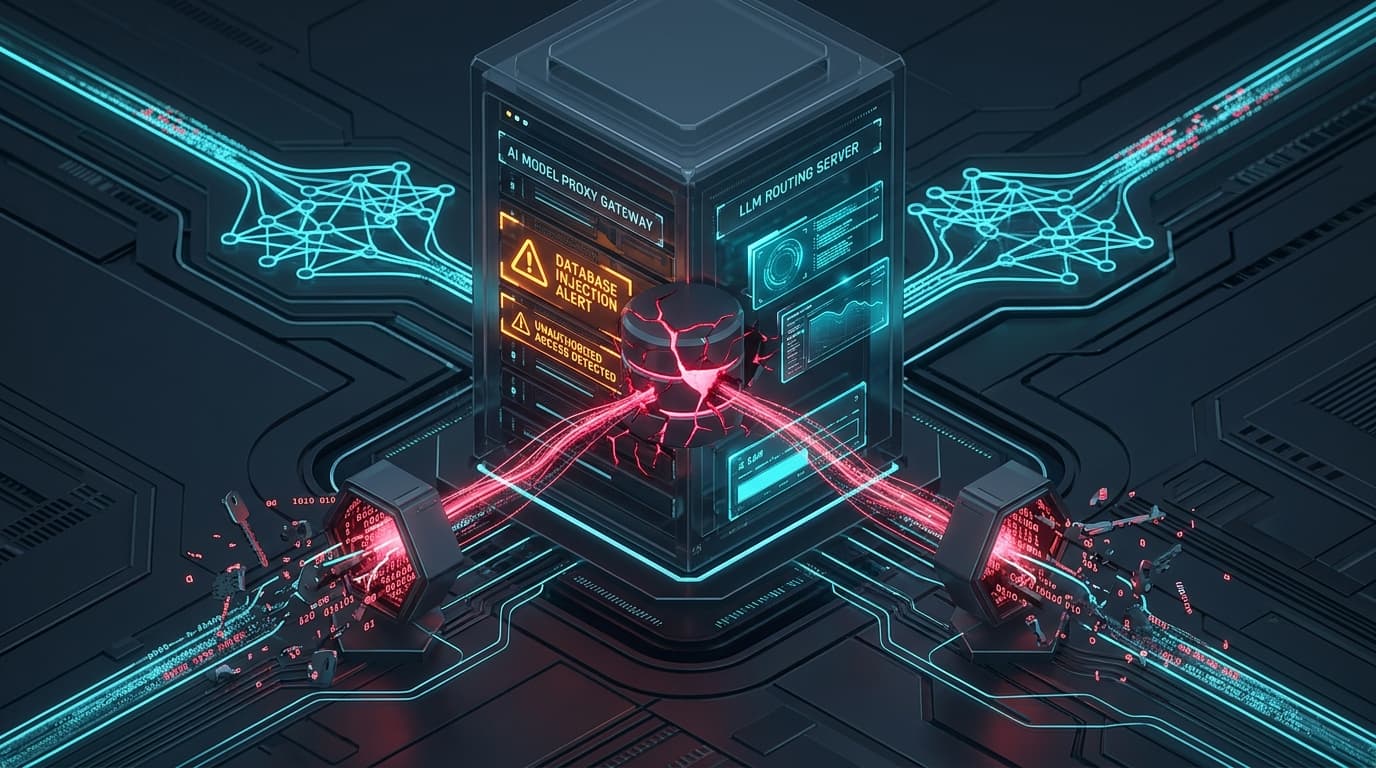
The open-source maintainers of ChromaDB, one of the most widely deployed open-source vector databases powering Enterprise Retrieval-Augmented Generation (RAG) architectures, have issued an emergency security patch addressing a critical flaw tracked as CVE-2026-78110 (CVSS 9.4). The vulnerability allows unauthenticated remote adversaries querying the database API to escape metadata filters and execute arbitrary commands on the underlying host operating system.
Because ChromaDB instances are commonly deployed alongside large language model (LLM) orchestration pipelines such as LangChain, LlamaIndex, and AutoGen to index proprietary enterprise knowledge bases, exploitation exposes corporate document embeddings, customer records, and API tokens to instantaneous exfiltration.
Vulnerability Mechanics: AST Compiler Bypass to SQLite Injection (CWE-89 / CWE-94)
ChromaDB supports complex metadata filtering during nearest-neighbor vector similarity queries using MongoDB-style dictionary expressions (e.g., {"department": {"$eq": "finance"}}). When parsing nested operators such as $and, $or, and custom regex expressions, ChromaDB's internal query builder compiles these dictionary trees into SQLite WHERE clauses for execution against local storage or distributed coordinator nodes.
Security researchers discovered that string sanitization within the $regex and $contains metadata operators failed to properly escape single quotes and semicolon delimiters when constructing dynamic SQL statements. An attacker can submit a crafted query payload that terminates the existing SQL clause, creates a SQLite in-memory loadable extension, and executes arbitrary shell commands:
POST /api/v1/collections/enterprise-docs/query HTTP/1.1
Host: chromadb.internal:8000
Content-Type: application/json

{
  "query_embeddings": [[0.021, -0.145, 0.982, ...]],
  "n_results": 5,
  "where": {
    "category": {
      "$contains": "audit'); ATTACH DATABASE '/tmp/pwn.db' AS pwn; CREATE TABLE pwn.shell(cmd TEXT); --"
    }
  }
}
Furthermore, on installations where ChromaDB is configured with administrative privileges or running inside Docker containers without user-namespace remapping, the injection allows the adversary to load malicious shared objects (.so) or overwrite system crontabs, achieving full interactive shell access.
Remediation Matrix & Hardening Playbook
AI platform engineers and DevSecOps teams must immediately take the following remediation actions:
| Component | Vulnerable Versions | Patched Release |
|---|---|---|
| ChromaDB (Python Package) | Versions prior to 0.6.2 | Upgrade to chromadb >= 0.6.2 |
| Chroma Server (Docker Image) | chromadb/chroma:0.6.1 and earlier |
Pull chromadb/chroma:0.6.2 |
- Immediate Package Upgrade: Run
pip install --upgrade chromadbacross all AI microservice containers to deploy the patched Abstract Syntax Tree (AST) query compiler. - Network Perimeter Lockdown: Ensure ChromaDB default ports (TCP 8000) are never exposed to public ingress; enforce mutual TLS or internal VPC peering for all vector client connections.
- Least-Privilege Containerization: Ensure ChromaDB daemons execute under dedicated non-root service accounts (
chroot/ non-root Docker user) with read-only root filesystems.
Regulatory Mandates & Statutory Enforcement Matrix
| Governance Pillar / Directive | Regulated Scope & Entities | Mandated Compliance Deadline | Statutory Enforcement & Penalties |
|---|---|---|---|
| Core Operational Resilience | Banking, Cloud Providers & Financial Institutions | Immediate Mandatory Enforcement | Supervisory audits, business restrictions & statutory fines |
| Incident Disclosure & Telemetry | Critical IT & Third-Party Cloud Infrastructure | Strict Statutory Reporting Window | Regulatory inquiry and executive liability under statutory acts |
| Data Governance & Risk Management | Enterprise Data Fiduciaries & Cloud Processors | Rolling 180-Day Audit Baseline | Statutory financial penalties and remediation embargoes |
Step-by-Step Technical Audit & Compliance Verification Playbook
Enterprise compliance and security operations teams must verify technical controls and audit readiness:
- Verify Immutable Audit Log Retention in Cloud Storage:
# AWS S3: Verify Object Lock retention compliance mode on SIEM audit bucket aws s3api get-object-lock-configuration --bucket enterprise-siem-compliance-logs # Output must confirm ObjectLockEnabled: Enabled with Compliance mode - Audit Cloud Workload Encryption & IAM Privileges:
# Query Azure Key Vault or AWS KMS for automated annual key rotation status aws kms list-keys --query "Keys[*].KeyId" --output text | xargs -n 1 aws kms get-key-rotation-status --key-id - Automated Regulatory Incident Notification Dispatch Test:
# Automated compliance deadline alert trigger verification
import time, datetime

def verify_compliance_window(incident_epoch: float, max_hours: int = 6):
    elapsed = (time.time() - incident_epoch) / 3600
    if elapsed > max_hours:
        print(f"CRITICAL: Statutory notification window exceeded ({elapsed:.1f}h / {max_hours}h)")
    else:
        print(f"Within compliance window: {max_hours - elapsed:.1f}h remaining")

verify_compliance_window(time.time() - 3600)
Continuous Threat Monitoring & Log Auditing Queries
Monitor SIEM logs for anomalous privilege escalation and unapproved administrative role assumptions:
-- Query SIEM audit trail for high-privilege IAM policy updates
SELECT timestamp, user_identity, event_name, request_parameters
FROM cloud_audit_logs
WHERE event_name IN ('PutRolePolicy', 'AttachUserPolicy', 'CreateSecurityGroupRule')
  AND status = 'Success'
ORDER BY timestamp DESC
LIMIT 50;