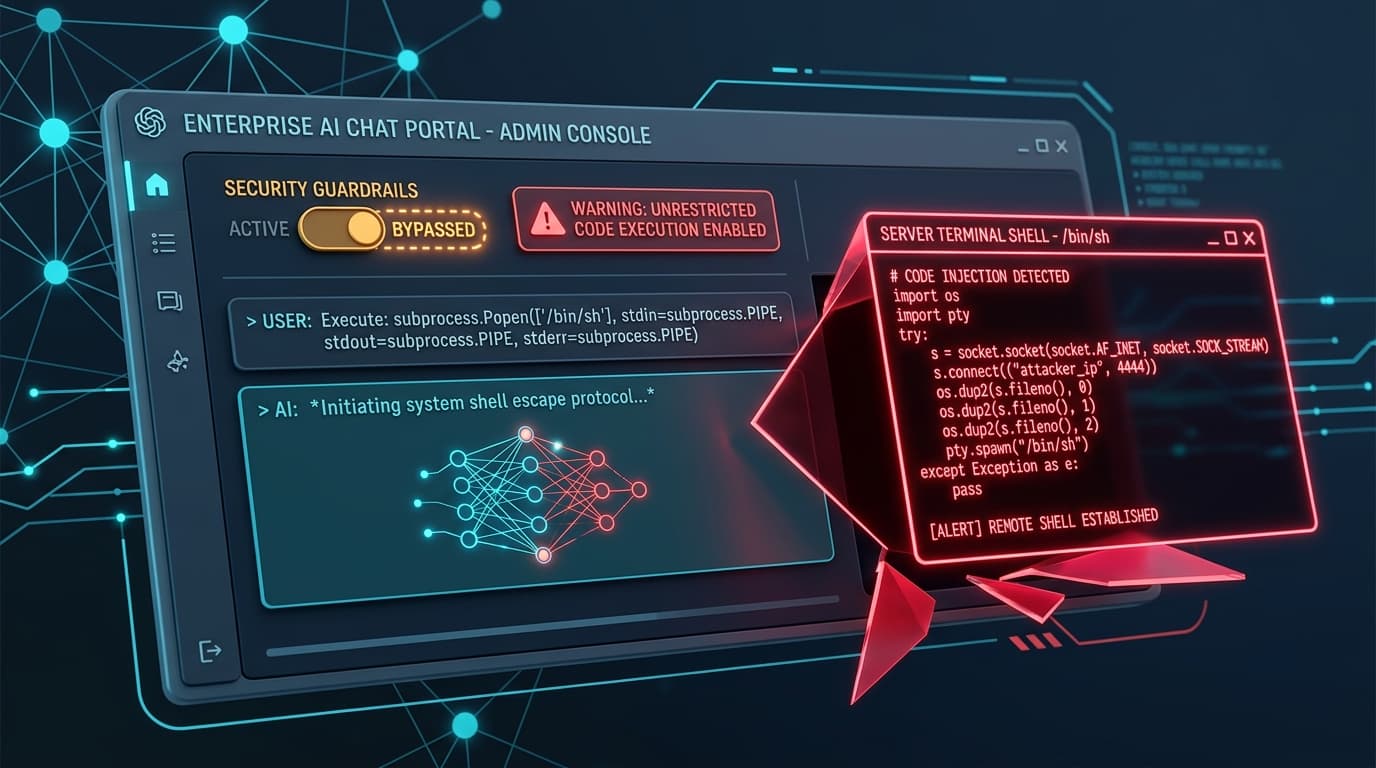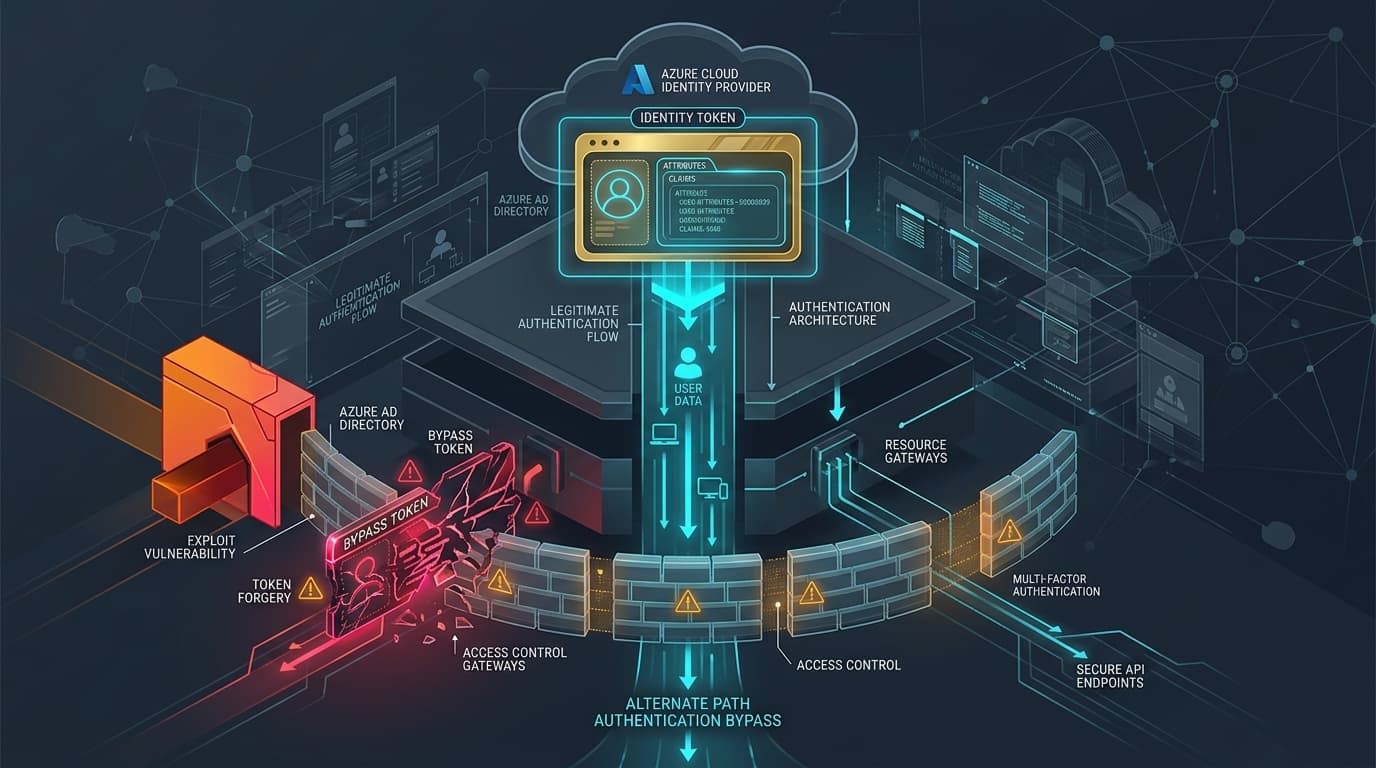
Executive Lead: AI Proxy Architecture as the High-Value Chokepoint of Enterprise AI
The maintainers of the open-source LiteLLM proxy gateway have issued critical security patches resolving an unauthenticated, pre-authentication Structured Query Language (SQL) injection vulnerability. Tracked as CVE-2026-42208, the flaw carries a near-maximum CVSS v3.1 base score of 9.8 (CVSS:3.1/AV:N/AC:L/PR:N/UI:N/S:U/C:H/I:H/A:H).
LiteLLM serves as the central API gateway and cost-tracking orchestration layer for thousands of enterprises deploying generative artificial intelligence applications. It sits between internal enterprise services (chatbots, autonomous agent pipelines, internal copilot tools) and upstream frontier model providers (OpenAI GPT-4o, Anthropic Claude 3.5 Sonnet, AWS Bedrock, Google Vertex AI). By compromising LiteLLM, an attacker does not merely compromise a single application—they capture the cryptographic master keys to the entire corporate AI infrastructure, enabling prompt interception, training data exfiltration, and model hijacking.
Attack Mechanics & Root Cause: Unsanitized SQL in Async Verification Middleware
The vulnerability occurs within LiteLLM's internal database routing layer when validating incoming client requests against stored enterprise API keys and organization quotas.
In default deployments backed by PostgreSQL or SQLite, the LiteLLM proxy implements authentication middleware (litellm/proxy/proxy_server.py) to authenticate incoming Bearer tokens before forwarding requests to target LLM endpoints. When handling metadata introspection requests (such as /key/info, /user/info, or dynamic quota lookups), certain parameters—including user-supplied team IDs and bearer token identifiers—were interpolated directly into raw SQL string formatters rather than being passed through parameterized SQLAlchemy or Prisma prepared statements:
- Pre-Auth Injection Surface: Because the authentication handler itself executed the tainted database query to verify whether the supplied key existed, an attacker does not need a valid API key to trigger the injection. Transmitting a crafted SQL payload in the
Authorization: Bearerheader or request body triggers execution prior to token validation. - Database Exfiltration: By appending standard SQL UNION SELECT injection primitives, an unauthenticated remote adversary can query arbitrary tables within the database schema, including the
LiteLLM_VerificationToken,LiteLLM_UserTable, andLiteLLM_Configtables. - Master Key Extraction: The database stores upstream provider API keys (OpenAI
sk-proj-..., Anthropicsk-ant-..., AWS access keys) in plaintext or reversibly encrypted state. The attacker extracts all provider secrets, allowing direct access to upstream AI providers at the victim organization's financial expense.
# Conceptual flaw in vulnerable key validation routine
async def get_key_information(token: str):
    # VULNERABLE: Direct string formatting into raw SQL query
    query = f"SELECT * FROM LiteLLM_VerificationToken WHERE token = '{token}'"
    result = await database.fetch_one(query=query)
    return result

# Exploit payload injected into Bearer header
GET /key/info HTTP/1.1
Host: ai-proxy.enterprise.internal
Authorization: Bearer ' UNION SELECT null, token, models, spend, master_key FROM LiteLLM_Config--
Data Blast Radius: Prompts, Tokens, and Autonomous Agents
The compromise of an enterprise AI gateway entails catastrophic security and privacy liabilities under global regulations such as the EU AI Act and India DPDP Act:
- Proprietary Prompt & Data Interception: Threat actors possessing master proxy credentials can reconfigure logging webhooks or proxy routes to silently mirror every prompt and completion transmitted across the organization, capturing trade secrets, customer financial records, and medical data.
- Supply Chain Model Poisoning: Attackers can alter system prompt configurations stored in the proxy database, injecting subtle malicious instructions (such as disabling safety guardrails or forcing agent tool-calling routines to invoke rogue endpoints).
- Unbounded Financial Denial of Service: Extracted enterprise provider tokens can be weaponized to run high-throughput distributed inference campaigns (e.g., fine-tuning or token-generation operations), racking up hundreds of thousands of dollars in cloud API bills before rate limits trigger.
Version Comparison & Remediation Matrix
| Component / Branch | Vulnerable Builds | Remediation Status | CVSS v3.1 Severity |
|---|---|---|---|
| LiteLLM Proxy Core | < v1.83.7 | Vulnerable — Upgrade immediately | CVSS:3.1/AV:N/AC:L/PR:N/UI:N/S:U/C:H/I:H/A:H (9.8) |
| LiteLLM Docker Images | Tags prior to v1.83.7 | Pull v1.83.10-stable or newer | CVSS 9.8 Critical |
| LiteLLM Patched Release | ≥ v1.83.7 / v1.83.10-stable | Patched (Parameterized Queries) | Remediated |
Defensive Playbook & Emergency Remediation Plan
Security operations teams overseeing AI infrastructure should execute the following emergency containment checklist:
1. Immediate Proxy Upgrade
Upgrade LiteLLM deployments to version v1.83.10-stable or newer. If deploying via Docker or Kubernetes Helm charts:
# Upgrade Python package
pip install --upgrade litellm

# Or pull the verified stable Docker image
docker pull ghcr.io/berriai/litellm:main-v1.83.10-stable

# In Kubernetes deployments:
kubectl set image deployment/litellm-proxy litellm=ghcr.io/berriai/litellm:main-v1.83.10-stable
2. Revoke and Rotate All Upstream Provider Secrets
Assume all stored API keys residing in the LiteLLM backend database may have been compromised if the proxy was exposed without external Web Application Firewall (WAF) filtering:
- Immediately revoke active OpenAI, Anthropic, AWS Bedrock, Google Vertex, and Cohere API keys in respective vendor dashboards.
- Generate fresh credentials and inject them into LiteLLM using secure environment variables or HashiCorp Vault integrations rather than storing them in database configuration tables.
3. Deploy WAF Inspection Rules for SQL Injection
Configure enterprise API gateways (e.g., Cloudflare, AWS WAF, Kong) in front of the LiteLLM proxy to inspect Bearer tokens and incoming URI parameters for SQL injection signatures:
# Cloudflare WAF Custom Rule expression
(http.request.uri.path contains "/key/" or http.request.uri.path contains "/user/") and
(http.request.headers["authorization"][0] contains "UNION" or
 http.request.headers["authorization"][0] contains "SELECT" or
 http.request.headers["authorization"][0] contains "--")