Executive Lead: Critical Pharmaceutical Supply Chain Paralyzed by Cyber Extortion
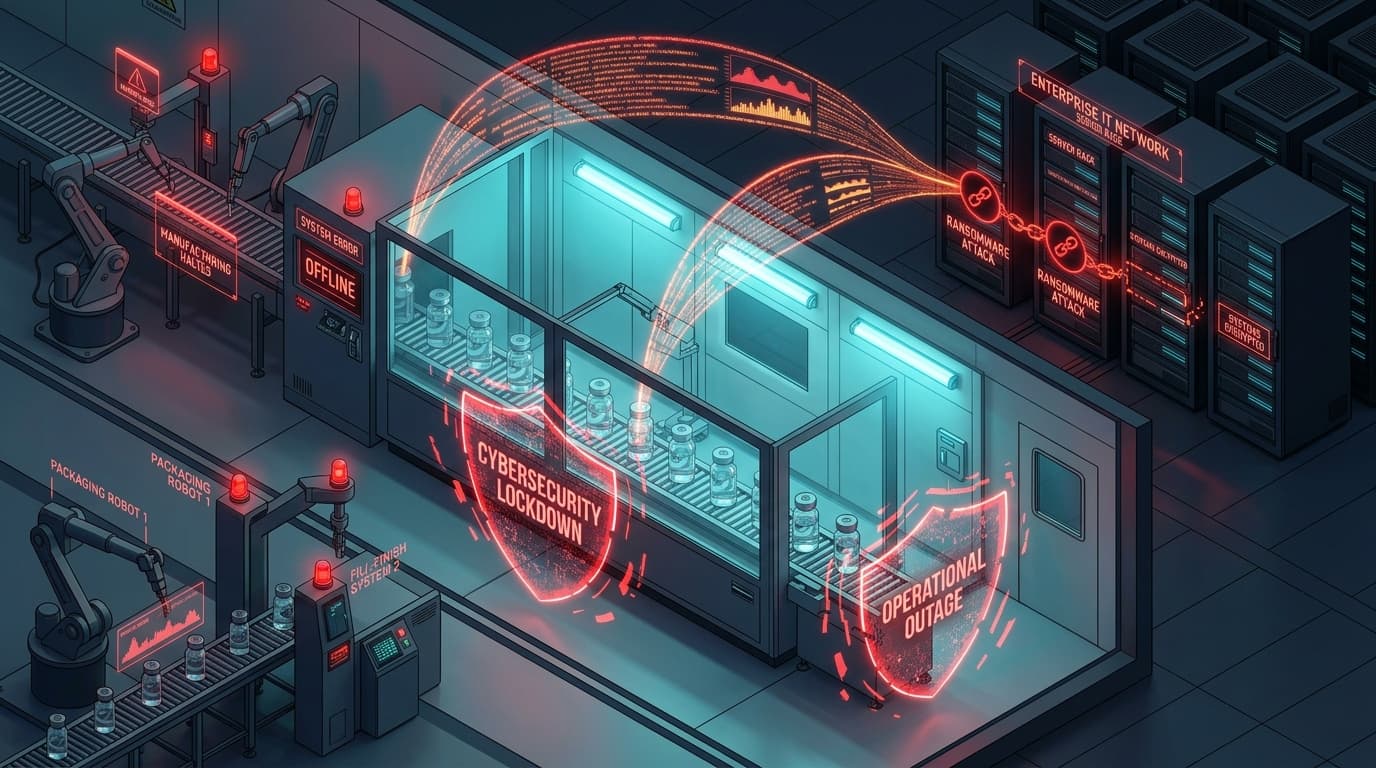
In an alarming regulatory disclosure highlighting the acute vulnerability of medical manufacturing infrastructure, West Pharmaceutical Services, Inc. (NYSE: WST) has formally filed a Current Report on Form 8-K under Item 1.05 (Material Cybersecurity Incidents) with the United States Securities and Exchange Commission (SEC). The public filing confirms that an unauthorized threat actor successfully exfiltrated corporate data and executed system-level encryption across enterprise infrastructure, forcing the corporation to shut down IT systems globally and halting manufacturing, packaging, and logistics operations.
West Pharmaceutical Services is a foundational global healthcare manufacturer, producing billions of specialized components annually—including elastomeric stoppers for injectable medicine vials, prefillable syringe plungers, safety administration systems, and containment solutions for biologics and vaccines. The operational paralysis of its manufacturing lines sent immediate shockwaves across the global biotechnology supply chain, as pharmaceutical giants depend on just-in-time delivery of sterilized packaging to prevent production drug shortages.
According to the regulatory filing, company security operations first detected unauthorized intrusion indicators on May 4, 2026. By May 7, 2026, the corporate board determined that the incident constituted a material event under SEC rules. The attack exemplifies the modern double-extortion playbook, where cyber syndicates combine high-velocity data exfiltration with strategic systems encryption to force compliance from high-revenue industrial targets.
Forensic Attack Anatomy: From Initial Foothold to Cleanroom Stoppage
Forensic incident response teams investigating the West Pharmaceutical intrusion observed a methodical, multi-phase attack trajectory characteristic of tier-1 ransomware syndicates:
- Initial Perimeter Ingress: The threat group gained entry via compromised administrative VPN credentials lacking hardware-backed multi-factor authentication. Ingress was correlated with a vulnerable remote access appliance on the corporate network perimeter.
- Active Directory Enumeration & Privilege Escalation: Within 12 hours of access, adversaries deployed BloodHound and SharpHound to identify domain escalation paths, exploiting unconstrained Kerberos delegation to compromise enterprise domain controller accounts.
- Data Staging and High-Volume Exfiltration: The group accessed centralized file servers, regulatory compliance repositories, and manufacturing formulations, staging tens of gigabytes using 7-Zip before exfiltrating data via encrypted Rclone streams to bulletproof European VPS hosts.
- Enterprise-Wide Encryption Deployment: Using Group Policy Objects (GPOs) and PsExec, the attackers pushed their ransomware payload simultaneously to hundreds of Windows servers and ESXi hypervisors. Enterprise resource planning (ERP) databases, warehouse inventory management (WMS) systems, and supervisory SCADA gateways were encrypted, triggering an emergency corporate IT disconnect.
+------------------------------------------------------------------------------------------+
|                 WEST PHARMACEUTICAL SERVICES INCIDENT TIMELINE & BLAST RADIUS            |
+------------------------------------------------------------------------------------------+
| May 4, 2026   | Threat actor gains initial perimeter access; begins exfiltration         |
| May 5-6, 2026 | Ransomware deployed across corporate IT & hypervisors                     |
| May 7, 2026   | Executive Board declares Material Cybersecurity Incident (SEC Item 1.05) |
|               | Global emergency shutdown of enterprise IT networks initiated             |
|                                       |                                                  |
|                                       v                                                  |
|               +-----------------------+-----------------------+                          |
|               |                                               |                          |
|               v                                               v                          |
|    [Cleanroom Manufacturing Stalled]             [Shipping & Logistics Paralyzed]        |
|    Robotic vial-capping machines halt            Warehouse management systems offline;   |
|    due to loss of ERP batch recipes              shipping & receiving halted globally    |
+------------------------------------------------------------------------------------------+
The Cascade from IT to OT: Why Enterprise Ransomware Halts Factories
A common misconception in industrial cybersecurity is that ransomware must directly infect programmable logic controllers (PLCs) to halt a factory. The West Pharmaceutical incident reveals how modern automated manufacturing is intrinsically tethered to corporate IT:
- ERP and Batch Recipe Ingestion: Modern cleanrooms operate under strict FDA Current Good Manufacturing Practice (cGMP) guidelines. Robotic lines cannot dispense elastomer compounds or sterilize glass stoppers without automated batch recipes and quality tracking codes fed in real time from SAP or Oracle ERP servers. When IT disconnects, production lines must halt by regulatory mandate.
- Warehouse Management & Serialization: In accordance with drug supply chain security legislation (such as the U.S. DSCSA and EU FMD), every carton and pallet of pharmaceutical components must be serialized and registered in a central cloud database prior to departure. When logistics databases were encrypted, physical warehouses were unable to clear shipping docks.
- Preventative IT Outage Measures: To prevent ransomware from traversing IT/OT network bridges and encrypting human-machine interfaces (HMIs) or historian databases, corporate defenders severed physical fiber links between offices and manufacturing plants, intentionally taking physical facilities offline.
SEC Form 8-K Item 1.05 Disclosure & Materiality Benchmark
West Pharmaceutical's disclosure demonstrates the rigor demanded by the SEC's Item 1.05 regulations:
| Regulatory Requirement | West Pharmaceutical Compliance Action |
|---|---|
| Determination Window | Evaluated within 72 hours of initial detection (May 4 to May 7, 2026) |
| Four-Day Filing Rule | Filed Form 8-K promptly with SEC EDGAR within the 4-business-day deadline |
| Material Impact Scope | Quantified temporary operational disruption across manufacturing, shipping, and receiving |
| Remediation Transparency | Disclosed engagement of third-party forensic firms and notification of federal law enforcement |
Industrial Cyber Resilience Playbook: Protecting Manufacturing Supply Chains
Pharmaceutical and medical manufacturing enterprises must adopt the following defensive architecture to isolate critical manufacturing processes from corporate IT compromises:
1. Enforce Purdue Model Network Segmentation (IEC 62443-3-2)
Manufacturing shop floors (Purdue Levels 0-3) must be strictly isolated from corporate IT networks (Level 4/5). Enforce an industrial Demilitarized Zone (IDMZ / Level 3.5) with stateful inspection firewalls:
# Palo Alto Networks Industrial Firewall Policy:
# Strictly deny all direct traffic from Corporate IT to Manufacturing OT
Rule: BLOCK_IT_TO_OT_DIRECT
Source Zone: Corporate-IT-VLAN
Destination Zone: Manufacturing-Cleanroom-OT
Action: DENY-AND-LOG

# Allow ONLY authenticated, brokered batch recipe transfers via jump host
Rule: ALLOW_BROKERED_RECIPE_SYNC
Source Zone: Corporate-ERP-Host
Destination Zone: IDMZ-Recipe-Staging
Application: ms-sql-db, sftp
Action: ALLOW (Enforce Antivirus, Threat Prevention & File Blocking Profiles)
2. Island-Mode Autonomy for Manufacturing Lines
Design cleanroom automation systems to operate autonomously in "island mode" for at least 72 to 96 hours in the event that corporate IT or internet connectivity is completely severed:
- Store standardized batch recipes, sterilization parameters, and quality inspection metrics in hardened local edge historians located physically on the plant floor.
- Ensure local barcode generation and packaging serialization can buffer records locally on solid-state edge appliances until central network connectivity is restored.
3. Immutable and Air-Gapped Disaster Recovery
Deploy immutable, write-once-read-many (WORM) storage architecture for all critical system backups. Utilize physical air-gaps or cloud object locks (such as AWS S3 Glacier Vault Lock or Azure Immutable Storage) that cannot be altered or deleted even by compromised enterprise domain admin credentials.
4. Active Threat Hunting on Virtualization Hypervisors
Modern ransomware syndicates prioritize VMware ESXi and Hyper-V virtualization hosts to maximize encryption blast radius. Harden hypervisors by disabling SSH, enforcing dedicated out-of-band management VLANs, and deploying specialized EDR agents across Linux hypervisor kernels.