Executive Lead: Healthcare Practice Networks Targeted in Extortion & Data Exfiltration
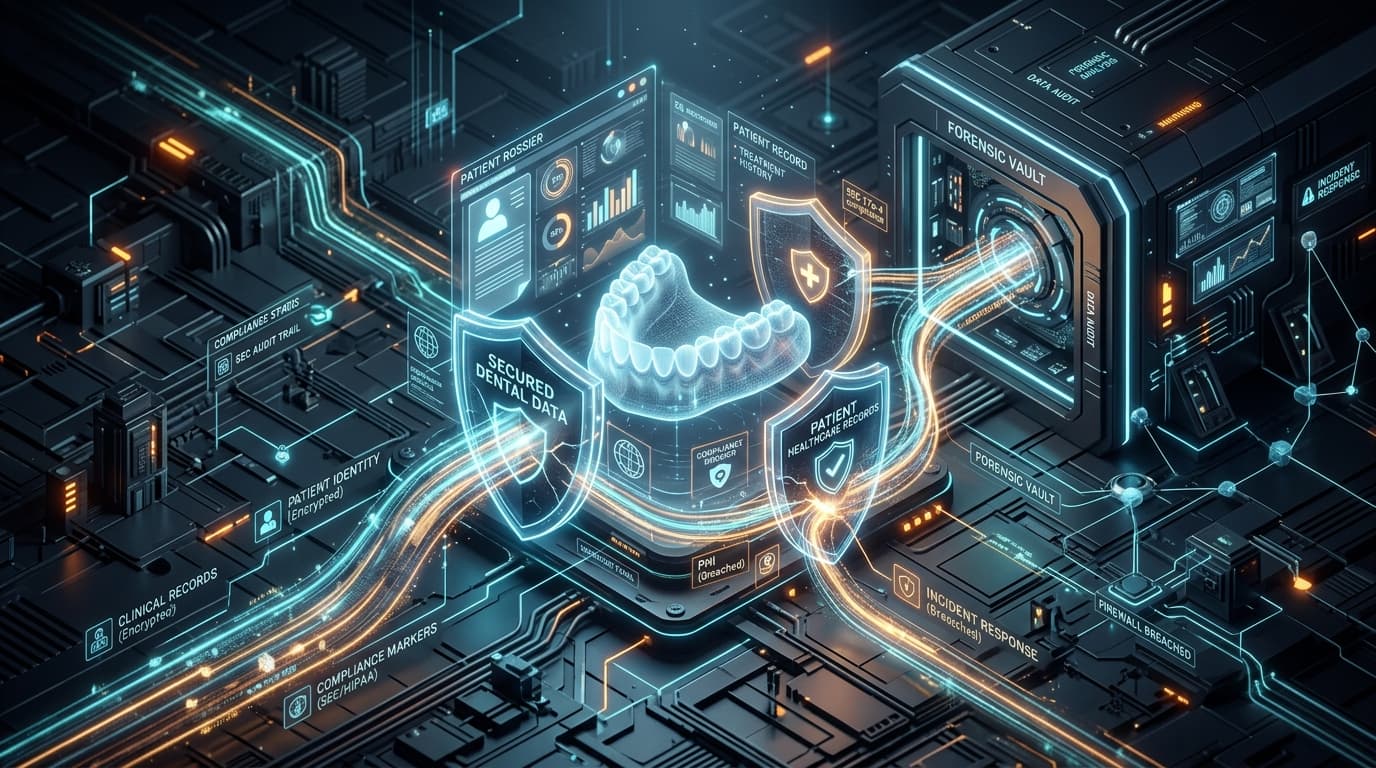
In an official regulatory submission to the United States Securities and Exchange Commission (SEC), dental healthcare provider Park Dental Partners, Inc. (NASDAQ: PARK) has formally filed a Form 8-K under Item 1.05 (Material Cybersecurity Incidents). The public disclosure reveals that unauthorized threat actors infiltrated the organization's internal computer network, gaining access to systems that store sensitive operational files and protected patient information.
Upon identifying the unauthorized access on August 28, 2026, Park Dental Partners initiated its enterprise incident response procedures, isolated affected network segments, and engaged specialized external cybersecurity forensics and legal counsel to assess the scope and forensic blast radius of the intrusion. While the company stated in its initial filing that operations have continued without immediate material disruption, the potential exposure of patient protected health information (PHI) has prompted widespread regulatory scrutiny and preliminary class-action investigations.
This incident highlights the relentless targeting of specialized healthcare support organizations (DSOs and MSOs). Because dental networks operate centralized practice management systems (PMS), electronic health records (EHR), and picture archiving and communication systems (PACS) across dozens of distributed clinical practices, a breach of the central corporate active directory environment provides adversaries with an expansive repository of high-value PII, insurance billing details, and clinical diagnostic images.
SEC Form 8-K Item 1.05 Compliance & Disclosure Dynamics
Adopted by the SEC in late 2023, Item 1.05 of Form 8-K mandates that public registrants disclose any cybersecurity incident determined to be "material" within four business days of that materiality determination. The regulatory framework requires companies to describe:
- The material aspects of the nature, scope, and timing of the incident;
- The material impact or reasonably likely material impact on the registrant, including its financial condition and results of operations;
- Whether the registrant has consulted with federal law enforcement or sought an authorized national security delay.
+---------------------------------------------------------------------------------------+
|                      SEC FORM 8-K ITEM 1.05 INCIDENT WORKFLOW                         |
+---------------------------------------------------------------------------------------+
| Intrusion Detected -> Incident Response Activated -> Forensic Scope Assessment       |
|                                       |                                               |
|                    Materiality Determination by Leadership                             |
|                                       |                                               |
|               +-----------------------+-----------------------+                       |
|               |                                               |                       |
|       SEC EDGAR Form 8-K                               HHS OCR HIPAA                  |
|    Mandatory 4-Day Public Filing                  Mandatory 60-Day Notice             |
|    (Financial & Operational Impact)               (Individual Patient Notices)        |
+---------------------------------------------------------------------------------------+
Park Dental Partners' filing underscores the delicate balance public healthcare companies must strike between early transparency and technical precision. By filing under Item 1.05, the registrant acknowledges that the scope of the unauthorized access carries potential material financial, legal, and operational liabilities, even while forensic investigators work to reconstruct forensic event logs.
Attack Vector & Lateral Movement Analysis: From Perimeter to Clinical Stores
While the specific threat group responsible has not yet been publicly attributed by federal investigators, threat intelligence telemetry across healthcare breaches in 2026 exhibits consistent initial access and post-exploitation patterns:
- Initial Access via Vulnerable Edge Gateways: Adversaries exploit unpatched remote access appliances, virtual private network (VPN) concentrators, or single-factor remote desktop protocol (RDP) instances exposed to the internet. Leaked credentials purchased from dark-web initial access brokers (IABs) remain the most frequent ingress mechanism.
- Privilege Escalation and Domain Reconnaissance: Once inside the corporate network, threat actors utilize living-off-the-land binaries (LOLBins) such as
nltest,adfind, and PowerShell scripts to map domain trusts, locate domain controllers, and extract LSASS process memory. - Targeting Practice Management Systems (PMS): In dental networks, systems such as Dentrix, Eaglesoft, or cloud-synchronized practice suites aggregate patient appointments, social security numbers, medical histories, and credit card authorizations. Threat actors deploy specialized exfiltration tooling (e.g., Rclone or MEGAsync) to siphon SQL database backups.
- Clinical Imaging (DICOM / PACS) Access: Dental radiograph archives containing 3D cone-beam computed tomography (CBCT) and panoramic X-rays are typically stored on on-premises network-attached storage (NAS) devices. Because these DICOM servers frequently lack granular access control lists (ACLs), intruders harvest full patient imaging directories.
Dual Regulatory Jeopardy: SEC Materiality vs. HIPAA Breach Notification Rule
Healthcare organizations operating as publicly traded entities face a complex dual regulatory compliance burden following any cyber incident involving unauthorized network access:
| Regulatory Authority | Governing Statute | Reporting Window | Enforcement Penalties |
|---|---|---|---|
| U.S. SEC | Form 8-K Item 1.05 | Within 4 business days of materiality determination | SEC civil enforcement, shareholder derivative litigation, restatements |
| U.S. HHS OCR | HIPAA Breach Notification Rule (45 CFR §§ 164.400-414) | Without unreasonable delay, no later than 60 calendar days | Civil monetary penalties up to $2,000,000+ per violation category |
| State Attorneys General | State Data Privacy & Breach Notification Acts (e.g., CCPA, SHIELD) | Typically 15 to 45 days from breach confirmation | State AG enforcement actions, statutory damages per impacted resident |
Under HIPAA regulations, any acquisition, access, use, or disclosure of protected health information (PHI) is presumed to be a reportable breach unless the covered entity demonstrates that there is a low probability the PHI has been compromised based on a four-factor risk assessment:
- The nature and extent of the PHI involved, including types of identifiers and likelihood of re-identification;
- The unauthorized person who used the PHI or to whom the disclosure was made;
- Whether the PHI was actually viewed or acquired;
- The extent to which the risk to the PHI has been mitigated.
Healthcare Enterprise Defensive Playbook & Forensic Remediation
To defend distributed clinical networks against advanced persistent threats and ransomware syndicates, CISOs and healthcare security leaders must execute the following strategic countermeasures:
1. Enforce Phishing-Resistant MFA on All Ingress Vectors
Eliminate password-only and SMS-based multi-factor authentication across all remote access gateways, clinician portals, and administrative VPNs. Deploy FIDO2/WebAuthn hardware security keys for all IT administrators and clinic managers:
# Microsoft Entra ID / Okta Conditional Access Policy Benchmark:
- Target Users: All Users & Clinical Contractors
- Cloud Apps: All Cloud & On-Premises Applications
- Grant Controls: Require Phishing-Resistant MFA (FIDO2 or Windows Hello for Business)
- Session Controls: Enforce Continuous Access Evaluation (CAE) & 1-hour sign-in frequency
2. Purdue-Style Micro-Segmentation for Medical & Dental Devices
Clinical hardware (intraoral scanners, digital X-ray sensors, sterilization monitors) must never share an untrusted flat broadcast domain with office workstations or public patient Wi-Fi:
# Cisco IOS / Arista VLAN Segmentation Template:
vlan 100
  name CLINICAL-PACS-SERVERS
vlan 200
  name DENTAL-OPERATORY-WORKSTATIONS
vlan 300
  name GUEST-PATIENT-WIFI

# ACL: Deny lateral traversal from Operatory to PACS database management ports
ip access-list extended BLOCK_LATERAL_PMS
  permit tcp 10.100.0.0 0.0.0.255 host 10.100.0.10 eq 1433   # SQL Server
  permit tcp 10.100.0.0 0.0.0.255 host 10.100.0.10 eq 4242   # DICOM PACS Port
  deny   ip any 10.100.0.0 0.0.0.255 log-input
  permit ip any any
3. Immutable and Air-Gapped Backup Architecture
Ransomware operators systematically hunt and delete online backups prior to deploying encryption payloads. Implement 3-2-1-1-0 backup hygiene:
- Maintain 3 copies of clinical data;
- Across 2 different media types;
- With 1 copy stored offsite;
- At least 1 copy residing in an immutable, air-gapped AWS S3 Object Lock or Azure Immutable Blob storage vault;
- With 0 errors verified through automated monthly disaster recovery restore drills.
4. Active Endpoint Detection and Threat Hunting
Deploy continuous Endpoint Detection and Response (EDR) agents with 24/7 Managed Detection and Response (MDR) monitoring across all clinic reception terminals, doctor operatory workstations, and back-office servers. Ensure that LOLBins such as vssadmin.exe, wbadmin.exe, and bcdedit.exe are blocked from executing shadow copy deletion commands.