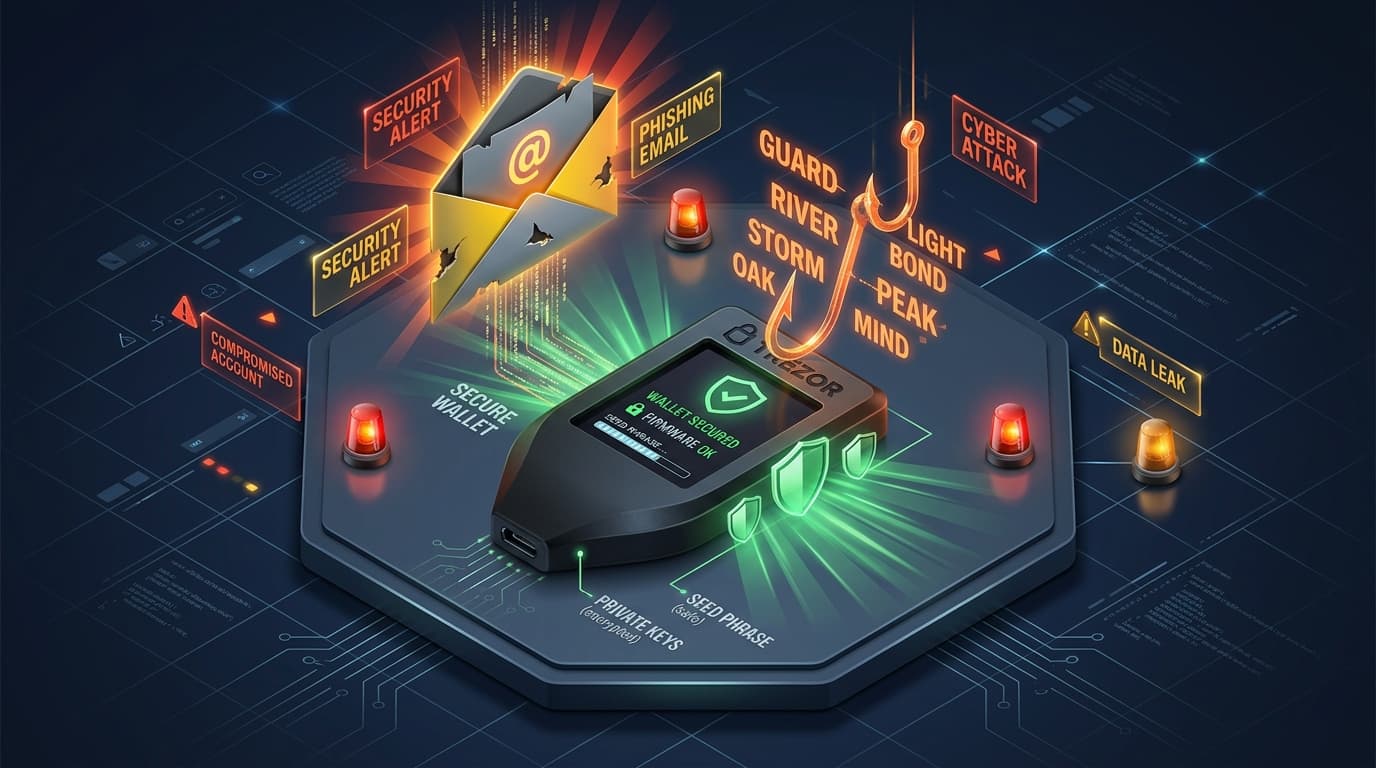
Hardware cryptocurrency wallets have long been regarded as the gold standard of digital asset protection, creating a physical air gap that isolates private cryptographic keys from internet-connected computers. However, that security foundation requires absolute trust in the physical supply chain. In late October 2026, leading hardware wallet manufacturer Trezor issued an extraordinary security bulletin warning customers that physically tampered Trezor Safe 5 devices had been identified in circulation, carrying sophisticated hardware implants capable of siphoning seed phrases via cellular networks.
The compromised units originated from CryptoBilis, a prominent Southeast Asian reseller operating across digital storefronts in Malaysia and Indonesia. The revelation follows a parallel discovery earlier in October involving similarly weaponized Ledger devices distributed by the same vendor, sparking multi-jurisdictional law enforcement inquiries led by the Singapore Police Force.
Hardware Forensic Teardown: The Rogue Cellular Interposer
Photographic and microelectronic teardown records submitted to Trezor's engineering team revealed a remarkably sophisticated physical interception architecture. The threat actors managed to cleanly open the tamper-evident ultrasonic-welded plastic casing of the Trezor Safe 5, install a custom interposer board, and reseal the unit to mimic factory packaging.
The rogue hardware package comprised three primary elements:
- Flexible PCB Interposer: A microscopically thin custom printed circuit board positioned directly between the primary STM32 microcontroller board and the color OLED display connector.
- Display Tap Bus: The interposer intercepted the display serial interface (SPI/MIPI lines), allowing a micro-controller on the rogue board to read pixel data in real time as the device displayed the 12- or 24-word recovery seed phrase during initial wallet setup.
- Miniaturized GSM Cellular Module & Antenna: Tucked into a milled hollow within the plastic casing, a low-power cellular modem and surface-mount antenna transmitted the reconstructed seed phrase over public GSM cellular networks as soon as the wallet was connected to a USB power source.
Why Firmware Verification Failed to Detect the Attack
Trezor devices feature robust cryptographic firmware checks: the bootloader verifies that the installed firmware binary is cryptographically signed by Trezor's master private key before booting. If modified firmware is detected, the device displays an emergency warning screen.
However, the cellular implant completely bypassed firmware integrity verification because the genuine Trezor firmware was never modified. The hardware interposer operated strictly as an external eavesdropper on the peripheral display bus. From the perspective of the secure microcontroller, the genuine operating system was executing in an uncompromised state, generating genuine cryptographic keys, and displaying them to the user—unaware that a secondary parasitic processor was transcribing the screen buffer.
Comparative Risk Matrix: Hardware Supply Chain Threats
| Vector | Firmware Modification | Pre-Seeded Wallet Card | Hardware Cellular Implant |
|---|---|---|---|
| Execution Level | Software / ROM | Social Engineering | Microelectronic Hardware Interposition |
| Bootloader Detection | Yes (Cryptographic signature check fails) | N/A (Device unmodified) | No (Firmware signature remains valid) |
| Network Dependency | Requires host PC connectivity | Requires user to deposit to attacker seed | Autonomous cellular exfiltration (Independent of host) |
| Sophistication Tier | Medium | Low | State-Level / Advanced Hardware Lab |
Mandatory Mitigation Steps for CryptoBilis Customers
Trezor terminated CryptoBilis as an authorized reseller on October 9, 2026. Anyone who purchased a Trezor or Ledger device through CryptoBilis from March 2026 onward must execute the following emergency measures:
- Migrate Funds Immediately: Do not rely on your existing hardware wallet. Immediately transfer all digital assets to a freshly generated wallet created on an untampered device or reputable cold storage custodian.
- Generate a Brand-New Recovery Seed: If a compromised device already exfiltrated your 12- or 24-word seed phrase, restoring that exact seed onto a brand-new, clean hardware wallet will not protect your funds. You must generate a completely fresh recovery seed.
- Retire and Quarantine the Hardware: Do not power on or connect the suspect device to a computer or power bank. Retain the device in static shielding for forensic inspection by vendor support or law enforcement.
- Purchase Exclusively from Official Channels: Acquire hardware wallets strictly through direct manufacturer web stores, avoiding third-party marketplace listings or unverified localized storefronts.