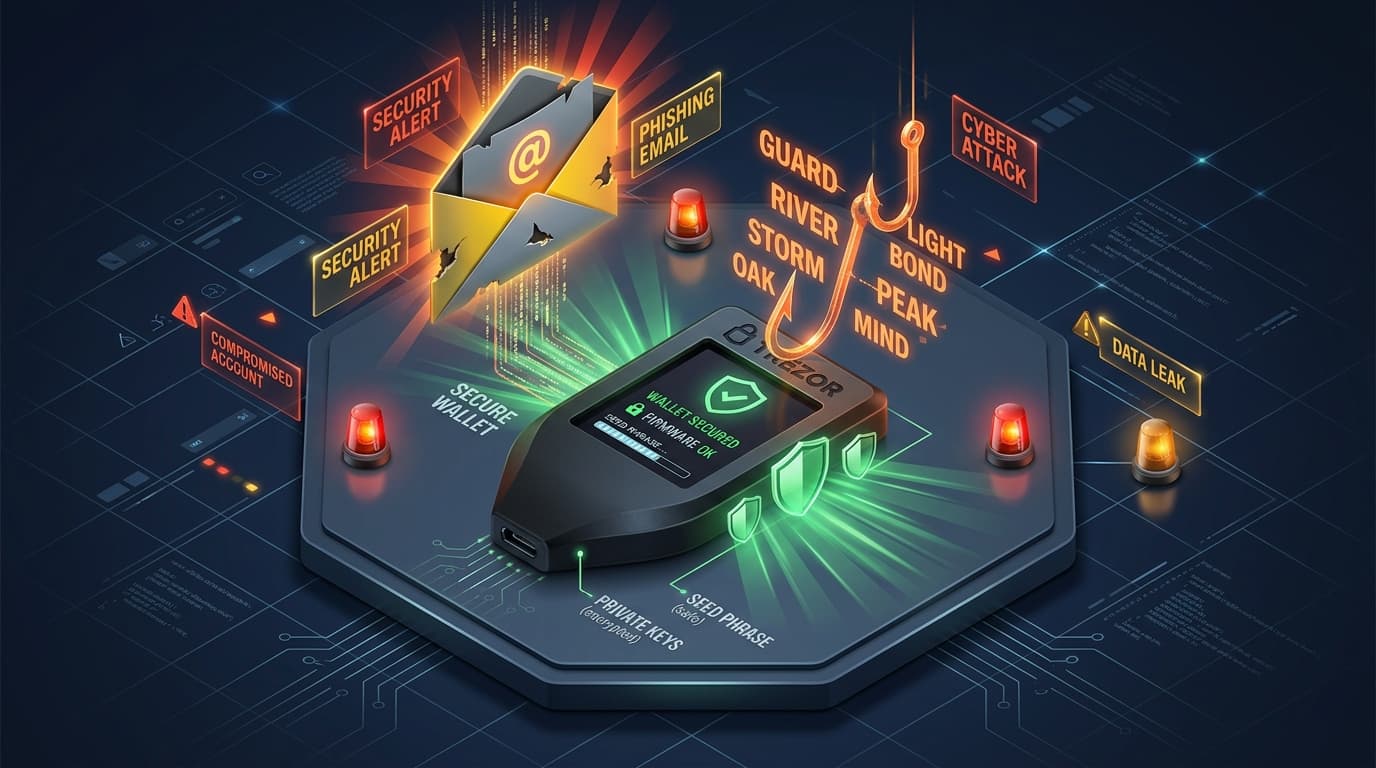
Hardware wallet manufacturer Trezor has issued an urgent warning to its global user base after a data breach at third-party marketing and transactional email platform Brevo (formerly Sendinblue) exposed the email addresses of 347,000 customers. Threat actors immediately weaponized the compromised contact list to launch high-urgency phishing emails aimed at draining cryptocurrency reserves.
According to disclosures from Trezor, approximately 2,500 recipients clicked the malicious links before defensive measures and domain takedowns took effect. The attackers sought to deceive users into entering their 12- or 24-word wallet recovery seed phrases onto convincing counterfeit websites.
The Anatomy of the Attack: From Brevo to the Inbox
The intrusion originated not within Trezor's cryptographic hardware or device firmware, but inside the software supply chain of its customer communications stack. Attackers compromised an internal credential at Brevo, granting them unauthorized access to client databases and newsletter distribution channels.
With verified customer email addresses in hand, the threat group deployed a targeted campaign featuring:
- Spoofed Authenticity: Emails sent from lookalike domains or compromised relay servers closely mimicking Trezor's branding and official support communication guidelines.
- Manufactured Urgency: Messages falsely claiming a mandatory firmware update or imminent account suspension due to changes in network protocol standards.
- Seed Harvesting Portals: Links directing victims to fake web portals replicating the Trezor Suite interface, prompting them to "verify wallet ownership" by typing their mnemonic recovery seed.
Never, under any circumstances, type your hardware wallet recovery seed into a website, computer keyboard, or mobile app. Hardware wallets exist specifically so your seed never touches an internet-connected memory space.
Third-Party SaaS as the Soft Underbelly of Crypto Security
This incident is not an isolated occurrence. Over the past two years, hardware wallet vendors, centralized exchanges, and Web3 services have repeatedly suffered collateral damage from vendor compromises at marketing, CRM, and customer support providers (including Mailchimp, Customer.io, and Zendesk).
While cold storage devices provide military-grade cryptographic isolation for private keys, customer records held in enterprise SaaS platforms remain governed by third-party access controls, employee session tokens, and cloud security configurations outside the vendor's direct enforcement boundary.
Guidance for Affected Customers and Security Teams
For crypto asset custodians, enterprise treasuries, and individuals who may have interacted with the campaign:
- Assume Email Compromise: If you received a security advisory asking for action regarding Trezor, assume it is fraudulent unless verified through official release channels on github.com/trezor or trezor.io.
- Rotate Compromised Seeds Immediately: If you entered your seed words into any web form, immediately transfer all assets to a newly generated wallet with an uncompromised seed before automated drainer bots sweep the addresses.
- Vendor Isolation Rules for Enterprise: Security teams should evaluate the data shared with external SaaS vendors. Email marketing tools should never receive real customer names, purchase histories, or physical asset ownership tags that enrich phishing lures.