Regulatory Disclosure Overview
An advanced nuclear energy technology corporation developing next-generation Small Modular Reactors (SMRs) has submitted a mandatory Item 1.05 Form 8-K filing to the U.S. Securities and Exchange Commission (SEC), disclosing that it has determined an unauthorized digital network infiltration to be a material cybersecurity incident.
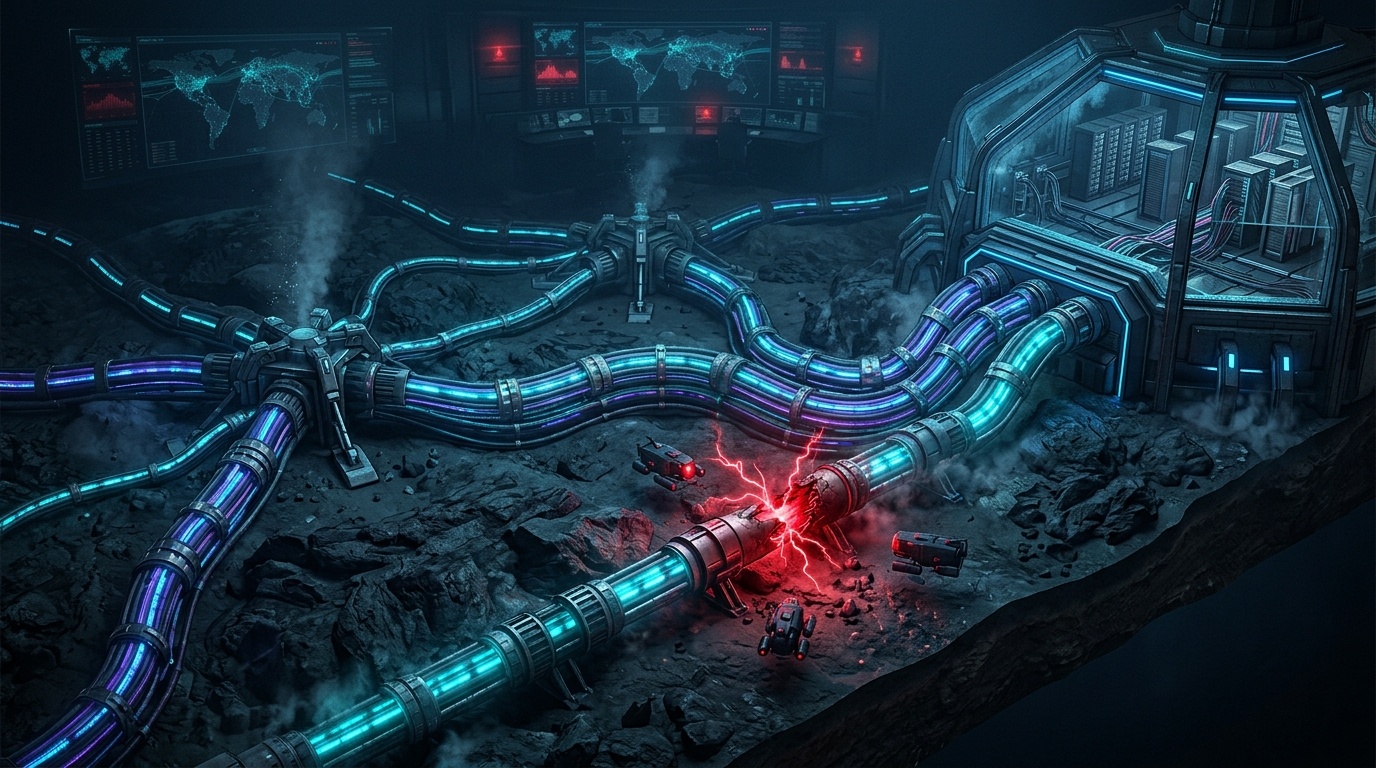
According to the regulatory report, sophisticated advanced persistent threat (APT) actors breached an on-premises engineering collaboration repository containing proprietary thermohydraulic simulations, passive safety cooling blueprints, and core neutronics calculations for commercial SMR deployments.
Forensic Intrusion Reconstruction & Attack Path
Digital forensics investigators retained by the firm, alongside federal cybersecurity authorities, traced the adversary's dwell time across a 38-day campaign:
| Attack Milestone | Observed TTP / Threat Vector | Forensic Finding |
|---|---|---|
| Initial Infiltration | Phishing and credential stuffing against third-party nuclear structural engineering contractor (T1078) | Compromised VPN session originating from commercial residential proxy pool |
| Privilege Escalation | Exploitation of local privilege escalation vulnerability in engineering CAD server software (T1068) | NT AUTHORITY\SYSTEM token assigned to unauthorized background daemon |
| Internal Discovery | Active Directory LDAP enumeration targeting nuclear engineering service accounts (T1087.002) | Automated BloodHound queries executed from compromised workstation |
| Data Exfiltration | Archival and encryption of 3D CAD assemblies and MCNP reactor physics input decks (T1560) | Egress via HTTPS web traffic to cloud storage bucket over a 72-hour window |
| SEC 8-K Regulatory Filing | Determination of materiality by Board Audit & Risk Committee | Public SEC EDGAR disclosure under Item 1.05 |
Nuclear Safety & NRC Regulatory Assurance
The company emphasized in both its SEC filing and communications with the U.S. Nuclear Regulatory Commission (NRC) that physical plant safety was never in jeopardy:
- Air-Gapped Instrumentation & Control (I&C): The affected environments were exclusively corporate research and development file servers. Operational reactor simulators and physical instrumentation control testbenches reside on strictly air-gapped Class 1E safety networks.
- Digital Signature Verification: Licensing software pipelines utilized for NRC Design Certification submissions utilize hardware-backed cryptographic signing (FIPS 140-2 Level 3 HSMs) that showed no signs of tampering.
- Intellectual Property Exposure: The exfiltrated data was restricted to legacy iteration design schematics and computational fluid dynamics meshes, with no enrichment or fuel fabrication chemical formulas compromised.
Critical Infrastructure Cyber Resilience Mandate
Nuclear energy innovators and defense energy contractors are urged to implement the following high-assurance security practices:
- Zero-Trust Supply Chain Verification: Enforce strict device health attestation and hardware security key authentication (FIDO2) for all external engineering contractors accessing CAD portals.
- Data Loss Prevention (DLP) on Scientific Computing Racks: Enforce kernel-level file monitoring and restricted USB/network export policies on servers hosting high-value computational simulations.
- Ephemeral Access Just-in-Time (JIT): Transition engineering repositories from standing administrative credentials to short-lived, cryptographically scoped session tokens.