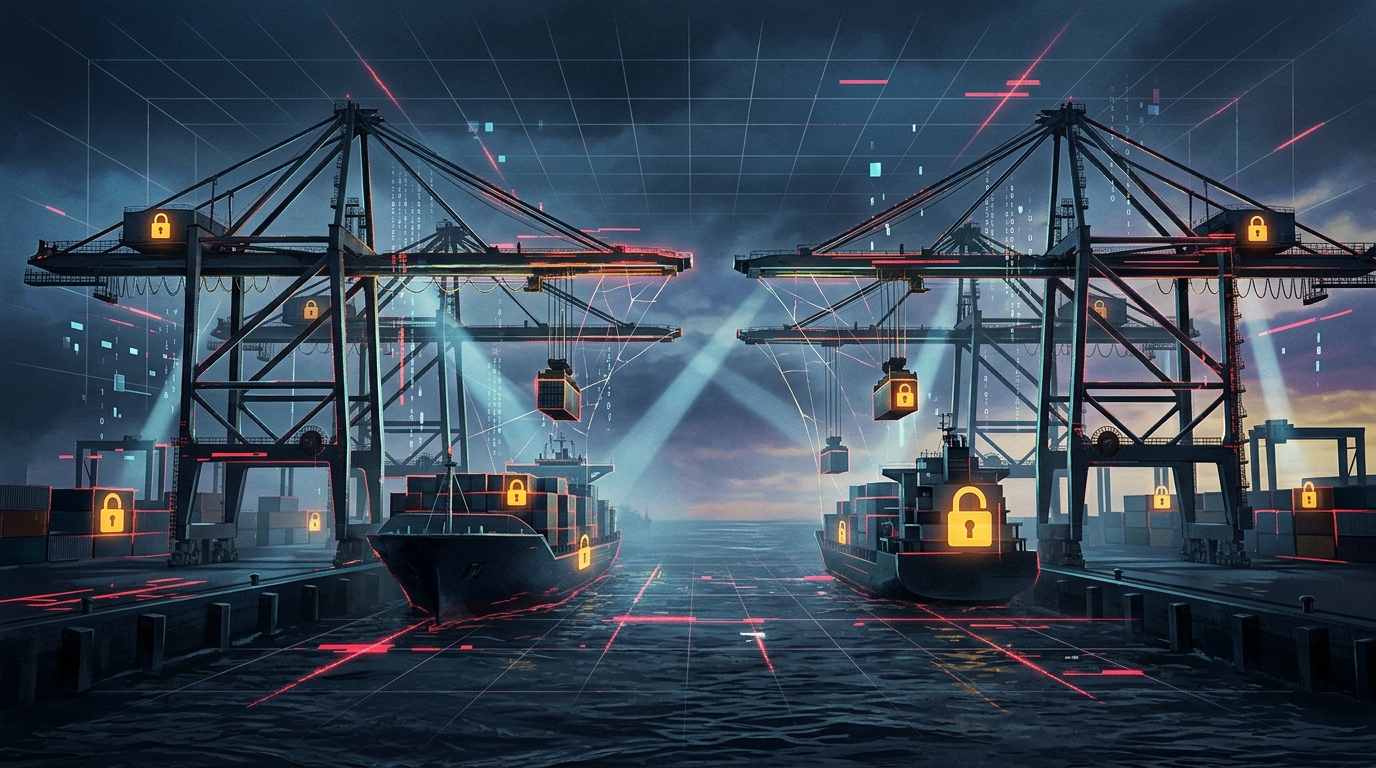
An international commercial container terminal and maritime logistics operator has submitted an urgent regulatory filing under Item 1.05 of SEC Form 8-K disclosing a material cybersecurity incident. The disclosure reveals a coordinated ransomware attack that disrupted terminal operating systems (TOS) across four global deepwater seaports, freezing automated gantry crane operations, halting intermodal freight loading, and paralyzing international cargo tracking for multiple days.
Forensic Timeline: VPN Ingress to Terminal Network Pivot
According to the company's technical filing and disclosures provided to maritime transportation authorities, the intrusion unfolded over a seven-day dwell period:
- Initial Ingress: Threat actors utilized compromised credentials associated with an outsourced third-party maintenance vendor on an external SSL VPN appliance. The account was exempt from conditional access MFA policies.
- Lateral Movement: Adversaries deployed legitimate administrative utilities (PsExec, Cobalt Strike beacons) to navigate from the corporate enterprise domain across perimeter firewalls into the Terminal Operating System (TOS) server cluster.
- Data Exfiltration: Prior to payload detonation, the group exfiltrated approximately 1.2 terabytes of customs documentation, international shipping manifests, and proprietary customer cargo manifests to cloud storage drop points.
- Ransomware Execution: The threat actors detonated custom file-encrypting ransomware across domain controllers, TOS SQL databases, and automated gate kiosks, appending encrypted extensions and demanding an extortion payment.
Material Impact on Maritime Critical Infrastructure
The operational disruption severely impacted global supply chain throughput:
| Operational Domain | Disruption Severity | Regulatory & Economic Impact |
|---|---|---|
| Gantry Crane Dispatch | Critical / Manual Operations | Automated container placement algorithms disabled; loading velocity dropped by 78%. |
| Gate Terminal Entry | Severe Congestion | Truck turn times increased from 35 minutes to over 7 hours; manual paper manifests enforced. |
| Direct Financial Impact | Material ($22M / day) | Demurrage penalties, forensic recovery fees, and lost terminal handling revenue. |
Defensive Blueprint for Port Authorities and Maritime Operators
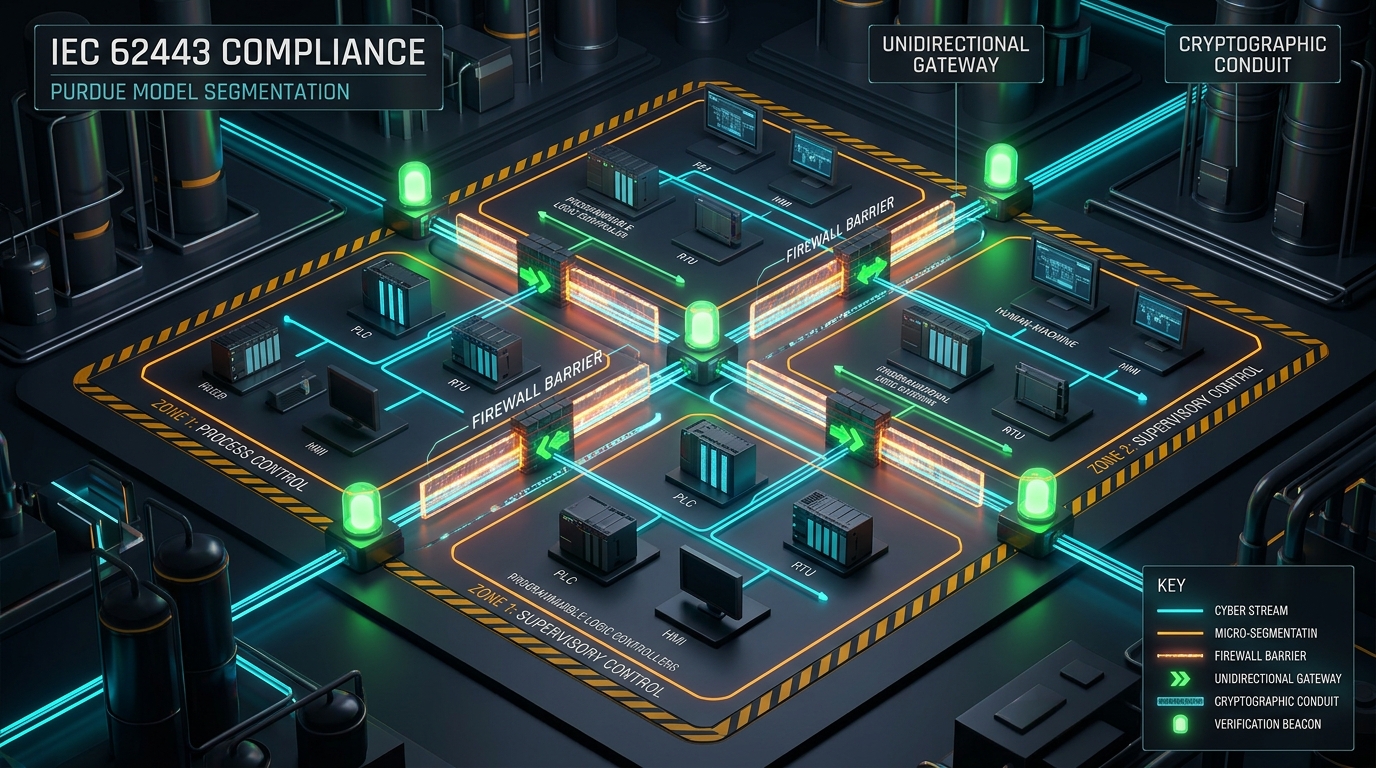
- Strict Purdue Model Boundary Enforcement: Decouple Terminal Operating Systems (TOS) and crane automation networks from corporate enterprise IT, enforcing air-gapped data diodes for telemetry.
- Eliminate Non-MFA Exceptions: Enforce mandatory hardware-token MFA across all VPN endpoints, third-party contractor portals, and remote maintenance tunnels.
- Deploy Immutable Offline Backups: Implement cryptographically isolated, air-gapped snapshots of TOS configuration databases to ensure deterministic recovery within 4 hours without paying ransoms.